
【COP30 Indonesia Pavilion】Tropical Peatland Management and Evaluation
Day:2025.12.10
event |





| Name | Organization | Position |
| Yuki Ura | Climate Change Mitigation Project in LULUCF Sector(Indonesia) | JICA Expert (Project Coordinator/Sub-Chief Advisor) |
Date:2025/11/12
Host:Ministry of Environment,Indonesia (Counterpart Agency of the JICA Technical Cooperation Project)
Location(Pavilion Name):Indonesia Pavilion
| Name | Organization | Position |
| Dr. Mitta Ratna Juwitta | Directorate of Greenhouse Gas Inventory and Monitoring, Reporting, and Verification | Director |
| Muhammad Askary | Directorate of Peat Ecosystem Protection and Management | Task force Coordinator |
| Waluyo Yogo Utomo | Directorate of Peat Ecosystem Protection and Management | Staff |
| Prof Mitsuru Osaki | JICA/Hokkaido University/Japan Peatland Society | JICA Short-Term Expert/Professor Emeritus/President |
Indonesia hosts one of the world’s largest and most carbon-dense tropical peatland ecosystems, which play a vital role in regulating carbon stocks, hydrology, and climate stability. Recognizing their strategic importance, the Government of Indonesia has incorporated peatland protection and restoration into its national climate commitments, including the Enhanced NDC and the FOLU Net Sink 2030 target. Despite meaningful progress, challenges remain in ensuring sustainable water management, preventing fires, strengthening MRV systems, and aligning restoration efforts with community livelihoods.
The session aimed to present Indonesia’s latest policy developments, scientific innovations, and monitoring methodologies essential for advancing peatland governance. It highlighted the national GWL monitoring system, the newly introduced GHG calculation methodology based on water-table depth, and the introduction of an emerging low-carbon cultivation approach: AeroHydro Culture (AHC). By convening policymakers, researchers, and practitioners, the event sought to deepen technical understanding, promote evidence-based decision-making, and reinforce Indonesia’s leadership in global peatland-based climate mitigation.
In her opening remarks, Dr. Mitta Ratna Jiuwitta of the Directorate of GHG Inventory and MRV, the counterpart to JICA’s technical cooperation project, emphasized that peatlands form the backbone of Indonesia’s mitigation pathway. She stressed Indonesia’s long-standing partnership with JICA, which has spanned more than two decades and contributed significantly to peatland fire prevention, scientific collaboration, REDD+ cooperation, and, most recently, the LULUCF Project.
She highlighted that the JICA–Indonesia LULUCF Project directly advances national climate targets by strengthening peatland MRV systems toward Tier-3 transparency and accuracy, and by developing and promoting low-carbon cultivation technologies—particularly the AeroHydro Culture (AHC) approach. This system integrates agricultural productivity with emissions reduction and peatland restoration. She reiterated that the partnership with JICA is enabling Indonesia to base its policies on science, accelerate innovation, advance water-table-based GHG methodologies, and enhance the credibility of Indonesia’s carbon credits. Overall, she positioned the collaboration as a key driver in Indonesia’s efforts to become a global model for sustainable tropical peatland management.
A central highlight of the forum was the introduction of AeroHydro Culture (AHC), developed through Japan–Indonesia collaboration, as a breakthrough low-carbon cultivation system. Field trials demonstrated that crops can remain productive under high groundwater levels, with yields increasing by up to 36% when GWL is maintained at sustainable thresholds. These findings confirmed that peatland rewetting and agricultural productivity can be mutually reinforcing. The forum recognized AHC as a promising Nature-based Solution that integrates restoration, emissions reduction, and livelihood support—strengthening the scientific and operational foundation for scaling the approach.
The seminar concluded with a shared call to deepen global partnerships, expand access to climate finance, and promote innovation-driven peatland solutions. Participants agreed that Indonesia’s experience—combining strong policy direction, advanced MRV systems, and field-tested low-carbon technologies—offers a compelling model for other tropical peatland countries and for broader international climate cooperation.
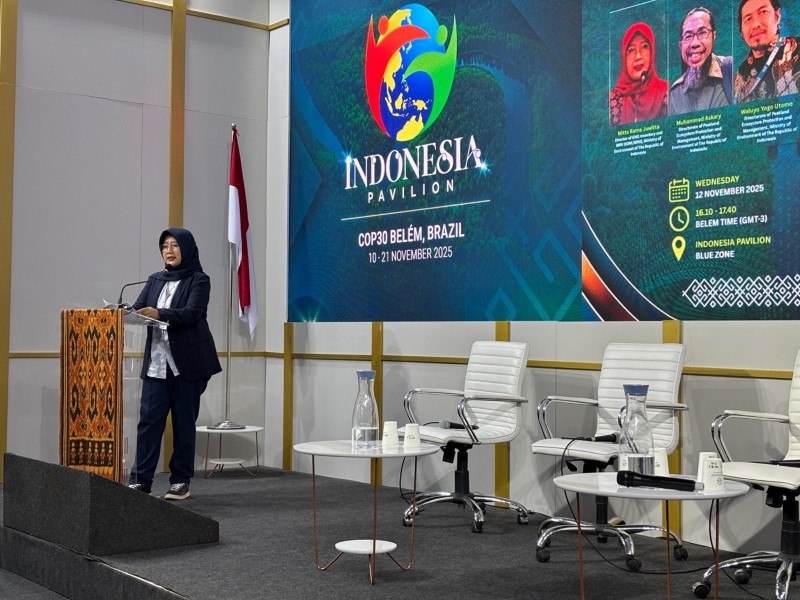
Opening Remarks: Dr. Mitta Ratna Jiuwitta, Directorate of GHG Inventory and MRV
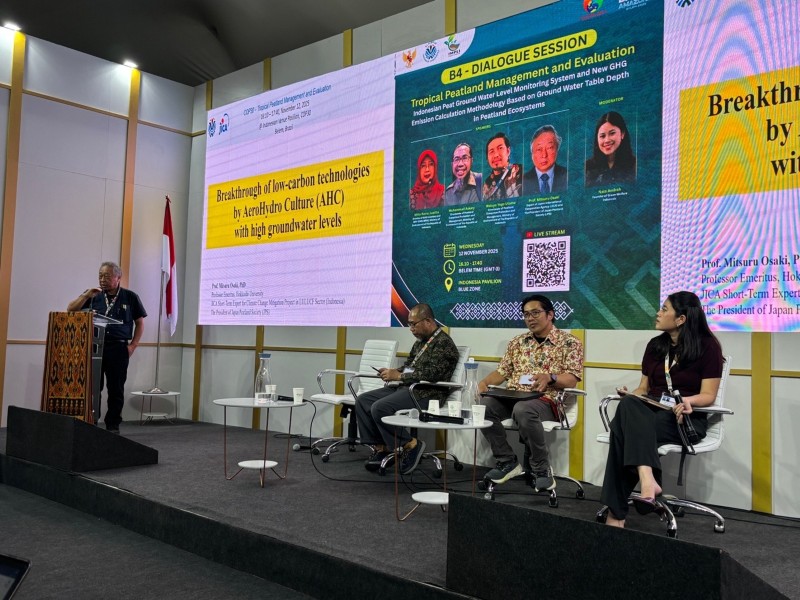
Presentation by Prof. Mitsuru Osaki (JICA / Hokkaido University / Japan Peatland Society)
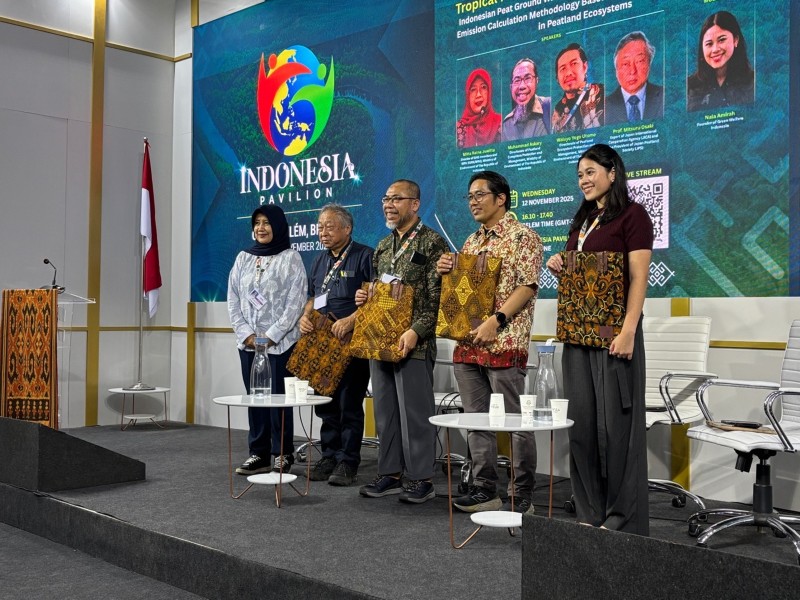
Group Photo


