
【COP30 Side-Event】Accelerate Energy Efficient Cooling in Nigeria
Day:2025.12.10
event |







| Name | Organization | Position |
| Kotaro TANIGUCHI | Office for Sustainability Management, Operations Strategy Department, JICA | Director |
Date:2025/11/20
Host:Daikin Industries, Ltd.
Co-host:JICA
Location(Pavilion Name):Nigeria Pavilion
| Name | Organization | Position |
| Dr. Mustapha Abdullahi | Energy Commission of Nigeria | Director General |
| Mr. Kyosuke INADA | JICA | Director General for Sustainability Management |
| Ms. Uboho Ekpo | National Council on Climate Change (NCCC), Nigeria | Principal Scientific Officer |
| Mr. Takahiro ASAHI | Daikin Industries, Ltd. | Manager, External Relations Department, Tokyo Office |
| Mr. Etiosa Uyigue | United Nations Environment Programme (UNEP) United for Efficiency (U4E) | National Project Coordinator |
In Nigeria, the demand for air conditioners is rapidly increasing due to population growth and economic development. Promoting the use of high-efficiency air conditioners is important both as a climate change mitigation measure and as an adaptation strategy. Daikin Industries is currently implementing a demonstration project under JICA's SDGs Business Validation Survey for Disseminating High-Efficient Inverter Air-conditioners with R32 Refrigerant in Nigeria (June 2024 – March 2026). This seminar introduced the outcomes of the Survey and discussed the necessary policies and challenges for further dissemination of high-efficiency air conditioners.
At the opening remarks, the Energy Commission of Nigeria (ECN) emphasized that high-efficiency air conditioners are crucial in Nigeria, where population growth and cooling demand are high. ECN also introduced that the country is working to promote the adoption of high-efficiency air conditioners nationwide, including the planned implementation of Minimum Energy Performance Standards (MEPS) in December 2026.
JICA presented its efforts to implement the SDGs Business Validation Survey in cooperation with relevant Nigerian institutions.
The National Council on Climate Change (NCCC) stated that high-efficiency air conditioners contribute to both mitigation and adaptation measures under Nigeria’s Nationally Determined Contributions (NDCs).
Daikin Industries reported that, under the SDGs Business Validation Survey, it conducted comparative experiments between high-efficiency inverter air conditioners and conventional non-inverter models. The results showed that, in addition to reducing GHG emissions, high-efficiency models should be adopted from a cost perspective as well in the long run.
In the panel discussion, participants debated the need for institutional support, cost-related challenges, and the importance of awareness-raising and capacity building to further promote high-efficiency air conditioners.
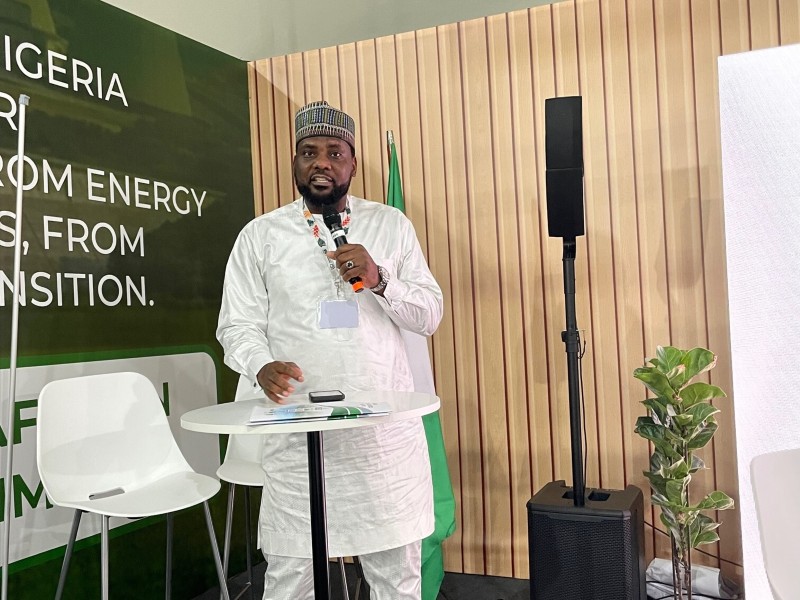
Speaker (ECN-Dr.Abdullahi)
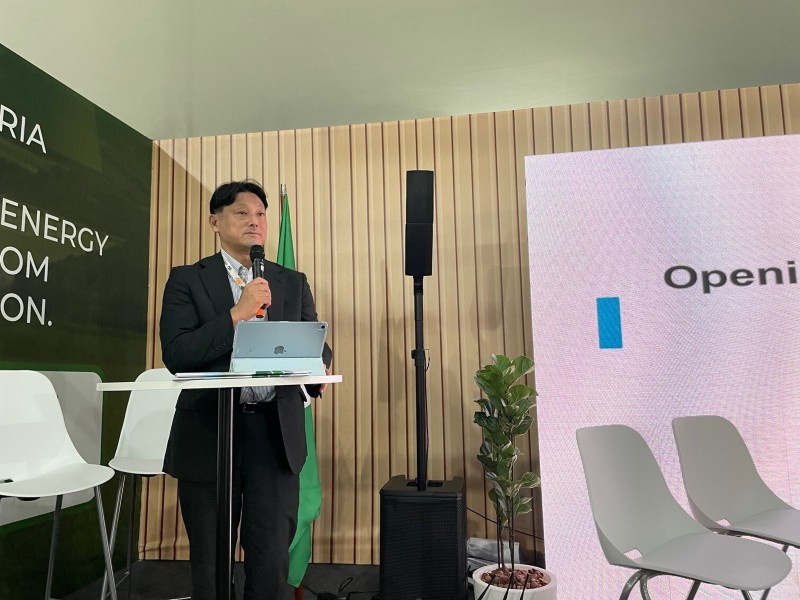
Speaker (JICA-Mr.Inada)
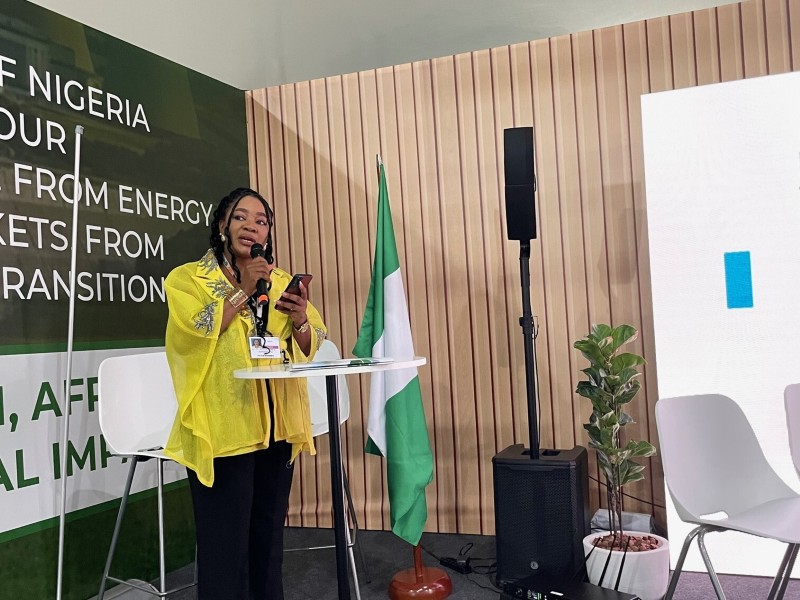
Speaker (NCCC-Ms. Ekpo)
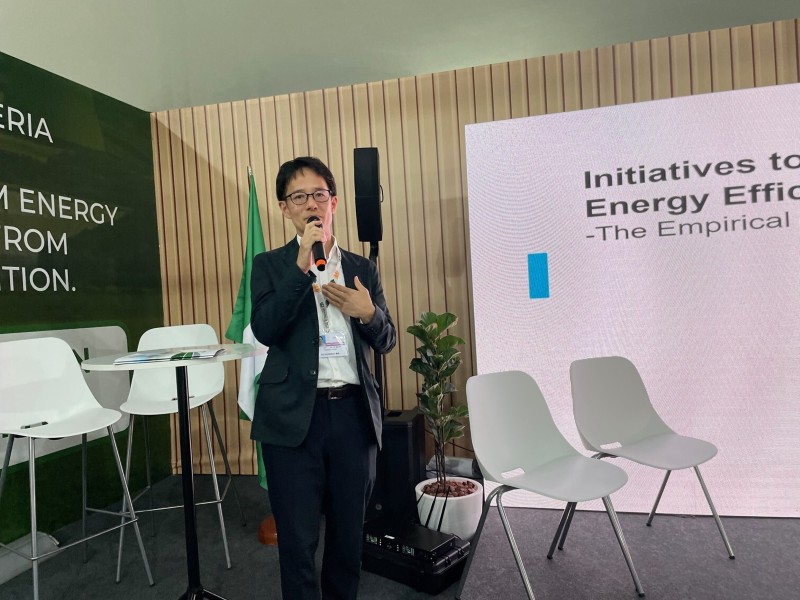
Speaker (Daikin Industries-Mr.Asahi)
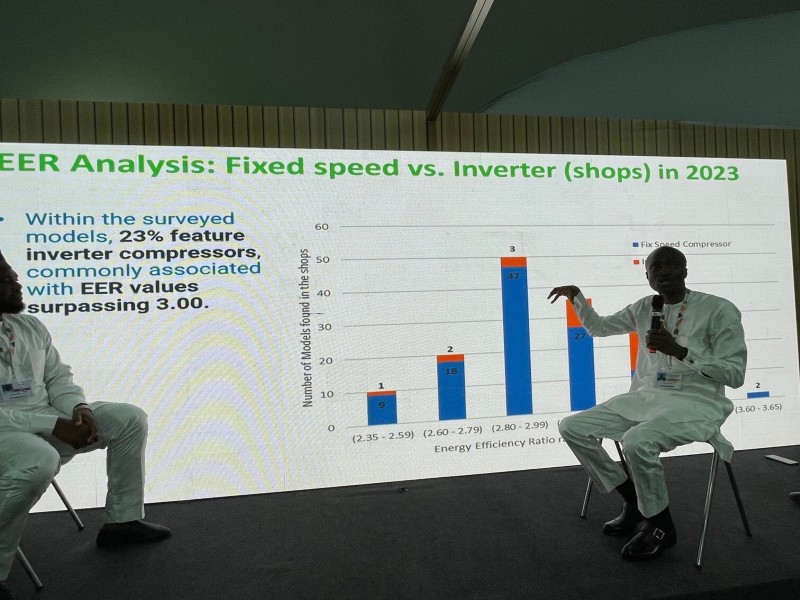
Speaker (UNEP-Mr.Uyigue)
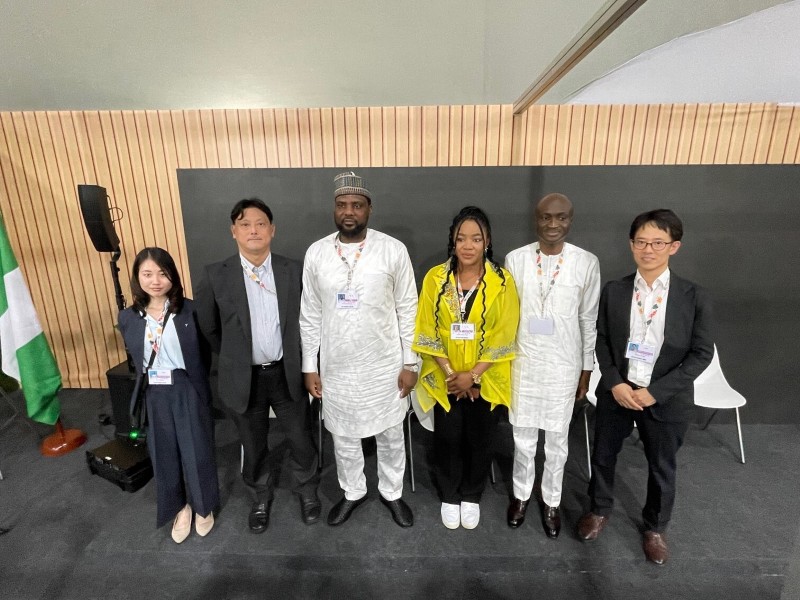
Group-Photo


