
Peacebuilding through Participatory Local Governance in Pakistan (Final Seminar Held)
Day:2026.10.09
event |






In northwestern Pakistan, near the Afghanistan border, residents have long had limited opportunities to voice their concerns to the government. Since 2022, JICA has been supporting a mechanism connecting local communities with local governments. A final seminar was recently held to share the results of this initiative.
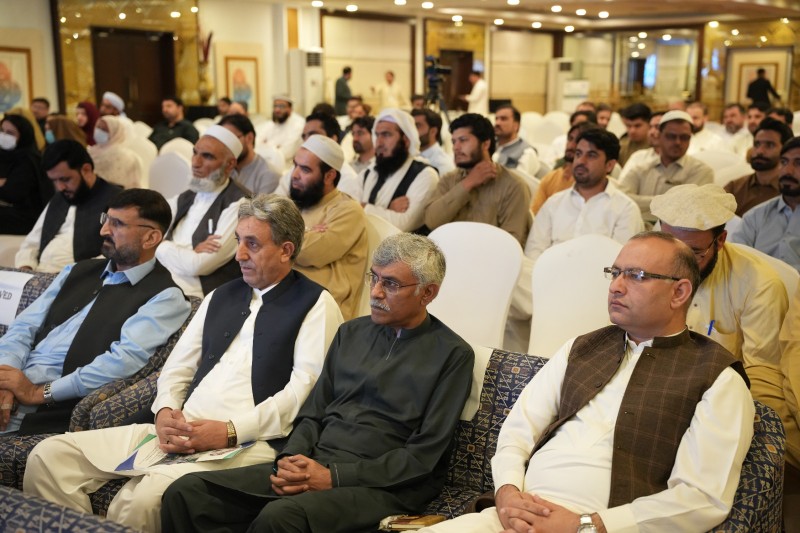
Project Final Seminar
In the region formerly known as Pakistan’s Federally Administered Tribal Areas (FATA), a unique social structure meant that Pakistan’s local governance system had not been fully implemented until recently, and the region maintained its own distinct social system. For example, local issues were resolved through discussions among tribal elders based on traditional customary laws, rather than through elections.
Since the region was merged into Khyber Pakhtunkhwa Province in 2018, efforts to establish a local governance system have progressed, and in 2022, the first-ever local councils were established in the region. However, the region is still one of the most disadvantaged regions in Pakistan and is also an unstable area highly susceptible to the situation in Afghanistan.
Since 2022, JICA has been implementing the technical cooperation project titled “Project for Strengthening Capacity of Local Government Officers in Newly Merged Districts in KP” targeting Tehsil governments in the region (a tier of local governments similar to municipalities in Japan). The project aims to strengthen the capacities of local government officials to ensure that the newly introduced local governance system takes root in the region. For example, training was provided to approximately 800 Tehsil council members in the target areas on the role of local councils and the basics of local government operation.
Approximately 20 percent of the training participants were female council members. Furthermore, to ensure that citizens’ voices are reflected in the public services and development plans of Tehsil governments, the project provided technical inputs on the formulation of medium-term development plans (MTDP), drawing inspiration from Japan’s experience. It also conducted livelihood training for women, sports events, and awareness-raising campaigns. As a result of these activities, participatory local government operations are gradually taking root - as evidenced by the fact that, for the first time, MTDP reflecting citizens’ voices have been formulated by each Tehsil government in the region.
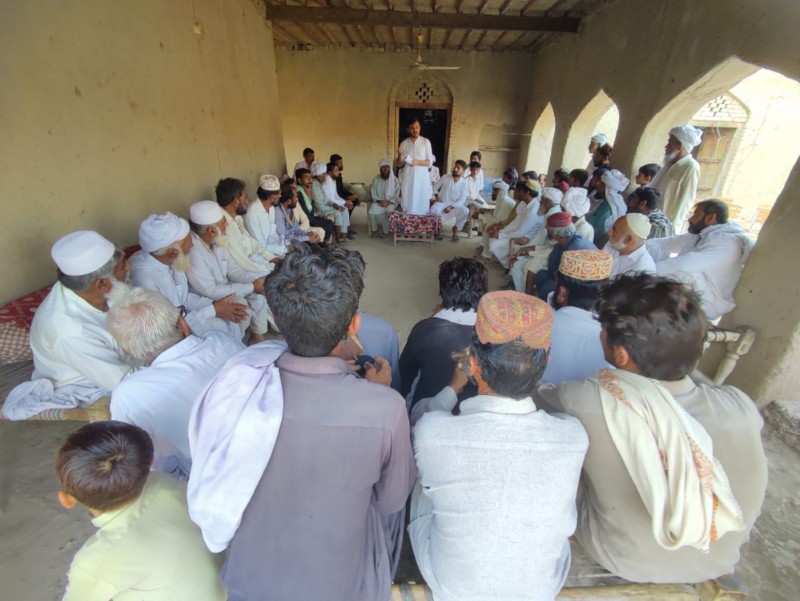
Community meeting to collect citizens’ voices (held separately for men and women)
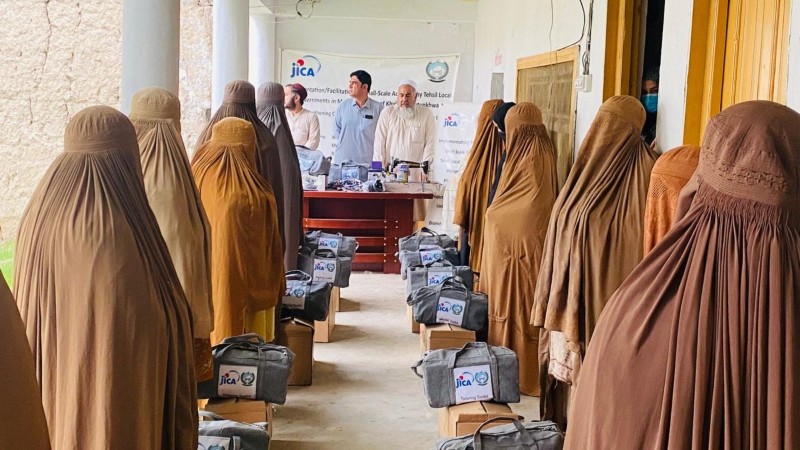
Livelihood Training for Women
At the project final seminar held in Peshawar, the capital of Khyber Pakhtunkhwa Province, the achievements of the project were presented to approximately 130 participants, including officials from the provincial and Tehsil governments.
Mr. Meena Khan Afridi, Minister for Local Government, Elections, and Rural Development Department (LGE&RDD), highlighted the significance of the project in identifying development priorities at the community level and formulating comprehensive development plans, and emphasized the importance of collaborating with a wide range of stakeholders, including members of parliament, for efficient and effective development planning and implementation of the MTDP at the local level.
In addition, a female council member stated, “Local governments receive many requests for support from residents, but until now, due to a lack of knowledge, we didn’t know how to prioritize and address them. The methods we learned from this project will benefit everyone in the community, including women and the youth.”
Mr. Ali Ahmed Saeed, former Chairman of Mir Ali Tehsil Council, remarked, “In the merged areas, many people initially lacked a clear understanding of the new local governance system and operational procedures. This project helped us to understand how local governments can address public needs and translate local ideas into concrete actions.”
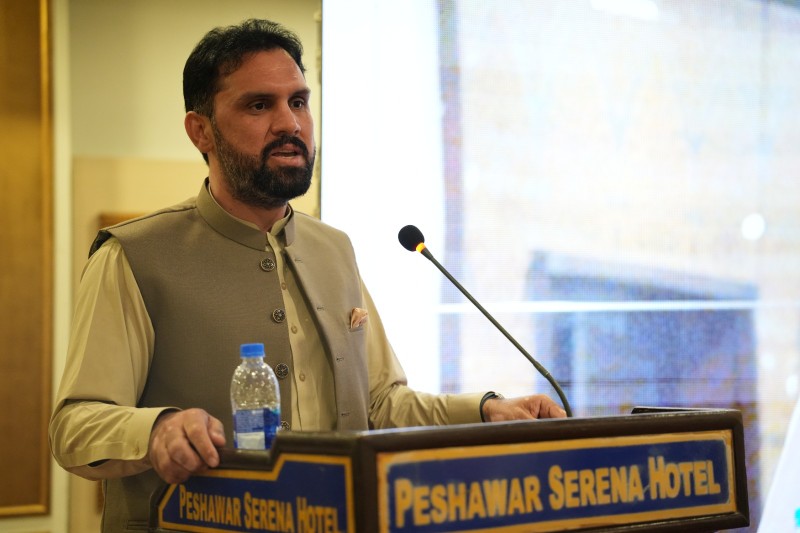
Speech by Mr. Meena Khan Afridi, Minister for LGE&RDD
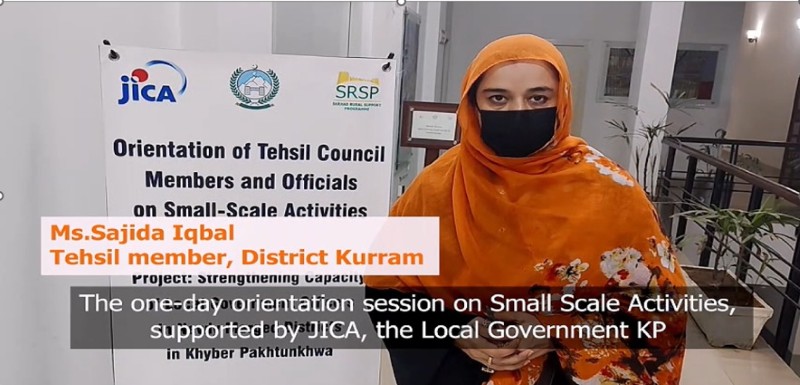
A female council member delivering her video message
Creating a system where citizens and local governments discuss issues at the community level and where local governments respond to citizens’ voices regarding the future of their own communities leads to public trust in the government.
Building such a social trust serves as a foundation for peace and stability in this volatile region bordering Afghanistan. Through supporting the construction of public infrastructure identified in Tehsils’ MTDPs and other initiatives, JICA will continue to support community development that gives tangible form to citizens’ voices.


