
Japan and Nepal find mutual support through 'mitsumata' plants used to make new Japanese banknotes
[Goal 1]No Poverty

[Goal 5] Gender Equality

2026.05.29






2026.05.29
Most of the mitsumata (Oriental paperbush) used as a raw material for Japanese banknotes is cultivated in the mountainous regions of Nepal, far from Japan. This is thanks to efforts by Osaka-based company Kanpou Inc., which has spent many years teaching people in Nepal how to cultivate and process the plant. Approaching the 70th anniversary of diplomatic relations between Japan and Nepal, we look back at Kanpou’s efforts and JICA's cooperation in the initiative.
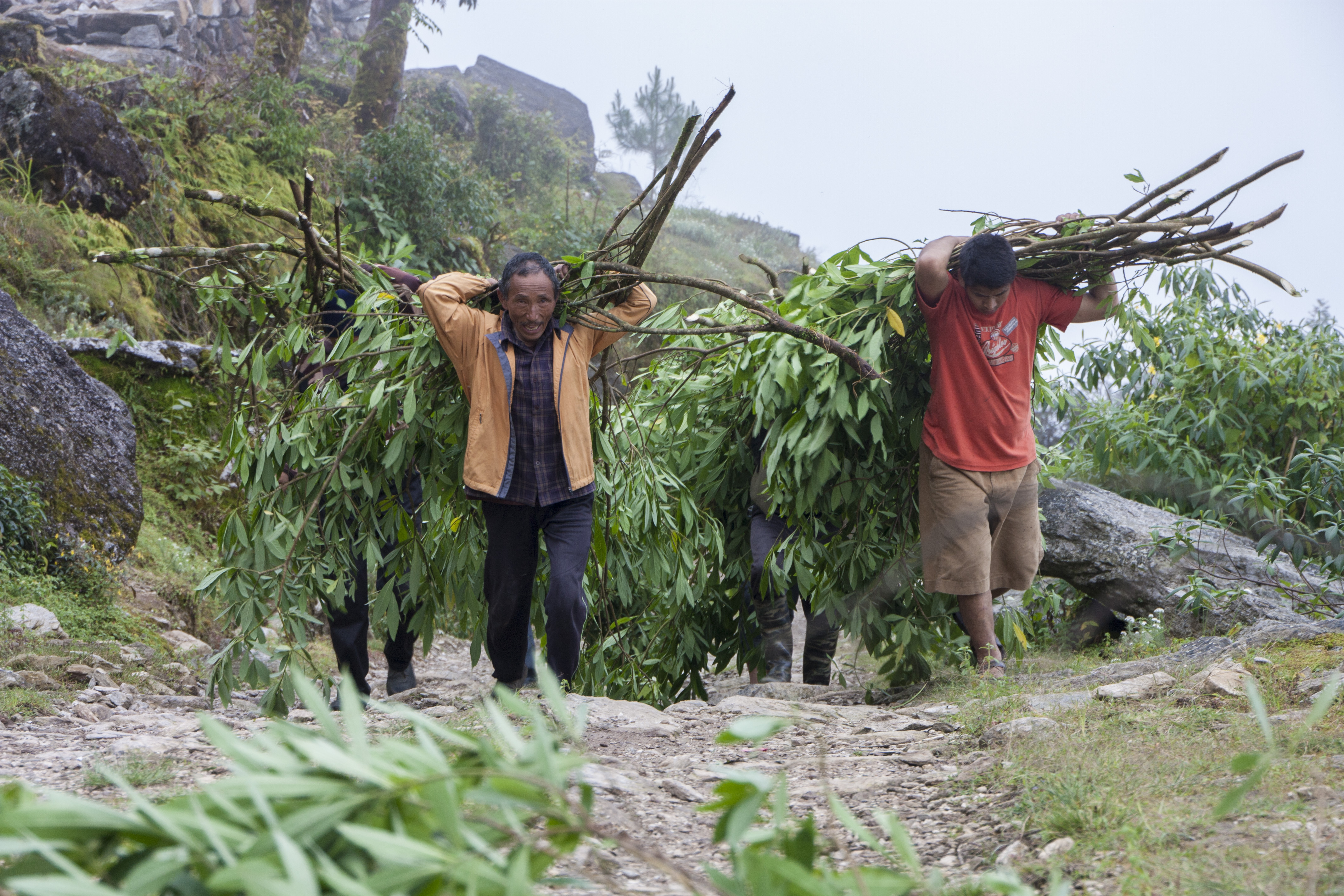
Nepalese people carry mitsumata trees. (Image courtesy of Kanpou)
Mitsumata is a deciduous shrub whose name literally means “three-forked” in Japanese, referring to the way its branches split into three at the tips. Its fibers are extremely strong, so it has long been valued as a material for banknotes and traditional Japanese paper, or washi.
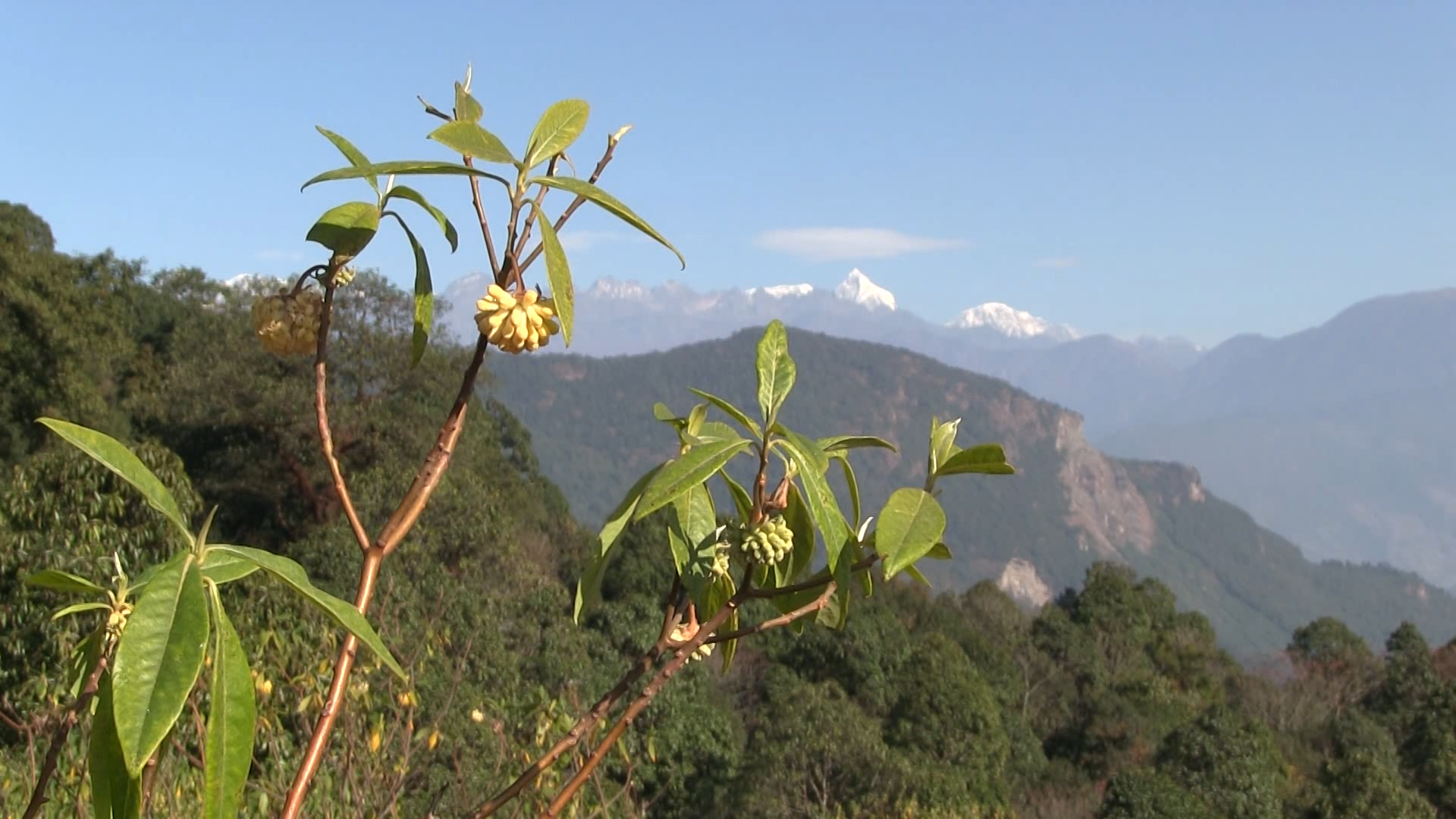
Mitsumata flowers are seen with the Himalayas in the background. (Image courtesy of Kanpou)
"Mitsumata grown in Nepal is of the highest quality in the world," says Kanpou President Matsubara Tadashi. Mitsumata grown in Nepal is now an essential material for making Japan’s new banknotes. While its high quality is well recognized, the road to stable production was not easy.
Kanpou, a company that sells the government's official gazette and government publications, became involved in mitsumata production in Nepal in 1990.
The official gazette is a government publication issued to inform the public about laws, Cabinet orders, important national announcements and other such matters. Kanpou had built a strong relationship with the Printing Bureau of the Ministry of Finance (now the National Printing Bureau) through its sale of the official gazette and other business activities.
One day, a staff member from the Ministry of Finance's Printing Bureau mentioned, "Fewer people are growing mitsumata (the plant used to make banknotes), and it's becoming difficult to secure enough of it in Japan. Apparently, mitsumata originates from the Himalayan region." This comment prompted Kanpou to turn its attention to cultivating mitsumata in Nepal.
At that time in Japan, the number of people growing mitsumata was decreasing, and production volumes had dropped significantly. With a shortage of raw materials emerging as an issue, the former president of Kanpou, harboring a deep sense of urgency, decided to start growing mitsumata in Nepal. After several years of local research, the company found an area in the Jiri region where mitsumata grew naturally across the mountain slopes.

Matsubara Tadashi, president of Kanpou (Image courtesy of Kanpou)
Nepal was among the countries in Asia where poverty was particularly severe. In rural areas, there are very few ways to earn cash income, prompting many people to go abroad to find work. It is not easy for people to stay in their hometowns and make a stable living.
Most of the adults Matsubara met had been unable to go to school for financial reasons, and very few of them could read. For this reason, when teaching how to grow and process mitsumata, he used videos instead of written materials. Explaining things in a way that everyone could understand was of utmost importance.
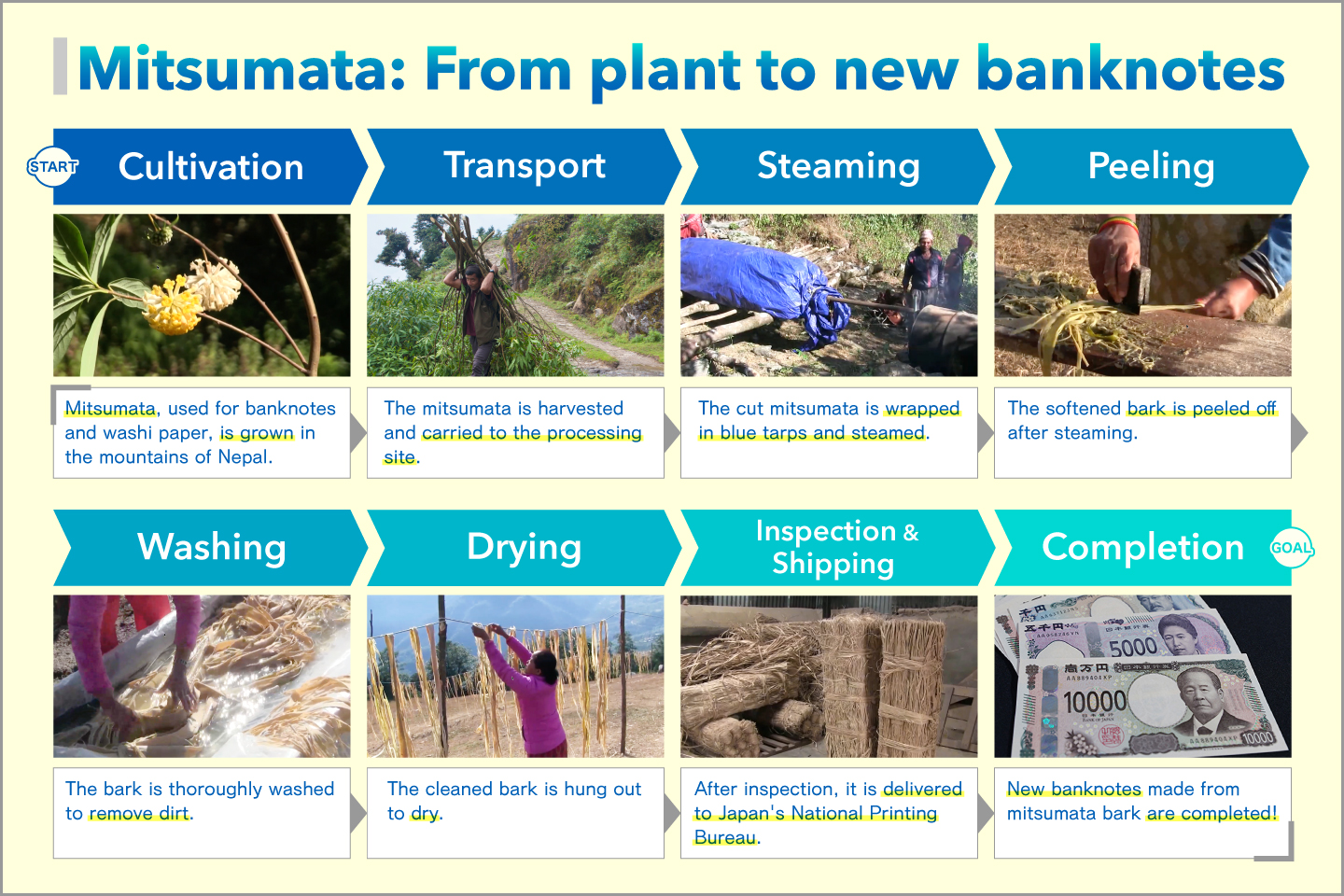
Harvesting mitsumata on mountain slopes, steaming it to soften it, carefully peeling off the outer bark, washing it with water and drying it — these processes required no special knowledge and were not physically demanding. Therefore everyone, including women, who generally have less physical strength than men, could fully take part in the work.
Women living in mountain villages were able to work in their spare time between housework and childcare. By earning cash income, women who had long been in socially vulnerable positions gradually gained confidence.
The income from producing and processing mitsumata also helped pay for children’s school fees and other such expenses, creating new educational opportunities.
While growing mitsumata in Nepal was a meaningful initiative for escaping poverty, it was also a tough business for Kanpou and it remained in the red for many years. Travel and transportation costs for sending employees to Nepal were a heavy burden, and there were times when shareholders voiced opposition to continuing the project at general meetings.
"Please give me three years. If we can't see a path forward by then, I'll withdraw from the project without hesitation."
This was how Matsubara explained the situation to shareholders after taking on the business in 2013, though inwardly he was filled with anxiety. At the same time, after witnessing the people in Nepal working hard and seeing children who became lively after being able to attend school, he strongly felt, "If we were to withdraw, they would fall back into poverty. We can't betray the people of Nepal."
"A relationship in which only one side makes sacrifices won't last. Even if it is international cooperation, it can't continue unless it is sustainable as a business. We have to find a way," Matsubara thought.
This determination led to the next step.
The turning point came in 2016, when the project was selected for JICA's "Support for Japanese Small and Medium-sized Enterprises Overseas Business Development" program. After consulting the Japanese Embassy in Nepal, Kanpou was introduced to the JICA program.
With advice from the JICA Nepal Office, training was provided for staff at local forest offices in the target areas. The trainees included assistant forest officers responsible for villages where mitsumata is grown, as well as forest rangers and foresters who frequently enter forests in their daily work.
Kanpou not only taught techniques for cultivating and processing mitsumata, but also methods for managing producers. This was because, for local people to continue production and build stable lives on their own, it was essential to create a system that would allow them to operate independently without relying on support from Kanpou or JICA.
As training efforts accumulated, a system was created to cultivate local instructors capable of training others, and technical guidance was gradually handed over to local counterparts, leading to a sustainable production system.
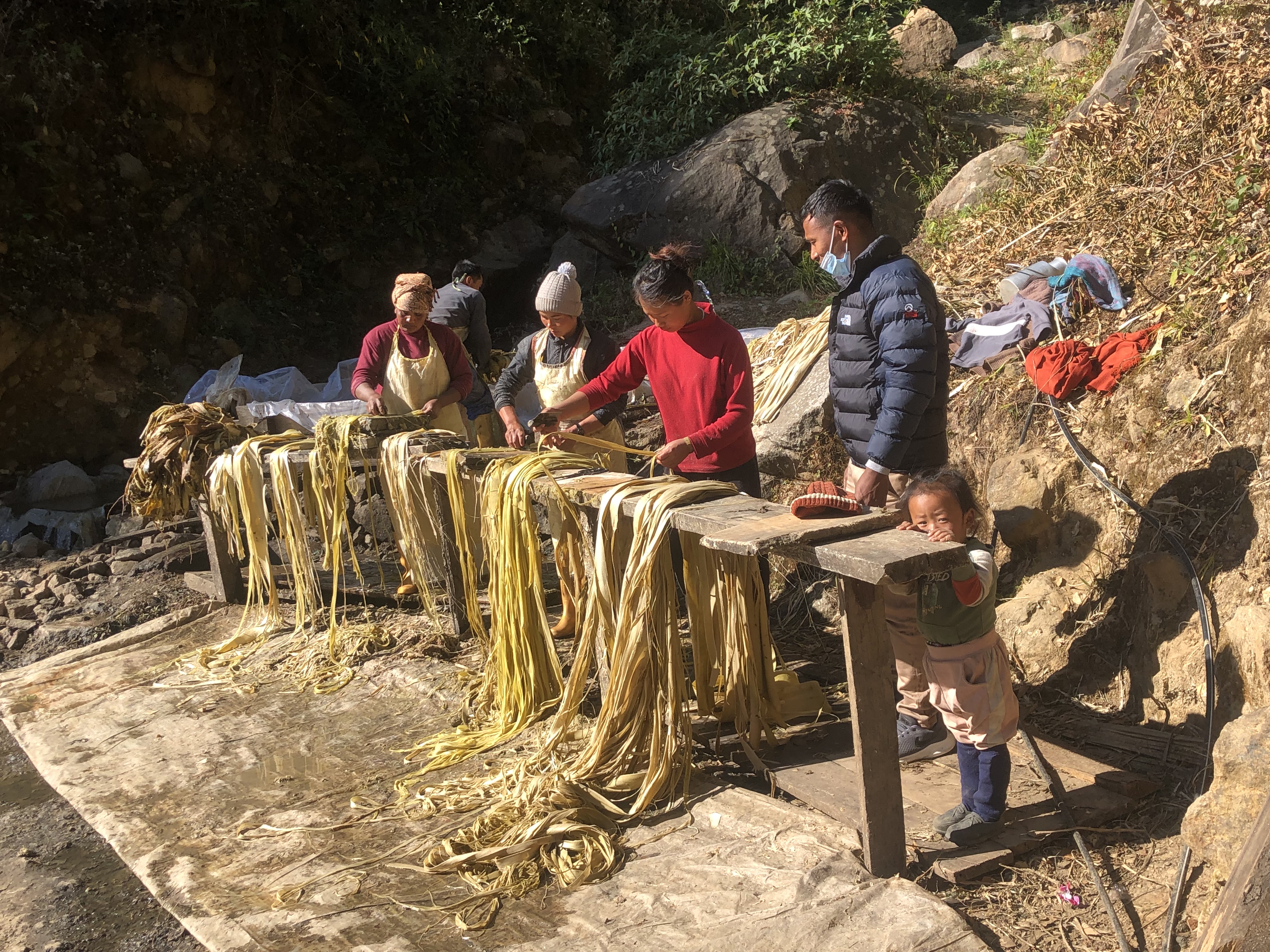
Kanpou staff teach local people how to process mitsumata. (Image courtesy of Kanpou)
With cooperation from JICA, coordination and procedures with Nepal’s central government ministries and related organizations also became smoother. Mitsumata is grown on state-owned land with permission from the Nepalese government, but each time there was a change of administration, it was often necessary to reapply for permits, which had been a major burden in continuing the project.
Backed by the strong network and trust that JICA has built in Nepal over many years, the approval process was expedited. The area of activity also expanded rapidly beyond the area around Kathmandu to remote rural regions. As a result, production areas grew significantly, and annual output increased from about 30 tons to around 100 tons. A system capable of stably supporting Japan's demand for banknote paper was thus established.
Looking back, Kozu Muneyuki, who was involved in the mitsumata project at the JICA Nepal Office, says, "Japanese technology and the strength of local people came together very effectively. I feel this is an excellent example in that it has tangibly improved the lives of people in the community.”
Iwatsuji Aya, who also works at the JICA Nepal Office, underscored the significance of projects collaborating with companies. "In Nepal, there are not enough stable jobs where people can continue working in their local areas. Growing crops that are in demand and keeping jobs in the community helps give young people more reasons to stay in rural areas. Being able to approach this with the help of companies (so that people don't have to go abroad for work) is of great value to rural Nepal. When the crops are in demand in Japan, as in this case, it also reaps great benefits for Japan," she said.
Regarding the collaboration with JICA, Matsubara commented, "For small and medium-sized companies, the financial hurdles to operating in developing countries are extremely high. The mechanisms for financial cooperation and coordination with related organizations require considerable time and effort, and there were limits to what we could handle alone. JICA supported us with its extensive experience and strong network, helping with local coordination and setting up systems. Just having the name JICA makes a huge difference in terms of trust on the ground."
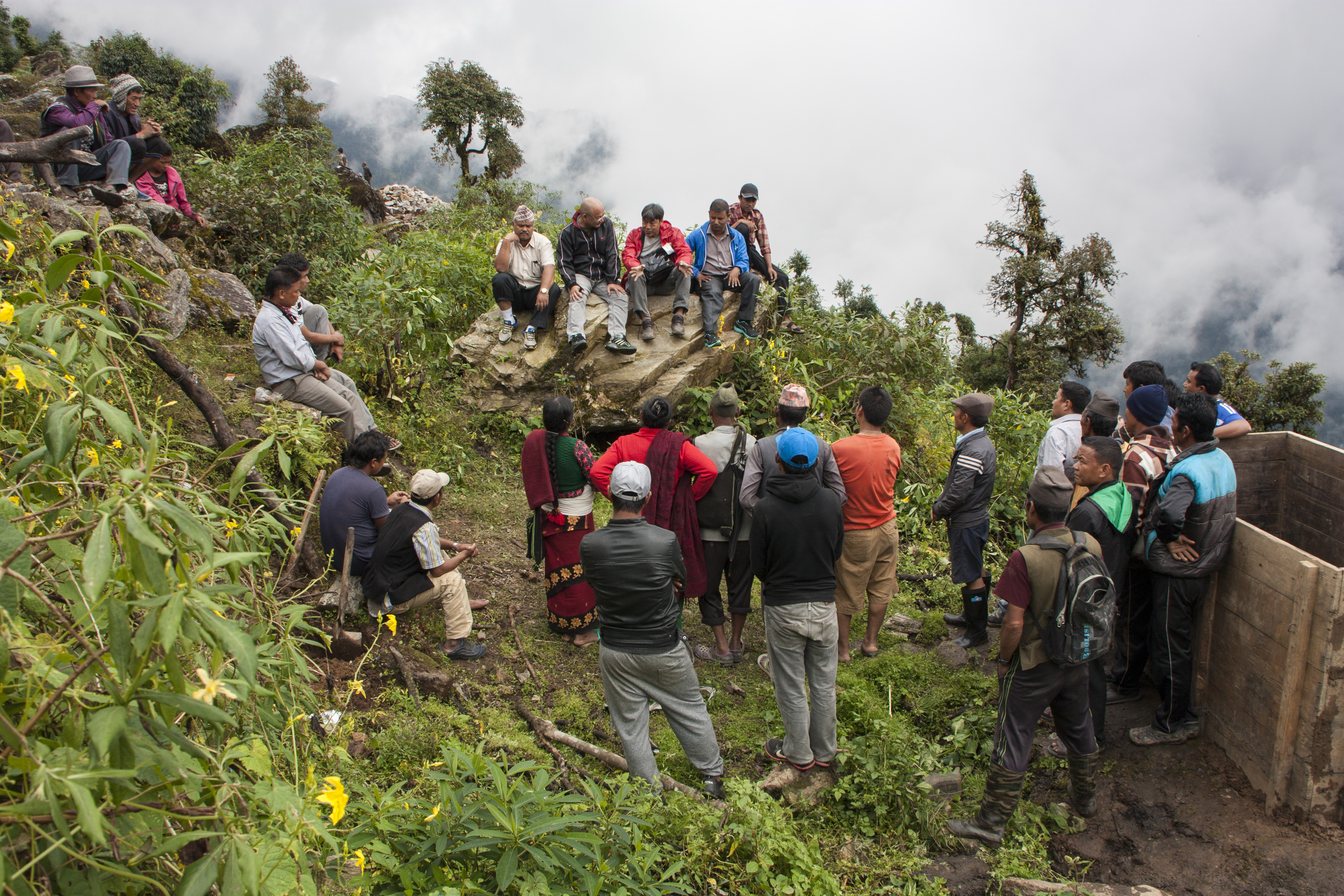
A training session is conducted on how to grow mitsumata. (Image courtesy of Kanpou)
Mitsumata cultivation has changed people's lives in Nepal. In one village, a woman was able to receive an education and study abroad using income from mitsumata. In another case, someone used the profits from mitsumata farming to build an elementary school. But that's not all there is to it, Matsubara says.
"We mustn't forget that people in Nepal are growing mitsumata for Japan (not just for themselves). Some children think, 'I want to help Japan,' or 'I can go to school thanks to Japan's support.' When these children grow up, they may be the ones who help Japan. I believe they will become a bridge connecting Japan and Nepal."
Sns share!


