The JICA website uses cookies to improve the service provided. By closing or continuously browsing this banner, you agree to use the cookies listed in the privacy policy.
Striving to create a peaceful world where everyone can enjoy sports beyond borders, languages and disabilities, JICA is working to promote sports. With the recent launch of the 2026 FIFA World Cup, a global soccer event, we spoke with former Japan national team player Kitazawa Tsuyoshi and Arai Atsuko, a former sports volunteer with the Japan Overseas Cooperation Volunteers, about the potential of international cooperation through sports. (A video version of this article is also available. Please see the link at the end of the article.)
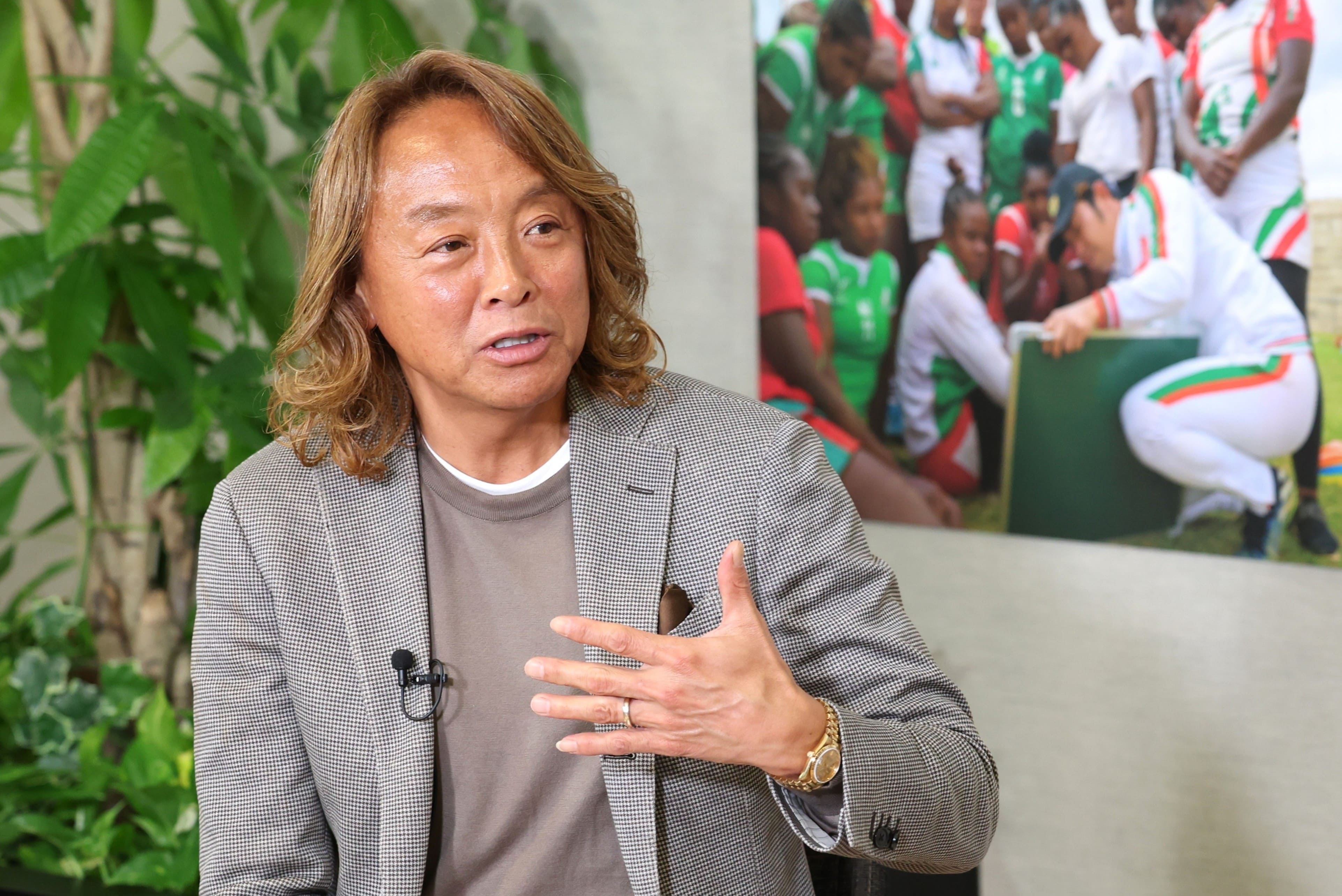
Kitazawa Tsuyoshi
Born in Tokyo, Kitazawa played for Yomiuri Club (now Tokyo Verdy) and was active as a member of the Japan national team. After retiring, he was appointed as a JICA official supporter in 2004. He has worked to promote soccer both in Japan and internationally, including in Asia, Africa and Latin America. He currently also serves as president of the Japan Inclusive Football Federation.
Kobayashi Ryutaro, Director, Secretariat of the Japan Overseas Cooperation Volunteers: The soccer World Cup, held once every four years, has kicked off. Mr. Kitazawa, what aspects of this tournament are you watching most closely?
Kitazawa Tsuyoshi, former Japan National Football Team player: With more participating countries and the tournament having expanded in scale, I think it will generate excitement in even more countries than before. The Japan national team has grown strong enough to contend for the title, so I hope everyone will support them. I also hope the event will be an opportunity for many people to deepen their understanding of the international community through soccer.
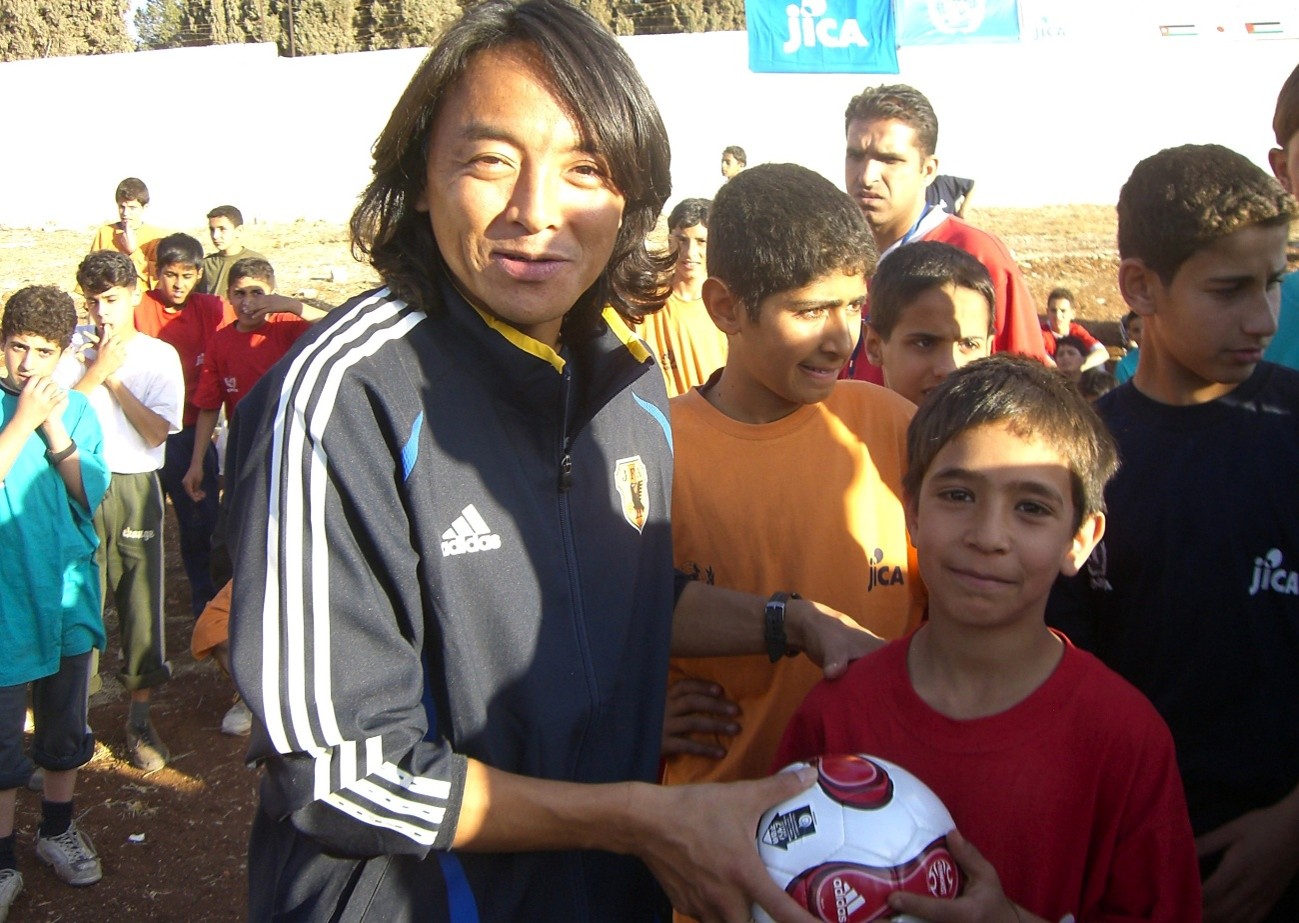
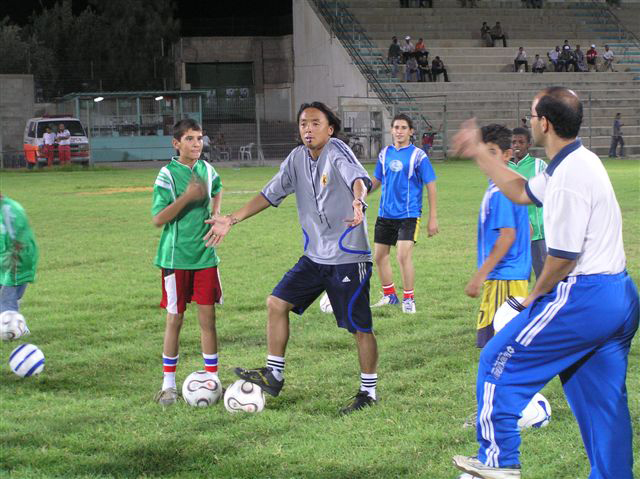
Kitazawa teaches soccer to children in Jordan (Photo provided by Kitazawa)
Kobayashi: In fact, among the 48 countries and regions participating this time, there are some where sports volunteers with the Japan Overseas Cooperation Volunteers have been dispatched.
Kitazawa: Knowing that background makes watching the matches even more enjoyable, doesn’t it? I was once in Cambodia during the Asian qualifiers. I had previously worked with JICA there to coach children, and one of the kids who was in elementary school at the time later became a national team player and actually played against Japan in the qualifiers. I found myself wanting to cheer for Cambodia.
Kobayashi: Has the level of soccer in Asia been improving?
Kitazawa: Yes, it has. Since the 2002 FIFA World Cup co-hosted by Japan and South Korea, the Japan Football Association and the J.League have been working to strengthen the entire Asian region. However, you can’t get people to listen with a top-down approach. That’s why we seek advice from JICA offices in each country and provide guidance tailored to local needs. Such efforts are part of the reason behind soccer’s growth in Asia. In fact, countries that go on to win the World Cup naturally extend cooperation to others. So I hope Japan’s soccer community will also further pursue such initiatives.
Tough sports environments in developing countries
Kobayashi: By the way, at what age did each of you start playing soccer?
Arai Atsuko, former Japan Overseas Cooperation Volunteer for football: I started playing in the third grade, influenced by my older brother, and I used to watch Mr. Kitazawa play on TV. I joined a team in a neighboring town in Gunma Prefecture and usually practiced together with the boys’ team.
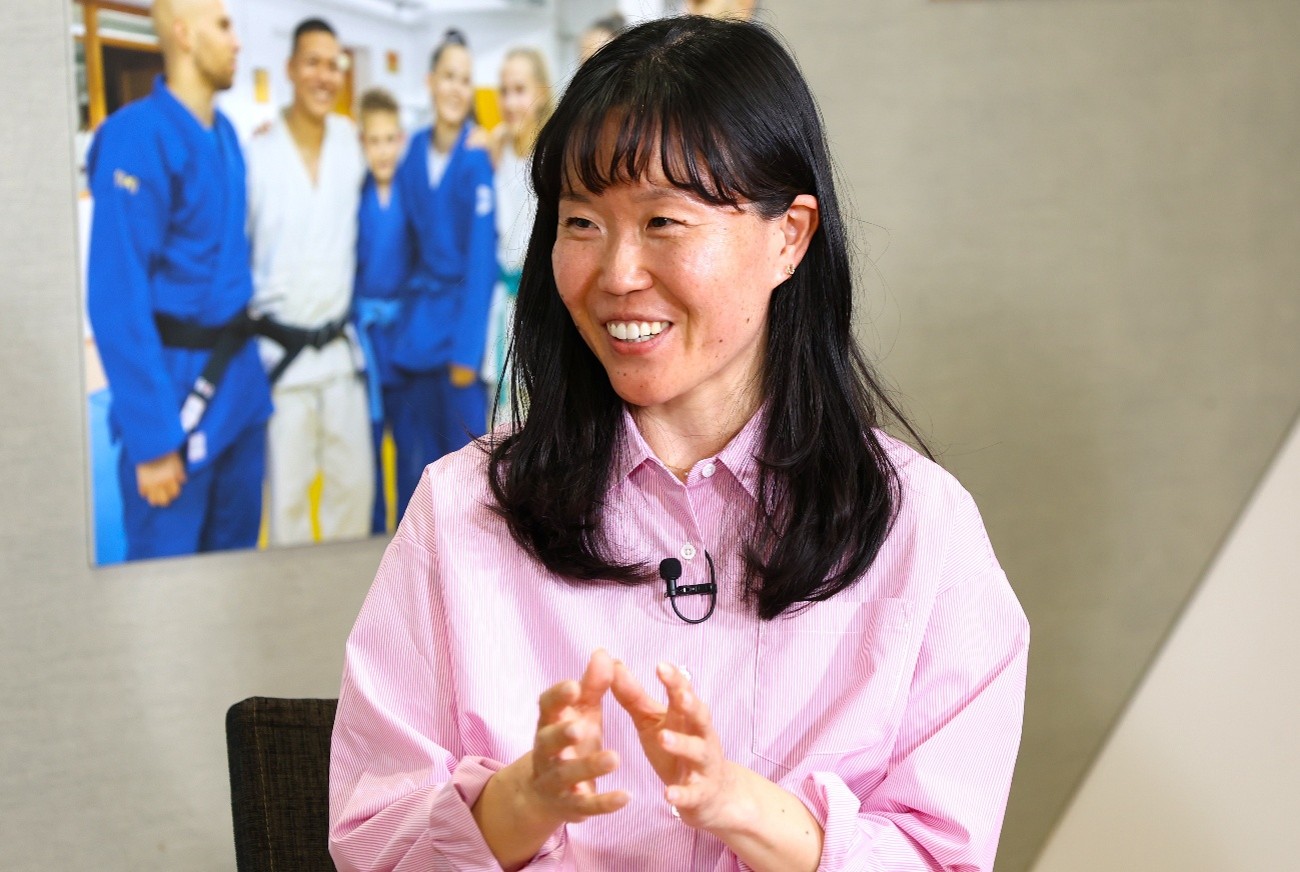
Arai Atsuko
Born in Gunma Prefecture, Arai began playing soccer in elementary school and joined the Waseda University women’s soccer team. After coaching soccer at an orphanage in Cambodia, she was inspired to join the Japan Overseas Cooperation Volunteers. She taught soccer as a sports volunteer in Uganda from 2019-2020 and 2022-2023. She is currently an elementary school teacher in Gunma Prefecture.
Kitazawa: I actually started out playing baseball, then switched to soccer in my first year of elementary school. In the city of Machida in Tokyo, where I grew up, sports thrived, and a soccer team there had even won a national title, so it was only natural for me to set my sights on becoming the best in Japan.
Arai: As a teacher, I realize that children in Japan have many chances to play sports, whether through physical education classes, club activities or extracurricular lessons. When I was dispatched to Uganda as a volunteer, I was struck by how harsh the local environment was.
Kobayashi: Around the world, there are still many children who are unable to play sports due to poverty and other challenges. Japan, by contrast, has a history in which everyone has been able to enjoy sports in peace. Building on that strength, JICA has continued international cooperation through sports for over 60 years.
Sports volunteers: Over 5,000 in 90 countries
Kobayashi: The Japan Overseas Cooperation Volunteers marked their 60th anniversary in 2025, and sports volunteers are one of the oldest volunteer categories. To date, more than 5,000 have served in 90 countries.
Kitazawa: 5,000!
Arai: Besides me, there were other sports volunteers in the program teaching baseball, judo, basketball and more. Even though the sports differed, we all shared common values. We wanted to teach behavior grounded in Japanese culture — greetings before practice and games, taking good care of equipment, being punctual and having a serious attitude toward practice. These actions, grounded in Japanese values, helped build trust in Japan among local communities.
Kitazawa: But wasn’t it tough for you to reach the level you were trying to achieve?
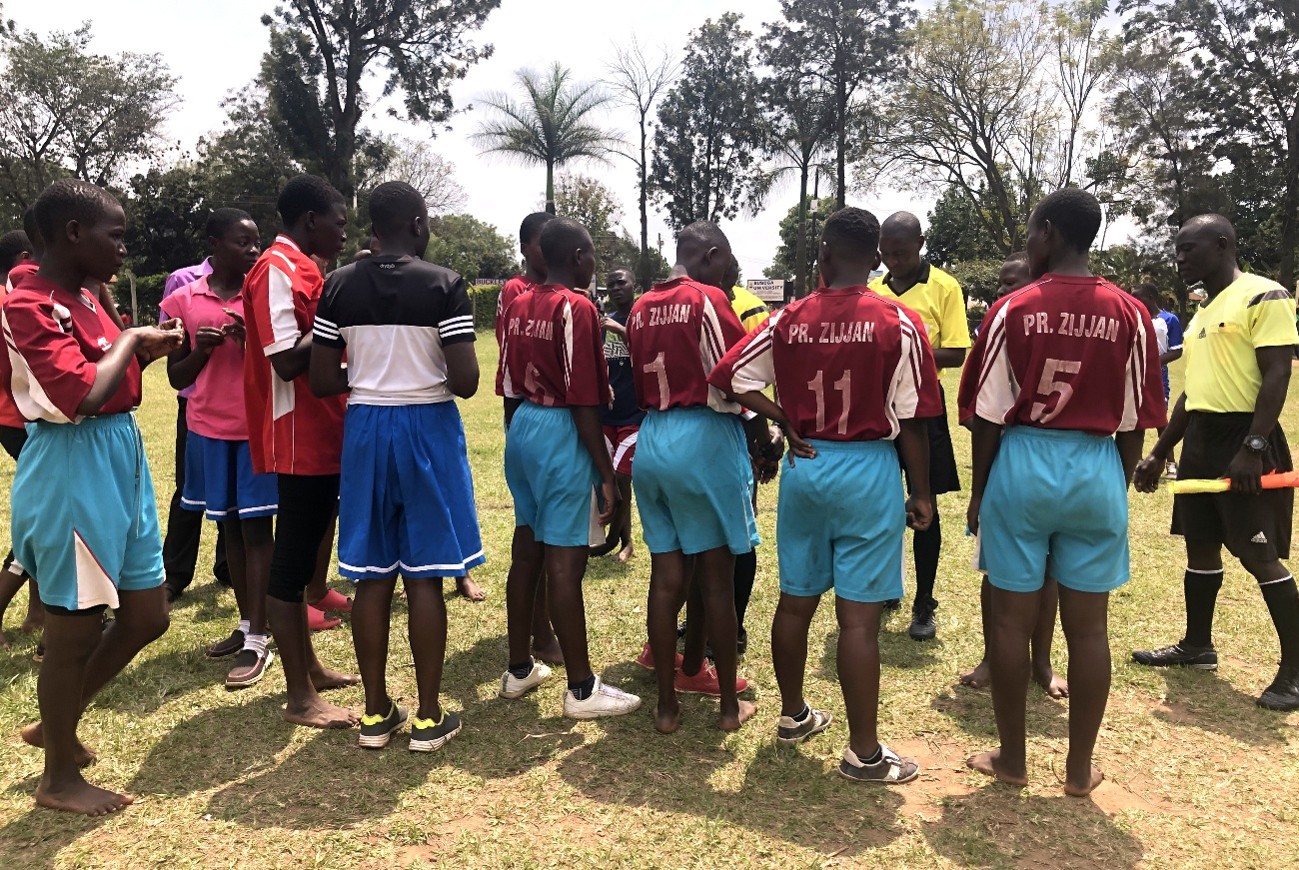
Arai: It really was hard at the beginning. Even when we called for practice, no one would show up. The field was uneven and covered with cow dung, and even the donated balls soon got punctured.
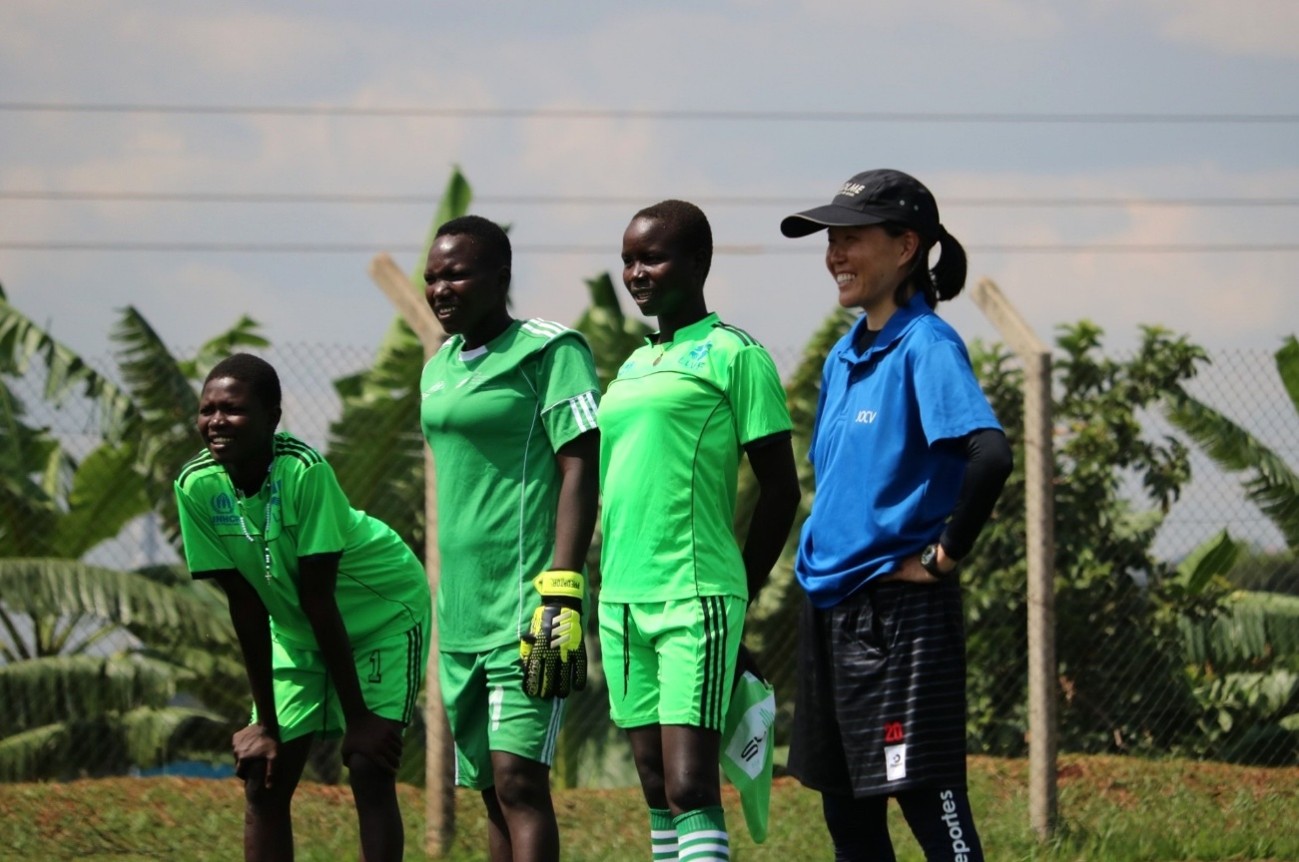
Members of a girls’ soccer team coached by Arai in Uganda are pictured together. The field was rough, and some players, lacking shoes, played barefoot (Photo provided by Arai)
Kobayashi: It's said that you only need a ball to play soccer, but there are still challenges, aren’t there?
Kitazawa: When we delivered balls collected in Japan to Paraguay, I was really surprised. There was only one ball for a team of about 100 players, so they were all practicing their dribbling without one.
Learning rules and applying them in society
Kobayashi: When I worked at the JICA Palau office, there was a sports volunteer for baseball. What local people appreciated was that the volunteer taught proper manners and a sincere attitude toward the game. These were embraced as “yakyudo” (the way of baseball).
Kobayashi Ryutaro
Kobayashi joined JICA in 2002. He worked in the Global Environment Department, the Rural Development Department, the Hokuriku Branch, and the Philippines Office, and was seconded to the Ministry of Foreign Affairs. He also served in the Southeast Asia and Pacific Department, the Vietnam Office, and the Palau Office. He is currently working at the Secretariat of the Japan Overseas Cooperation Volunteers.
Kitazawa: Yakyu? So it’s not called “baseball”?
Kobayashi: That’s right. In Palau, which used to be under Japanese administration, the word “iakiu” (from Japanese yakyu) remains in the Palauan language.
Arai: In Uganda, at first some kids would hit their opponents or pick up the ball with their hands. I coached them with the hope that following rules would become second nature to them, even after they entered society.
Kitazawa: Through sports, the importance of rules naturally sinks in for children. But to teach that, you really have to be close to them and build a relationship of trust.
Kobayashi: Mr. Kitazawa, you became a JICA Official Supporter in 2004 and were observing activities of the Japan Overseas Cooperation Volunteers and sharing their work in Japan, weren't you?
Kitazawa: In Syria, together with volunteers, we held a soccer tournament for Palestinian refugee children called the JICA Cup. When the kids began preparing for their matches, adults stepped in and offered support, saying things like, “We’ll provide buses to the venue” or “We’ll supply uniforms,” and the event grew into something like a community-building project.
The children who lost their matches cried — it was their first time experiencing that kind of frustration. That’s when the volunteers spoke to them: “We gave it our best, but it didn’t go our way. Let’s try a little harder next time.”
This kind of thoughtful engagement has a huge impact on a child’s growth. Sports are something people enjoy together. You also do your best for those cheering you on. Even in defeat, you have to be a good loser. These are the kinds of lessons they learn.
Kitazawa teaches soccer to children in the Palestinian territories (Photo provided by Kitazawa)
Kobayashi: You were also involved in JICA activities in Africa to promote HIV and AIDS testing, weren’t you?
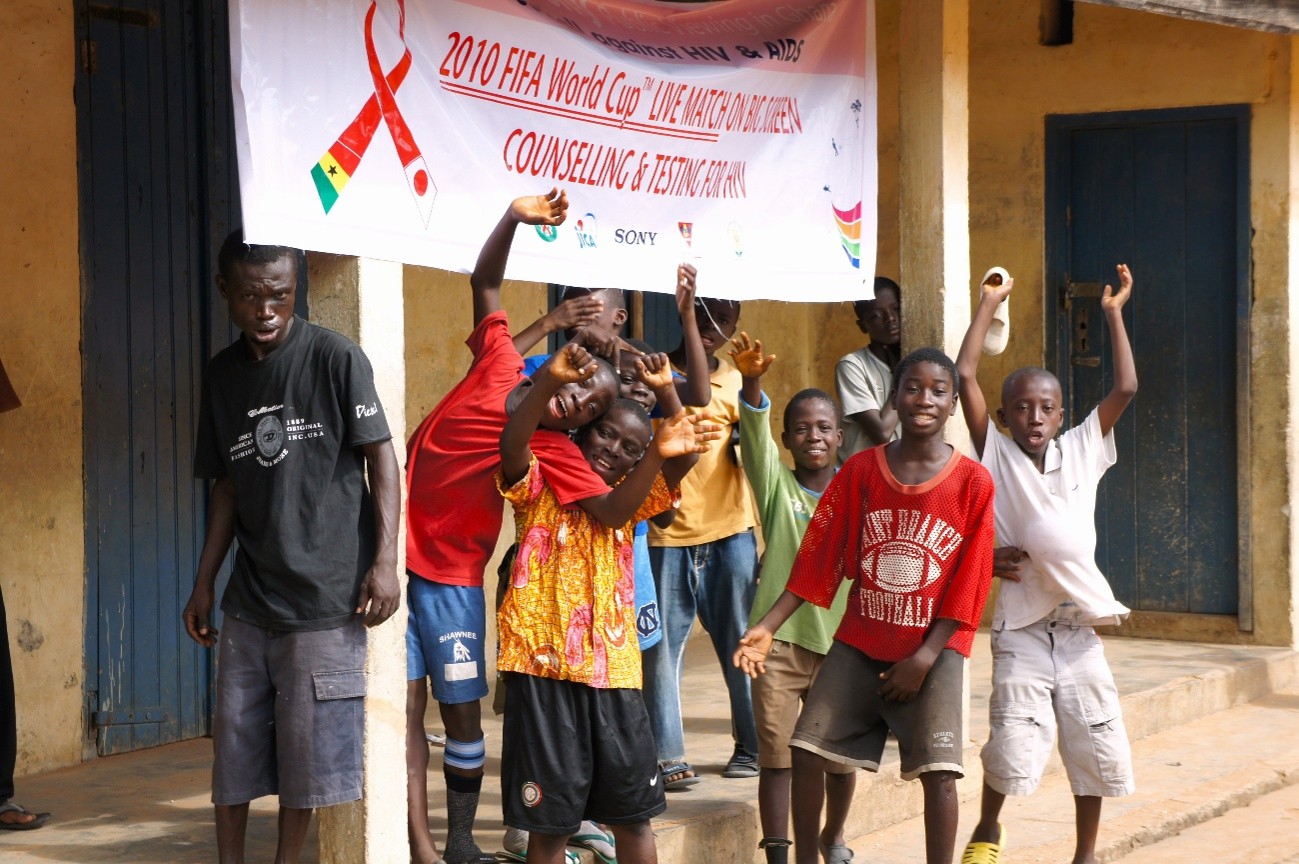
Kitazawa: At first, no matter how much we encouraged people to get tested, hardly anyone showed up. But when we held soccer clinics and told participants, “If you don’t take care of yourself, you won’t be able to enjoy this fun sport,” many people got tested after playing.
Sports can be a powerful force in achieving things — that’s the kind of potential I felt.
In Africa, JICA and others promoted HIV testing through soccer. (Photo provided by Kitazawa)
Refugees and girls: ‘We want to shape our futures without giving up’
Kobayashi: Ms. Arai, I’ve heard that in Uganda, where you were dispatched, there is a strong perception that “sports are for men.”
Arai: People were surprised, asking, “Can women play soccer?” It’s very sad when girls have to give up on what they want to do just because they’re girls. At the first school I was assigned to, I formed a girls’ team. At first, there were only a few members, so we practiced with the boys, but gradually, more girls joined, saying, “A female teacher is coaching!” Eventually, we had 11 players and could enter matches.
Kobayashi: I’ve heard that you were also involved in the TICAD Cup organized by JICA.
Arai: Yes. The TICAD Cup is a women’s soccer tournament in which both refugees and local residents participate, and it started in 2022 while I was there. Uganda is by no means a wealthy country, but it is very accepting of refugees, having taken in nearly 2 million people from neighboring countries. However, there have been tensions in host communities due to differences in living conditions and other issues. The idea was to have them play soccer together, get to know one another and contribute to resolving these challenges.
Players are seen at practice before a TICAD Cup match. Pictured on the far right is Arai, who was serving as a Japan Overseas Cooperation Volunteer. (Photo provided by Arai)
Kobayashi: What kind of environments are the children participating in the TICAD Cup living in?
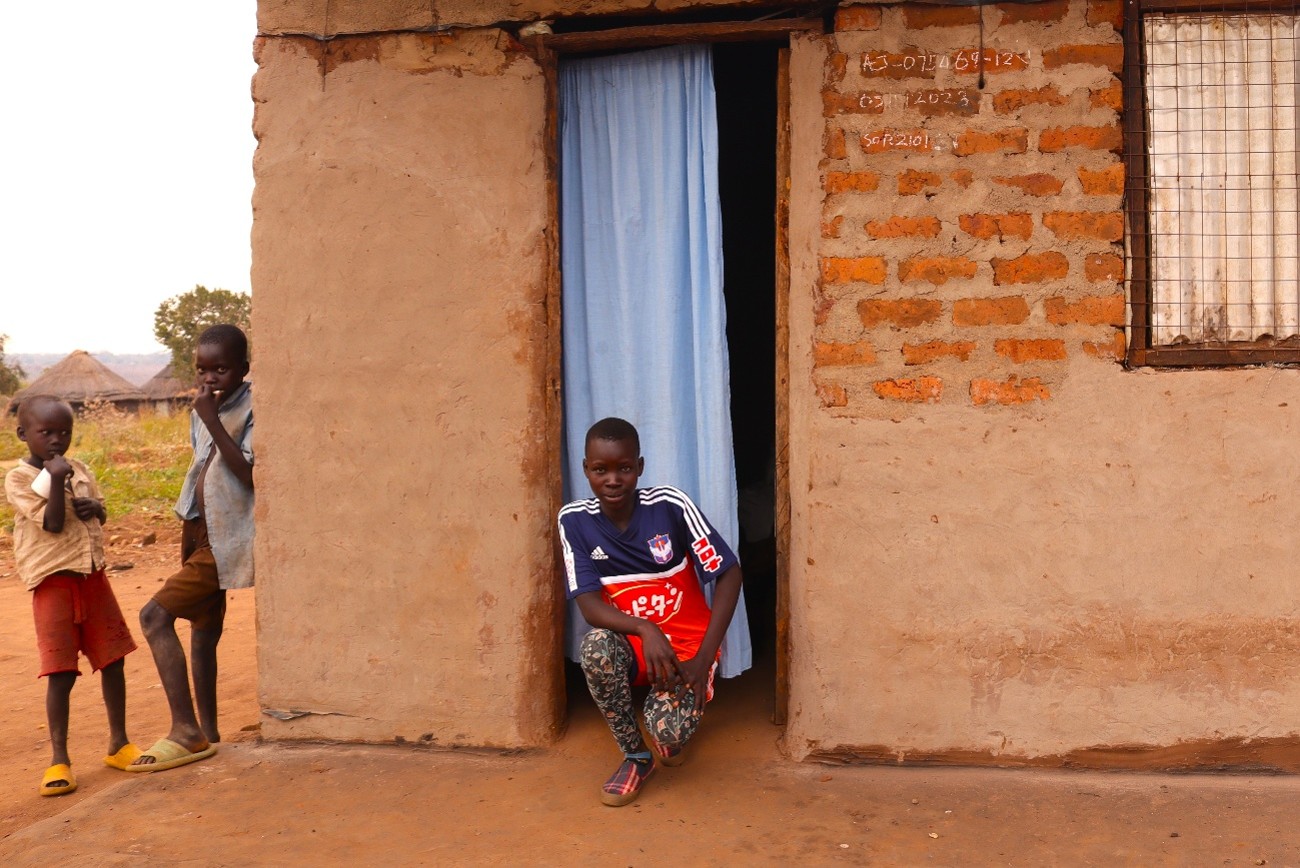
Arai: One girl living in a refugee settlement left a strong impression on me. She had been unable to attend school in South Sudan, and, after coming to Uganda, started elementary school at age 15. When I visited her home, I found that her parents were not there, and she was taking care of her younger siblings by herself. She handled all the household chores, went to school, and practiced soccer in her spare time. It made me realize that even while we were happily playing soccer together, there were many children living in harsh conditions that we were not aware of.
Kitazawa: Maybe it’s precisely because of those tough circumstances that they want to play sports together.
Arai: They had fun connecting with friends, and meeting us made them feel their world was expanding. I think they realized this added value of soccer and joined with the hope that they could shape their own futures.
A refugee girl, right, who began playing soccer while attending elementary school and caring for her younger siblings is pictured in a refugee settlement. (Photo provided by Arai)
Kobayashi: I heard that Japan’s women’s professional soccer league, the WE League, provided uniforms for the TICAD Cup.
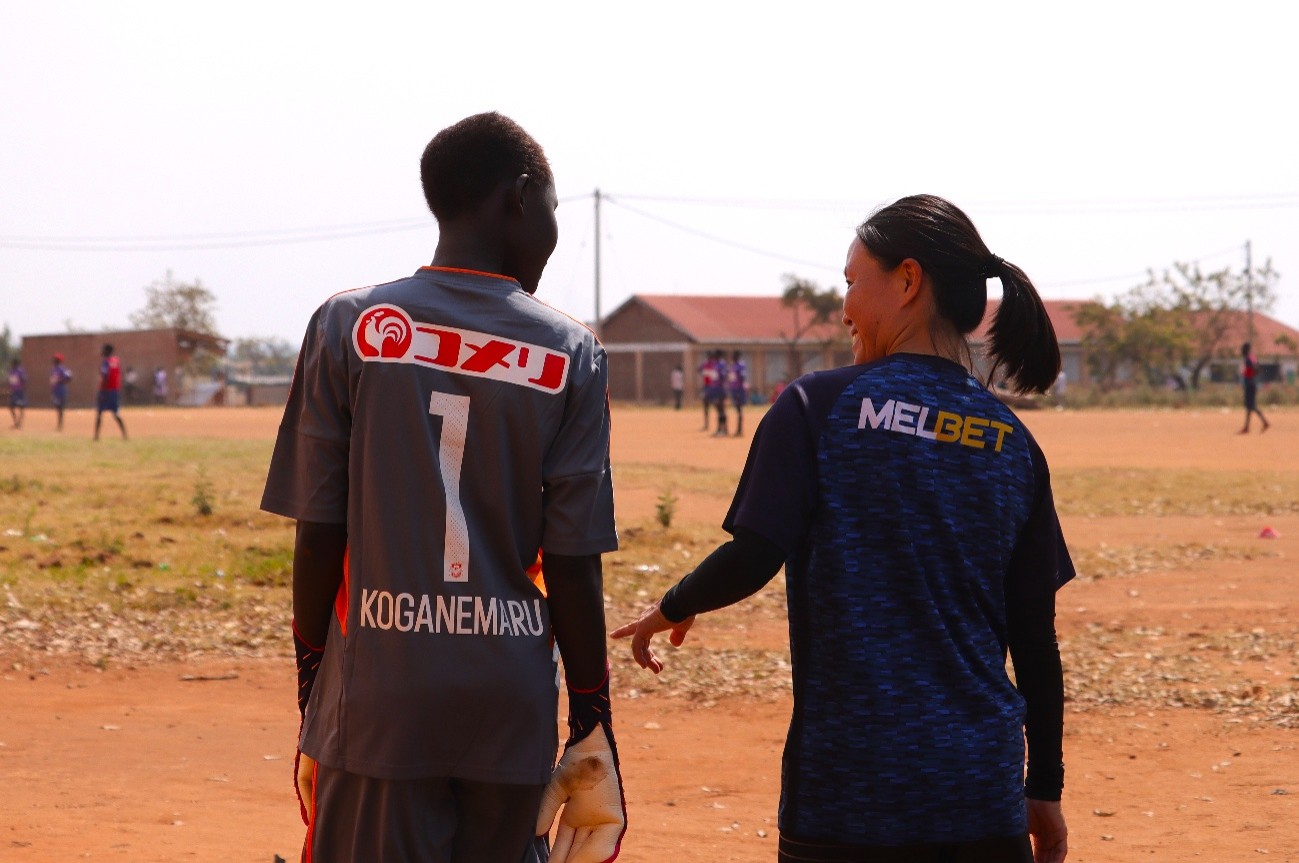
Arai: Many of the girls didn’t even have sportswear or shoes and played barefoot in T-shirts and shorts. So when they put on the uniforms donated by Albirex Niigata Ladies, they looked thrilled. Seeing them from behind as they headed to their match, they appeared so dignified. Uniforms really are a source of pride for players.
Kitazawa: Isn’t it wonderful that even a single uniform can inspire such motivation?
“It looks great on you”: Arai, right, encourages a refugee girl wearing a uniform provided by Albirex Niigata Ladies. (Photo provided by Arai)
Beyond disability
Kobayashi: Mr. Kitazawa, you’ve also been involved in supporting sports for people with disabilities for many years, haven’t you?
Kitazawa: I have long thought about how I can contribute to JICA’s goal of enabling everyone to enjoy sports. My experiences in developing countries eventually led me to get involved in soccer for people with disabilities in Japan. The turning point was when I visited Jordan and observed the work of volunteers supporting sports for people with disabilities.
Although discrimination against people with disabilities was still strong in the Middle East, in that particular community, there was surprisingly little distinction between people with and without disabilities. I felt that this was the result of Japanese volunteers spreading understanding of an inclusive society, and I thought, this is what fairness in sports truly means.
Kobayashi: There are also volunteers who not only support sports for people with disabilities, but work to promote activities where people with and without disabilities play together.
Kitazawa: That’s what I’m aiming for — realizing an inclusive society through sports. At the 2023 Deaf Futsal World Cup, the women’s national team won the championship, and that was possible because the F.League has been welcoming deaf players and working to strengthen them. There are also sports like blind soccer, where people with and without disabilities play together. I carry out my activities believing that such initiatives and sports can offer insights into building an inclusive society.
Arai: There really are so many things that sports can do.
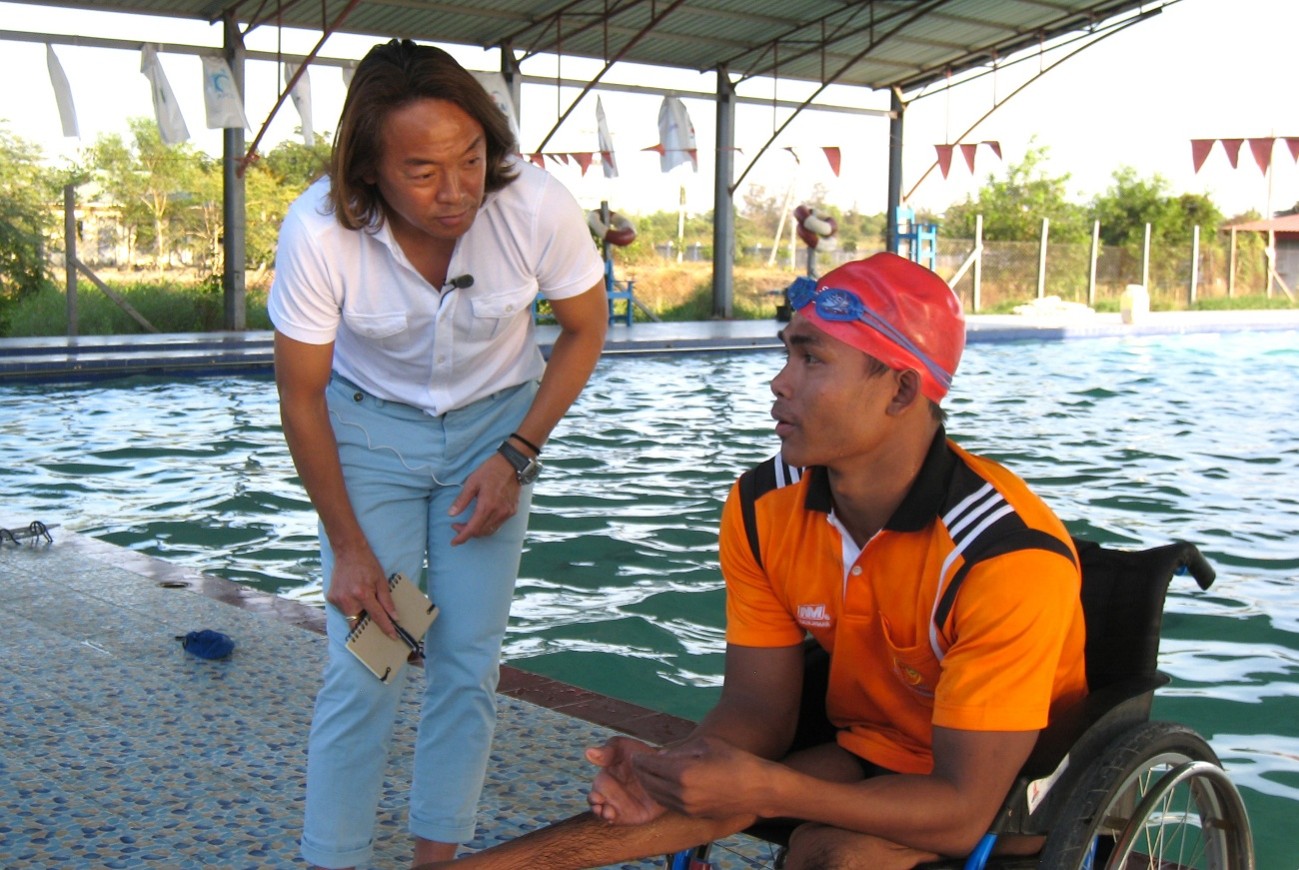
Kitazawa, left, interviews a competitive swimmer in a wheelchair. (Photo provided by Kitazawa)
Trust in Japan’s unique contribution
Kitazawa: When you go to different countries, there are times when you can feel the trust people have in Japan, aren’t there?
Arai: In Uganda, people would ask me, “Where are you from?” When I answered “Japan,” they’d say things like, “Oh, my friend!” “Japan is wonderful,” or “We respect you.” I was struck by the remarkable work of Japanese people who had built such trust through their activities.
Kobayashi: Earning that trust by spreading Japanese culture and values around the world is one of the great achievements of international cooperation through sports, isn’t it?
Kitazawa: In Palestine, there was an opportunity for locals to play soccer with Israelis. After a hard-fought match, everyone said, “That was fun,” and shook hands with each other. Seeing that, I really hoped that chasing the same ball together could lead to peace. Through the spread of sports, developing people leads to community building, and eventually to building nations. In the long run, I believe that sports can contribute to both national development and peace.
Kobayashi: To foster those kinds of connections, JICA is working to promote sports and to build peace through sports. Going forward, we hope to continue joining forces to create a society where everyone can enjoy sports and understand one another.
Thank you very much for your time today.