
Taking on Africa’s water crisis: How the experience of a JICA volunteer changed her life
[Goal 3] Good Health and Well-Being
[Goal 6] Clean Water and Sanitation
2026.08.25





2026.08.25
Japan Overseas Cooperation Volunteers (JOCV) work to address social issues in developing countries. After returning to Japan, many former volunteers draw on those experiences to create new value for society. At the “4th JOCV Commendation for Giving Back to Society” awards held in June, the grand prize went to Tsuboi Aya, who is working to solve water-related challenges in Uganda.
During her time as a volunteer, Tsuboi confronted the issue of maintaining and managing wells. She devised a system that uses mobile money to collect fees for well usage. This experience eventually led her to launch her own business, and she continues today to support efforts to improve access to safe water.
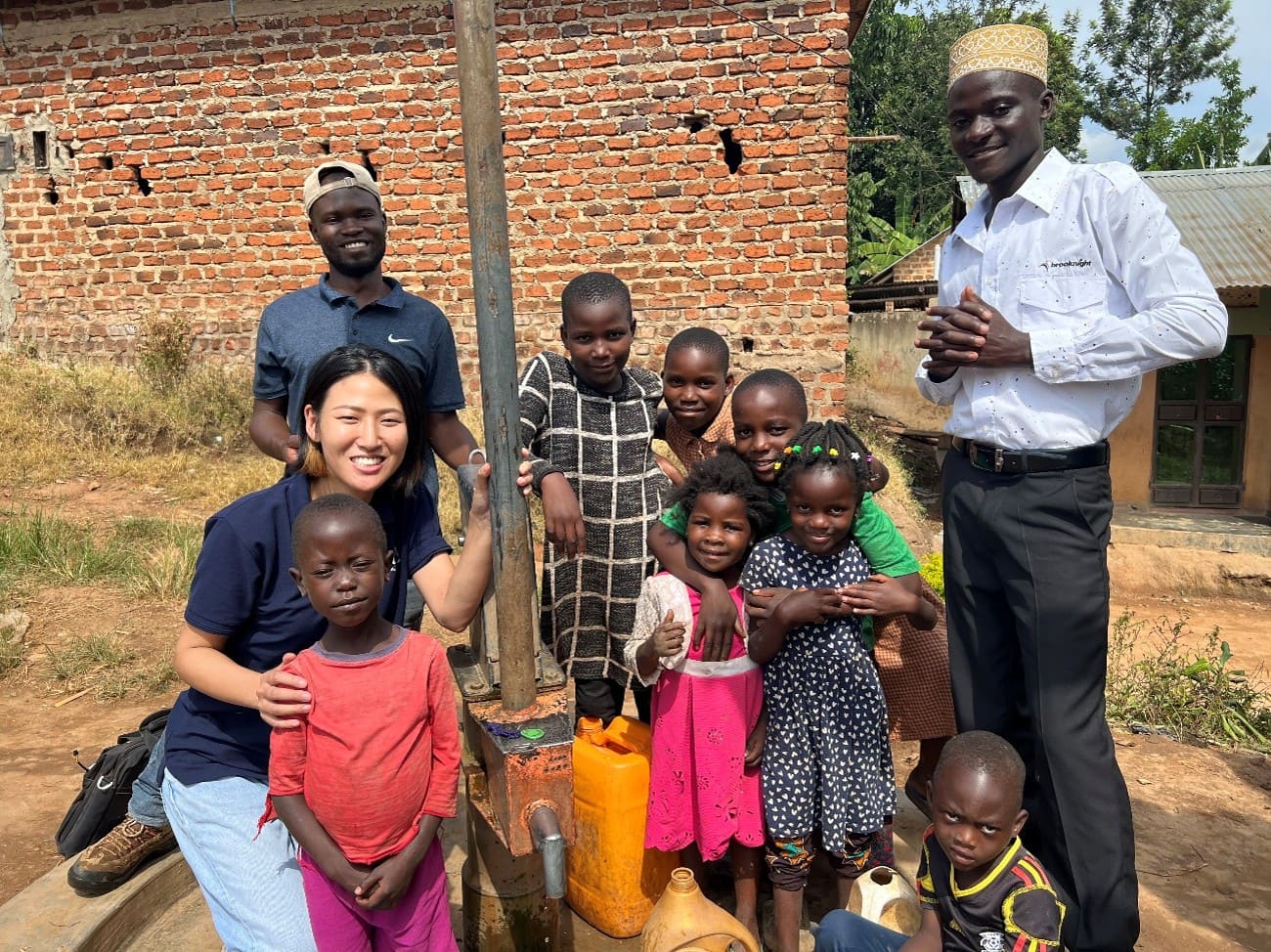
Tsuboi Aya, left, is tackling water challenges in Uganda. (Photo provided by Tsuboi)
The “JOCV Commendation for Giving Back to Society” recognizes former volunteers who have used the experience and skills they gained through their volunteer service to help address challenges in Japan and abroad. In this fourth edition of the commendation, six returned volunteers, including Tsuboi, were selected as recipients.
The recipients worked in various fields ranging from regional revitalization to education. They included a former volunteer who developed a business model in Malawi to help increase farmers’ incomes by producing and selling fabric accessories, and another who drew on their experience teaching Japanese in Brazil to support the education of children in Japan with foreign roots. Among them, Tsuboi was honored with the grand prize.
| AWARD | NAME | PROJECT TITLE |
| Grand Prize: Development Cooperation Practice Award |
Tsuboi Aya | Achieving sustainable water facility management through Africa-Japan collaboration |
| Regional Revitalization Award |
Takahashi Fumihiko | The challenge of a small zoo in a depopulating area |
| Multicultural Coexistence Award |
Ochi Sayaka | Community-based multicultural coexistence practices supporting the growth and rearing of children with foreign roots |
| Multicultural Coexistence Award |
Kawakami Kimie | Implementing multicultural coexistence education in Nishio, Aichi Prefecture |
| Judges' Special Award |
Tanaka Hisakazu | Promoting education on the Kimitsu SDGs (international understanding, environmental and regional issues, connected mountains, rivers and seas) |
| Entrepreneurship Award |
Msukwa Nohara | A fully made-in-Malawi model for generating income for farmers and circulating value within the local economy |
In her acceptance speech, Tsuboi said, “I am truly grateful to receive the grand prize. Participating in the JOCV program was more than just a turning point in my life. It was an experience that greatly changed my life itself. By going into the field (as a JOCV volunteer), I was able to understand why these problems were occurring from the perspective of local people, and to think together with them about solutions. I believe those experiences were possible precisely because of the JOCV program.”
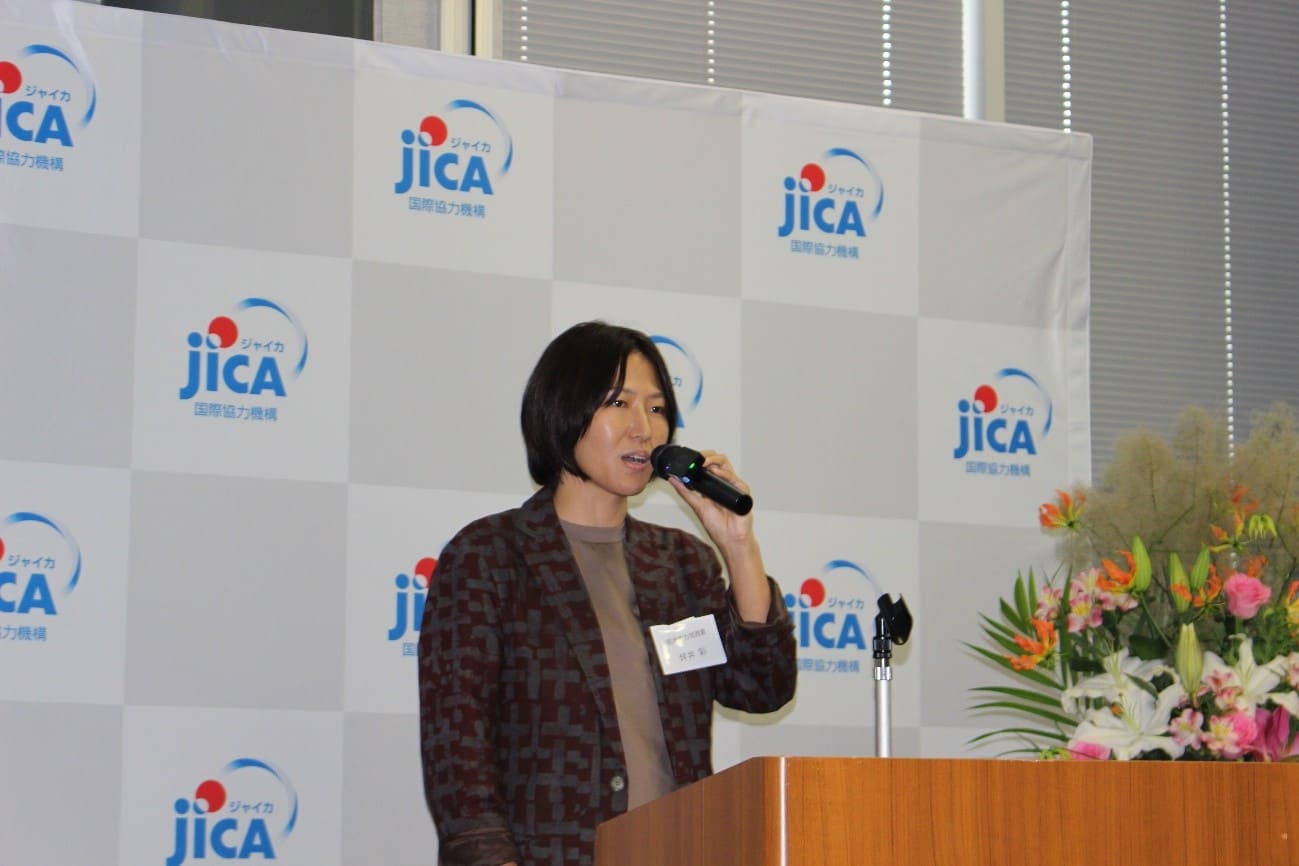
Tsuboi delivers a speech.
Tsuboi first became interested in social issues when she took part in an internal workshop while working for a major electronics manufacturer. As she developed business ideas aimed at addressing challenges in developing countries, she says she came to realize the limits of that approach, feeling, “Without a solid understanding of the local situation, I can only make broad proposals that lack detail.”
This experience led her to want to learn more about the situation on the ground, and she decided to apply for the JOCV program. In 2018, she was dispatched to Uganda.
In Uganda, Tsuboi faced the challenge of maintaining and managing wells. Even before her dispatch, she had understood the seriousness of the problem through reports by previous JOCV members and other sources. But after seeing firsthand the local reality of wells being left broken and people having to rely on unsafe water, she says her desire to do something about the situation grew even stronger.
Tsuboi thought, “We should collect the repair costs for wells from residents,” and she decided to visit villages to gather funds for well repairs.
Things, however, did not go as planned. “My husband has all the money,” “I need the money for my children’s school fees,” “I don’t have any money right now.” For various reasons, residents refused to cooperate, and even after visiting more than 100 households, Tsuboi was able to collect only a small amount.
“I would be told one thing or another and then move on to the next house, over and over. To be honest, I was exhausted, and I thought, ‘I can’t keep doing this,’” Tsuboi recalls.
She then decided to create opportunities for dialogue with residents. Through those conversations, she came to realize that the issue was not that residents were unable to pay, but rather that they did not want to pay.
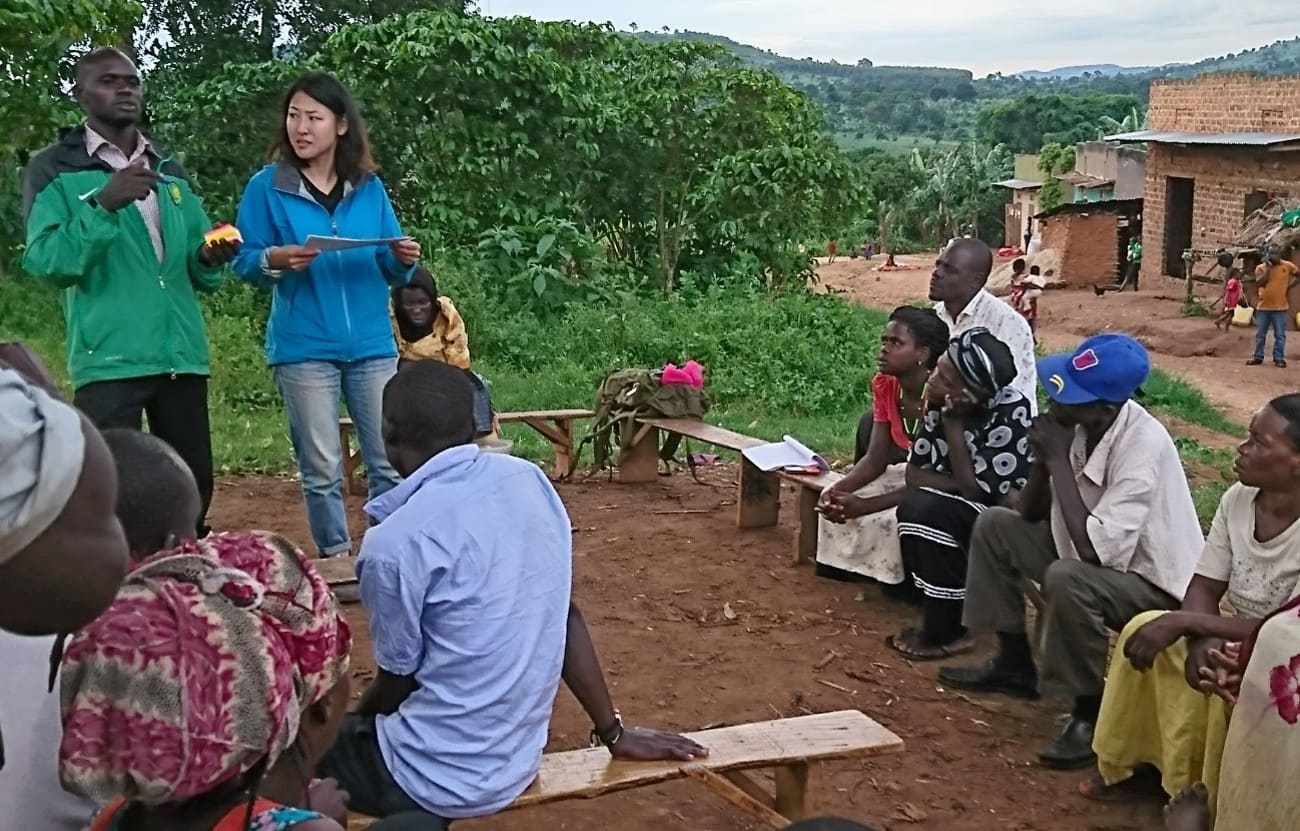
A community meeting in Uganda. (Photo provided by Tsuboi)
“It's unfair for only me to pay when everyone else isn't paying,” “I'm worried that even if I pay, the money might be misused.” Through these conversations, Tsuboi learned that residents felt the fee collection system was unfair and distrusted the cash-based payment process.
To address this challenge, Tsuboi came up with the idea of “SUNDA,” a prepaid water fee collection system combining mobile money with pay-as-you-go pricing. When users add money to their mobile money account on a mobile phone, the information is reflected on a dedicated ID tag. By holding the tag over a SUNDA device installed at the well, the fee for the amount of water drawn is automatically deducted from the user’s balance. This made it possible to collect fees efficiently, allowing wells to be repaired quickly when they broke down.
Tsuboi looked locally for an engineer who could build and implement such a system, and went through repeated rounds of prototyping and failure. Refusing to give up, she continued working persistently, and just before her one-year term ended, she was finally able to install the first unit at a well.
“Once SUNDA was installed, the response from residents was very positive, and we began to collect money. Because the well could be repaired quickly whenever it broke down, people appreciated being able to use it with peace of mind,” Tsuboi recalls.
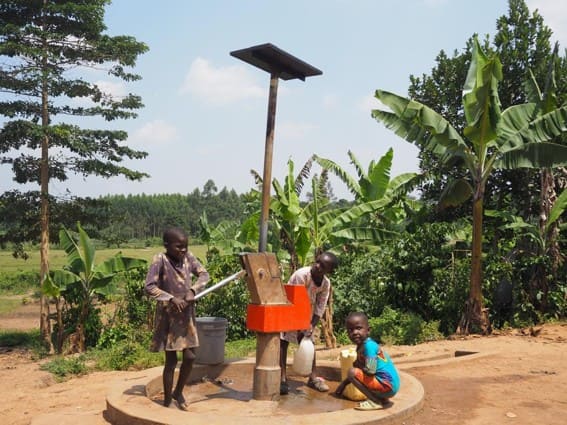
A well equipped with SUNDA. A water meter attached to the pump is linked to mobile money, enabling users to pay only for the amount of water they draw. (Photo provided by Tsuboi)
With the introduction of SUNDA, wells that had remained broken were repaired, enabling residents to maintain continuous access to safe water. Children who had previously walked several kilometers to fetch water were able to attend school. The risks of being attacked by wild animals or becoming caught up in crime while traveling to collect water also decreased.
One resident described the change this way:
“The village has completely changed. In the past, some female students became pregnant (after being raped while fetching water) and ended up leaving school. But now, such incidents no longer occur.”
Even after Tsuboi’s term as a JOCV ended, SUNDA continued to be used locally. Tsuboi had served as a volunteer while remaining employed by a major electronics manufacturer, and after returning to Japan, she had to go back to her job. However, if she returned to her workplace and stepped away from SUNDA activities, there was a possibility that the situation would revert to how it had been before. Tsuboi struggled with the decision of whether to stay with the major electronics manufacturer or resign and continue the project as a business.
Driven by the thought, “If I stop here, I would be betraying the people who were so happy with what we had achieved,” Tsuboi decided to leave her job. She founded Sunda Technology Global and chose to continue the initiative as a business.
She moved her base to Uganda and launched the business in earnest with colleagues she had met during her time as a JOCV volunteer. There were many challenges along the way, including strong opposition from villagers to the installation of SUNDA and difficulties in sourcing some parts for the system within Uganda. Tsuboi says she and her team searched for solutions together, engaging patiently in dialogue with residents to gain their understanding, and procuring parts unavailable in Uganda from Japan and China.
Their efforts have borne fruit. To date, more than 300 SUNDA units have been installed across Uganda, enabling many people to access safe water. Looking ahead, Tsuboi says she aims to strengthen partnerships with companies and organizations and accelerate the system’s further expansion.
Tsuboi's experience as a JOCV, and the connections she made with people she met during her time volunteering, changed the course of her life. She repeatedly consulted fellow volunteers who had been dispatched to Uganda at the same time about how to collect well usage fees using mobile money. Advice from those colleagues, she says, was extremely helpful in building the SUNDA system.
As a message to those who hope to join the JOCV program in the future, Tsuboi says: “I believe there are experiences and encounters that can only be gained through the JOCV program. To make that opportunity more fruitful, I feel it is important to take on the challenge with a clear sense of purpose about what you want to achieve. I think the more specific your goal is, the more valuable the experience will become. The opportunity offered by the JOCV program is truly unique and cannot be found anywhere else. If you are interested, I hope you will take on the challenge with your own goals in mind.”
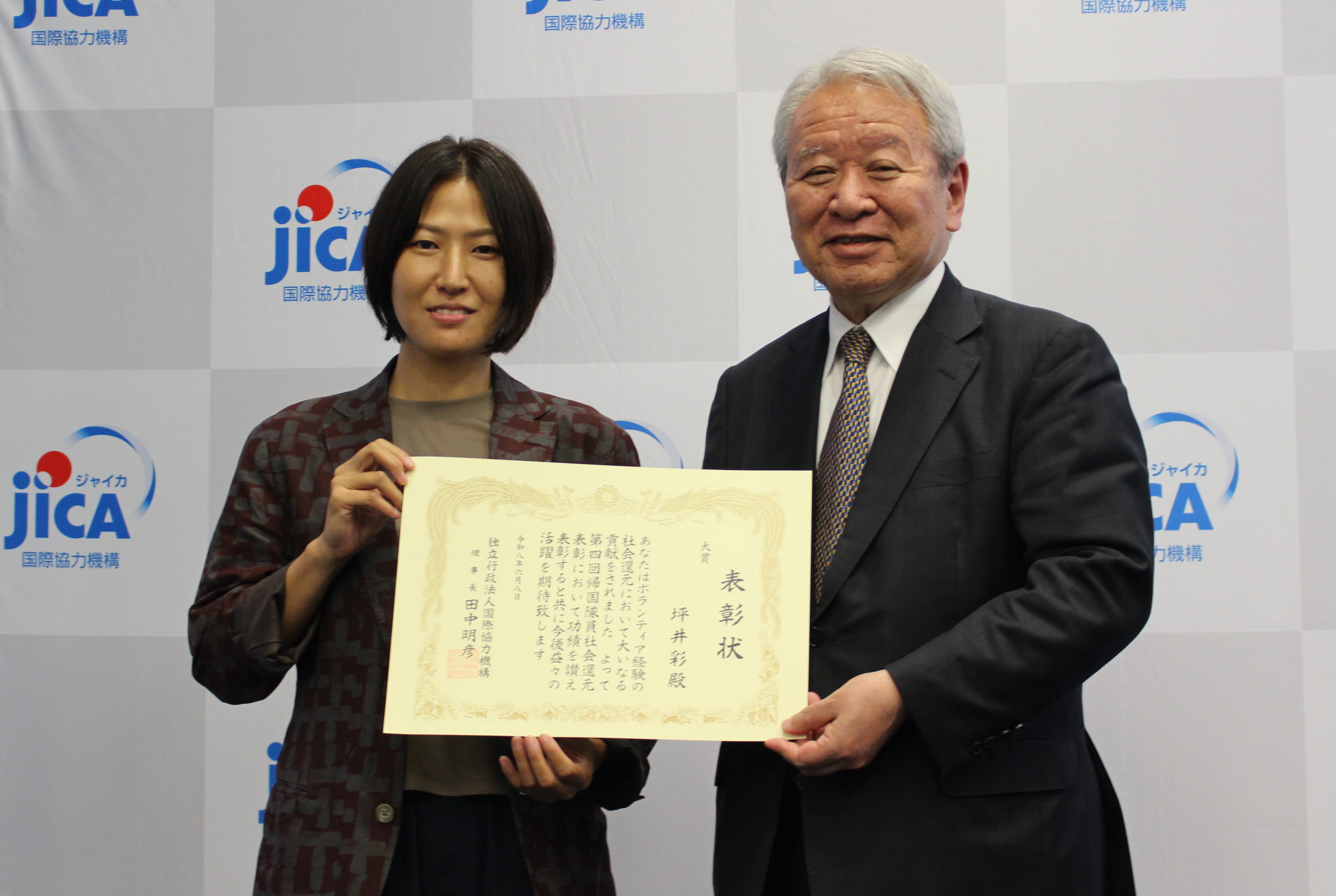
Tsuboi, left, stands alongside JICA President Tanaka Akihiko holding a certificate naming her the recipient of the grand prize in the 4th JOCV Commendation for Giving Back to Society awards.
Sns share!


