



scroll


Toward a Society Where Infrastructure Supports Daily Life, Connects Communities, and Allows People to Feel the “Dividends of Peace”
JICA has continued its cooperation to deliver the dividends of peace throughout Mindanao by rehabilitating infrastructure damaged by conflict and developing road networks that connect isolated communities. As a development cooperation agency, JICA’s infrastructure development in Mindanao is not merely a physical construction effort. It is also a process of rebuilding trust through infrastructure between the Bangsamoro Transition Authority (BTA) and residents, between the Government of the Philippines and residents, and among residents themselves.
Delivering Visible Change Quickly: Rebuilding Trust through Community-Led Initiatives
One of the most important elements in a peace process is for residents to quickly experience “change” toward peace and thereby deepen their support for the government and for the peace process itself. Alongside large-scale development, JICA has rapidly implemented small-scale infrastructure projects directly linked to residents’ needs as Quick Impact Projects (QIPs). The “visible support” provided through QIPs had the effect of clearly delivering the “dividends of peace” to residents immediately after the signing of the Comprehensive Agreement on the Bangsamoro (CAB) in 2014. By enabling people to experience that peace contributes to local development, these projects also aimed to prevent a return to conflict.
Under initiatives such as the technical cooperation project Comprehensive Capacity Development Project for the Bangsamoro (CCDP) from 2019 to 2026, and The Study for Socio-Economic Reconstruction and Development of Conflict-Affected Areas in Mindanao in the Republic of the Philippines (SERD-CAAM) from 2007 to 2009, QIPs were implemented in ways that enabled residents themselves to form organizations, discuss what their communities needed, and take part in the construction, operation, and maintenance of facilities.
For example, in communities such as Camp Darapanan in Maguindanao del Norte Province, residents discussed their needs and identified schools and community halls as priorities. They then worked with their own hands to build these facilities. Coordination between local communities and the project was undertaken by the Moro Islamic Liberation Front (MILF) which was leading the transition toward the new autonomous government. The pride residents felt in having built these facilities themselves created a deep attachment to them. For the MILF as well, these symbolic projects, which quickly delivered the fruits of peace to the people, helped spread a tangible sense within communities that their aspirations were taking shape through peace.
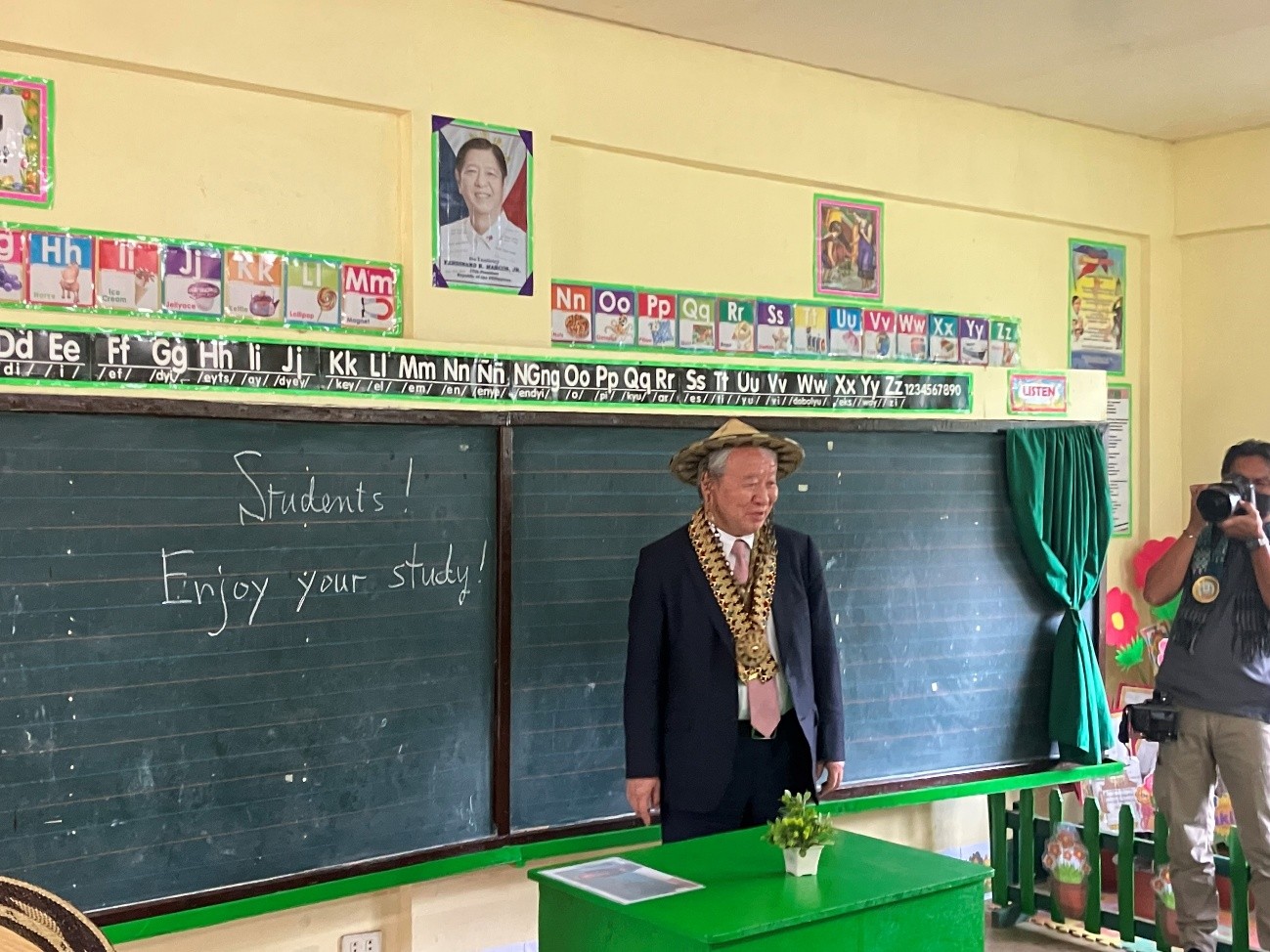
JICA President Dr. TANAKA delivering a message to children at a school built through QIPs.
Through initiatives such as the yen loan project ARMM Social Fund for Peace and Development Project from 2003 to 2012, multipurpose halls were constructed in various communities. These halls became places where people who had been divided by conflict could gather once again and engage in dialogue. The sight of residents smiling and interacting under one roof shows that infrastructure is not simply a “building,” but an important base for restoring communities.
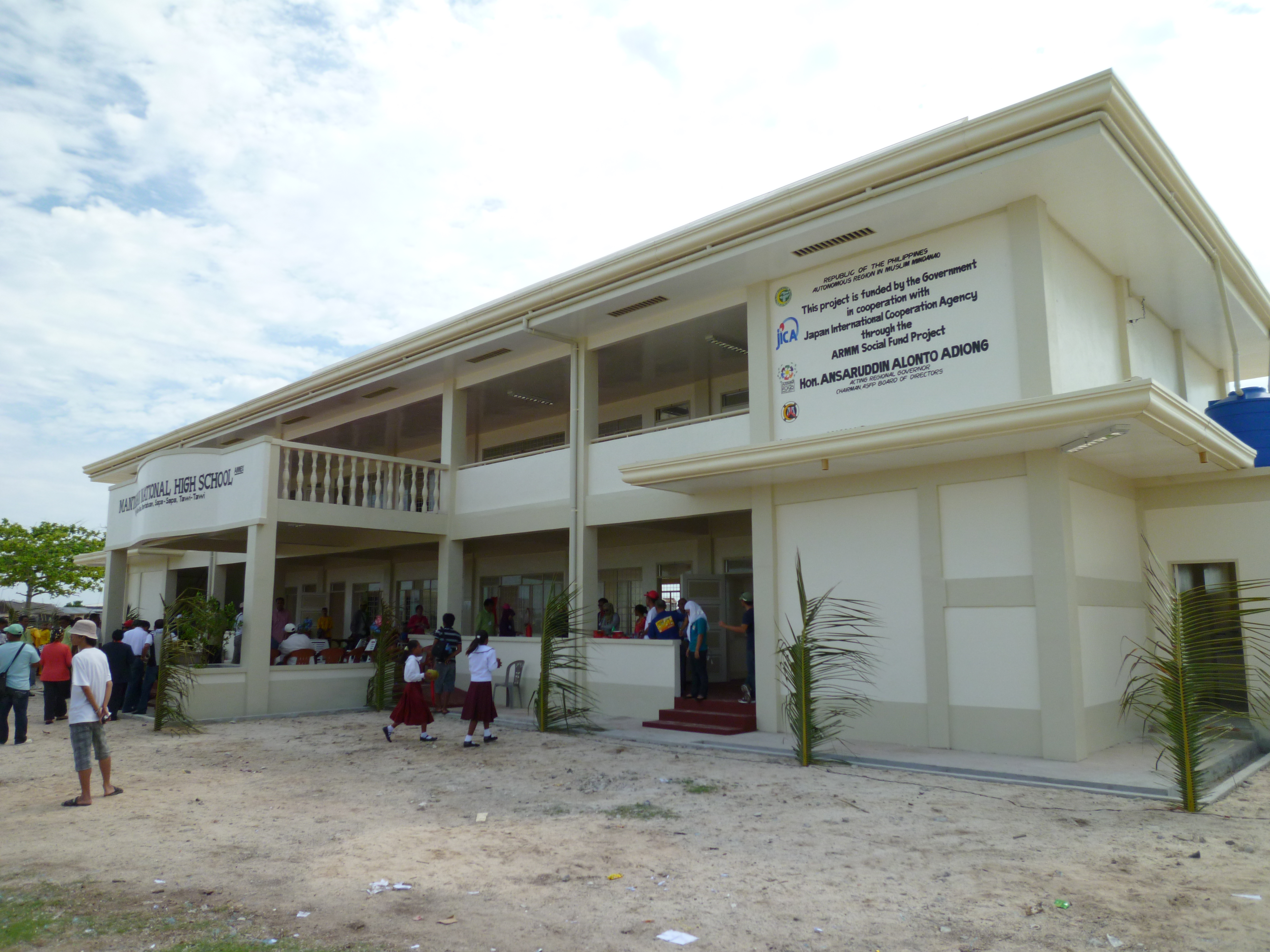
A school constructed through the ARMM Social Fund for Peace and Development Project.
Mr. Parid lived in the Municipality of Guindulungan in Maguindanao, an area that had been a fierce battleground during the conflict and where clan feuds, known as rido, continued to occur. He became involved in a rido with a rival kinship group that had been in conflict with his family for many years, and he lost his right arm. However, he decided not to retaliate. Instead, as a representative of the residents, he led the community in completing the construction of a solar dryer, crop storage warehouse, and community center built in the area through a JICA project. To ensure that many people in the community could use the facilities safely, Mr. Parid formally reconciled with the kinship group that had attacked him. As a result of this reconciliation, people who had fled the area out of fear of rido returned to their hometown, and many residents now use the facilities. Infrastructure development, together with the generous spirit of one man, contributed to peace in the community.
Mr. Parid, 2012.
Building “Roads” that Connect Communities and Support Economic Self-Reliance
Behind the delayed development and poverty in Mindanao lay not only the long stagnation of infrastructure development caused by conflict, but also geographical isolation. JICA has addressed this challenge by connecting “roads.” Through projects such as the yen loan Central Mindanao Road Project from 2003 to 2011, areas that were once insecure and marked by muddy, difficult roads have now been transformed into major arteries supporting logistics. Road paving has dramatically changed people’s lives. Crops that previously spoiled on the way to markets can now be transported more quickly and at lower cost, contributing significantly to higher incomes for farmers. In addition, solar dryers and warehouses constructed along roads were long-awaited facilities for farmers. These facilities have enabled them to properly store and dry their harvests, allowing them to receive fair prices rather than being forced to sell cheaply to middlemen.
The connection of “roads” has also contributed to improved access to social services such as education and health care. Residents have said, “In the past, even going to the hospital was difficult, but now ambulances can come all the way to the village.” Furthermore, shorter travel times and improved mobility for public institutions have enhanced the accessibility of police and emergency services, reduced risks during travel, and contributed to improvements in security. When roads connect and people and goods begin to move, residents’ daily lives are supported. The frustrations that people once felt in many aspects of everyday life can, through the development of local infrastructure, turn into expectations toward the government and toward peace.
Regeneration from the Scars of Conflict and a Bridge to a Sustainable Future
In Marawi City, which suffered devastating damage during the Marawi siege that broke out in 2017 after the peace agreement, JICA provided support to help restore daily life through the grant aid Programme for the Support for Rehabilitation and Reconstruction of Marawi City and its Surrounding Areas, which began in 2018 and is ongoing. The Grant Agreement for this project was signed in May 2018, six months after the Marawi siege had subsided, marking the start of cooperation. For people who had almost lost hope for peace once again, the rapid support from Japan, including the reconstruction of roads and the development of facilities, became a major source of strength as they resumed their path toward peace. It also embodied Japan’s stance that it would not abandon Marawi.
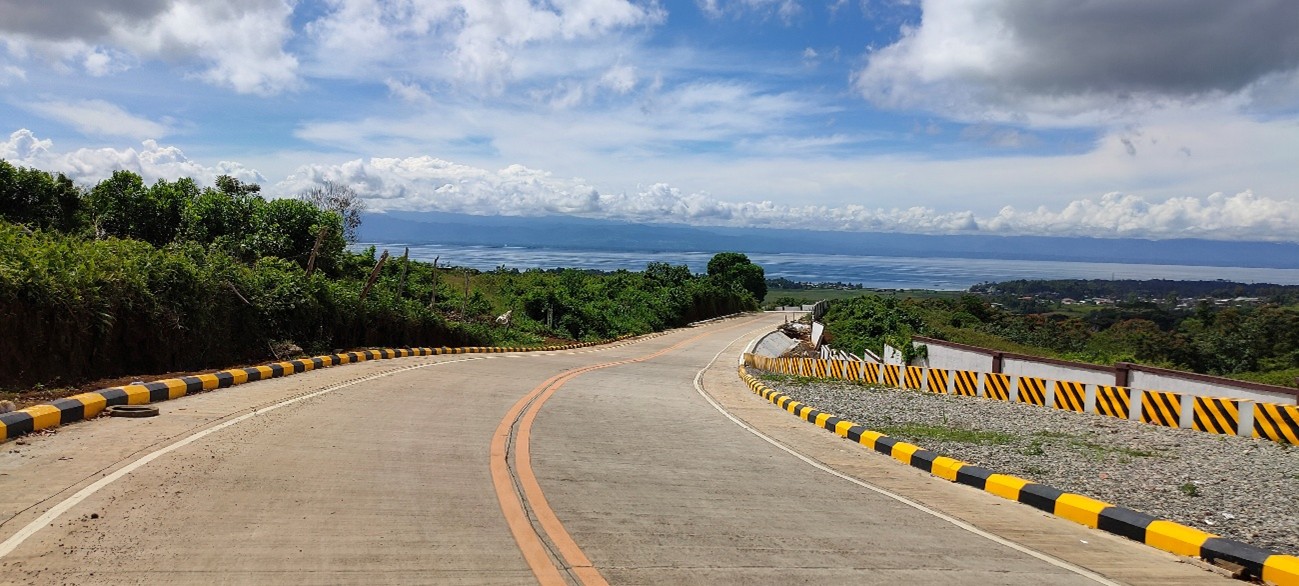
A road improved through the Programme for the Support for Rehabilitation and Reconstruction of Marawi City and its Surrounding Areas.
Today, JICA’s support is evolving from the stage of “building” infrastructure to the stage of “protecting, maintaining, and continuing to use” it with local ownership. Under the newly planned technical cooperation project; Project for Strengthening Management Capacity of Road Network Improvement and Maintenance in Bangsamoro Autonomous Region in Muslim Mindanao, scheduled to begin in 2026, JICA plans to transfer technical expertise so that the BTA and the future autonomous government can independently maintain and manage the improved road network. Preparatory work is also underway to improve the water supply system, which is essential for the healthy lives of people living in Cotabato City. Extending this sense of security in everyday life to every corner of BARMM will serve as one of the strongest deterrents against any reversal of the peace process.
What JICA Aims to Achieve: Trust Built through the Process of Working Together
JICA views infrastructure development not simply as construction work, but as a process for fostering trust. Roads, facilities, and other foundations are essential for sustaining peace. Yet what is even more important is the bond that emerges among residents and between residents and the administration through the process of “building together.” People work side by side and give shape to something together. The trust nurtured through that process is the strongest foundation for peace.
Next Page: Dialogue and Co-creation for Peace