

scroll


In March 2014, the Comprehensive Agreement on the Bangsamoro (CAB), was signed between the Government of the Philippines and the Moro Islamic Liberation Front (MILF). Behind this historic agreement was not only the formal negotiation process, but also the accumulation of dialogue, in which the parties spoke directly with one another, deepened mutual understanding, and nurtured trust.
One symbolic event was the meeting held in Narita, Japan, in August 2011 between President Aquino of the Philippines and MILF Chairman Murad. The meeting brought together conflict parties who had not had an opportunity to meet face to face for many years. In the neutral setting of Japan, a third country, they engaged in frank exchanges of views. This meeting encouraged mutual trust and became a turning point that significantly advanced subsequent peace negotiations. JICA has supported the Mindanao peace process from the sidelines by providing neutral and trusted spaces for dialogue, including through its contribution to the realization of this meeting.
Peace is not something that is completed at the moment an agreement is signed. After the signing of the CAB, in order to put the agreement into practice, establish a new autonomous government, and enable people with different positions and experiences to share the same vision for the future, it has remained essential to continue dialogue, clearly identify challenges, and jointly consider solutions.
JICA has supported the post-CAB peace process not only as an implementing agency of development cooperation in Mindanao, but also by providing “platforms for dialogue” where peace actors can gather, learn from one another, and co-create solutions.
The following sections introduce representative initiatives: the “Consolidation for Peace for Mindanao (COP)” Seminar held in 2014 shortly after the signing of the CAB, the International Symposium Commemorating the 10th Anniversary of the CAB in 2024, and the International Conference on Women, Peace and Security (WPS), also held in 2024.
“Dialogue for Peace” from Hiroshima: The 2014 “Consolidation for Peace for Mindanao” Seminar
In June 2014, approximately three months after the signing of CAB, JICA held the “Consolidation for Peace for Mindanao (COP)” Seminar in Hiroshima, Japan, with the support of both the Government of the Philippines and the MILF. This seminar was an internationally significant forum for dialogue, held for the first time after the CAB as the process moved from peace negotiations to the phase of implementation and consolidation.
Hiroshima, the host city, is, needless to say, a symbol of peace in Japan. For a city that had experienced the tragedy of war and achieved reconstruction to send a message of peace to the world carried great significance in showing Mindanao’s peace to audiences both within and outside the Philippines.
Approximately 100 stakeholders involved in the Mindanao peace process participated in the seminar, including President Aquino, MILF Chairman Murad, officials of the Government of the Philippines, members of the Bangsamoro peace negotiation process, international organizations, and experts. A major feature of the seminar was that it went beyond the framework of formal negotiations and enabled frank exchanges of views on concrete issues necessary to turn the peace agreement into reality, including politics, administration, security, and socioeconomic development. This also helped lay the foundation for the trust-building required in the implementation phase.
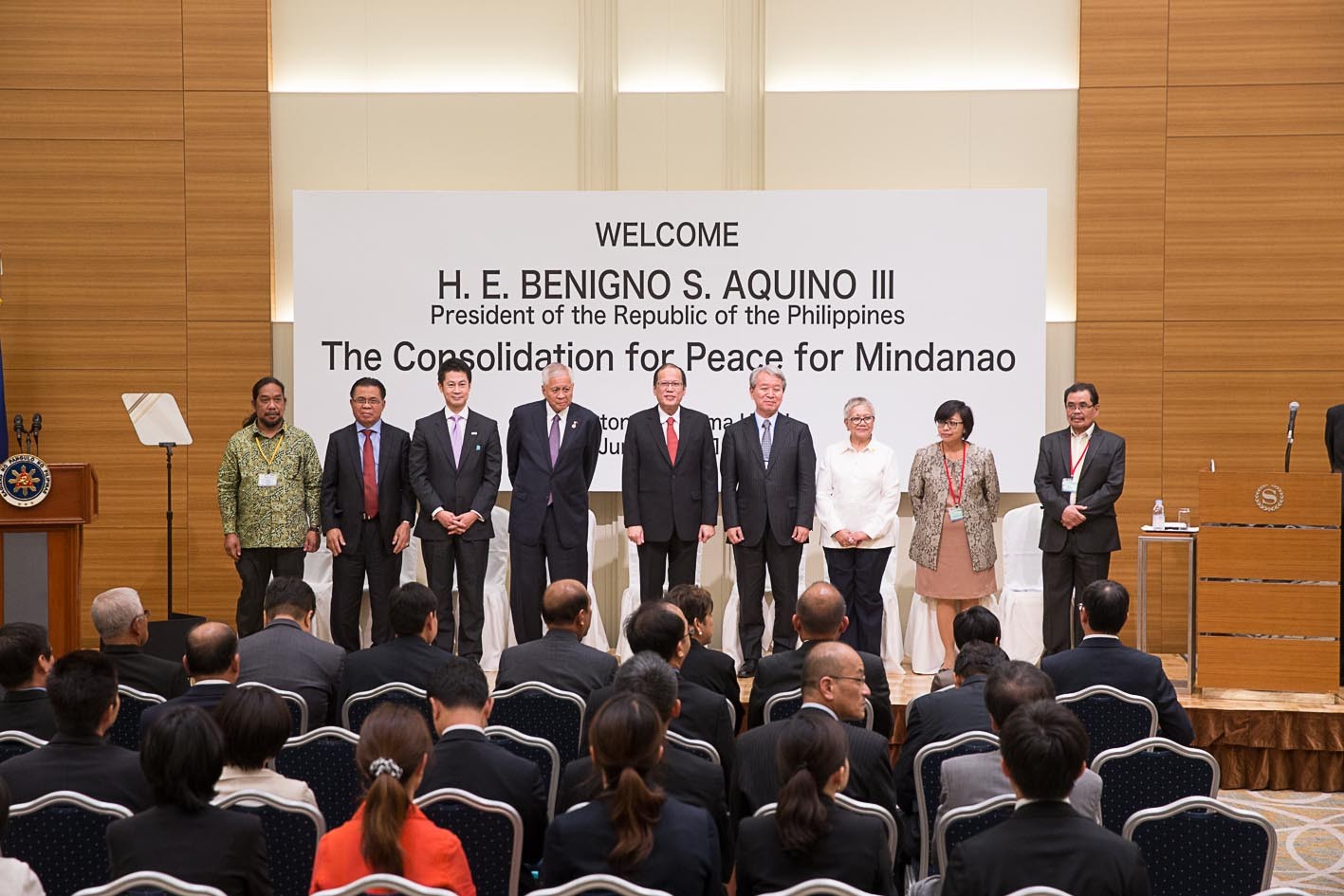
The seminar brought together key actors in the peace negotiations and those who had supported the peace process, including then President Aquino III, MILF Chairman Murad, then Presidential Adviser on the Peace Process Deles, then Chair of the Government of the Philippines Peace Negotiating Panel Ferrer, then Chair of the MILF Peace Negotiating Panel Iqbal, then Governor of Hiroshima Prefecture Yuzaki, and JICA President Tanaka. It became an important opportunity for the implementation of the peace agreement.
The discussions focused on three themes: 1) socioeconomic development in the Bangsamoro region; 2) the establishment of the new autonomous government and institutional design; and 3) security normalization. Through dialogue that involved not only the conflict parties but also members of the international community, the seminar provided an opportunity to share perspectives on what challenges needed to be addressed and who should play which roles in implementing the peace agreement.
As an outcome of the seminar, the “Hiroshima Declaration” was adopted. The declaration expressed support for the CAB and reaffirmed the importance of inclusive socioeconomic development in Bangsamoro and international solidarity toward the establishment of the new autonomous government. It also showed a shared understanding that peace should not remain merely a political agreement, but should lead to transformation across local communities.
For JICA, the seminar was an attempt to use its knowledge as a development cooperation agency and its neutral position to create a “space for dialogue” where the parties could sit at the same table and envision the future together.
The dialogue and agreements exchanged in Hiroshima have become one of the foundations supporting the subsequent establishment of the Bangsamoro autonomous government and the steady progress of the peace process.
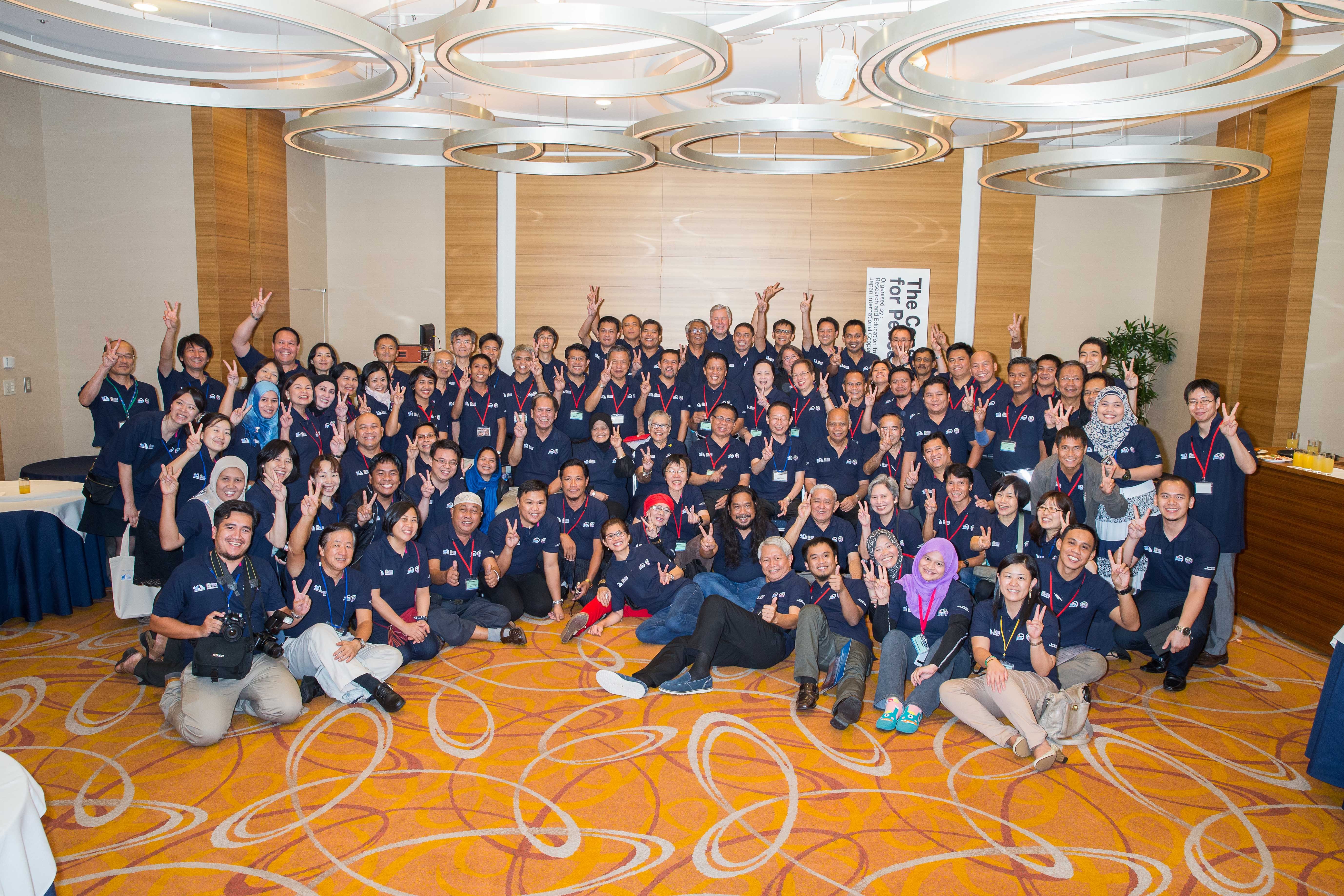
Over the three-day seminar, participants engaged in candid discussions on the future of Bangsamoro.
A Peace Process that Offers Hope for the World: Mindanao’s 10-Year Journey and Future
In August 2024, JICA hosted a symposium in Tokyo to commemorate the 10th anniversary of the signing of the Comprehensive Agreement on the Bangsamoro (CAB). Key figures in the Mindanao peace process from both the Government of the Philippines and the Bangsamoro Transition Authority (BTA) gathered to reflect on the journey so far and speak about their hopes for the future of Bangsamoro.
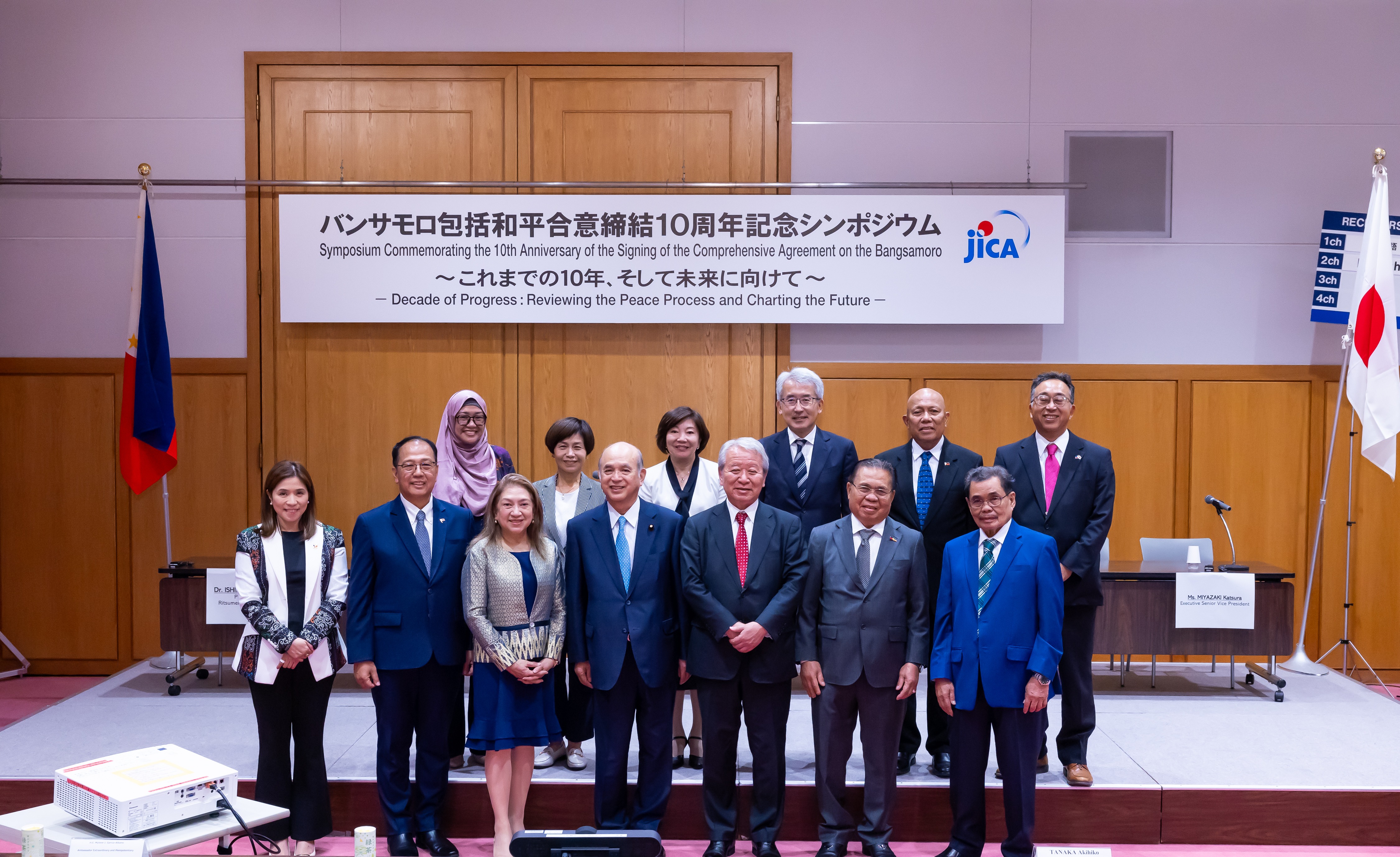
The symposium was attended by the Presidential Adviser on Peace, Reconciliation and Unity of the Government of the Philippines, the Chief Minister of the BTA, the co-chairs of the Intergovernmental Relations Body (IGRB) between the Government of the Philippines and the BTA, the chairs of the Peace Implementing Panels (PIP) of the Government of the Philippines and the MILF, the State Minister for Foreign Affairs of Japan, the President of JICA, and others.
As the Mindanao peace process approached a new stage ahead of the autonomous government election, the symposium not only made clear the positive commitment to peace shared by both the Government of the Philippines and the BTA, but also provided a valuable opportunity to hear directly from the parties about the forms of cooperation expected from Japan and JICA in the years ahead.
According to a World Bank study from 2003, even when parties to a conflict conclude some form of agreement, such as a peace agreement or ceasefire agreement, after the outbreak of conflict, the probability that the agreement will break down within the following five years is 43.6 percent. This shows how difficult it is to sustain peace.
At a time when conflicts are breaking out around the world and the international community is becoming increasingly unstable, the fact that peace has been maintained and the region has been revitalized in Mindanao is significant not only for the security of the Philippines and Southeast Asia. It also offers hope to the world and can be regarded as a model case for peace processes.
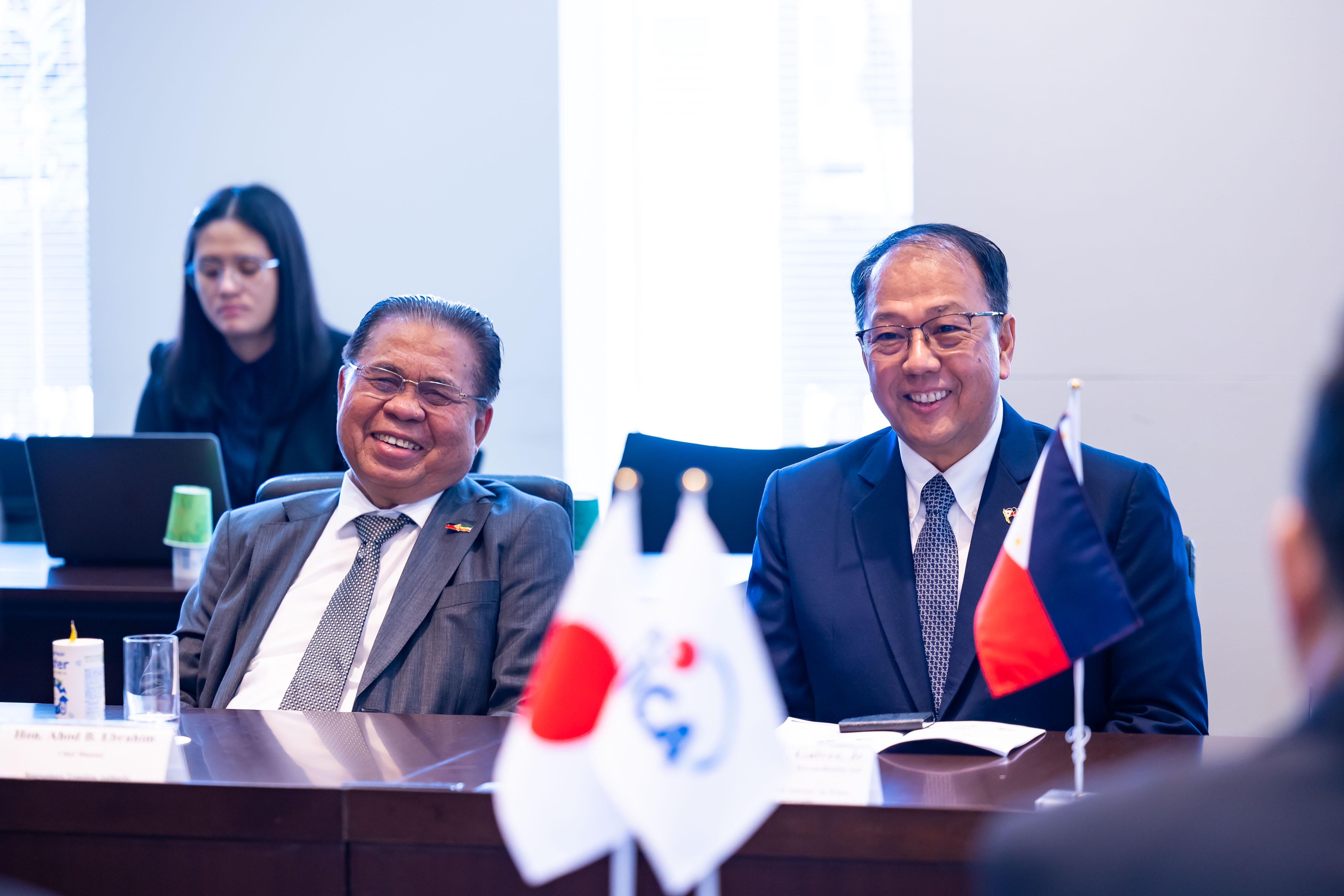
Murad Ebrahim, then Chief Minister of the BTA (left) and Galvez, then Presidential Adviser on Peace, Reconciliation and Unity (right).
The fact that JICA was able to invite top leaders from both the Government of the Philippines and the BTA to Japan and hold such a symposium was an achievement made possible by the long-standing relationships of trust that JICA has built with both sides.
For more details, please see:
Event Report on JICA Symposium Commemorating the 10th Anniversary of the Signing of the Comprehensive Agreement on the Bangsamoro | News&Publication - JICA
Sustainable Peace Guided by WPS: The Experience of Mindanao, Philippines
Based on United Nations Security Council Resolution 1325, adopted in 2000, the concept of Women, Peace and Security (WPS) has developed internationally. WPS is an international framework that ensures women’s participation in conflict prevention, conflict resolution, and reconstruction processes, protects women and girls from violence, and incorporates a gender equality perspective into security. It is said that incorporating women’s perspectives into peace processes makes it easier to achieve sustainable peace rooted in human security, including education, livelihoods, and community stability. Studies have shown that when women participate in peace processes, the probability that a peace agreement will last for at least two years increases by 20 percent, and the probability that it will last for 15 years increases by 35 percent.
The concept of WPS is particularly important in Mindanao, where women have suffered from many years of conflict while also playing major roles in community mediation and reconstruction. WPS is not merely an ideal. It is a practical key to improving the quality and sustainability of peace.
The Philippines ranks 20th in the world in the Global Gender Gap Index, 2025, while Japan ranks 118th, making the Philippines one of the ASEAN member states where gender equality has advanced the most. Women’s participation has also been positioned as an important element in the Mindanao peace process.
In fact, at the signing of the Comprehensive Agreement on the Bangsamoro in 2014, Prof. Miriam Coronel-Ferrer became the first woman in the world to sign a peace agreement as chief negotiator, drawing international attention. Since then, women have continued to participate as panel members on both the Government of the Philippines and Bangsamoro Transition Authority sides in the processes of peace negotiations and peace implementation, playing important roles in the peace process.
In October 2024, the Government of the Philippines hosted the International Conference on Women, Peace and Security 2024 in Manila. More than 700 participants from over 90 countries gathered for the plenary sessions, and the joint outcome document, “The Pasay Declaration on Women, Peace and Security” was adopted.
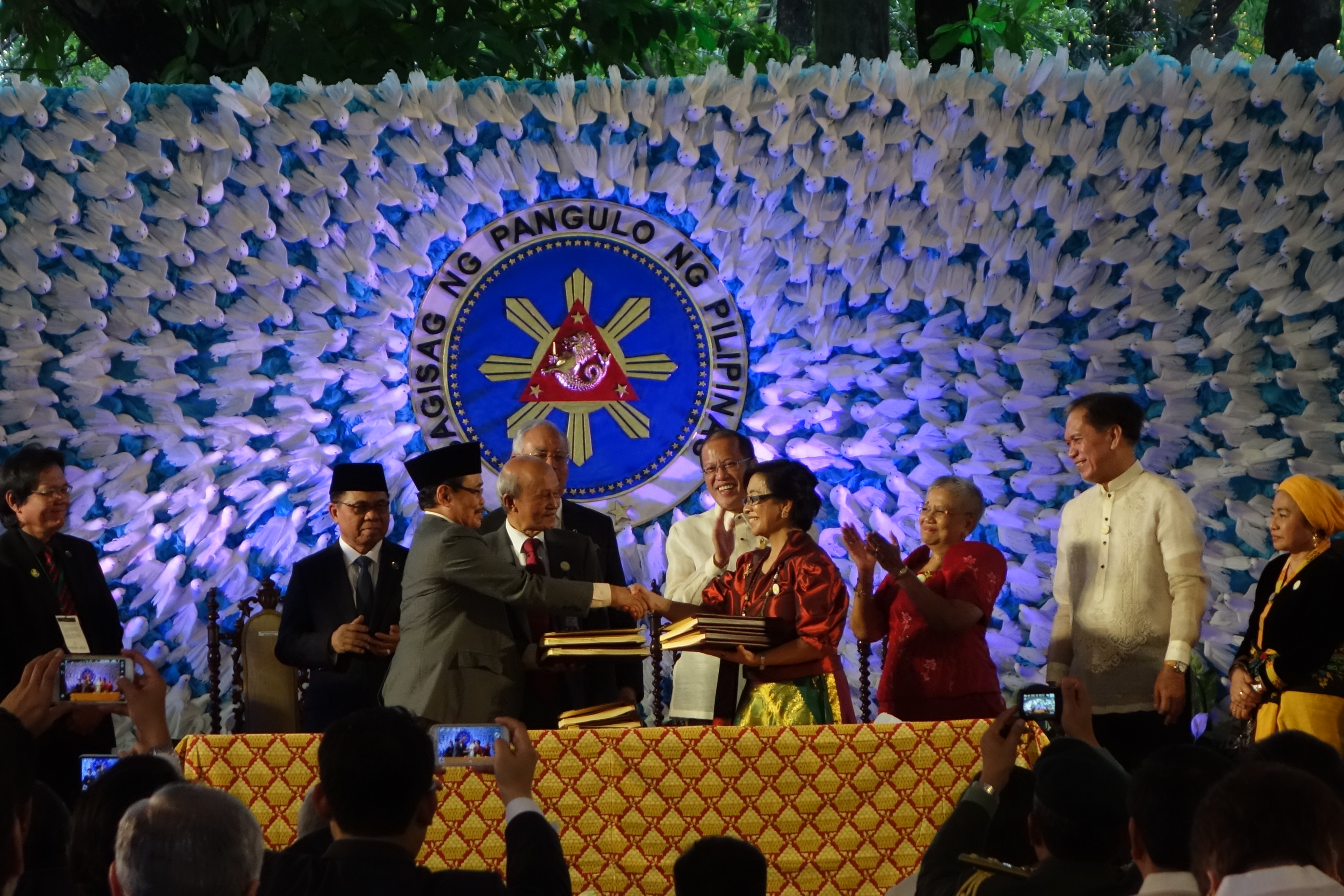
Signing Ceremony of the Comprehensive Agreement on the Bangsamoro, 2014.
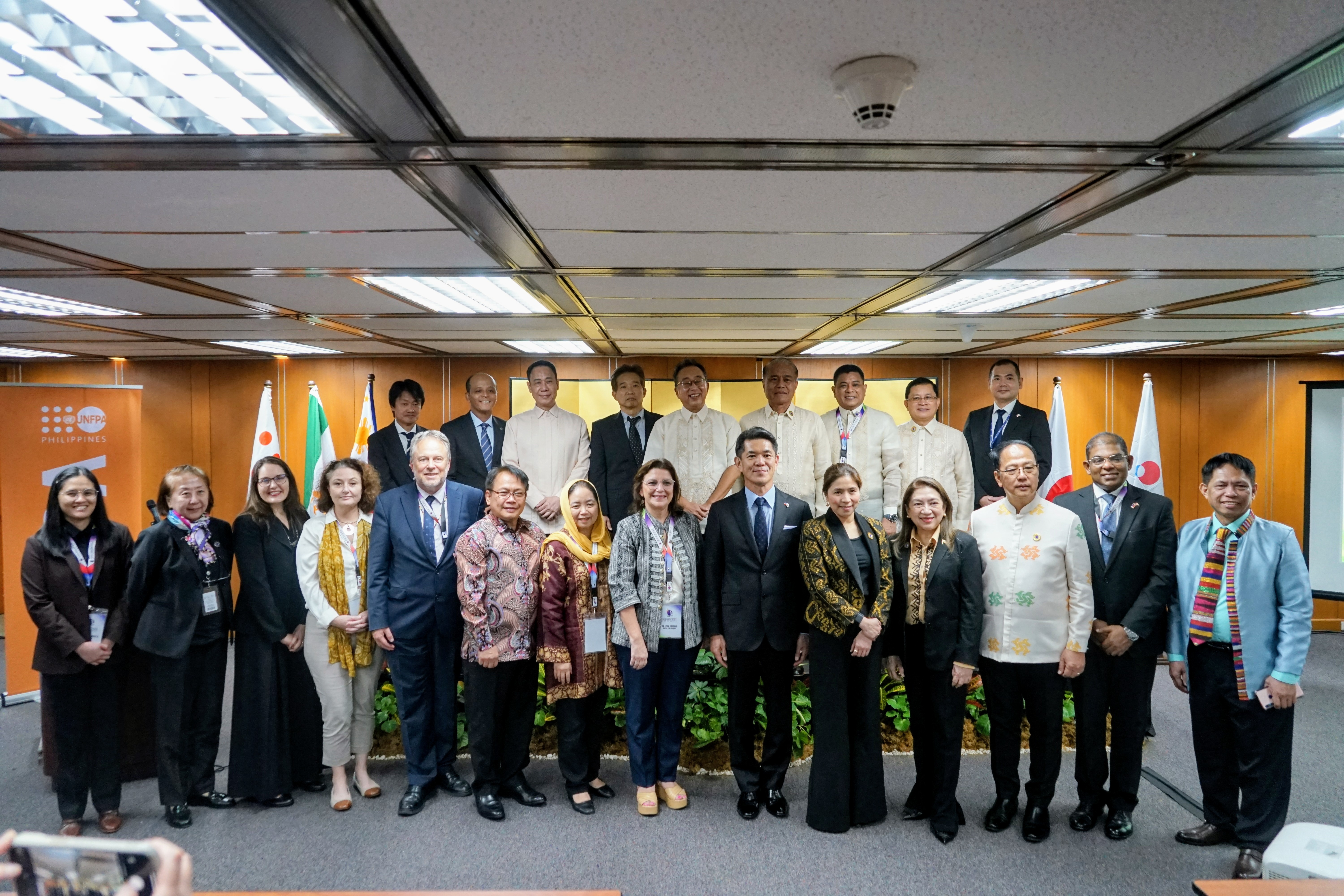
The seminar co-hosted by the Government of Japan and JICA brought together more than 150 participants, including Ambassador Kazuya Endo, Japan’s Ambassador to the Philippines; Ambassador Mylene J. Garcia-Albano, Philippine Ambassador to Japan; then Presidential Adviser on Peace, Reconciliation and Unity Carlito Galvez Jr.; Secretary Amenah Pangandaman, then Secretary of the Department of Budget and Management and Co-Chair of the Intergovernmental Relations Body; BARMM Minister of Social Services and Development Raissa Jajurie; BARMM Minister of Health Kadil Sinolinding Jr.; and representatives of international organizations.
At this international conference, JICA co-hosted a seminar with the Government of Japan. Many key figures from the Government of the Philippines and the BTA attended, and the seminar was a great success, with more than 150 participants in total. At the seminar, the Government of Japan and JICA introduced their WPS-related initiatives in Mindanao and confirmed the importance of advancing WPS in coordination with international development partners. In particular, JICA will contribute to the promotion of WPS in Mindanao in the field of maternal and child health.
For more details, please see:
Embassy of Japan and JICA vow to boost gender mainstreaming; launch new human security projects in health sector in BARMM | Where We Work - JICA
Creating Spaces for Dialogue and Promoting Peace
In this way, JICA has supported Mindanao not only by implementing development projects, but also by creating opportunities for dialogue among stakeholders in the Mindanao peace process through timely seminars, symposiums, training programs, and other initiatives. In collaboration with other development partners, and based on the trust it has built over many years, JICA continues to work together with the Government of Japan, the Government of the Philippines, and the people of Bangsamoro toward co-creation for peace and development.
During the meeting held when President Marcos of the Philippines visited Japan in May 2026, JICA President Tanaka also referred to the Mindanao peace process. He noted the importance of progress in the peace process, expressed expectations for the success of the Bangsamoro parliamentary election scheduled for September 2026, and emphasized the significance of JICA’s cooperation.