
Striving for Better Construction: “KAIZEN PROJECT” Activity Diary Vol. 4
[Goal 9] Industry, Innovation and Infrastructure

[Goal 11] Sustainable Cities and Communities

2025.12.04






2025.12.04
Hello, I’m Nakanishi, a JICA Volunteer currently working at the Provincial Works Supervision Unit in Alotau, Milne Bay Province.
In this series, I share updates on my activities and the local environment. In the previous report, I explained preventive maintenance for road facilities to the staff of the office. This time, I would like to report on a bridge inspection we conducted together, following Japan’s standard bridge inspection guidelines.
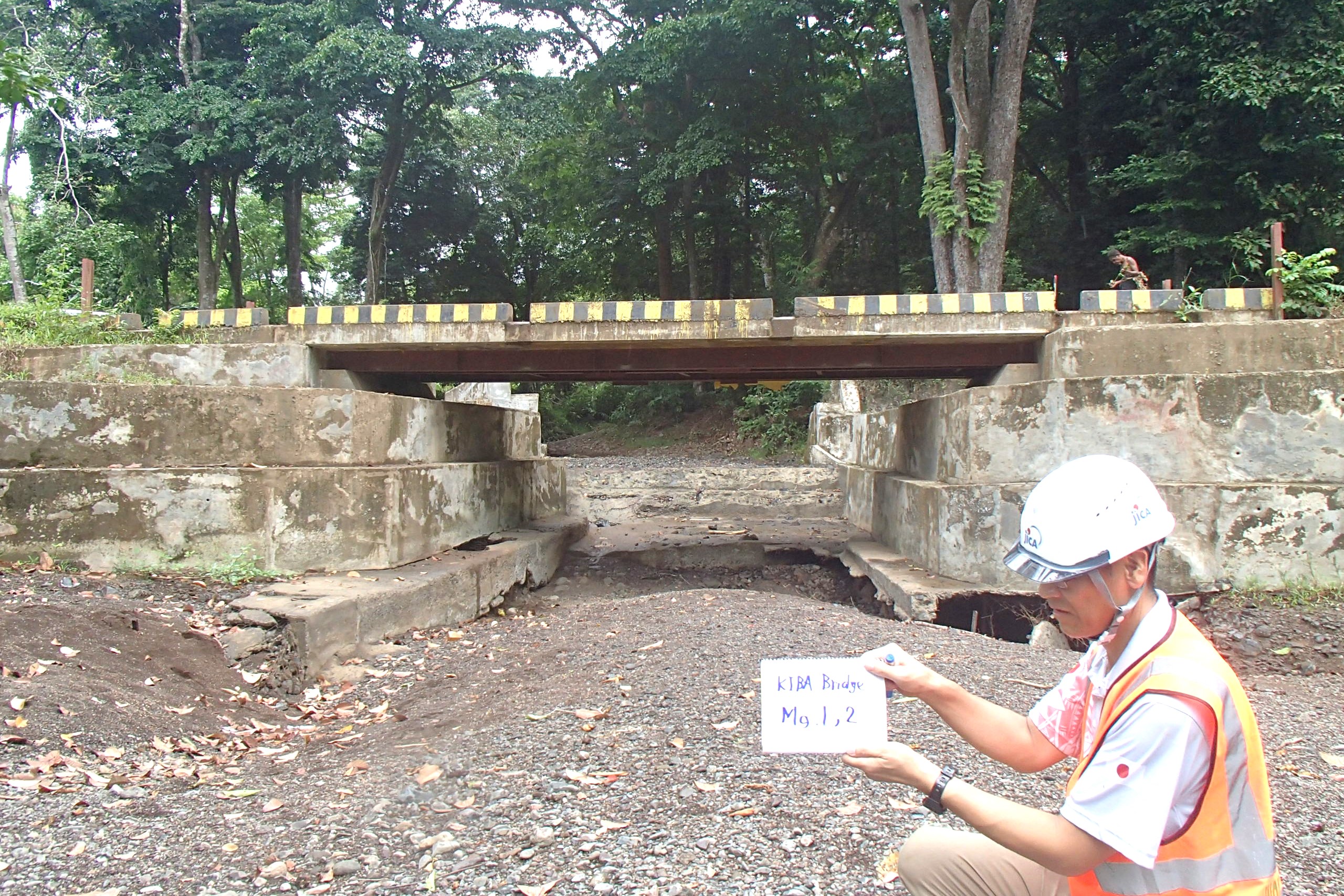
The bridge we inspected is Kiba Bridge on the North Coast Road, located on the outskirts of Alotau (Photo 1). Previously, it was a structure made of three circular corrugated pipes embedded in earthwork. However, after being damaged by flooding, it was replaced in 2023 with a simple steel I-girder bridge with a concrete deck. In Japan, the first inspection of a newly built bridge is usually carried out about two years after construction, so this was a good timing.
(Photo 1)
(Photo 2)
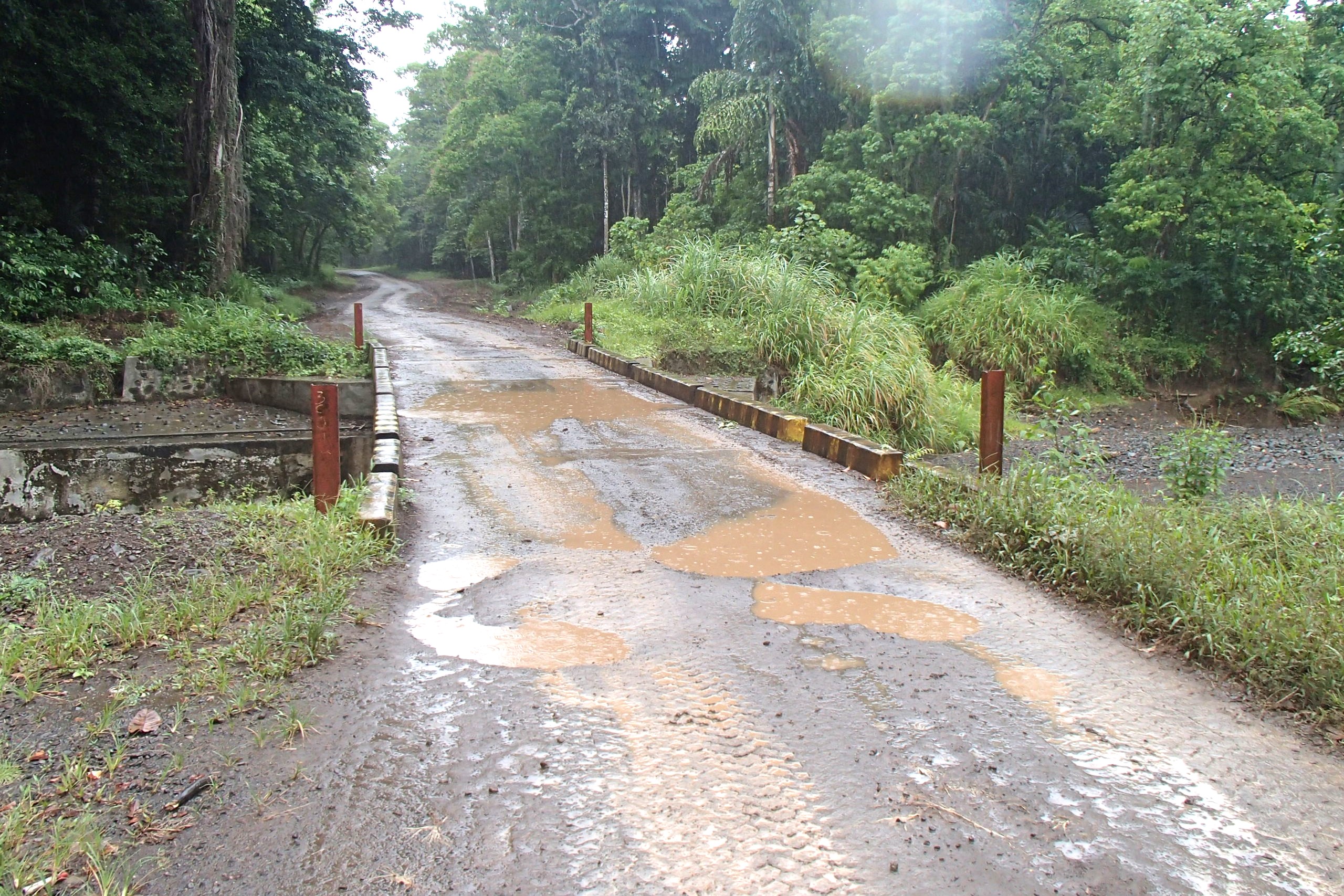
We started by observing the bridge from a distance to get an overall view. The road leading to the bridge has a long downhill slope, and water puddles were visible on the surface (Photo 2). There were no major bumps, but it was clear that water tends to accumulate.
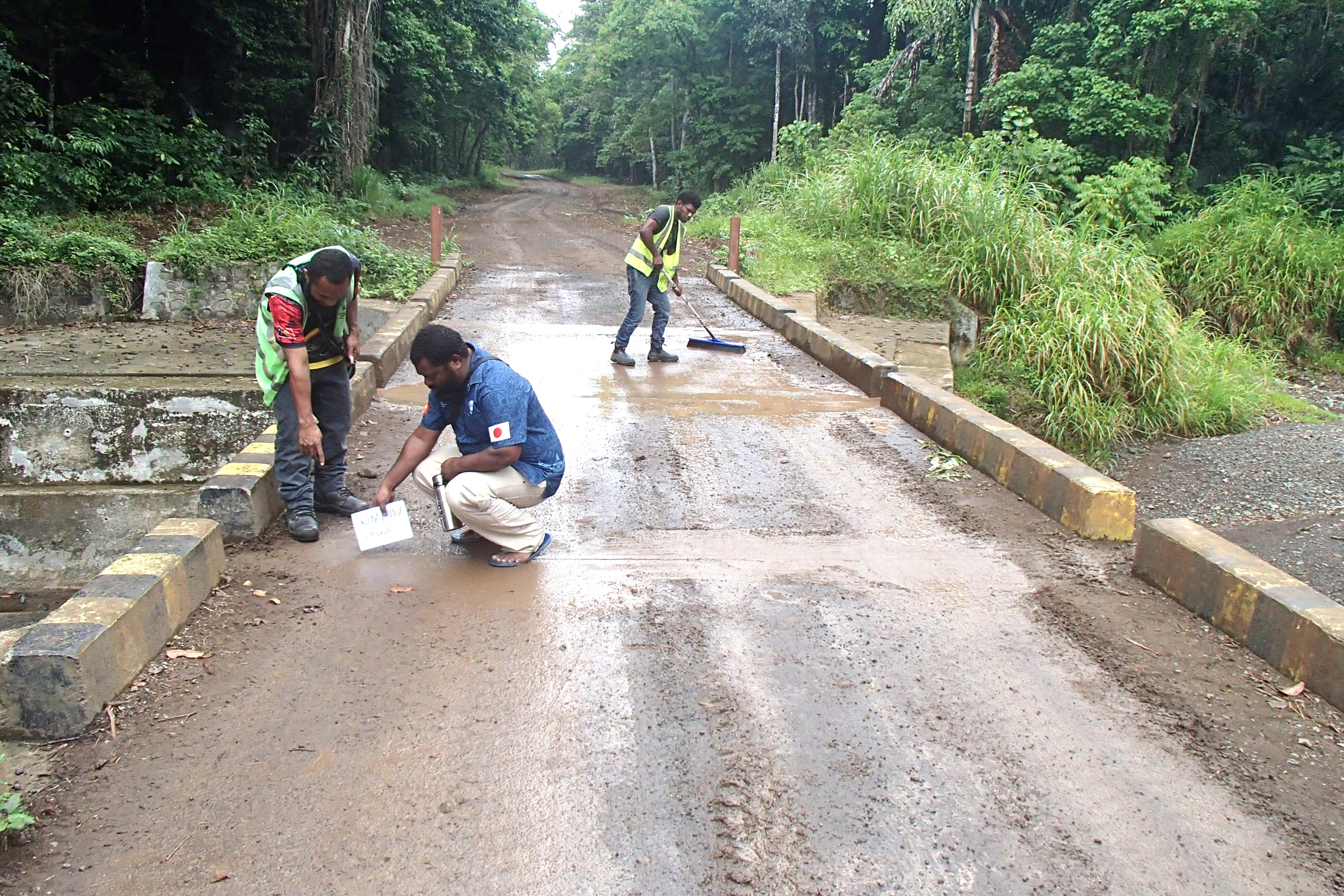
Next, we performed a close visual inspection of the joints between the concrete deck and the parapet (Photo 3). If there are steps or irregularities, it may indicate problems with the bearings or abutments that support the deck. Water infiltration from these joints can cause various issues under the bridge. As expected, when we checked underneath, we found white deposits leaking from the concrete deck (Photo 4).
(Photo 3)
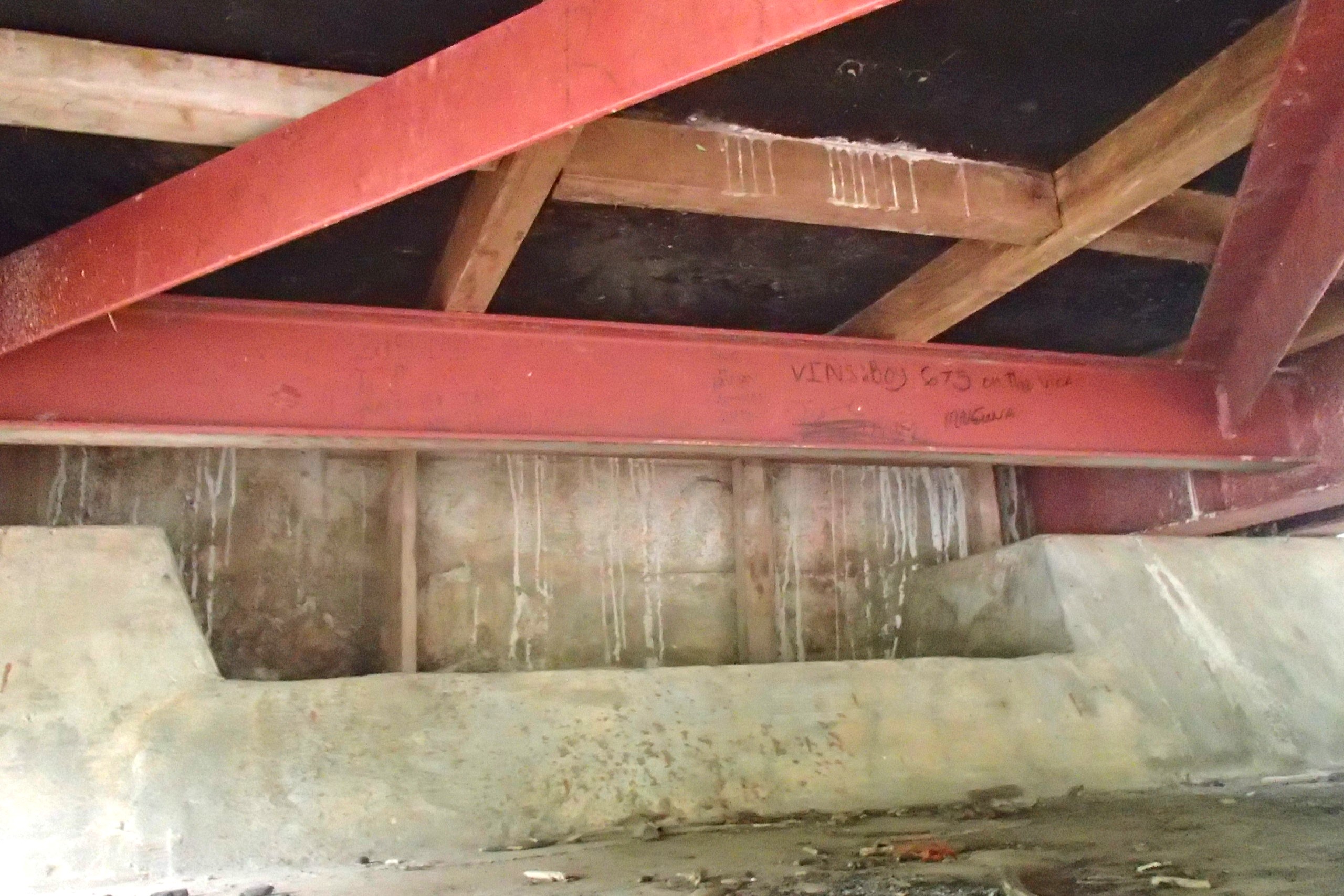
(Photo 4)
These deposits are called “free lime,” which occurs when calcium in the concrete dissolves in water and crystallizes on the surface. While this mainly affects appearance, if water enters through cracks and causes free lime, it can lead to corrosion of the reinforcing steel inside the concrete. Unfortunately, we could not observe the cracks this time because of formwork left during construction, so we plan to remove it and check the internal condition next time.
Finally, we inspected the abutments. Both sides showed significant scouring around the foundations (Photos 1 and 5). On the starting side, we found a vertical crack about 1.5 mm wide. This likely occurred due to shear stress when the downstream side settled after scouring, while the upstream side remained intact. To monitor this, we marked the crack location and date for future observation (Photo 6).
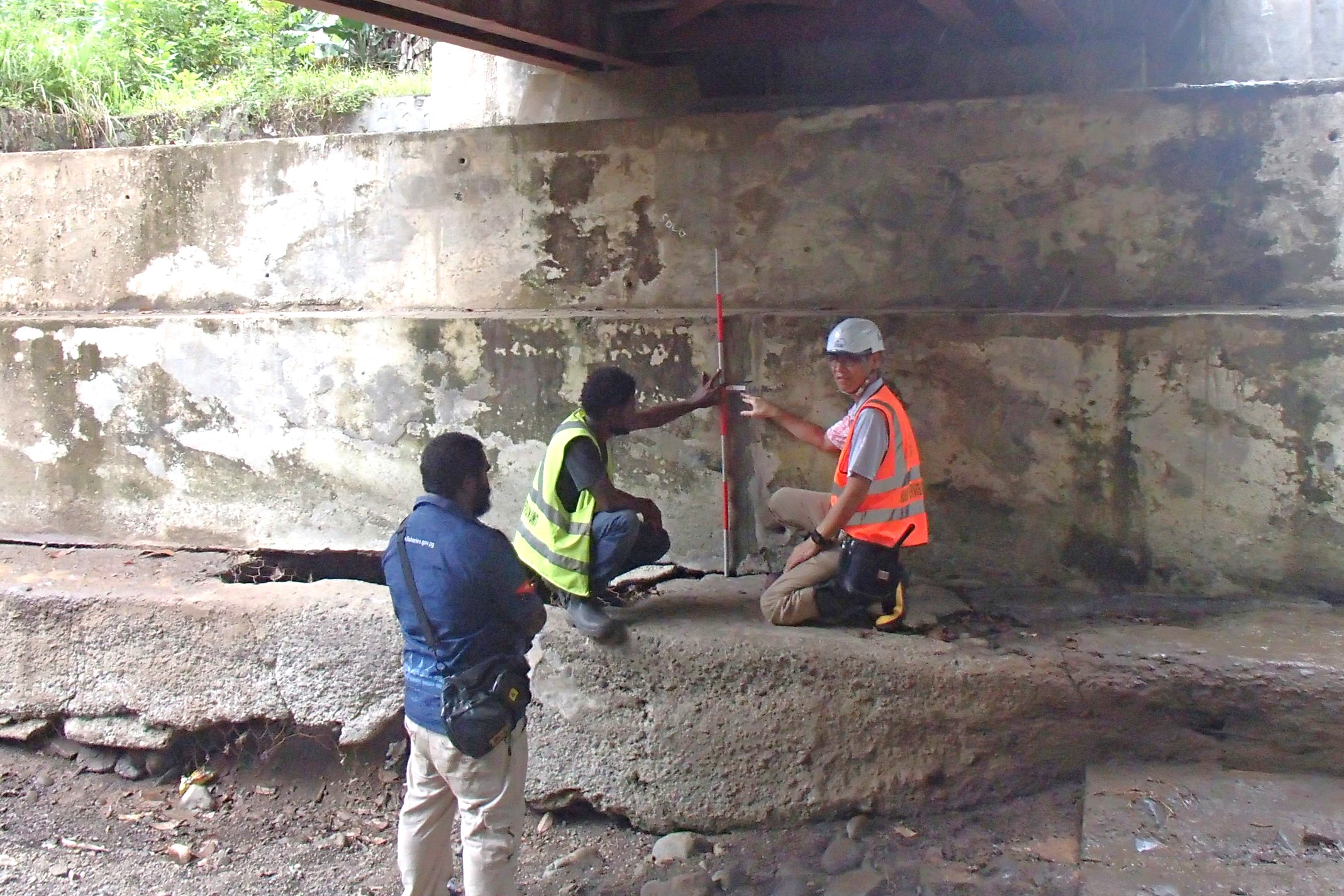
(Photo 5)
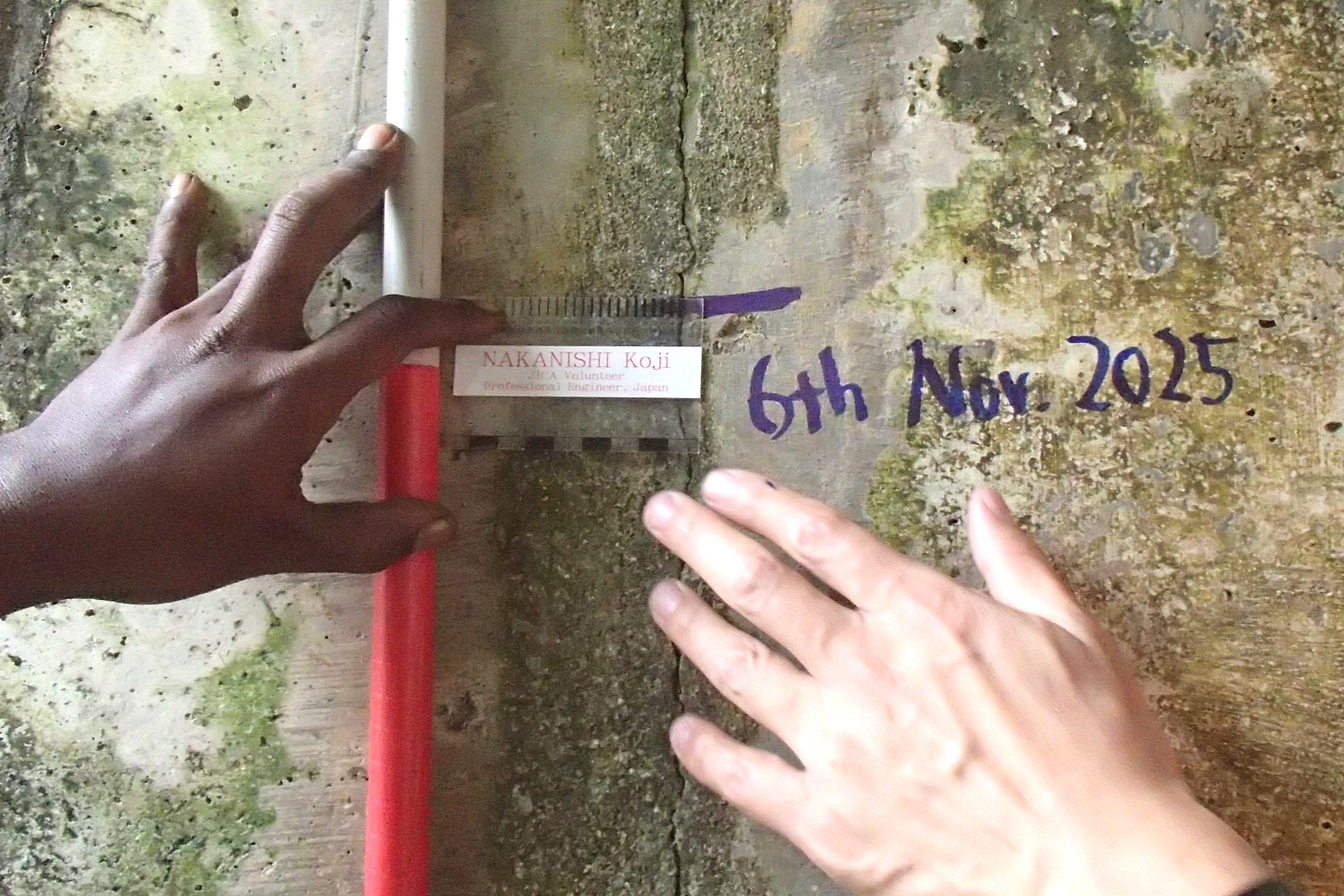
(Photo 6)
The project manager who supervised the design and construction of this bridge also joined the inspection. This was a great opportunity to reinforce the importance of regular bridge inspections among the staff. Based on these findings, we will assess the bridge’s condition and discuss appropriate measures together.
Related Link
・Cultivating the Power of Agriculture in Eastern Highlands Province. Vol.0
・PNG Auditor General and PNGEITI Sign Landmark MoU to Advance Transparency in Resource Revenue Management
・Papua New Guinea at COP30: Protecting Our Beautiful Forest
Please also visit our Facebook for our latest activities and events news
JICA Facebook Page
Sns share!


