The JICA website uses cookies to improve the service provided. By closing or continuously browsing this banner, you agree to use the cookies listed in the privacy policy.
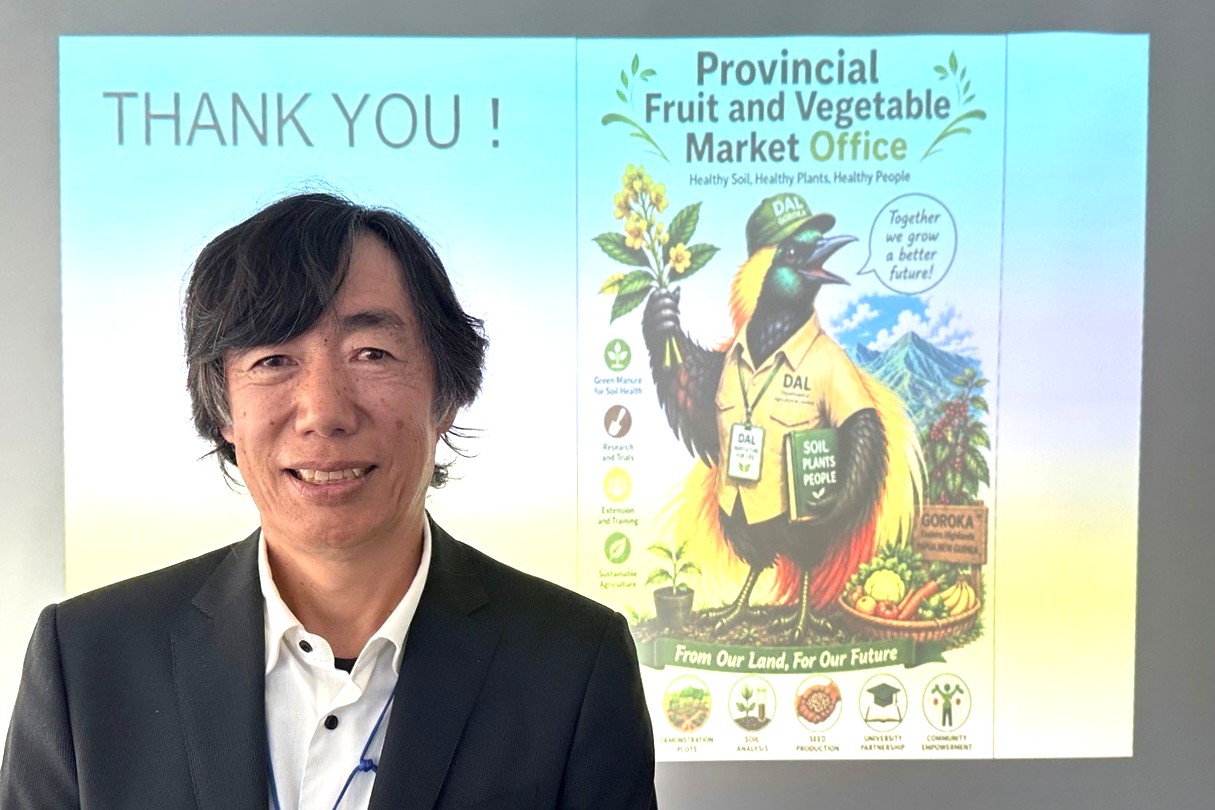
After two years of working alongside local agriculture officers and farmers, JICA Volunteer Mr. Masaru Hara has completed his assignment with the Eastern Highlands Provincial Division of Agriculture, Livestock & Fisheries (DALF). Mr. Hara, a volunteer specializing in vegetable production, served from August 2024 to August 2026. Throughout his assignment, he focused on a simple but important question: How can farmers improve agricultural production using methods that are affordable, practical, and sustainable in their local context?
Finding Affordable Solutions for Farmers
Many smallholder farmers in Eastern Highlands rely on limited cash income, making it difficult to regularly purchase fertilizers and pesticides. Soil surveys conducted together with university students in six areas around Goroka also revealed that some farmland suffered from low soil nutrient levels.
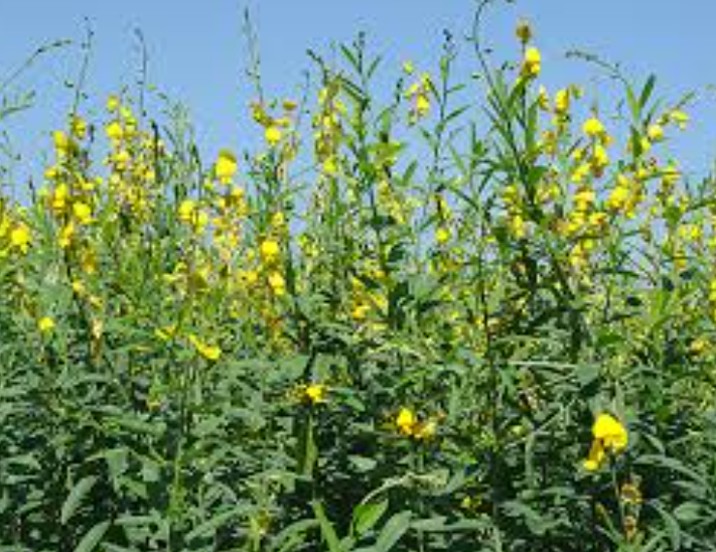
To address these challenges, Hara and his counterparts explored the use of green manure, an agricultural practice that improves soil fertility by growing specific plants and incorporating them back into the soil. Several species were first tested on a small scale at the DALF office. Among them, Crotalaria performed particularly well, producing seeds within approximately four months.
This result was significant because the seeds could potentially be produced locally and shared among farmers, reducing dependence on externally sourced agricultural inputs. The approach was straightforward: start on a small scale, evaluate the results under local conditions, and then expand successful practices.
Putting DALF Officers and Farmer Leaders at the Centre
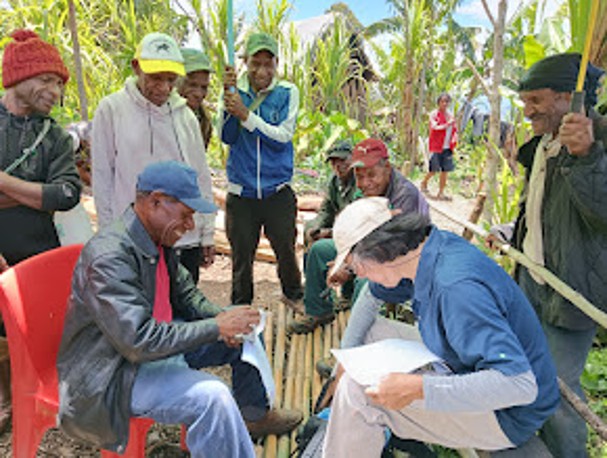
Reaching rural farmers is not always easy. Long distances and limited fuel availability can make regular field visits challenging. With this in mind, Hara worked closely with DALF officers and respected farmer leaders who could test new techniques on their own farms and share their experiences within their communities.
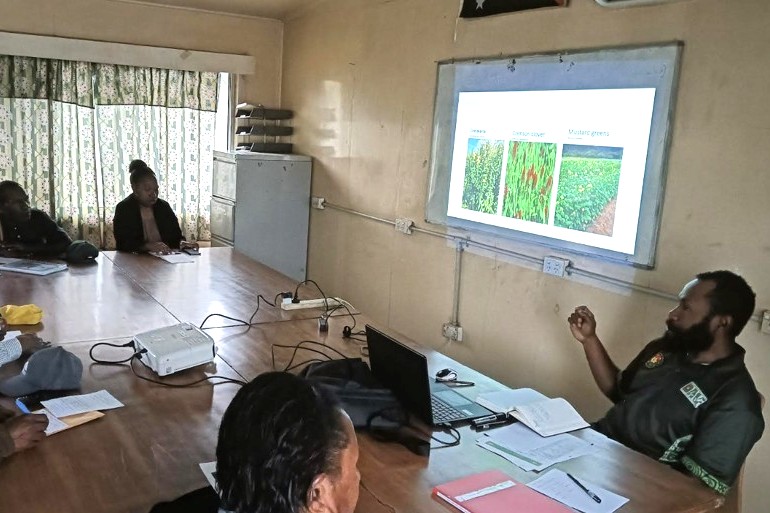
One of the clearest signs of progress emerged during farmer training sessions.
At the beginning of the project, Hara was the one explaining soil management and the benefits of green manure. About a year later, DALF officers were delivering the training themselves.
For Hara, this represented one of the most meaningful achievements of the project. The objective was never for a Japanese volunteer to remain the primary source of knowledge. Rather, it was to support local officers and farmers in developing the skills, confidence, and ownership needed to continue the work independently.
From “Hara’s Activity” to “Our Activity”
Throughout his assignment, Hara carefully documented soil survey results, trial findings, and training materials so that the knowledge could remain within DALF after his departure. By the end of the project, green manure trials were being managed not only at DALF demonstration sites but also by farmer leaders on their own farms and within their communities.
The Crotalaria seeds left behind in Eastern Highlands may be small, but they symbolize something much larger: a farming practice that local officers and farmers can continue to adapt, improve, and share long after the volunteer's departure.
As Hara returns to Japan, the next chapter of this work will be carried forward by those who understand Eastern Highlands best: its agriculture officers, farmer leaders, and farming communities.
His experience demonstrates that sustainable development is built not only on technology, but also on local ownership, strong partnerships, and shared knowledge.
JICA Papua New Guinea Office will continue supporting sustainable development through collaboration with local communities and institutions across the country.