
JICA and PNG Health Partners Agree on Landmark Malaria Elimination Research Initiative
[Goal 3] Good Health and Well-Being
[Goal 17] Partnerships for the Goals
2026.10.09



2026.10.09
The Japan International Cooperation Agency (JICA), the National Department of Health (NDoH), and the Papua New Guinea Institute of Medical Research (PNGIMR) signed the Minutes of Meeting for a new Science and Technology Research Partnership for Sustainable Development (SATREPS) initiative aimed at accelerating malaria elimination in Papua New Guinea and the wider Southwest Pacific. The signing marks an important milestone in strengthening collaboration between Papua New Guinea and Japan in the fight against malaria.
The project, titled “The Project for Acceleration of Malaria Elimination and Development in the Southwest Pacific: A Multi-Pronged Strategy Tailored to Local Characteristics,” will bring together PNGIMR, NDoH, Divine Word University, East Sepik Provincial Health Authority, Osaka Metropolitan University and other Japanese research institutions to develop innovative, evidence-based solutions for malaria elimination. This project is the first of its kind among JICA projects in PNG, as it integrates both research and technical cooperation components.
Despite significant progress in recent decades, malaria remains a major public health challenge in PNG, particularly in high-burden provinces such as East Sepik. Emerging issues, including climate change, changing transmission patterns, and population mobility, continue to pose challenges to malaria control efforts.
Under the SATREPS framework, the project will generate evidence on malaria risk factors through epidemiological, socio-cultural and biological research; develop AI-powered early warning forecasting systems and spatial risk maps; evaluate innovative intervention measures; strengthen malaria surveillance and response systems; and promote evidence-based policymaking.
The initiative is expected to strengthen national research capacity, improve surveillance and data-driven decision-making, support the development of cost-effective malaria elimination strategies, and contribute to the formulation of future malaria policies in Papua New Guinea. Knowledge and lessons learned from the project will also support regional collaboration and technical exchange across the Southwest Pacific.
Speaking during the signing ceremony, NDoH Secretary Mr. Pascoe Kase emphasized the Government's commitment to eliminating malaria and the need for approaches that are responsive to Papua New Guinea’s unique context and challenges. He noted that collaboration with Japan provides access to valuable scientific expertise and technical assistance. Mr. Kase further stated that the project should contribute to strengthening the health system’s capacity to prevent, detect, and respond to malaria. He welcomed the project’s focus on enhancing surveillance and response mechanisms, including improved data utilization, capacity development, and the application of Artificial Intelligence (AI) to support decision-making and response efforts.
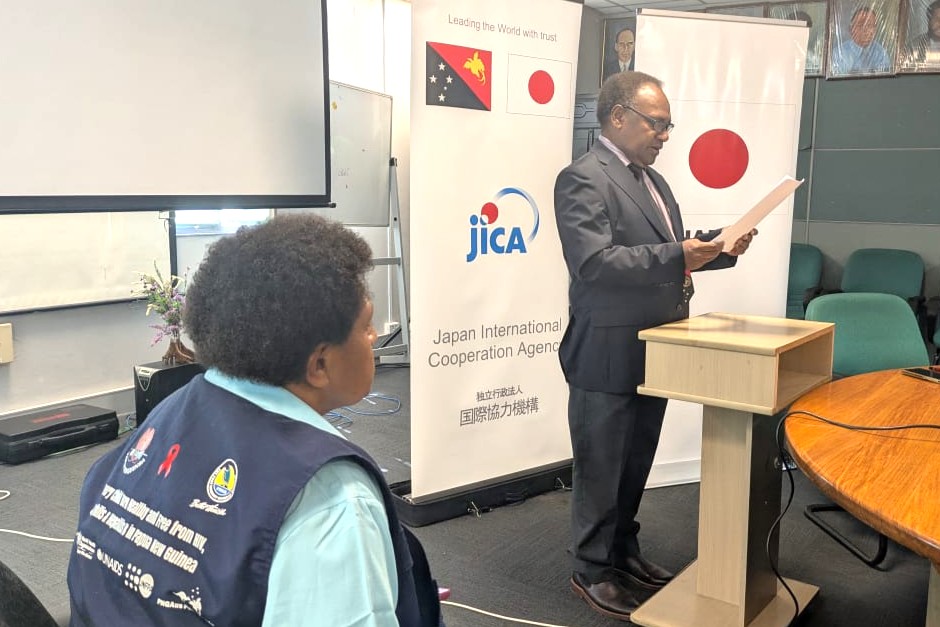
NDoH Secretary, Mr. Pascoe Kase, giving his speech
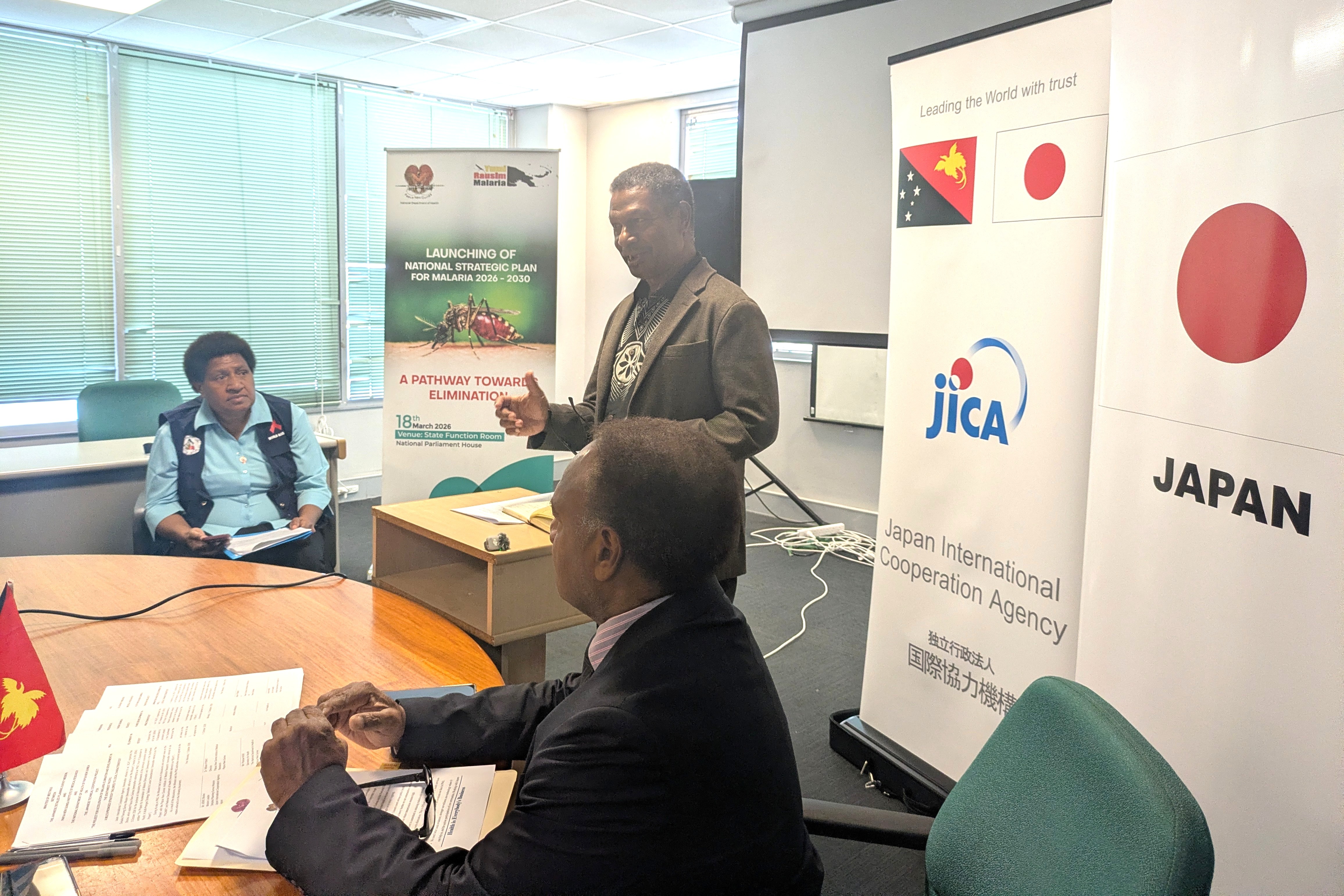
Director, PNG Institute of Medical Research, Dr. William POMAT
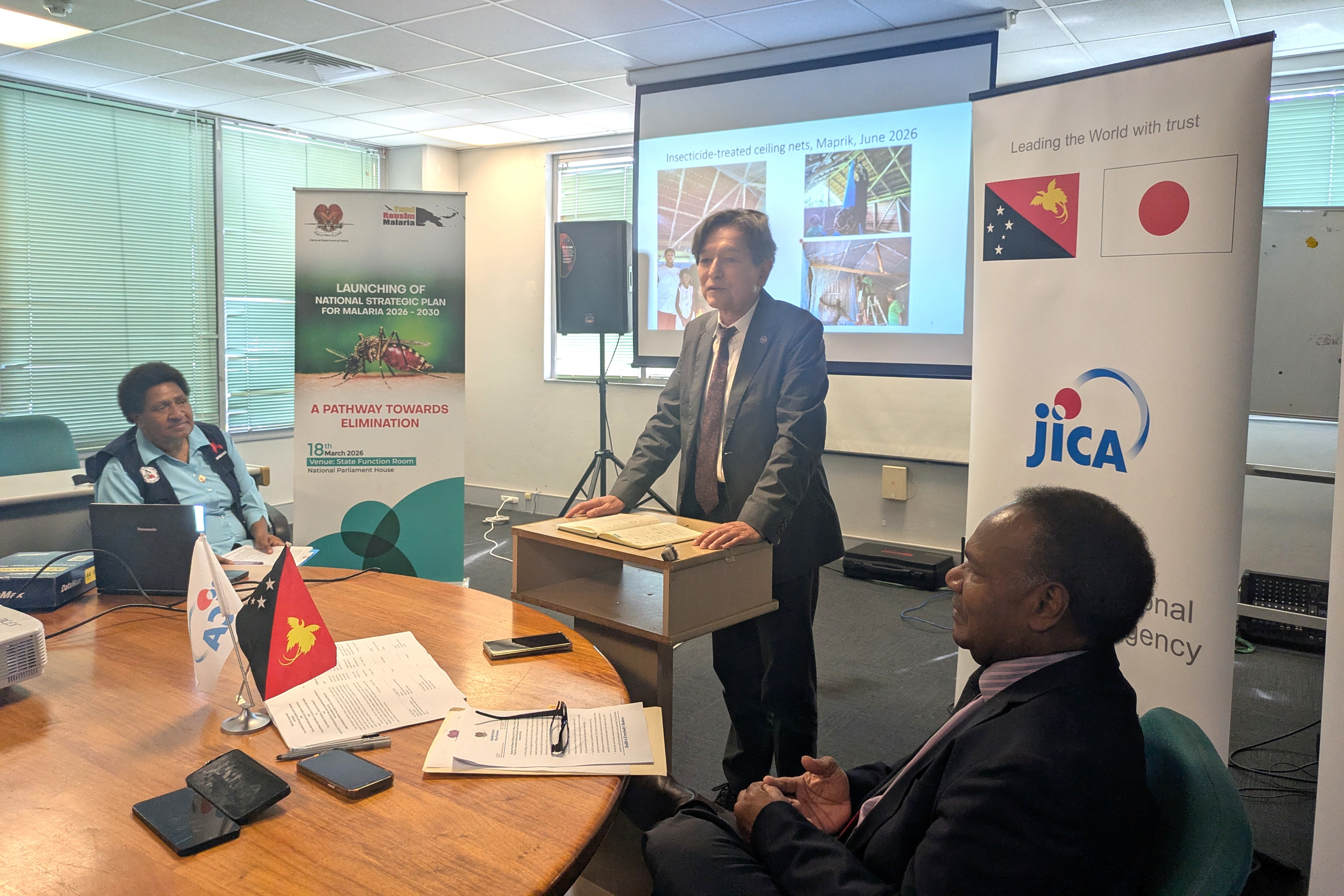
Project lead from Japan side, Prof. KANEKO Akira
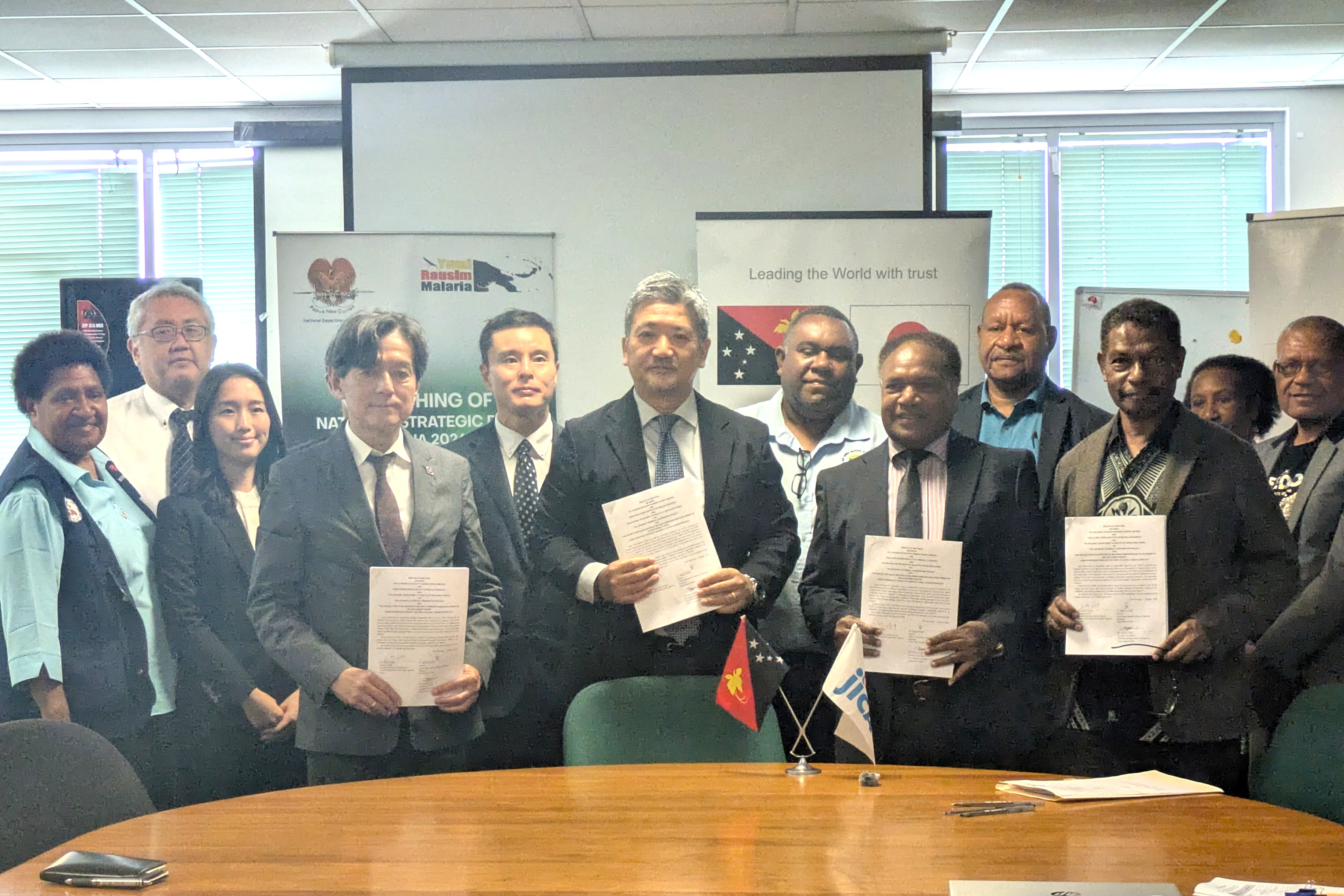
Representatives from Japan and PNG following the signing ceremony
Related Link
・Children Express Papua New Guinea’s Culture: West Goroka Primary School Design/Art Contest
・JICA-JDS Scholarship Program: Grant Agreement Signed for New Batch of Scholars
・Airport Development Opening the Door to the Future Opening Ceremony of the New Gurney Airport Terminal and the Development of Milne Bay Province
Please also visit our Facebook for our latest activities and events news
JICA Facebook Page
Sns share!


