
Aikawa Nanase's discovery! Japanese police stations “koban” in Brazil!?
[Goal 11] Sustainable Cities and Communities
[Goal 17] Partnerships for the Goals
2025.12.16





2025.12.16
Koban, Japan’s small community police stations that have long helped keep communities safe, are spreading across Latin America. In Brazil, the koban system is playing a key role in improving public safety. Aikawa Nanase, a rock singer and goodwill ambassador for Japan-Brazil friendship, explores the background of this initiative.
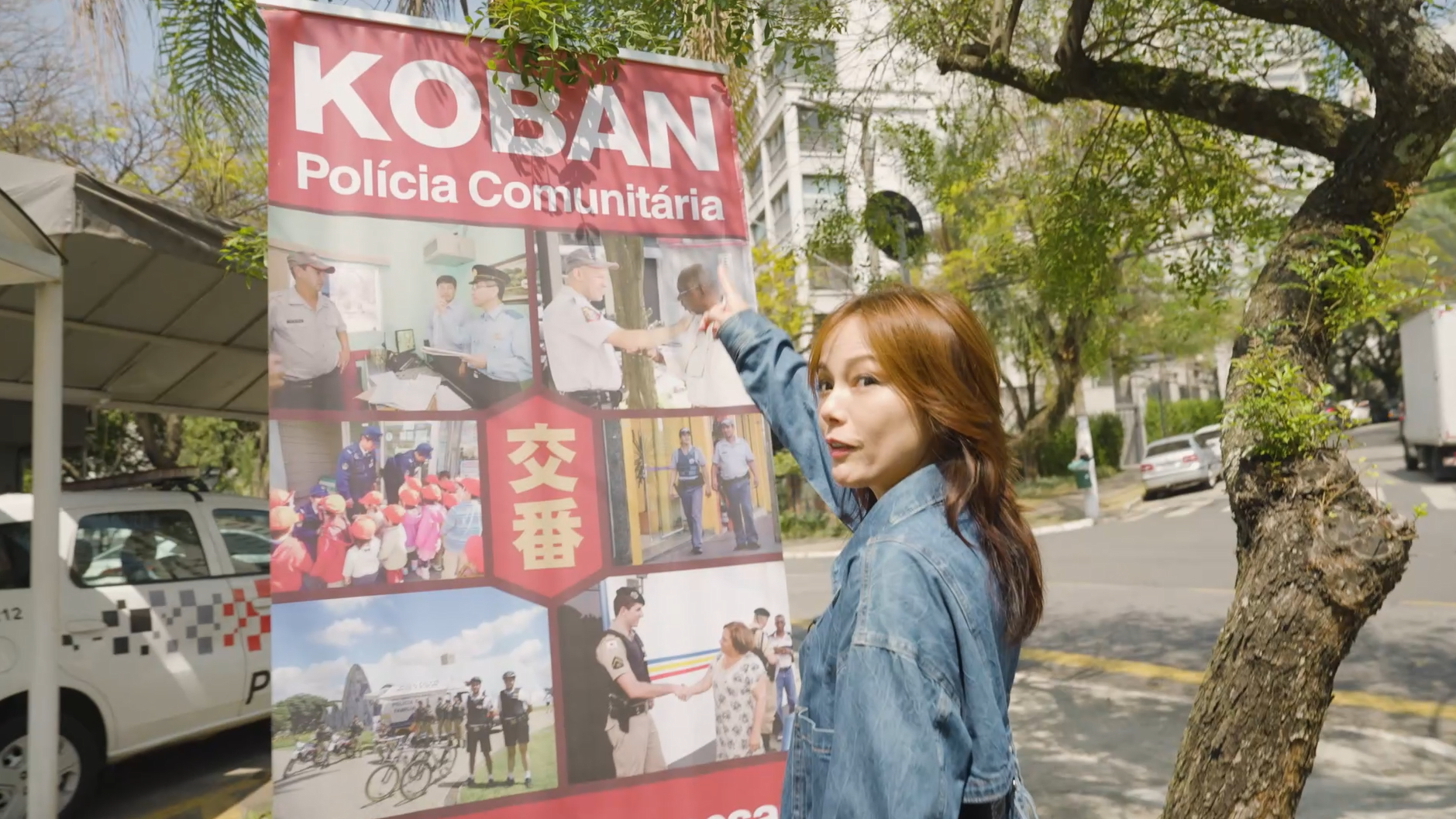
Aikawa points to a "KOBAN" sign.
São Paulo is South America’s largest city with a population of about 12 million. While walking along a major street, Aikawa Nanase exclaimed:
"Oh, it says 'koban' in kanji!"
Brazil has adopted Japan’s koban system. The sign Aikawa spotted belongs to one of 47 koban police stations located across the city.
Inside the koban, a local resident voiced his concern: “There are so many thefts, it’s really troubling.” The police officer responded, “Understood. We’ll step up patrols, and please file a report as well.” Just like in Japan, koban in Brazil serve as community hubs for addressing safety concerns and offering advice on everyday problems.
“Police officers are approachable to residents. If there’s trouble, they dispatch patrol cars and are a trusted presence,” the local man said.
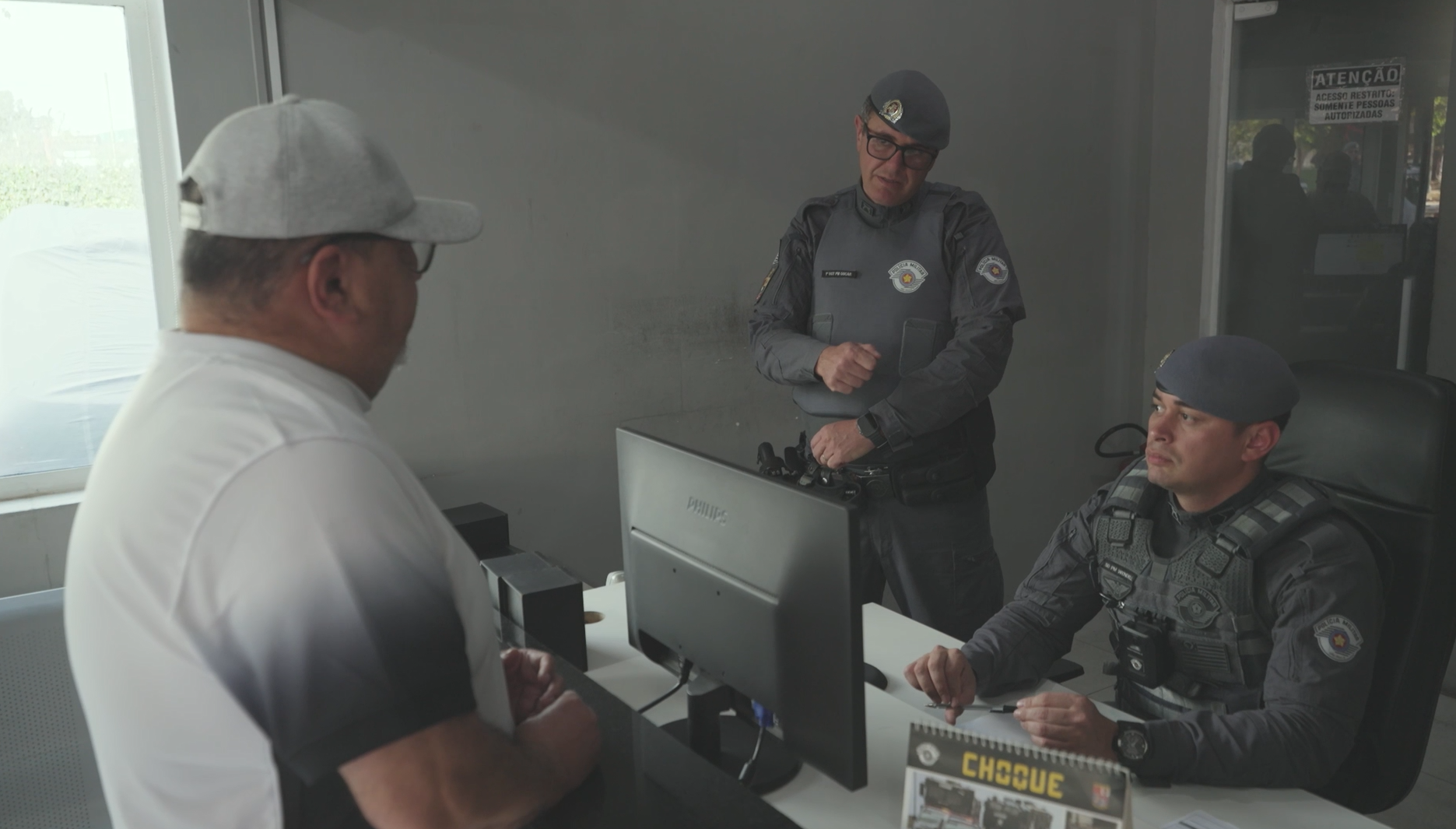
A police officer speaks with a resident at a koban police station.
The koban system, which stations police officers throughout neighborhoods, originated in Japan. It began in 1874 (Meiji 7) when the Tokyo Metropolitan Police Department set up “koban-sho,” or police stations, for officers to take turns on duty. By 1888, the system was expanded nationwide, and ever since, koban have served as the cornerstone of community policing, helping safeguard Japan’s safety and security.
But why is Japan’s koban system in Brazil?
Until 1985, Brazil was under military rule, creating a deep divide between the oppressive police force and citizens. This led to soaring crime rates and weakened community ties. In response, the government began exploring the introduction of community-based policing to foster cooperation among police, local authorities, and residents in building safer neighborhoods.
According to Kano Yuri of the JICA Brazil Office, in their search for a model to make policing more citizen-friendly, they turned to Japan’s koban system.
Luis Castro, a retired police officer familiar with that period, reflects:
“We studied systems from Canada, the United States, and the United Kingdom. But we still wondered if there was another model that would better match our needs. Then we discovered that Japan’s koban system was efficient and excellent. Until then, we had only been recording crimes, but in Japan, they also kept a database of citizen consultations and police responses. We wanted to adopt that system,” he said.
JICA acted as the bridge between the police organizations of both countries. In 2005, it launched the “Community Policing Project” in São Paulo State, which later expanded nationwide. Castro, who trained with Japan’s National Police Agency, said, “Without JICA’s role in connecting Brazilian and Japanese police, we never could have implemented the koban system.”
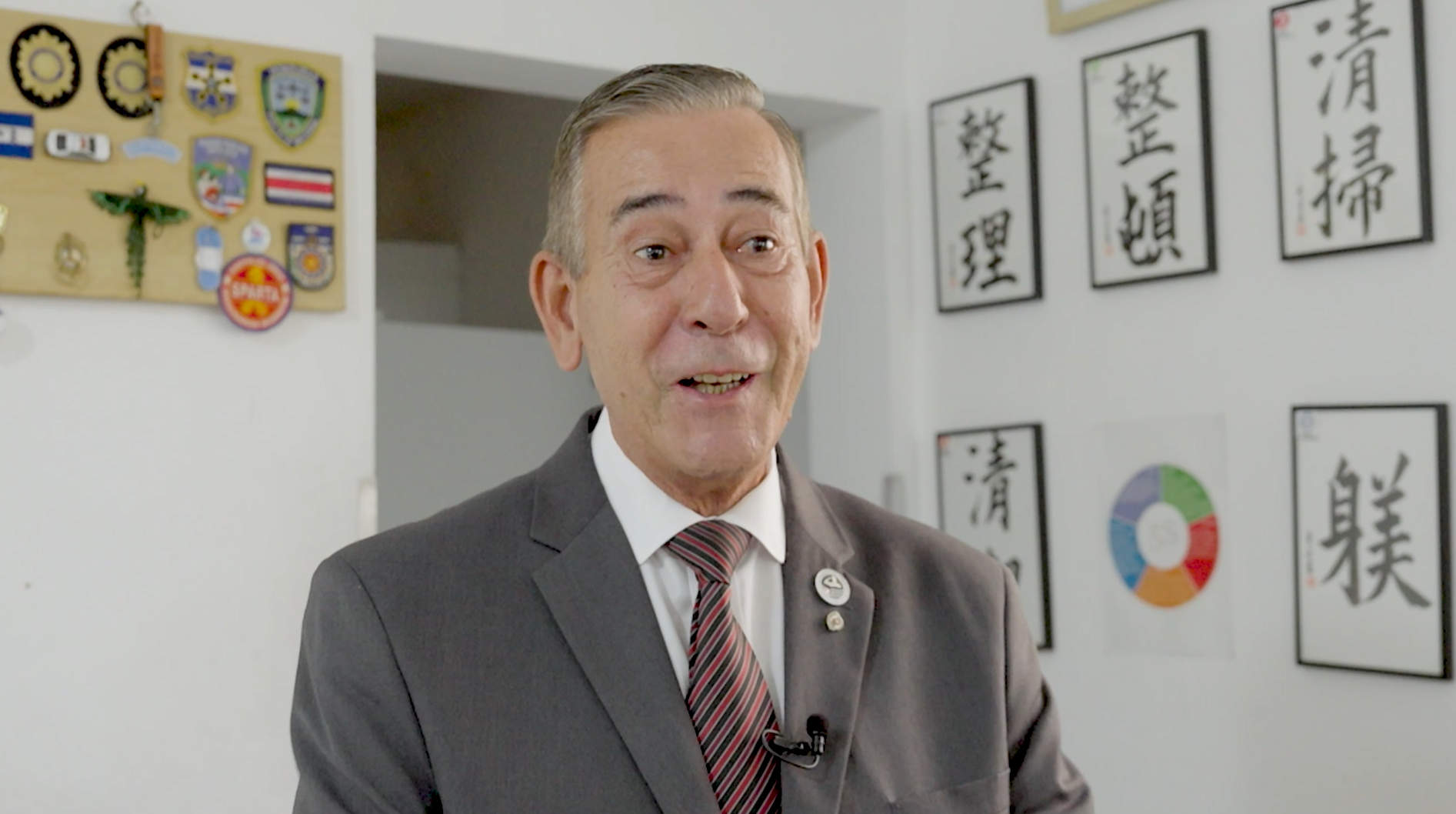
Luis Castro, who helped introduce the koban system in Brazil
What the Brazilian police learned from Japan was the importance of building ties with local communities. A key part of this effort is routine patrols. Officers visit cooperative residents to ask about recent developments in the area. They also create social media groups to stay connected and coordinate with the community.
In urban areas where land for new koban is scarce, “mobile koban” play an active role. These van-type vehicles are equipped with all the functions of a regular koban, including a desk inside for citizen consultations. In some high-crime districts, their deployment has reportedly reduced theft incidents by about 80 percent.
Over 1,000 mobile koban are deployed in São Paulo state alone.
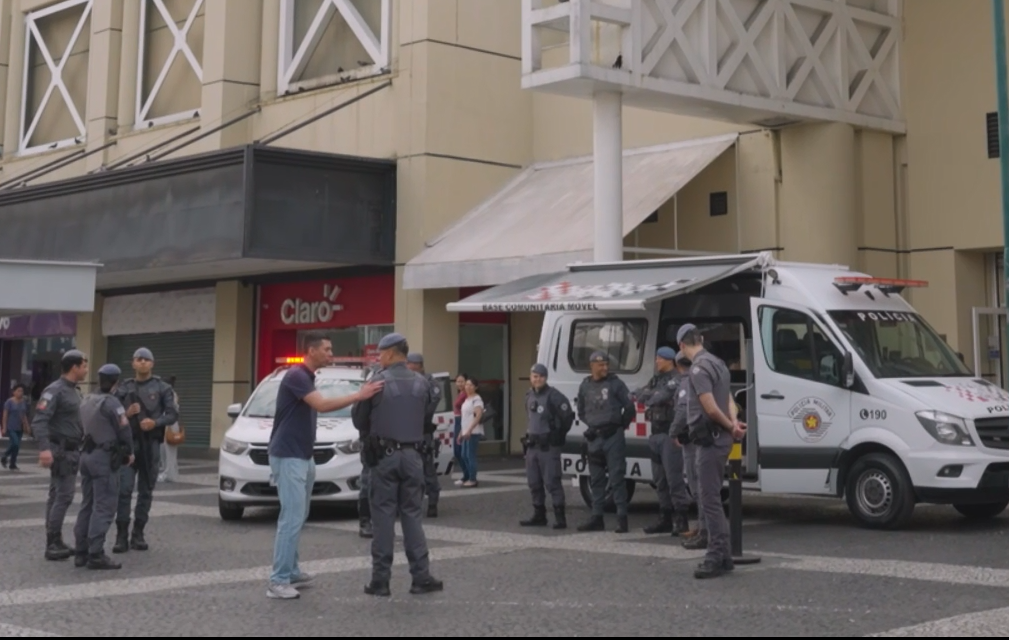
A mobile koban serves a shopping complex.
The role of the police extends beyond responding to incidents and accidents that have occurred.
At 7 p.m., near a koban in the city, cheers could be heard. Inside, children in Jujutsu uniforms were bouncing with excitement. It was a free jujutsu class hosted by the police officers at the koban.
Soon, adults joined in, watching through the windows. One boy grinned and said, “Jujutsu is so much fun. The officer is my best friend.” Pointing toward the koban, he declared, “Someday, I’ll be a police officer right there.”
Through martial arts, the program teaches far more than physical skills — it instills manners and an appreciation for hierarchy.
The police officer leading the class said, “The tatami holds countless lessons. Life comes with setbacks, but I hope (the children) strengthen both their minds and bodies and stay on the right path.”
In Brazil, it is not uncommon for children to be drawn into crimes committed by gangs. “Before gangs can lure them in, we accept them here,” said Carlos Teixeira, a Brazilian Jujutsu master, emphasizing the purpose behind his classes.
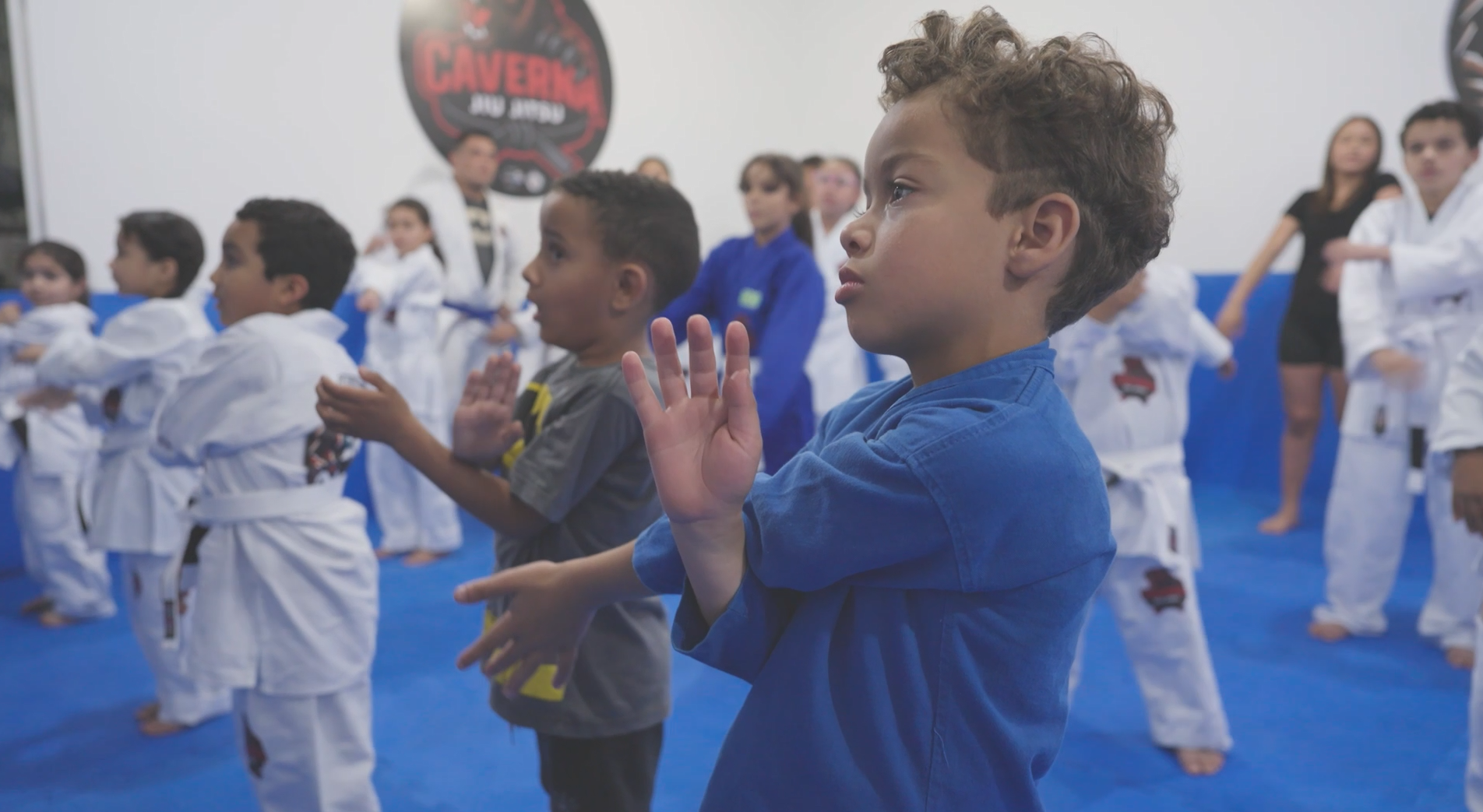
Children take part in a jujutsu class at the koban.
The koban system that was introduced in Brazil has now expanded beyond its borders, reaching other countries — one of them being Guatemala in Central America.
Like Brazil in the past, people in Guatemala had a deep-rooted distrust of the police due to their involvement in human rights violations under military rule. Serious crimes committed by drug cartels and gangs were also major problems. In response, JICA launched a police personnel development project in 2016 through a scheme known as “triangular cooperation,” involving Japan, Brazil, and Guatemala.
Guatemala adopted the koban system that Brazil had first learned from Japan and then further developed on its own. Niino Sawako from the JICA Guatemala Office explains.
“I believe the significance of this project lies in the fact that a Brazilian-adapted community policing system was introduced to Guatemala. Because of the many similarities with Brazil, the system was easier for Guatemalan police and local residents to accept.”
The “Community Policing Project,” launched in 2021, has provided support through training programs both in Japan and abroad, as well as by supplying 200 motorcycles to Guatemala. As a result of these efforts, public trust in the police has improved, contributing to a decline in crimes such as homicide. Further positive outcomes are expected in the future.
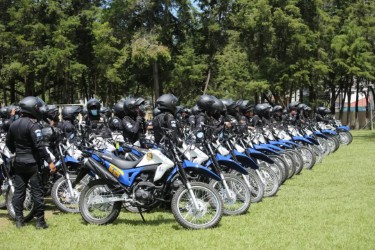
Motorcycles supplied to Guatemala
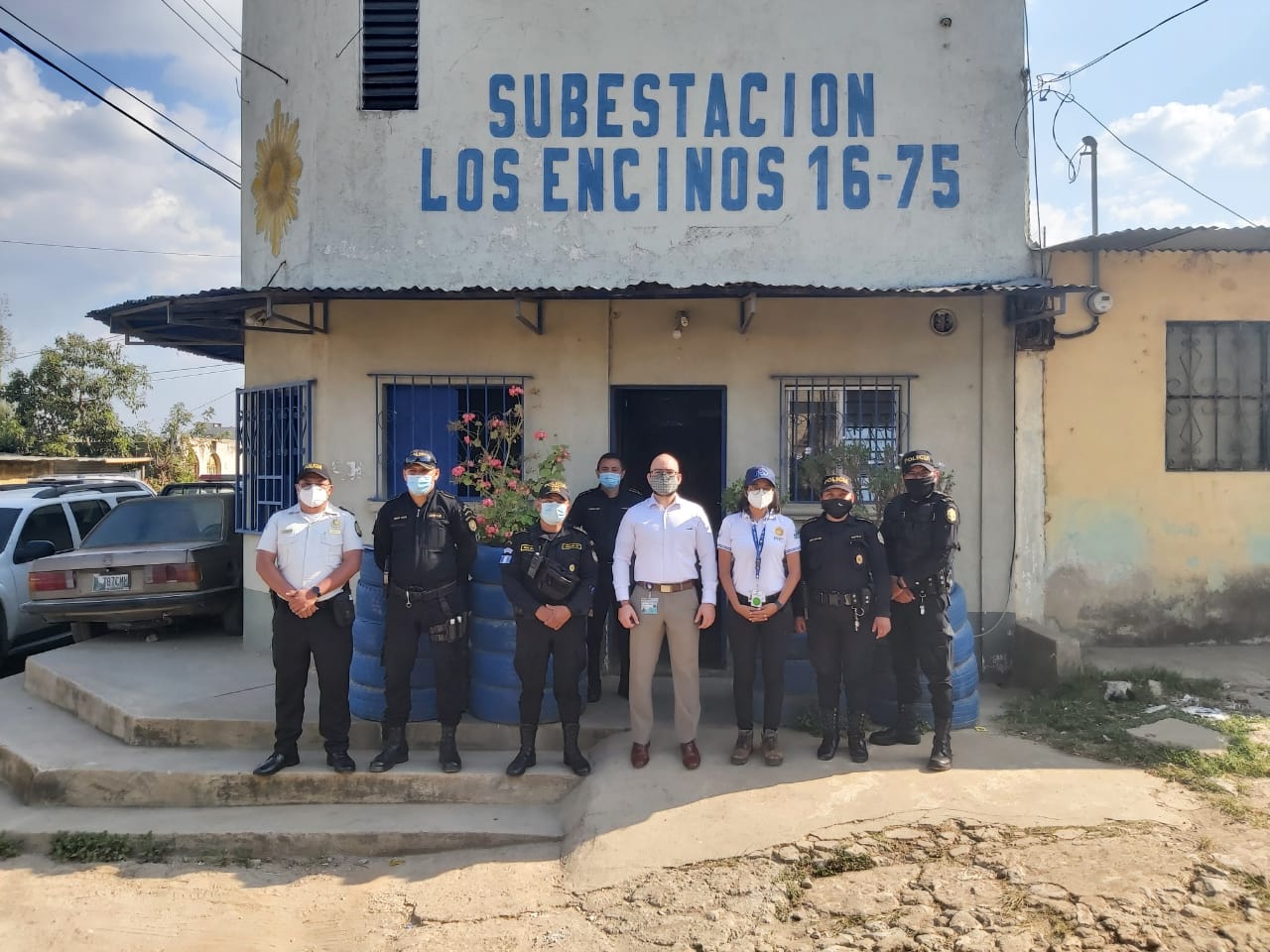
Inspection of the Community Policing Project in Guatemala
After completing her observation of community policing activities in São Paulo, Aikawa shared her thoughts:
“I felt truly proud to learn that the koban system, which helps maintain public safety in Japan, is protecting citizens in faraway Brazil and even spreading to other countries. The role of the koban is to watch over the community, and it is the residents — not the police — who create safety in their neighborhoods. I also sensed how much importance is placed on this perspective.”
Aiming for a society where everyone can live in safety and security, a system born in Japan is helping improve public safety in Latin America — on the other side of the globe.
Sns share!


