
Aikawa Nanase's perspective: The Nikkei community connecting Brazil and Japan
2025.12.25






In 2025, Japan and Brazil celebrated 130 years of diplomatic relations. Today's friendly relations owe much to the Nikkei Brazilian community —people of Japanese descent living in Brazil—which has overcome hardships to serve as a bridge between the two countries. Rock singer Aikawa Nanase, serving as a goodwill ambassador for Japan-Brazil friendship and exchange, reflected on this shared history and the current situation.

Aikawa Nanase performs passionately at the Bon Odori traditional Japanese dance festival in the Japanese neighborhood of Liberdade.
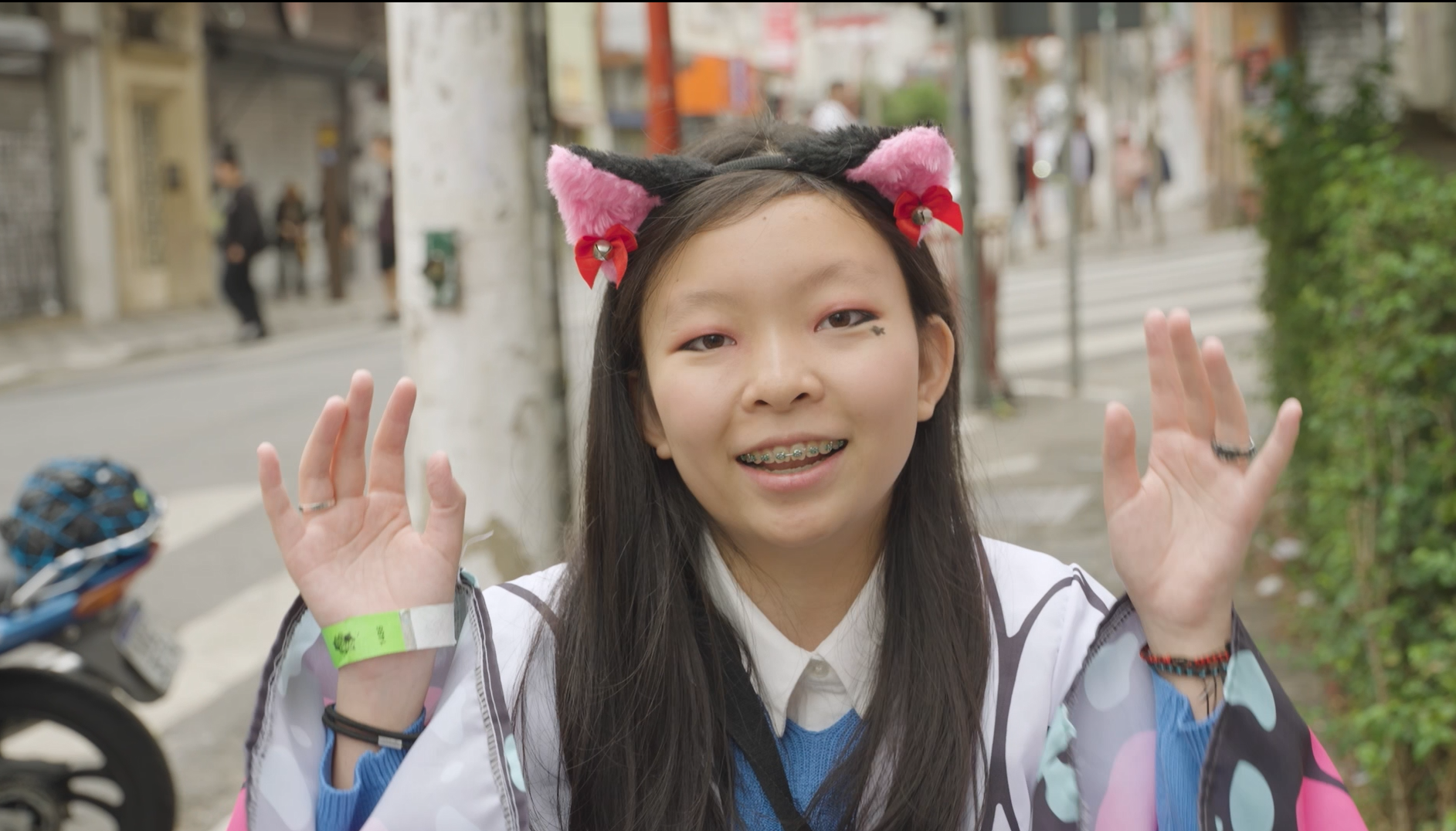
"Digimon," "Demon Slayer" ... Throughout the bustling streets, young people are dressed in cosplay costumes of Japanese anime characters.
"I can see myself in the characters."
"I learned courage from anime."
São Paulo's Liberdade district is known as one of the largest Japanese neighborhoods in the world. Stalls selling manga illustrations and signs for maid cafés catch the eye. It seems everyone is enjoying Japanese anime and pop culture.
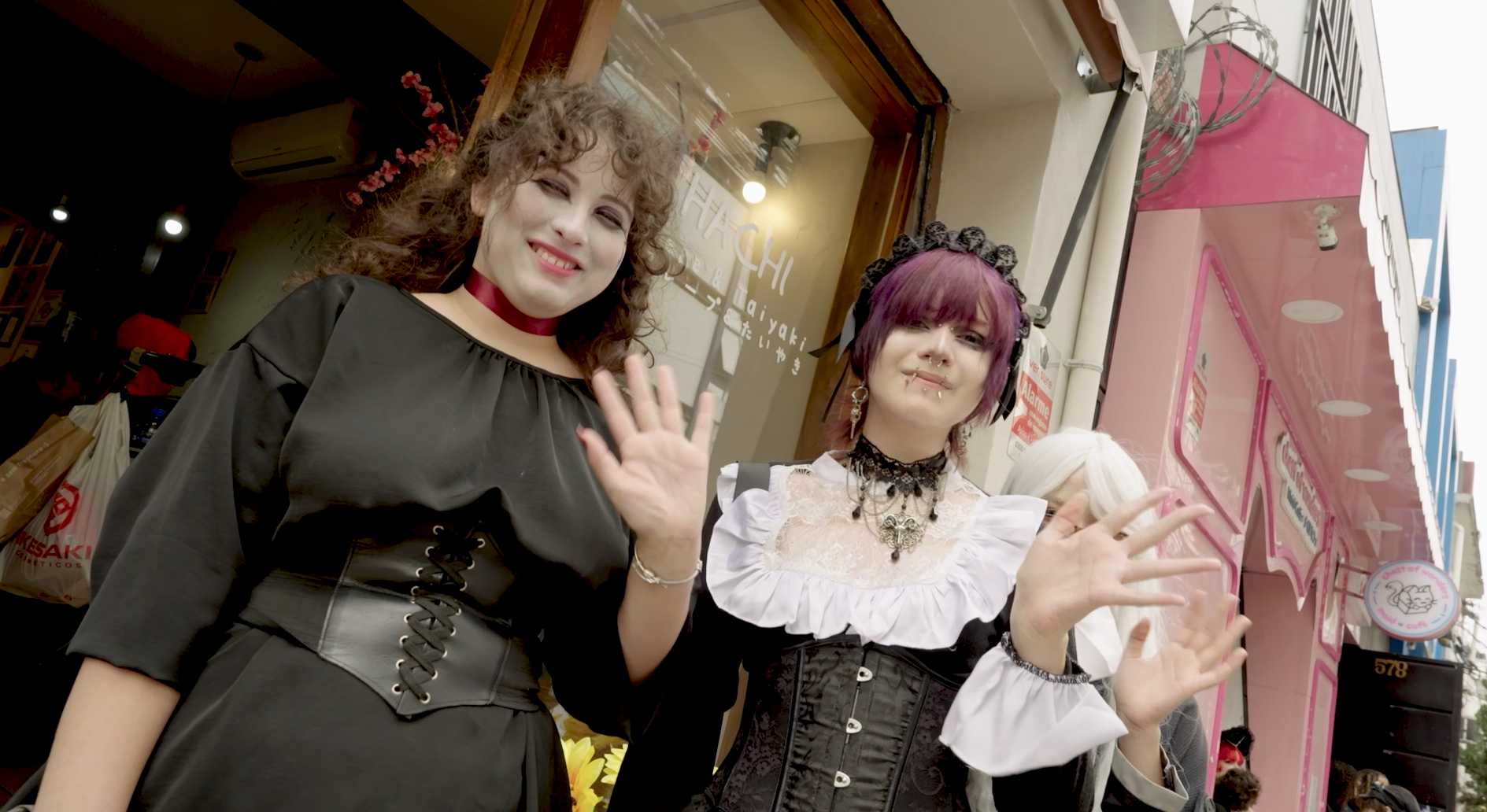
Young people enjoy cosplay.
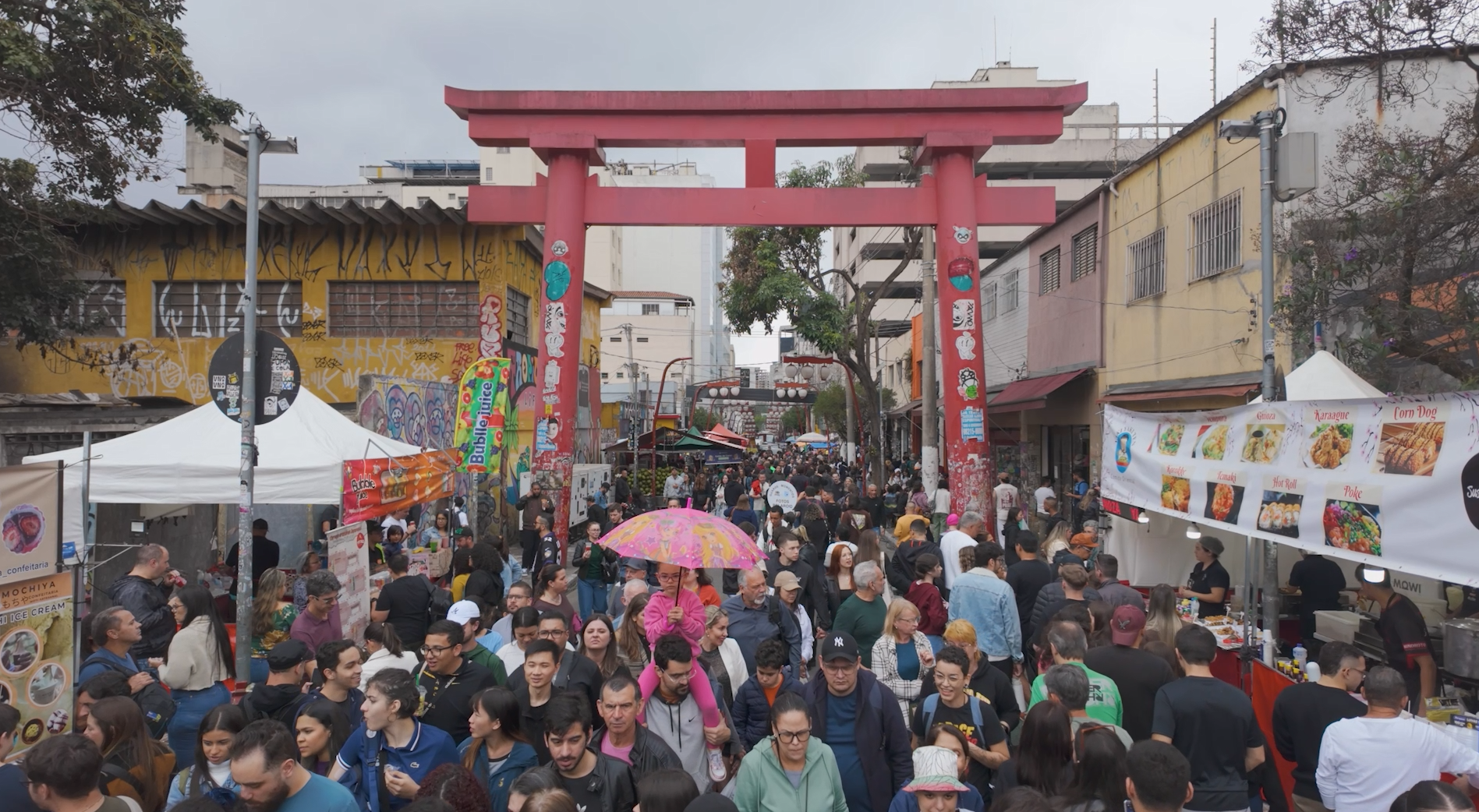
The bustling center of Liberdade.
Approximately 2.7 million people of Japanese descent live in Brazil. Outside Japan, this is the largest number in the world. Nishio Roberto, president of Bunkyo, the Brazilian Society of Japanese Culture and Social Assistance, one of the main organizations of the Nikkei community in Brazil, states, "The Nikkei community is a strong one and has become a part of Brazilian society." Bunkyo promotes the preservation and dissemination of Japanese culture in Brazil and also plays a role in introducing Brazilian culture to Japan.
However, Nishio is currently facing a challenge. "At present, the individual members of Bunkyo are primarily in their 60s. To further develop the Nikkei community, the participation of young people is essential ..." Nishio said as he watched the lively young crowd.
Inside the Bunkyo building in Liberdade is the "Historical Museum of Japanese Immigration," which displays and houses approximately 97,000 artifacts that convey the history of migration to Brazil, beginning with the first group migration in 1908.
Aikawa Nanase, who researches folklore in graduate school alongside her career as an artist, visited the museum with great interest. The museum exhibits photos, timelines and tools used in farming and daily life, capturing the spirit of the first-generation immigrants who overcame hardships. Aikawa paused at the exhibits, observing them with a serious expression.
"The immigrants cleared land by cutting trees with their bare hands and endured hardships beyond what we can imagine to survive. Generations followed, leading to the formation of the Nikkei community we see today. It's truly remarkable," she said.
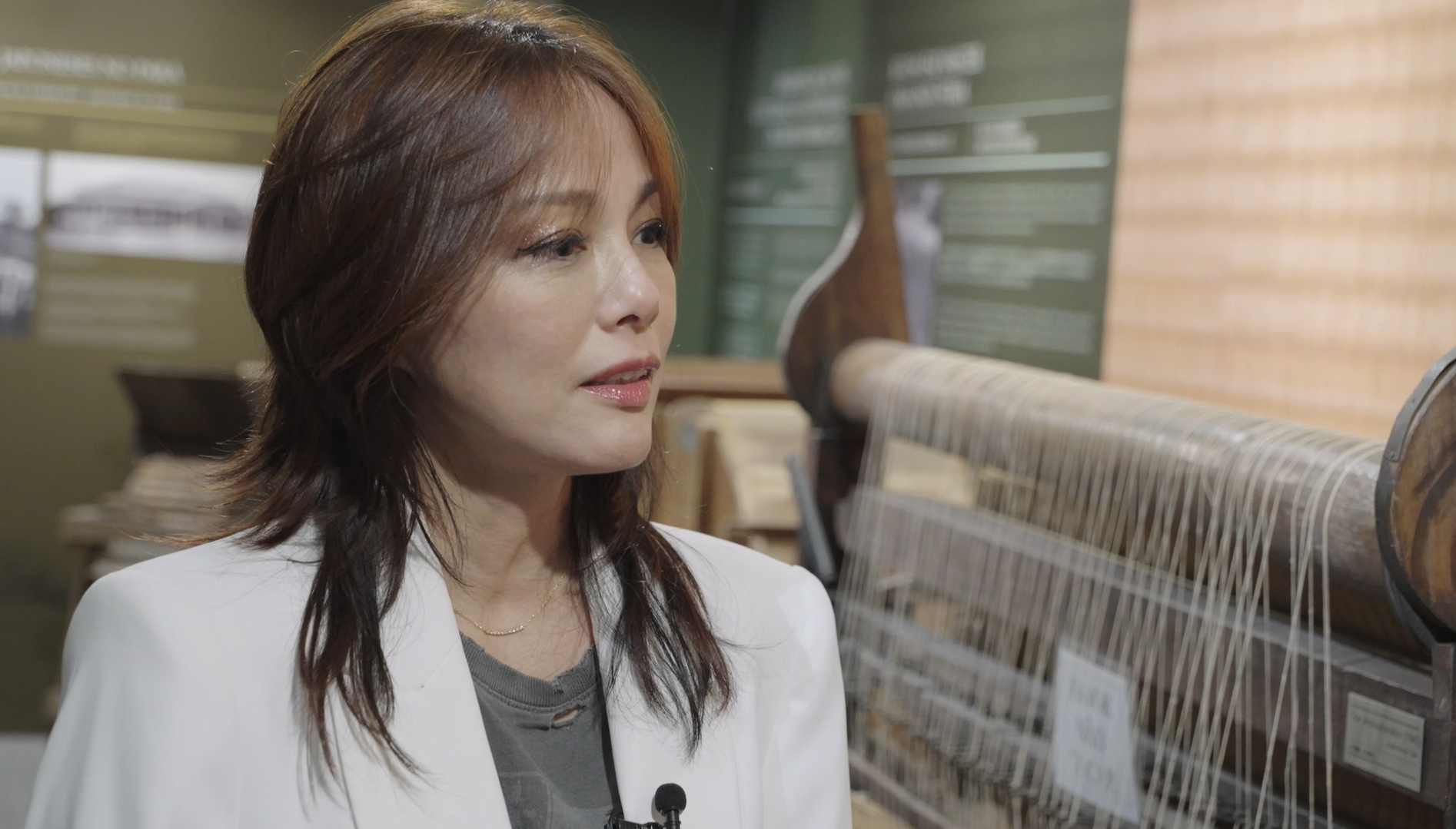
Aikawa Nanase visits the Historical Museum of Japanese Immigration.
At the museum, Aikawa had a discussion with Bunkyo President Nishio, where she inquired about the current challenges.
President Nishio: The history of Japanese immigration to Brazil has reached its 117th anniversary. Nikkei organizations have integrated into Brazilian society, but the number of people supporting these organizations is decreasing.
Aikawa: Are there any ideas or strategies you are currently considering to engage the younger generation?
President Nishio: It's not only people of Japanese descent who are interested in Japanese culture. Therefore, I believe it's important to hold events that also engage non-Nikkei individuals.
Aikawa: As a singer, I hope to contribute to the development and friendship of the Nikkei community, even if just a little, through music and culture.
President Nishio: It is truly an honor to hear that from Aikawa Nanase, a well-known singer in Brazil. We look forward to your support.

Aikawa Nanase and Nishio Roberto, president of the Brazilian Society of Japanese Culture and Social Assistance, discuss the challenges facing the Nikkei community.
The relationship between JICA and the Nikkei community in Brazil spans nearly 60 years.
It began in the 1960s when JICA's predecessor, the Japan Emigration Service, supported migration and travel to Brazil. The service also provided indirect support to stabilize the lives of Japanese immigrants through settlement development and financial loans. Currently, JICA collaborates with the Nikkei community to strengthen relations between Japan and Brazil by arranging support projects for the Nikkei community.
Miyazaki Akihiro, chief representative of the JICA Brazil Office, explains the situation.
"The rise of Brazil as an agricultural powerhouse has been significantly influenced by the contributions of Nikkei farmers. Many early immigrants were engaged in agriculture, and JICA provided development cooperation to Brazil, including support for their farming activities. As a result, Brazil became capable of large-scale soybean production and emerged as an agricultural giant. The benefits have also reached Japanese dining tables. Additionally, the achievements of the Nikkei community have supported the expansion of Japanese companies into Brazil."
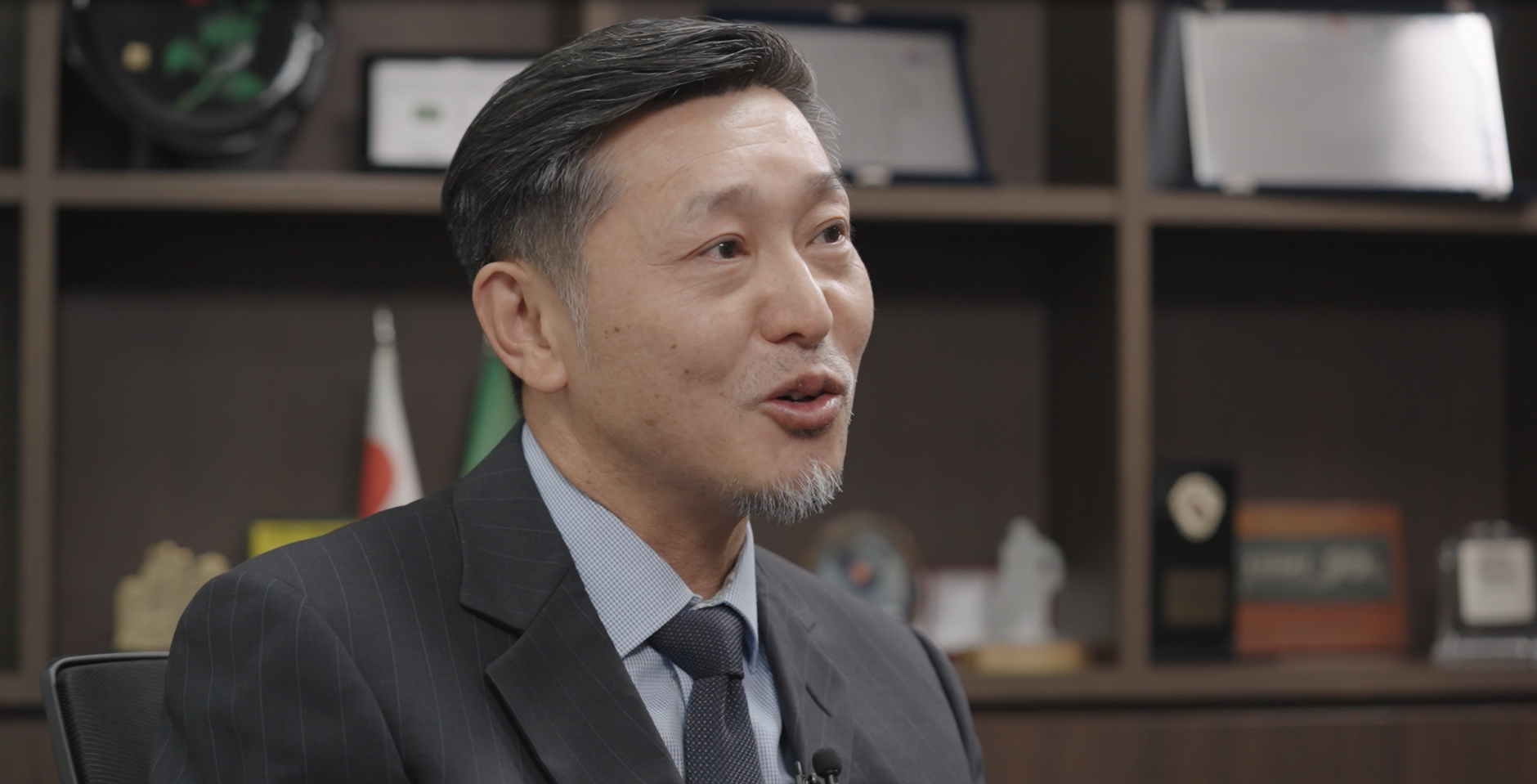
Miyazaki Akihiro, chief representative of the JICA Brazil Office, discusses the history and contributions of the Nikkei community.
JICA supports the Nikkei community in various ways, recognizing its contributions to both Japan and Brazil and its role as a bridge between the two countries. One such initiative is the development of leaders within the Nikkei community.
In Brazil, there are prefectural associations for each of Japan's 47 prefectures. At a cooking class at the Mie Kaikan, Miyazaki Marcia, the head of the women's department of the Mie Kenjinkai (Mie Prefecture Association), was teaching how to make okonomiyaki. She participated in a JICA-organized training program in Yokohama aimed at revitalizing Nikkei organizations, and is now spreading what she learned as a leader in the Nikkei community in Brazil. "I learned that food is culture, memory and identity. In the classes, we convey Japanese culture through food."
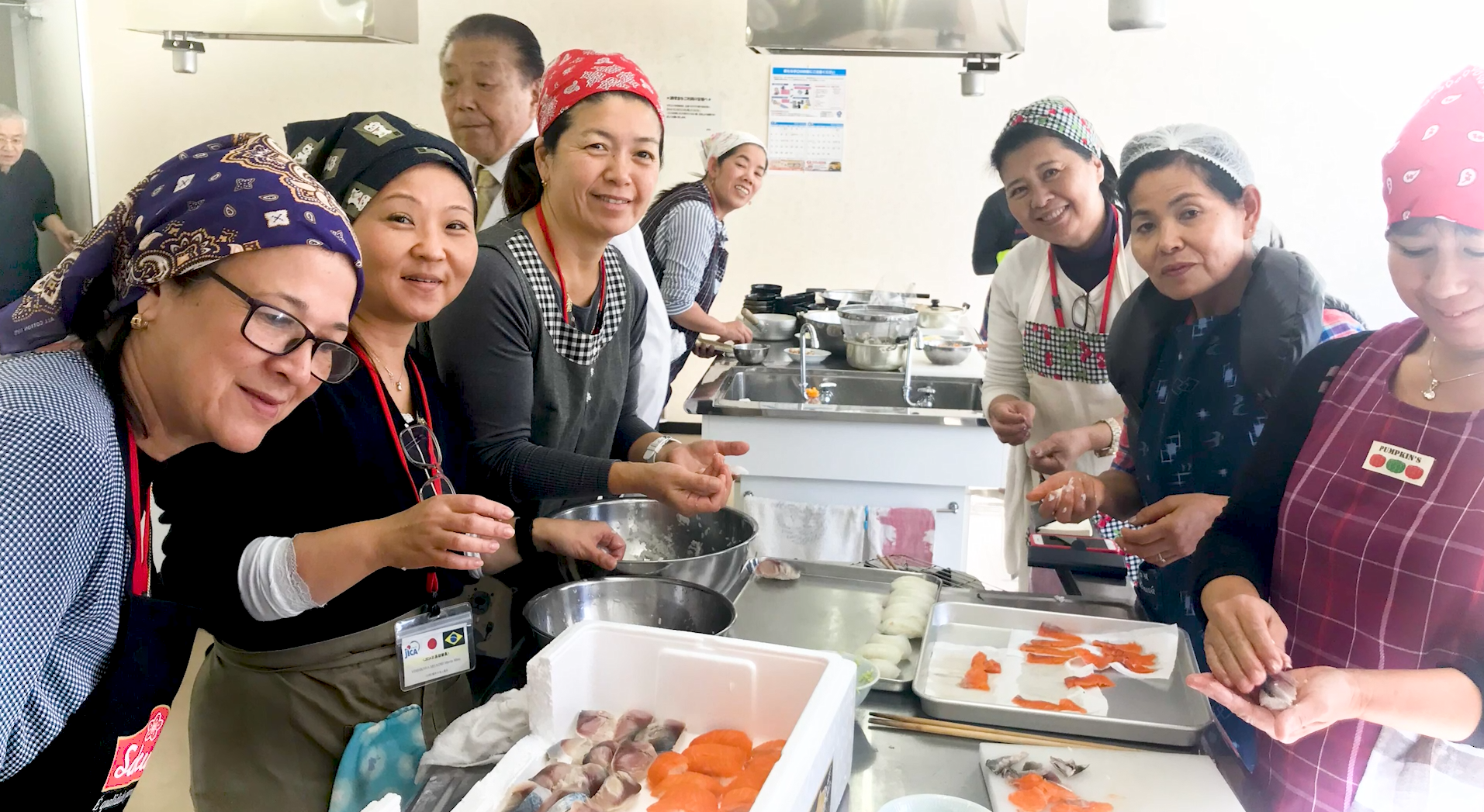
People take part in a cooking class arranged by the women's department of the Mie Kenjinkai.
Additionally, JICA supports Nikkei hospitals. During the global spread of COVID-19, it assisted in the operation of Hospital Nipo-Brasileiro. Director Sergio Okamoto shares his thoughts.
"Even when our plans for equipment investment became uncertain due to the COVID-19 pandemic, we were able to continue providing community healthcare. We have also been supported in the post-pandemic period. I am deeply grateful to JICA, the Japanese government, and the people of Japan," Okamoto said.
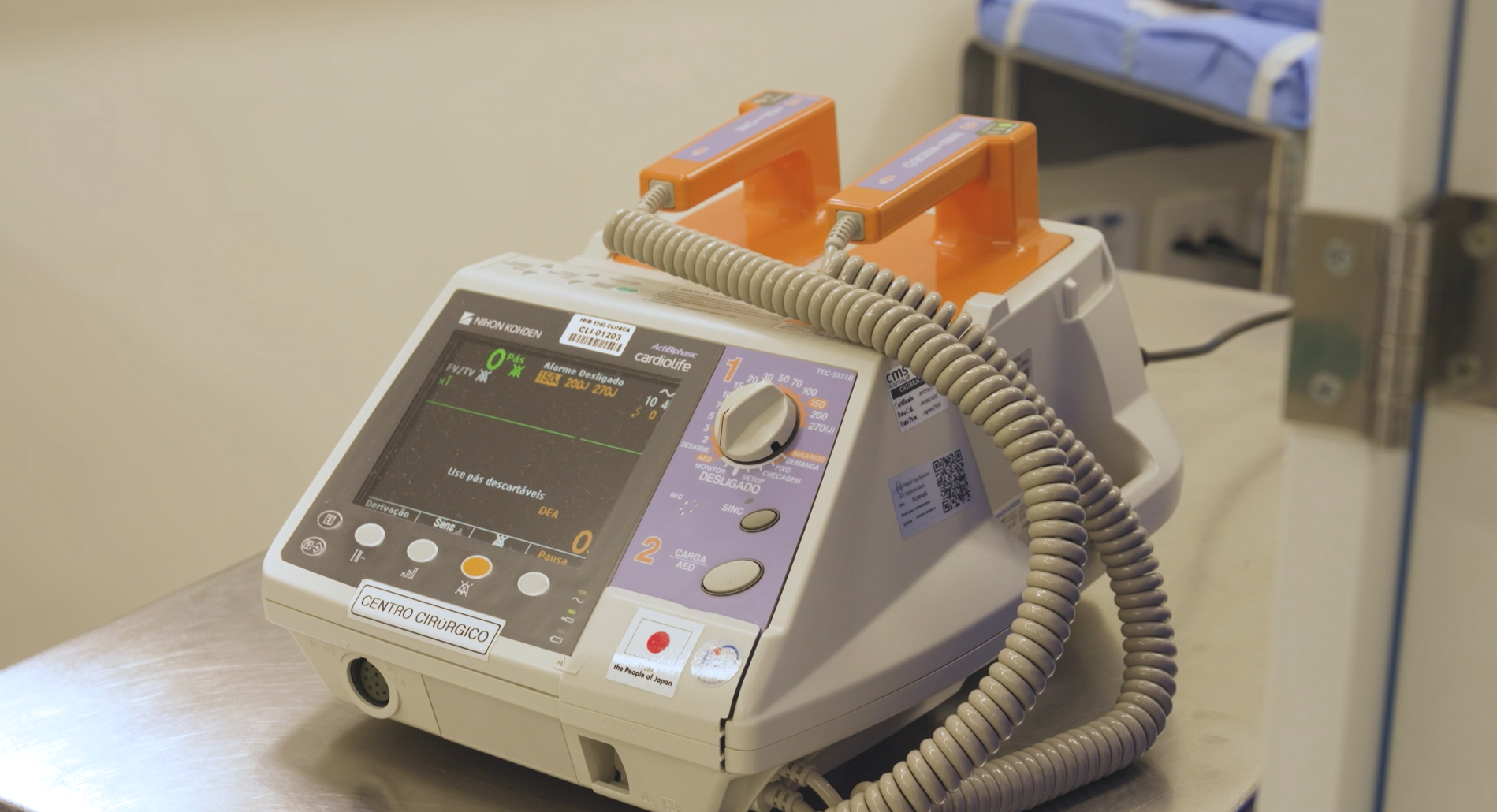
Medical equipment in operation at Hospital Nipo-Brasileiro features the Japanese flag and the JICA logo.
In September 2025, the "1st Liberdade Bon Odori" dance event was held in Liberdade Square. The highlight was the stage performance by Aikawa Nanase, who is hugely popular in Brazil. The venue was filled with people who gathered to catch a glimpse of her.
In Brazil, there is a dance called the "Matsuri Dance," which incorporates elements of street dance into traditional Bon Odori choreography. Aikawa's debut song, "Yume Miru Shoujo Ja Irarenai," has been loved as the accompanying music for this dance for over 20 years.
As Aikawa appeared on stage, a loud cheer erupted from the audience. She passionately performed her new song "Wasshoi," which embodies the spirit of connecting people with people, and Japan with the world, as well as her hit "Yume Miru Shoujo Ja Irarenai ("I can't stay a dreaming girl")." Below the stage, members of Nikkei organizations danced in happi coats to the Bon Odori.
"It was amazing," "I want to learn more about Japan," excited young people exclaimed. President Nishio seemed to sense the impact. "The songs were very energetic and heartfelt. They brought not only the Nikkei community but various communities together as one," he said.
Aikawa, who had expressed to President Nishio her desire to support the Nikkei community through music, was beaming with a broad smile. "They say music transcends borders, but I never imagined my songs would cross borders like this," she said.

The Matsuri Dance is performed at the Liberdade Bon Odori event.
On this trip, Aikawa deepened her understanding of the Nikkei community.
"My honest impression is that I am truly delighted, as a Japanese person, to see how Japanese culture has been embraced in Brazil and how it has fused with local elements to evolve into a new culture. Behind this is the history of those who crossed the ocean nearly 120 years ago, and I was struck by how the trust they built over time has taken root in Brazil," Aikawa reflected.
"In Brazil, Japanese culture is embraced even by non-Nikkei individuals. However, we still don't know enough about Brazil. As we move forward from the 130th anniversary of diplomatic relations to the 150th and beyond, I hope interest in and understanding of Brazil will continue to grow in Japan."
Sns share!


