
Telemedicine project optimized in Thailand saves mothers’ and babies’ lives
[Goal 3] Good Health and Well-Being

[Goal 9] Industry, Innovation and Infrastructure

2026.02.27







2026.02.27
JICA's international cooperation has produced many cases in which achievements in developing countries are returned to Japan, contributing to solving domestic challenges and supporting business activity. One such example is a perinatal telemedicine system that originated in Kagawa Prefecture, was further refined in Thailand, and then returned to Japan. In areas across Japan where the shortage of obstetricians is becoming more serious, the system's small heart-shaped devices are helping to protect the lives of pregnant women and their babies.
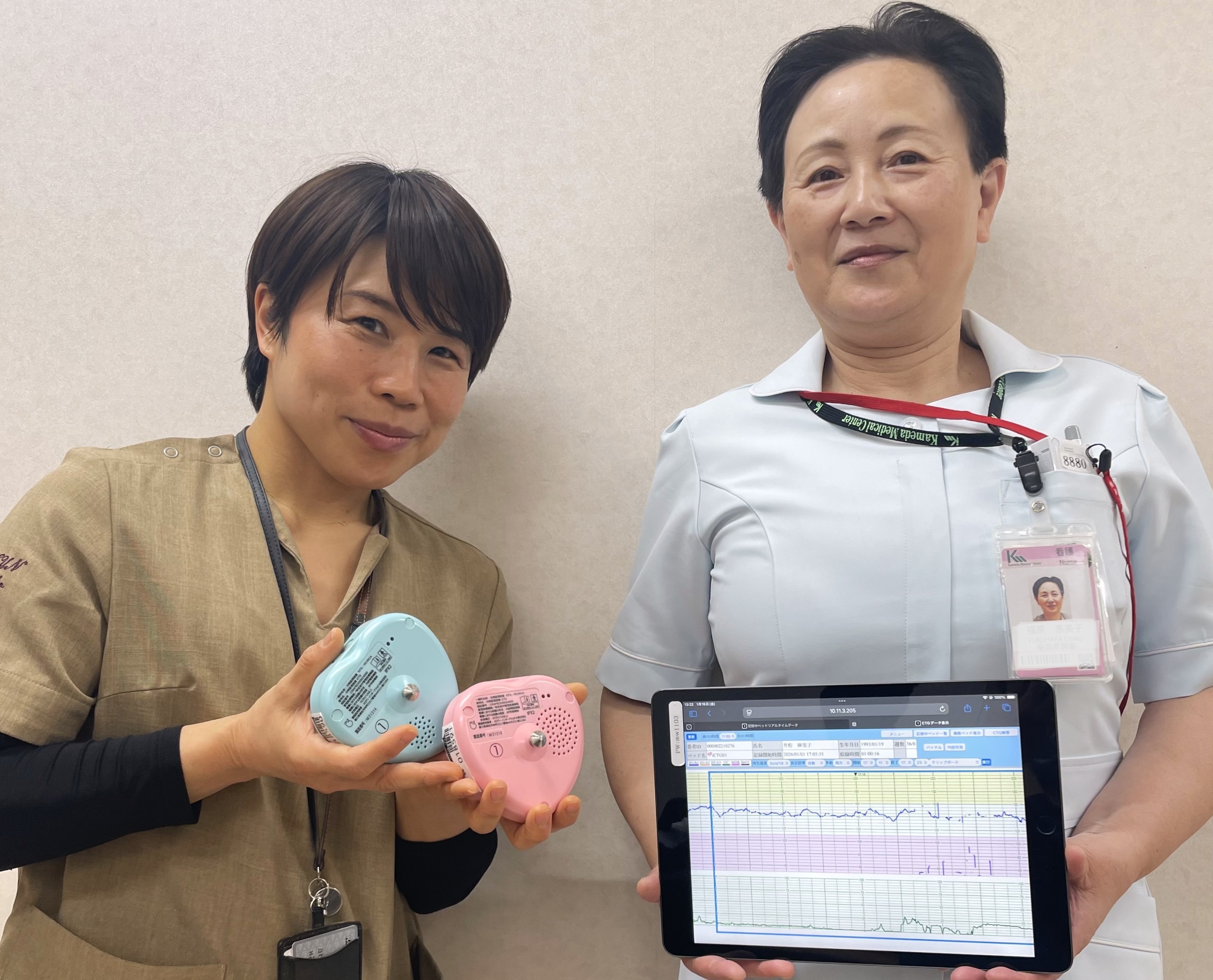
The mobile fetal monitor “iCTG,” pictured here, is now widely used across Japan. (Image courtesy of Kameda Medical Center)
Depopulation and low birthrates across the Boso Peninsula in Chiba Prefecture have led to a decline in the number of maternity clinics. Kameda Medical Center in the city of Kamogawa is a key facility providing perinatal care in the southern part of the prefecture, handling about 500 births annually.
An expectant mother diagnosed with delayed fetal growth had to be hospitalized for tests at the end of 2025.
“I was worried about how to take care of my two older children if my hospital stay dragged on, with the hospital bill adding up too. But after hearing from my doctor about this device, I decided to go home and give it a try."
The hospital lent her the two heart-shaped devices that comprise the iCTG fetal Monitor, which incorporates information and communication technology (ICT). The pink device measures the fetal heartbeat and the light blue one uterine contractions.
Twice a day, in between housework and childcare, the woman lies down on her living room sofa and puts on the iCTG, securing the two devices with belts. Through ultrasonic Doppler, the system detects the fetal heart rate, allowing her to hear the steady thump of her baby’s heart.
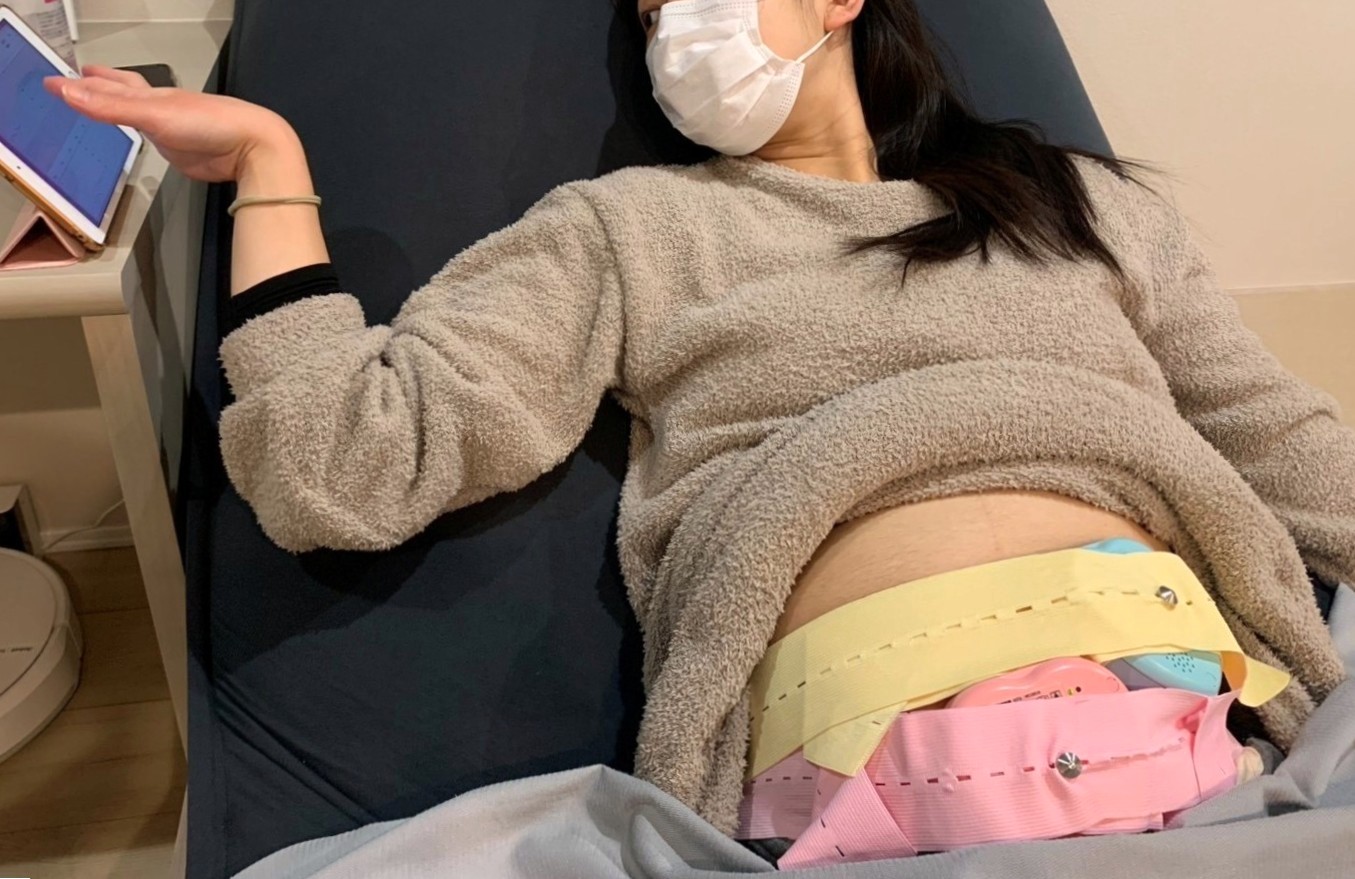
An expectant mother checks her baby’s heart rate and other vital signs on a tablet at home while wearing the iCTG on her abdomen. (Image courtesy of an iCTG user).
Data measured at home is transmitted in real time to the hospital about 50 km away, where it can be checked by the attending physician on a monitor.
“Even while at home, I feel at ease knowing that my doctor will notice right away if anything is wrong.”
In January 2026, the woman safely delivered a healthy baby.
Physician Kadooka Mizuho, acting head of the Department of Obstetrics and Gynecology, commented, “With the introduction of the iCTG, pregnant women with conditions such as fetal growth restriction can spend fewer days hospitalized for pregnancy management. And by collaborating via telemedicine with a family clinic 30 km away, we have also reduced the frequency with which full-term pregnant women need to spend long hours traveling to our hospital for checkups. There have been cases where early detection of a drop in the fetal heart rate or tightening of the mother's abdomen has enabled safe deliveries.”
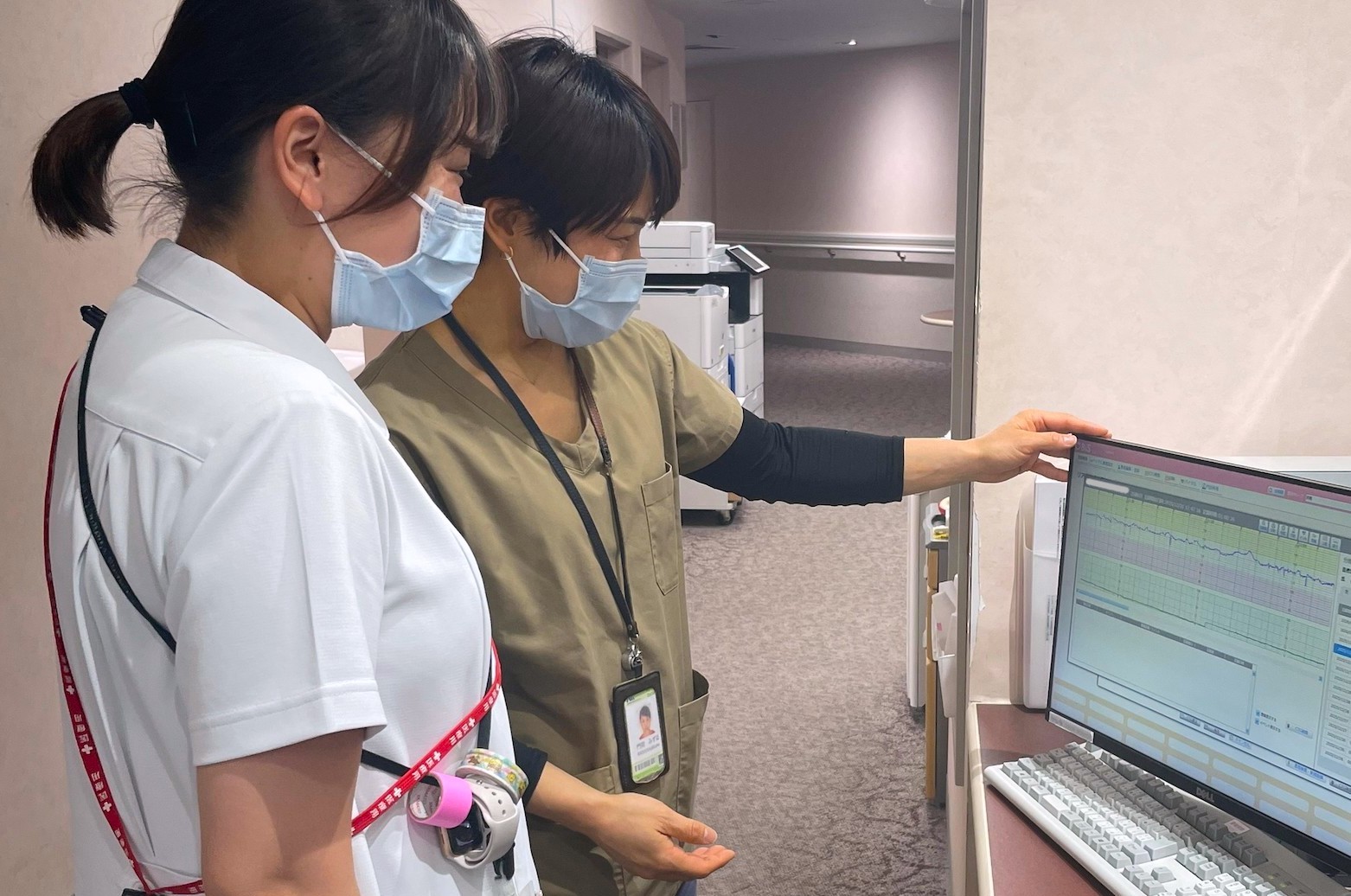
Physician Kadooka Mizuho (right) checks iCTG data transmitted from a pregnant woman’s home together with a midwife at Kameda Medical Center in Kamogawa, Chiba Prefecture. (Image courtesy of Kameda Medical Center)
Japan has one of the lowest maternal mortality rates of any developed country, yet each year it records over 2,000 perinatal deaths, combining stillbirths at 22 weeks of pregnancy or later and early neonatal deaths.
In recent years, the number of medical facilities equipped for childbirth has dropped outside major urban areas, making it increasingly difficult for women to give birth safely with peace of mind in their local communities.
"No family should lose a baby in childbirth." Born from the heartfelt wish of its developers, the iCTG is recommended by the World Health Organization (WHO) and used in Japan and other countries. In fact, international cooperation through JICA has played a significant role in its wider adoption.
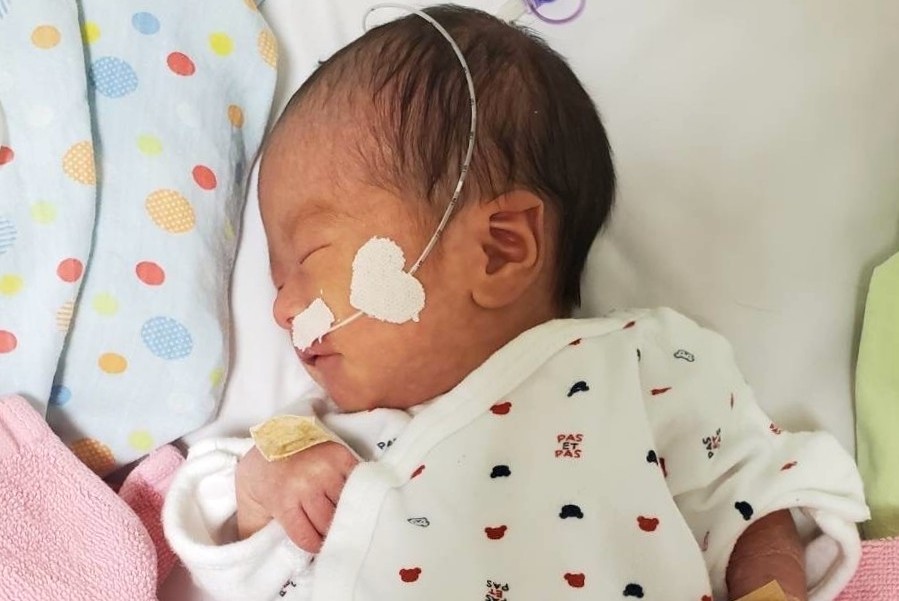
A baby is seen after being safely delivered at Kameda Medical Center Hospital after the mother used an iCTG device at home. (Image courtesy of patient)
The iCTG was developed by Melody International Inc., headquartered in Takamatsu. The company also manufactures and markets the device. Ogata Yuko, founder and CCO, previously worked for an IT firm developing electronic medical record systems, but she was deeply troubled by the serious circumstances surrounding childbirth in Kagawa Prefecture with its many outlying islands.
“I heard about pregnant women living on remote islands going to stay at a hotel in Takamatsu as their due dates approached so they could visit the hospital regularly. Not only is that a financial burden, it's also a time when they want to be with their families as much as possible. Yet, there are still regions in Japan today where that remains difficult. I wanted to find a solution to that problem.”
Around this time, Ogata happened to meet Hara Kazuhiro, professor emeritus at Kagawa University. Professor Hara is a leading expert who developed the world's first fetal ultrasound monitor in 1974.
Professor Hara recalls, “In the 1970s, Kagawa Prefecture had one of the worst neonatal mortality rates in the nation. The most reliable way to bring down the mortality rate is to detect fetal heart rate. However, at that time, such equipment was large and expensive.”
The pair set out to leverage ICT to develop an improved compact and portable fetal monitor. A boost came from JICA’s Technical Cooperation for Grassroots Projects, a program supporting small-scale technical cooperation with developing countries. Believing the device would also be needed in emerging nations, they presented JICA with a proposal for a telemedicine support project in Thailand that would bring together industry, academia, and government. Their proposal was approved for implementation, and a project was established to start in 2014. With the cooperation of Chiang Mai University through its ties to Kagawa University, they secured the opportunity to demonstrate and optimize their fetal monitor in Chiang Mai province.
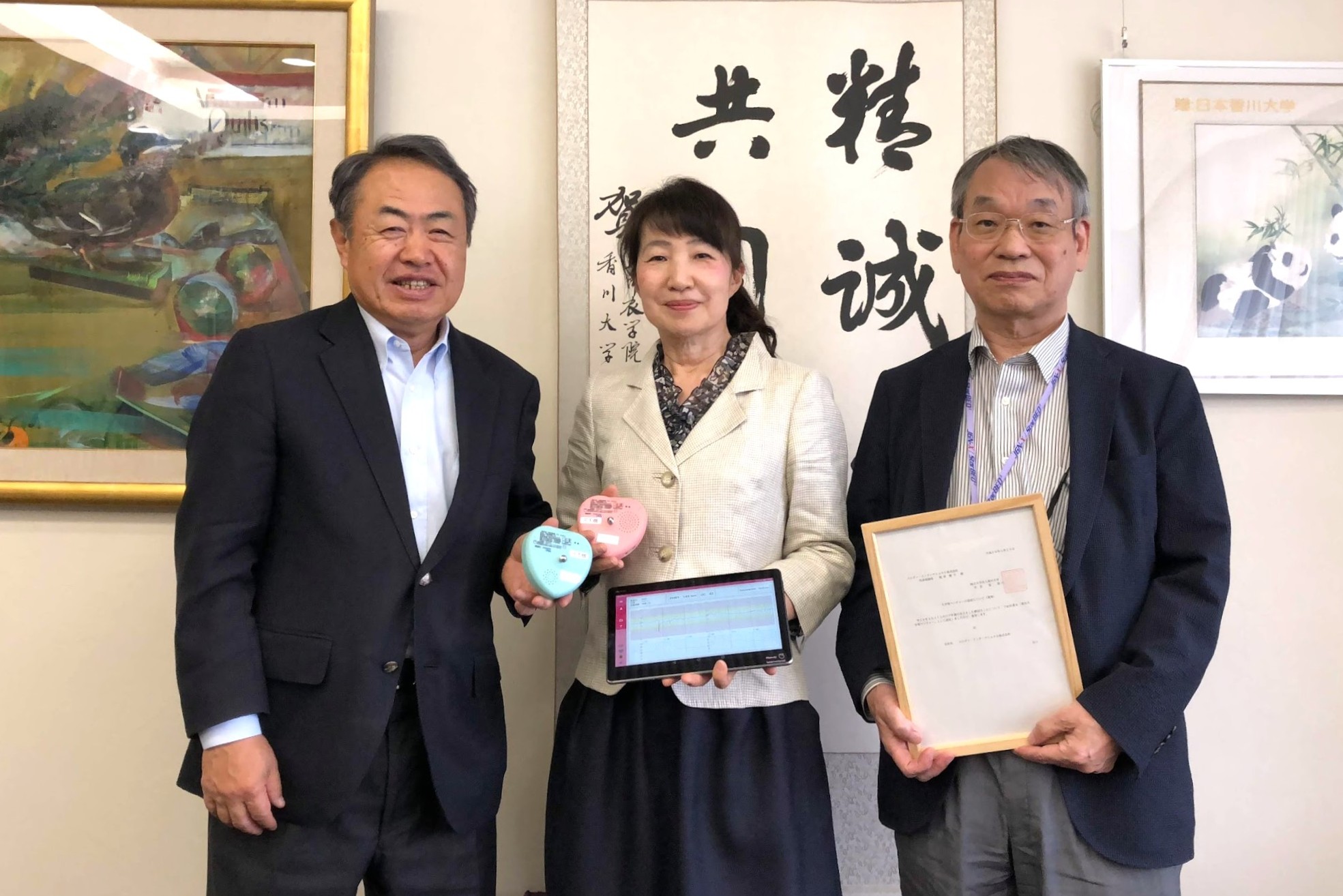
Melody International CEO Ogata Yuko (center), recipient of a Kagawa University Startup certification in 2018, poses with Kagawa University President Kakehi Yoshiyuki (left) and Specially Appointed Professor Hara Kazuhiro. (Image courtesy of Melody International Inc.; titles current as of 2018)
In Chiang Mai province with its population of roughly 1.65 million, approximately 20,000 babies are born each year, yet only about 20 obstetricians work at medical institutions under the jurisdiction of the provincial public health office. According to Ogata, “There have been many cases where pregnant women and even newborn babies have been rushed to hospitals in the city only for it to be too late by the time they arrive.”
Ogata and her team first distributed compact portable fetal monitor prototypes to three community clinics to be used for prenatal checkups. Expensive, large-scale fetal monitors were available only at major hospitals, and so Ogata was overcome with emotion when she witnessed expectant mothers' delight at hearing their babies’ heartbeats.
Doctors suggested several improvements, which Ogata incorporated to optimize the prototypes. For example, hospital staff discovered data was lost whenever an ambulance or other transport passed through a tunnel, prompting Ogata to modify the system so that it would continue recording even if data transmission was interrupted. She also developed an iPad app so that doctors could instantly check data wherever they were.
After reviewing approximately 1,500 datasets from facilities including local clinics without an obstetrician, doctors at Chiang Mai University recommended some 50 or so pregnant women be examined at a fully equipped hospital. Abnormalities were found in about 10 cases, and five underwent emergency procedures. It was reported that all lives were saved thanks to this intervention. One doctor remarked, “If we can save this many, I hope we can distribute these devices throughout the entire region.” Having garnered high praise from local stakeholders, the iCTG portable fetal monitor, as the final design has come to be known after moving through several iterations, is now set to be adopted by all public hospitals in the province.
Ogata reflected, “JICA’s support for team building at the local level created the enthusiasm for everyone involved to work together, which was a great outcome.”
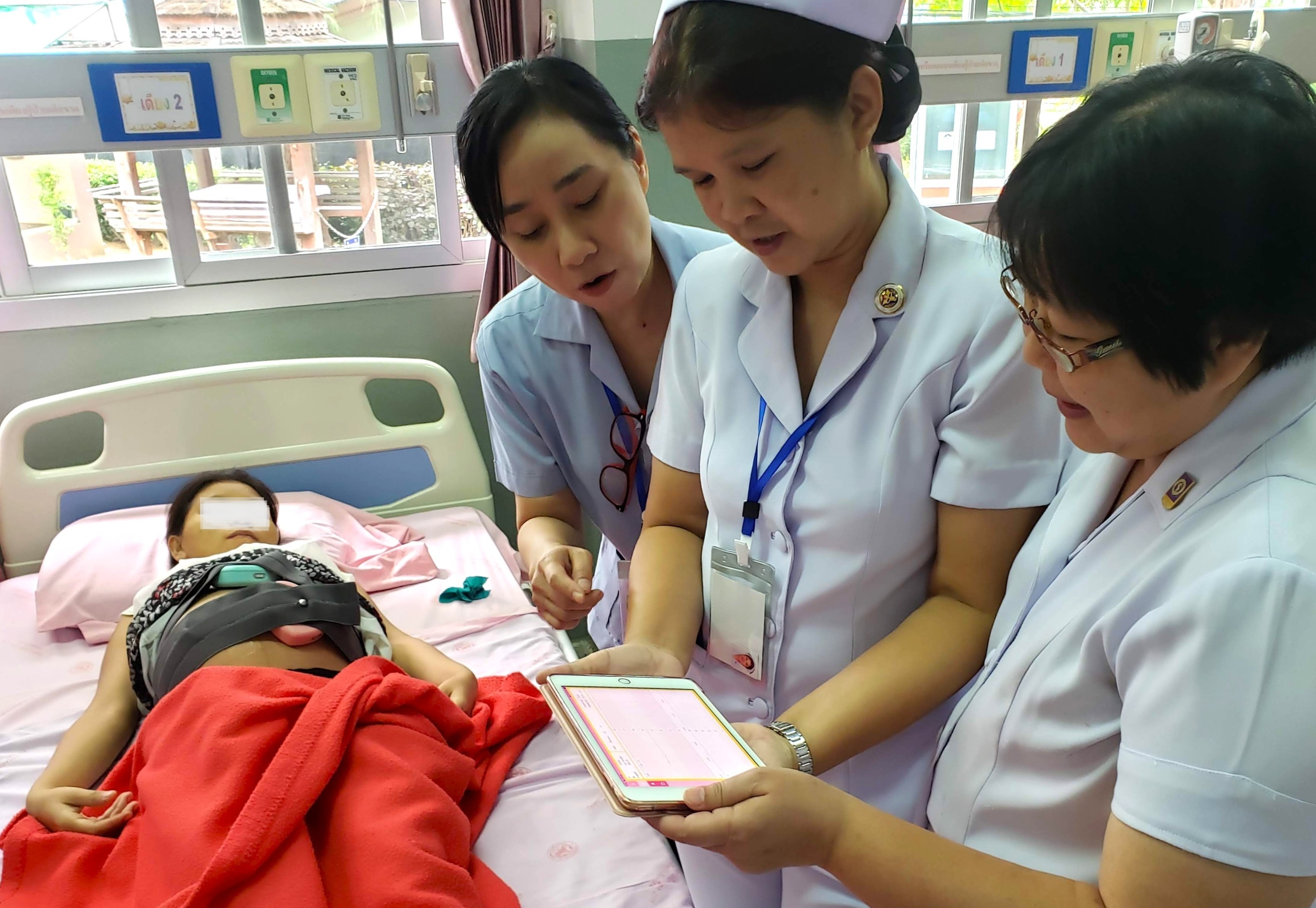
Health care staff in Chiang Mai, Thailand, use a device to check a pregnant woman’s vital signs. (Image courtesy of Melody International Inc.)
Japan certified the iCTG as a medical device in May 2018. This approval was made possible thanks to the many iterations optimizing the device and the clinical data collected in Thailand. Initially, however, few healthcare facilities gave the iCTG much thought as telemedicine was not widely practiced. That situation changed dramatically with the onset of the COVID-19 pandemic.
It was in Hokkaido where infections first spread. One after another, medical institutions contacted Melody International to inquire about the iCTG: “We want to minimize the risk of infection for expectant mothers when they come to hospital for appointments.” “We want to treat pregnant women who have tested positive at home.” These and other statements reflected the sudden necessity of telemedicine.
Oka Yasuko, OB-GYN department head at Komatsu Municipal Hospital in Ishikawa Prefecture, said “The iCTG device has exceeded our initial expectations.” She described how the hospital lent devices to pregnant women infected with COVID-19 who were recuperating in isolation wards or at home. By monitoring their condition remotely without face-to-face contact, the hospital was able to detect abnormalities and performed emergency cesarean sections in some cases.
In 2021 in Ishikawa Prefecture, a newborn died at Wajima Municipal Hospital after the mother's condition suddenly deteriorated while no doctor was available. The tragic accident occurred because there was only a single obstetrician assigned to cover two cities and two towns in the remote Okunoto region in the northern Noto Peninsula.
To build a safer perinatal care system providing care to mothers and babies from late pregnancy through shortly after birth, the prefectural government established the Baby Council and decided to introduce the iCTG. The device was also used after the Noto Peninsula Earthquake in January 2024 for deliveries during power outages and for managing pregnancies at evacuation sites.
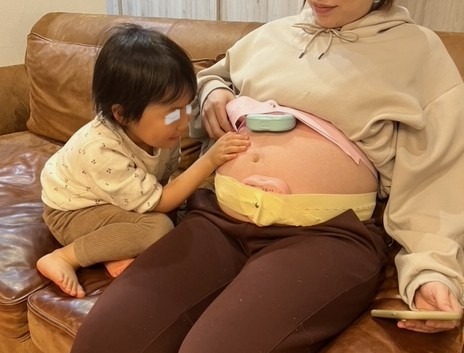
An expectant mother uses an iCTG fetal monitor at home as her child, looking forward to a new brother or sister, watches with keen interest and wonders how the baby is doing (Image courtesy of Komatsu Municipal Hospital)
Developed countries are increasingly drawing on innovations created in developing countries and bringing them back to their own countries, a process known as “reverse innovation.” The iCTG is a prime example of this trend.
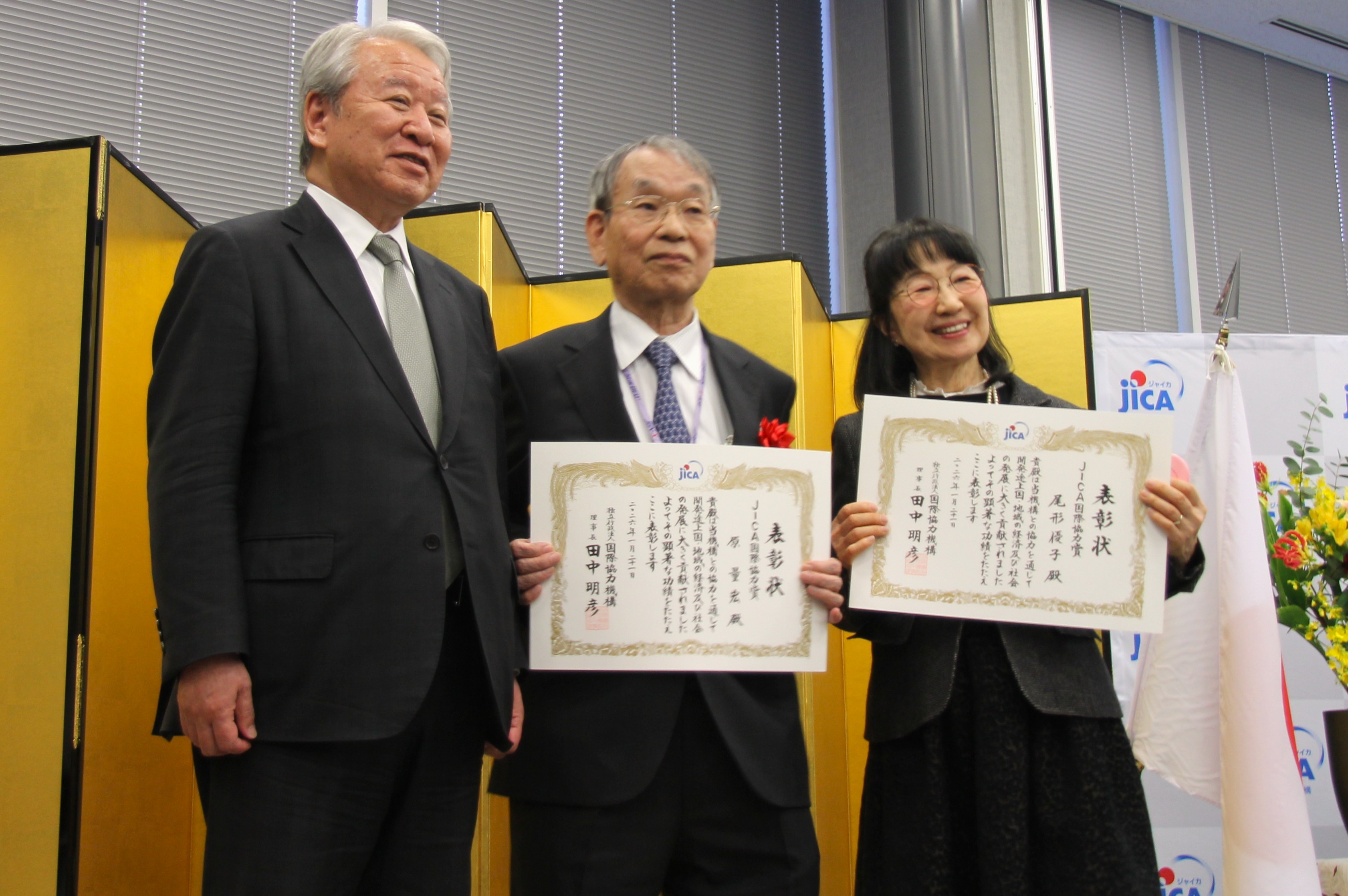
At the 2025 JICA International Cooperation Award Ceremony, JICA President Akihiko Tanaka poses alongside Kagawa University Professor Emeritus Hara Kazuhiro and Melody International’s CCO Ogata Yuko.
In January 2026, Professor Hara Kazuhiro and Melody International CEO Ogata Yuko were presented with the JICA International Cooperation Award in recognition of their outstanding achievements.
Looking back on the experience, Ogata said, “Securing medical device certification in Japan was a very high hurdle for a small startup like us. However, thanks to JICA’s relationships with governments and related organizations in other countries, we had access to connections with health ministries and other organizations there. The iCTG was repeatedly optimized, ultimately emerging as a useful device utilized in both Japan and many other nations.”
As of the end of 2025, the iCTG has spread to 16 countries worldwide including Myanmar, Indonesia and Bhutan. In Japan, it has been introduced at 130 medical facilities across 39 of the country's 47 prefectures, saving the lives of many mothers and babies.
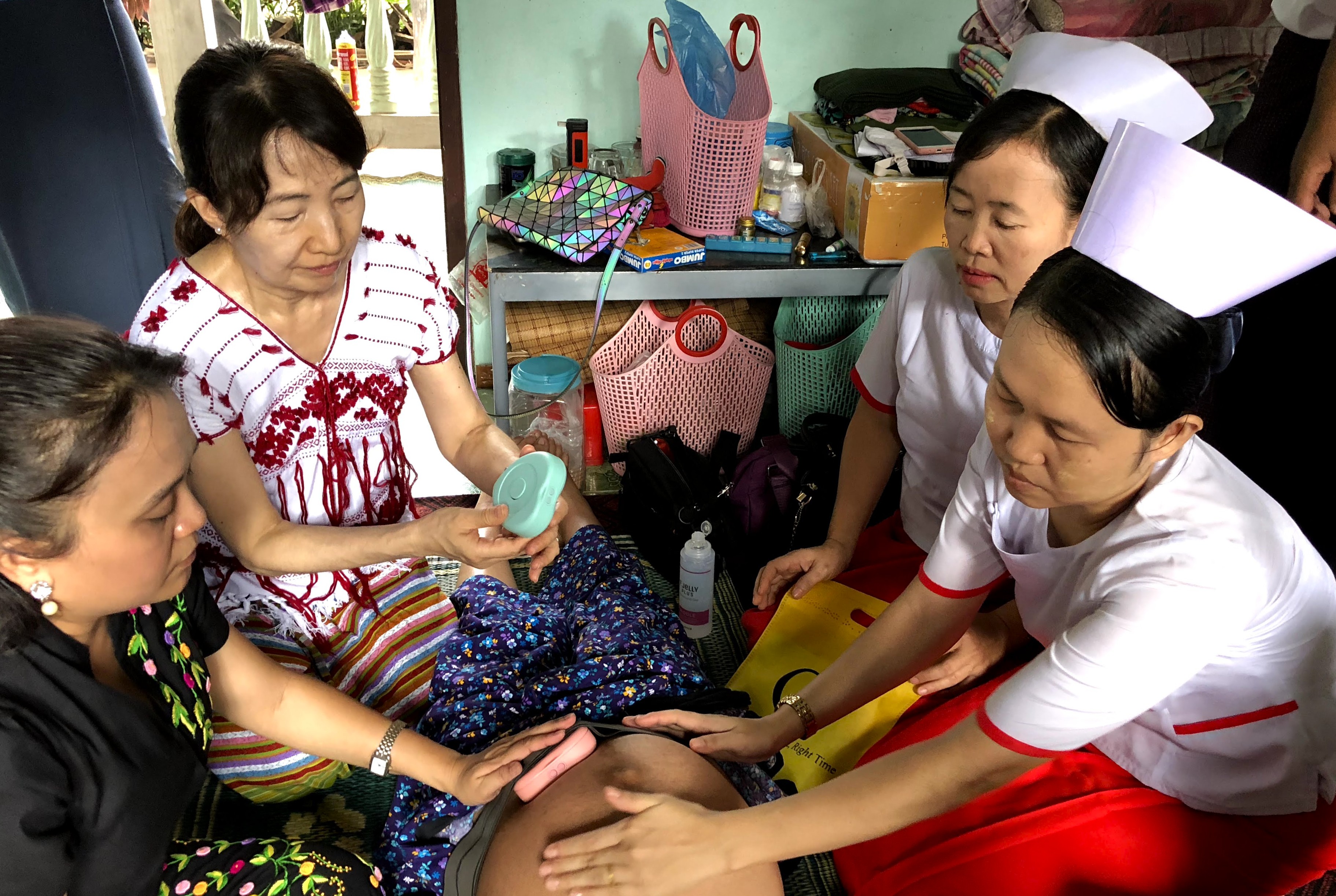
At a private home in Myanmar, Ogata Yuko (second from left) teaches healthcare staff and an expectant mother how to use the portable fetal monitor device iCTG. (Image courtesy of Melody International Inc.)
WHO 2023 data shows that, globally, over 700 women are lost each day due to preventable pregnancy or childbirth causes.
“No matter where you go in the world, families' feelings for a baby in the womb are the same. If we further enhance our efforts, such as using AI to support diagnoses, we can save more lives. Together with JICA, we hope to further expand our activities.”
Japan turns international cooperation into a source of national strength.
Through its efforts, JICA is contributing to saving lives both in Japan and overseas.
Sns share!


