
Women shaping the future of peace: From the front lines of WPS
[Goal 5] Gender Equality
2026.03.06





2026.03.06
In many parts of the world, conflicts and disasters are occurring in succession, heightening the risk of women facing various forms of disadvantage. The Japan International Cooperation Agency (JICA) not only provides relief to such women as “victims,” but also positions them as “agents of peacebuilding,” pursuing a range of cooperation under the principles of the Women, Peace and Security (WPS) agenda. Ahead of International Women’s Day on March 8, Hirose Megumi, senior director of JICA’s Office for Gender Equality and Poverty Reduction, and journalist Hamada Keiko sat down to discuss the WPS agenda and related issues.
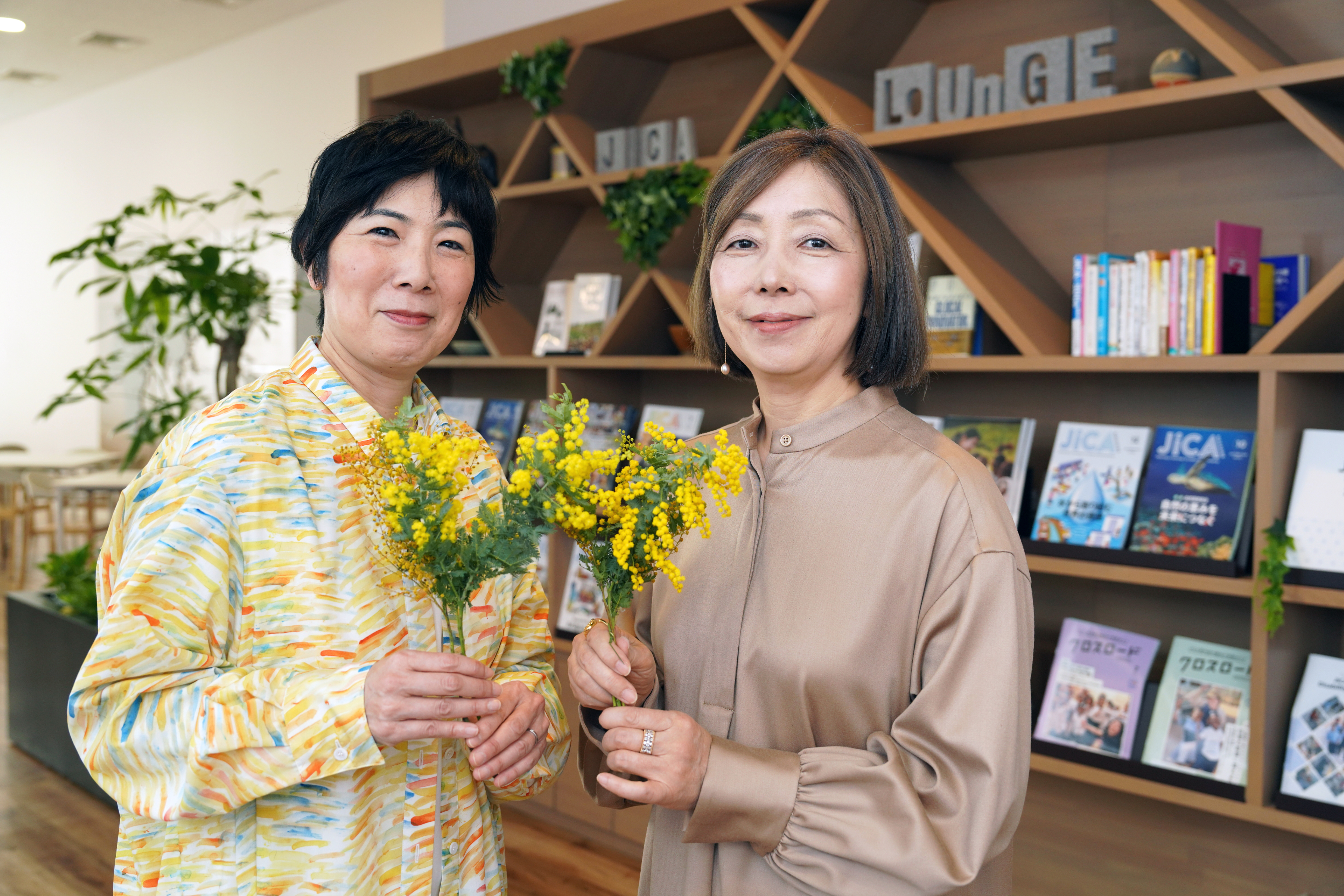
Hirose Megumi (left), senior director of JICA’s Office for Gender Equality and Poverty Reduction, and journalist Hamada Keiko held a dialogue on JICA’s initiatives ahead of International Women’s Day.
Hirose: “At JICA, our efforts toward gender equality and women’s empowerment are not limited to protecting women as ‘victims.’ Based on the principles of WPS, we also promote initiatives that ensure women to participate as key actors in peacebuilding, responses to gender-based violence (GBV), and disaster risk reduction and emergency response.”
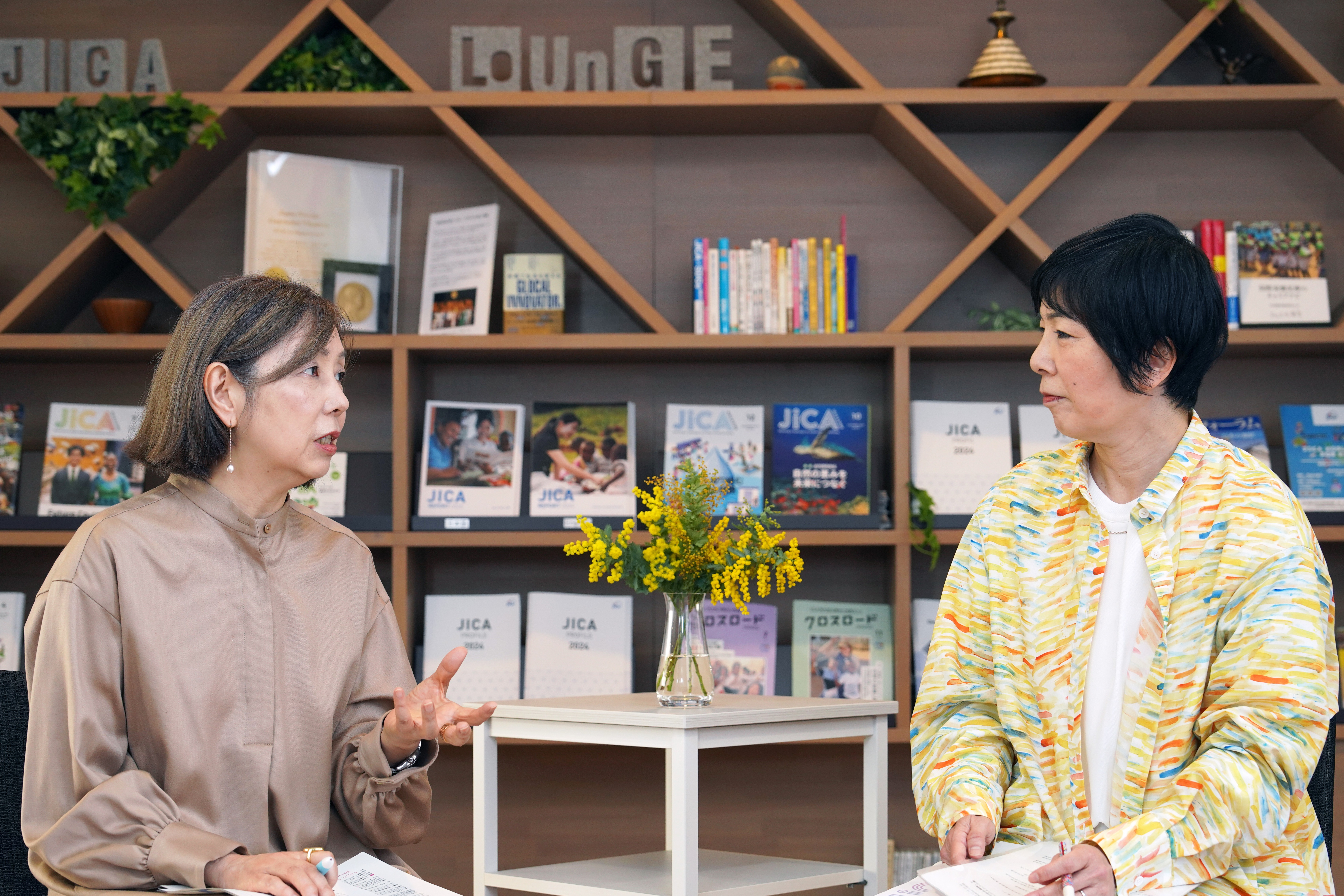
Hamada Keiko, left, poses a question to Hirose Megumi, senior director of JICA’s Office for Gender Equality and Poverty Reduction.
Hamada: “WPS refers to the idea that women should actively participate in conflict resolution, peace processes and reconstruction. Women are often spoken of primarily as ‘victims,’ but in fact they can be key players in peacebuilding. When I first learned about the perspective of WPS, I was truly moved.”
Hirose: “For example, on Mindanao Island in the Philippines, conflicts between clans hindered the progress of reconstruction. JICA had been cooperating with the peace process for many years, and when women were made mediators in the community, they connected hostile communities and helped lay the foundation for peacebuilding.”
Hamada: “Why did having women, rather than men, serve as mediators lead to success?”
Hirose: “When husbands became combatants, it was women (wives) who remained at home. In situations where women were responsible for everything — cultivating fields, earning income, raising and educating children — women who shared the same desire to ‘end conflict quickly and prevent conflict before it starts,’ formed groups, sought mutual support, and worked toward a peaceful society. The voices of these women, who were protecting their families, had a strong influence on the peace negotiations.”
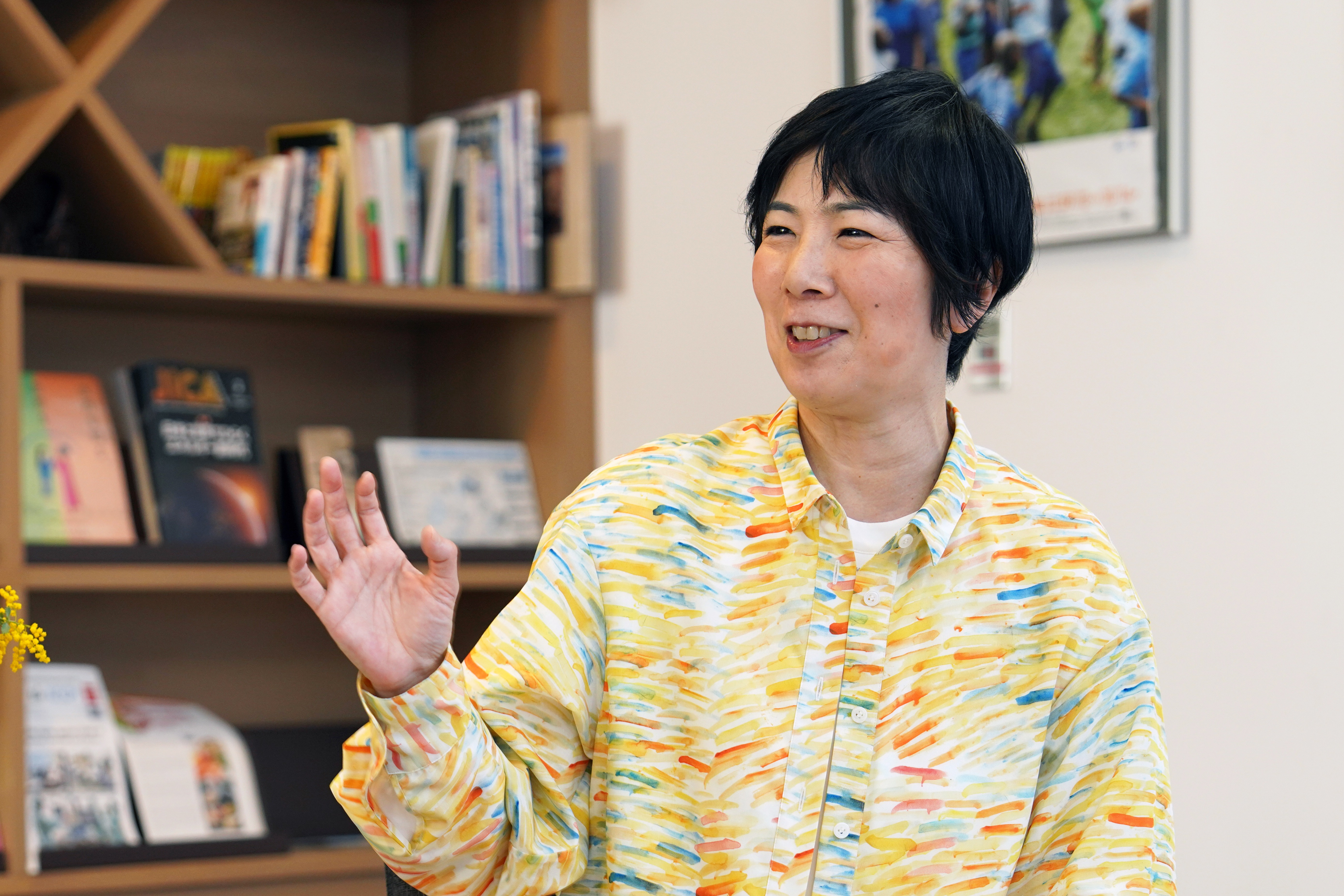
Hirose Megumi
Senior Director, Office for Gender Equality and Poverty Reduction, Governance and Peacebuilding Department, JICA.
Hirose joined JICA in 1994. She has served in various positions, including post in the Social Development Cooperation Department; the JICA Ghana Office; the Africa Department; the Industrial Development and Public Policy Department; and JICA Yokohama. She also served as Deputy Director of the JICA Ethiopia Office, and Deputy Director of the Office for Sustainability Promotion in the Planning Department. She assumed her current post in October 2025. Her areas of interest include public–private partnership, gender and development, and the Africa region.
Hamada: “I once reported from the Middle East around the time of the Iraq War. When I interviewed women with children in both Palestine and Israel, none of them wanted conflict. They all said they simply wanted to raise their children in a safe and secure environment. If women had been able to engage in constructive discussions about how to achieve that, they might have found common ground — realizing that both sides want the same thing — and could have contributed to peacebuilding. What other examples of JICA’s WPS-related initiatives are there?”
Hirose: “In Colombia, years of conflict devastated people’s lives, and many women also became victims of domestic violence. To support the recovery and economic empowerment of women affected by conflict and violence, JICA assisted a women‑only coffee farmers’ cooperative by helping them improve product quality and develop their own coffee brand. Through earning their own income, the women became more financially independent and gradually regained confidence and pride.”
Hamada: “Economic independence is extremely important for women. By becoming economically independent, women gain more choices in life and can make their own decisions about how they want to live. Even if they are in a patriarchal and oppressive environment, economic independence can be the first step toward breaking free from it.”
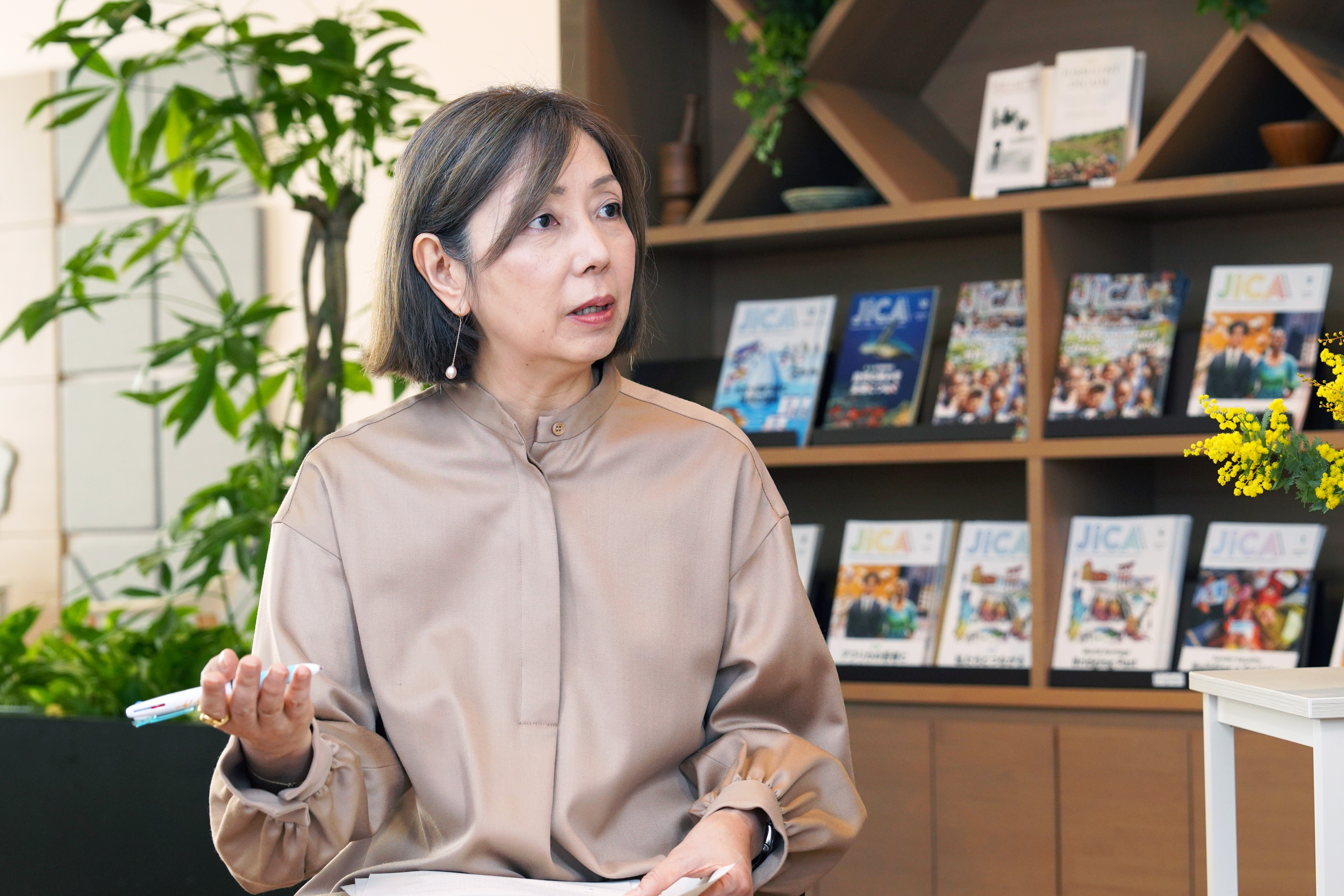
Hamada Keiko
Born in 1966, Hamada is originally from Yamaguchi Prefecture. She joined The Asahi Shimbun in 1989, worked at Shukan Asahi, and later served as editor in chief of AERA from 2014. She left the company in 2017 and now works as a freelance journalist and commentator on television. Her books include "Dansei Chushin Kigyo no Shuen" (The end of male‑dominated corporations), published by Bunshun Shinsho.
Hirose: “Economic independence is indeed a crucial perspective. There was a major flood in Pakistan some years ago. Many women who earned income by selling handicrafts could no longer go to town to sell their products because the damage was so severe. However, because JICA had been supporting the creation of an e‑commerce site where they could sell their handicrafts, these women were able to continue earning income through online sales.”
Hamada: “So the advancement of technology has, in a way, given women new ‘weapons’ to empower themselves.”
Hirose: “In Pakistan, GBV, including forced marriage and child marriage, is a serious issue. JICA provides continuous support for women affected by GBV — from protection and shelter to economic independence and social reintegration.
One girl who escaped a forced marriage first took refuge in a shelter and then received vocational training at a ‘transitional home’ that was established and operated with JICA’s cooperation. She now works at a garment factory and lives in women‑only housing. She has become a role model in the community, inspiring other women by showing them that they, too, can choose their own path in life.”
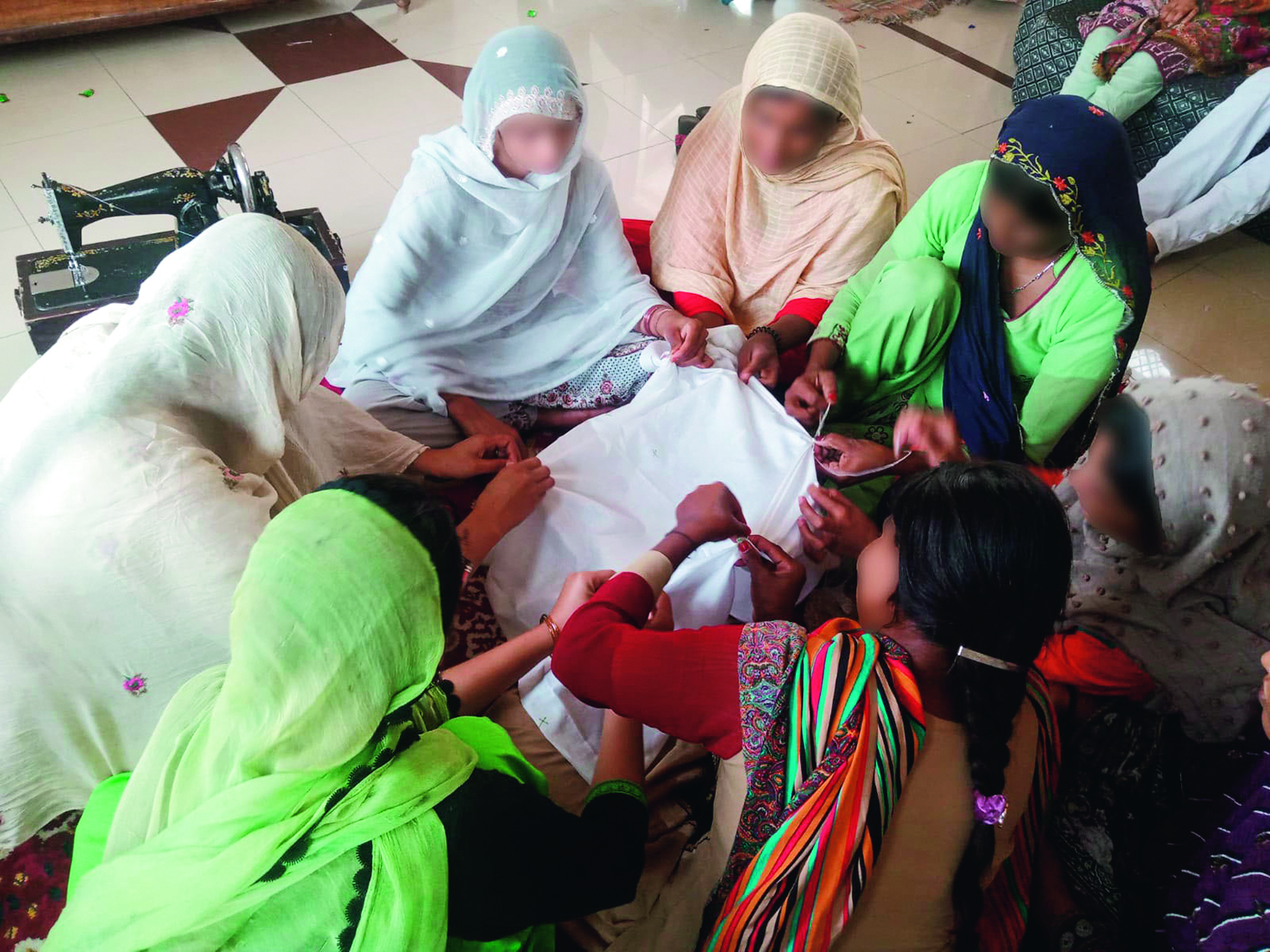
Scenes from a shibori (tie-dye) workshop held at a transitional home
Hamada: “Even if a girl grows up believing she has no choice but to marry the person her parents choose, the moment even one woman proves that there is another option, more women begin to choose it. This shows how powerful it is to invest in women. A single success story can shift the mindset of an entire community.”
Hirose: “There are also cases where significant change has occurred when women actively participated in their communities. In a Palestinian refugee camp, JICA worked with the Palestine Liberation Organization to create a mechanism that enabled women — who previously had few opportunities to voice their opinions — to contribute their perspectives to improving living conditions in the camp.
As a result, requests emerged for implementing vocational training for women, developing parks where children could play safely, and setting up childcare facilities.
Women’s perspectives began to be reflected in the environment around them, and they themselves started to feel that they had an important role to play.
This example shows how essential it is to support the leadership of women who have had limited opportunities to speak up in public.
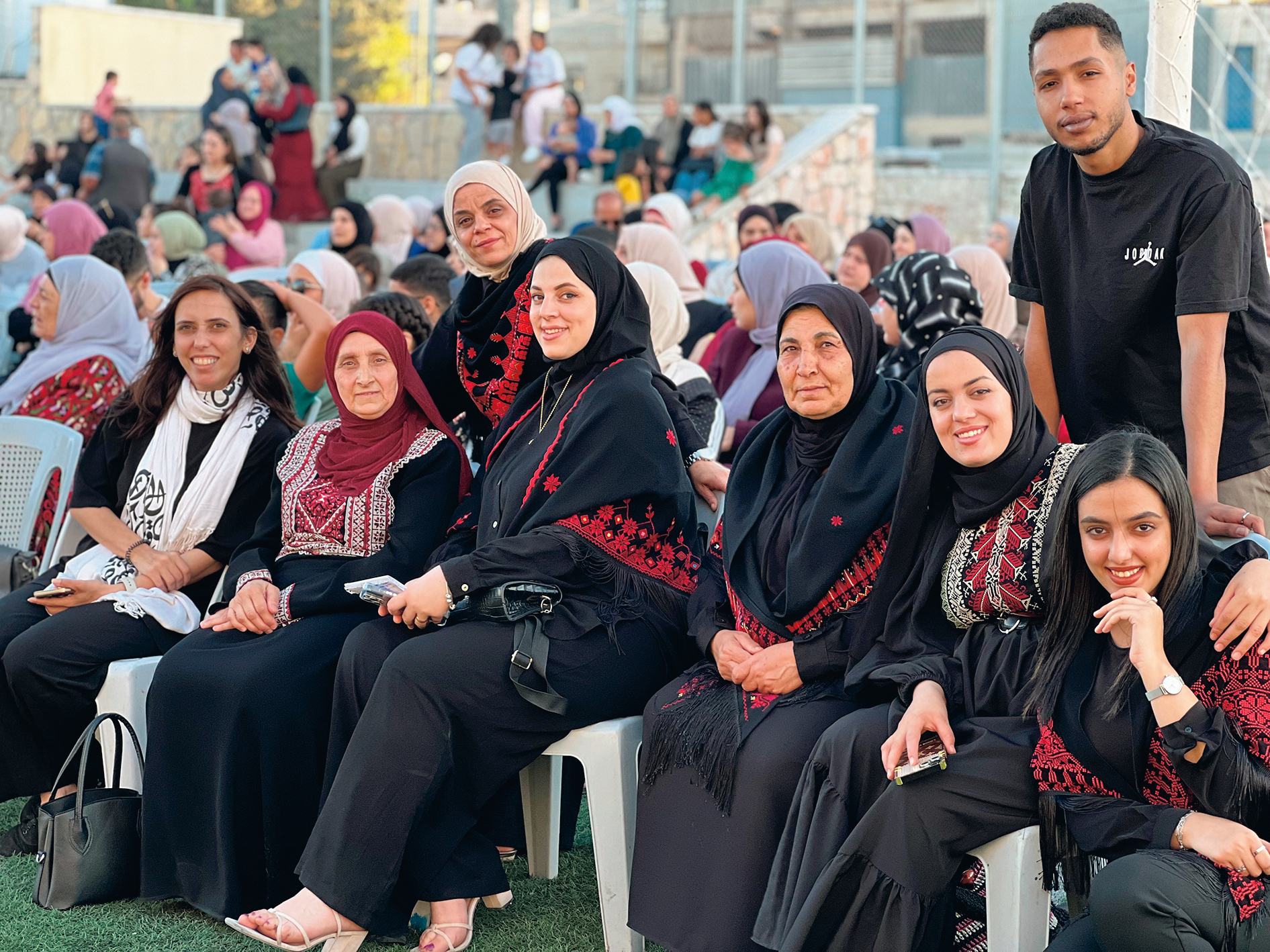
Palestinian refugee women
We also support women who are working on the front lines in conflict situations. In Ukraine, many women are engaged in mine action, actually saving lives on the ground, but they struggled with protective suits designed for men, which restricted their movement.
JICA plans to provide women’s protective suits to local organizations, enabling these women to work more safely and effectively.
Hamada: “So women are increasingly taking part in decision‑making and expanding the roles in which they can contribute.”
Hirose: “From the WPS perspective — which emphasizes not only ‘protecting women’ but also ‘ensuring women’s participation’ — we are also conducting training programs in Japan on the theme of disaster risk reduction. We invite participants from around the world to visit areas heavily affected by the Great East Japan Earthquake and hold workshop‑style training sessions that explore gender‑responsive disaster measures and ways to promote women’s leadership during emergencies.”
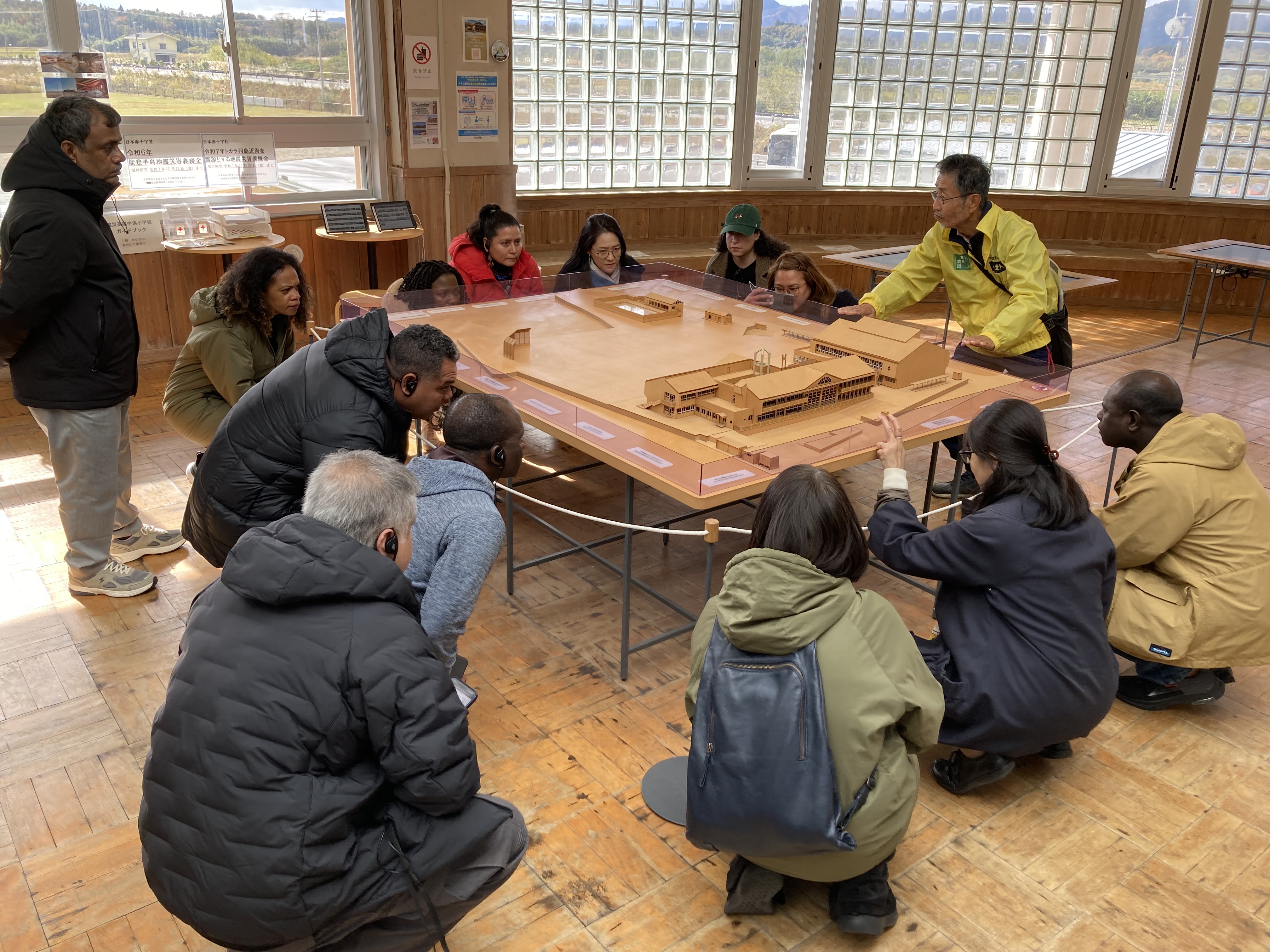
Scenes from a thematic training program focused on disaster risk reduction
Hamada: “Was there anything in particular about the training programs that left a strong impression on you?”
Hirose: “When a male neighborhood association leader said, ‘We are trying to increase the number of women in the association, but very few are willing to participate, and we don’t know what to do,’ some of the overseas participants offered advice. They asked, ‘Are the meeting times and locations arranged in ways that make it easier for women to attend?’ and suggested,
‘Approaching individual women may not work, because it takes courage for a woman to join an unfamiliar group alone. It is more effective to ask an active women’s group to have several members join together.’
The neighborhood leader’s reaction — saying he had never even considered reaching out to women’s groups — was quite memorable.”
Hamada: “Neighborhood association and community meetings are usually scheduled at night. For women who are preparing dinner or putting children to bed, this is a difficult time to participate. When conducting interviews in Japan, especially in rural areas, I sometimes feel that gender awareness may be even more behind than in developing countries. WPS is not just an issue overseas — it is also connected to solving problems in Japan. If women are not included in decision-making, local communities in Japan will not change.”
Hirose: “In fact, JICA has been asked by Saitama Prefecture to help incorporate a "gender perspective" into the prefecture's policies. This is because they recognize our 30-year track record of promoting gender mainstreaming in developing countries. I see great potential in applying the knowledge and experience JICA has accumulated so far to initiatives within Japan.”
Hamada: “JICA's expertise in how to involve women in decision-making seems like it would be very useful in Japan as well.”
Hirose: “What WPS emphasizes is not only ‘protecting women from harm’ but also ensuring their meaningful participation. Even in Japan today, there are still many situations where women are not involved in decision‑making. In that sense, Japan and developing countries face similar challenges.
That is precisely why we continue to support our partner countries overseas while also sharing examples of women’s participation here in Japan. I want us all — regardless of gender — to move forward together. Gender equality is not an issue that only women should work on, nor is it something that should be left solely to men; it is a responsibility shared by society as a whole.”
A scene from the film “The Day Iceland Stood Still”
Hamada: “I heard that the Icelandic film ‘The Day Iceland Stood Still’ will be screened internally at JICA on March 8. That’s wonderful. I reported from Iceland in 2024, and what amazed me was that in 1975, 90% of women went on strike — taking a day off from both housework and paid work. The country nearly came to a standstill, and people realized just how enormous women’s labor and unpaid work actually was.
This event sparked major social change: Women’s participation in society and politics increased, a woman was elected president, and legal frameworks were strengthened. What’s also interesting is that men, too, found it easier to live their lives once they were freed from the pressure of being the sole breadwinner. It made me realize that gender equality is not just for women — it’s a system that makes life better for everyone.”
Hirose: “JICA will continue to promote gender equality both in Japan and around the world. Thank you very much.”
Sns share!


