
Across the seas: Tracing the history of Japanese migration and the roots of international cooperation
[Goal 11] Sustainable Cities and Communities
2026.08.20







2026.08.20
Japanese overseas migration began with the Meiji Restoration in 1868. Seeking employment opportunities and farmland, many Japanese crossed the seas, yet the hardships they endured and the realities they faced have often gone untold. This article traces the roots of international cooperation through JICA's long-standing role in supporting migration and its continuing efforts to strengthen ties with communities of Japanese emigrants and their descendants, or Nikkei communities, around the world today.
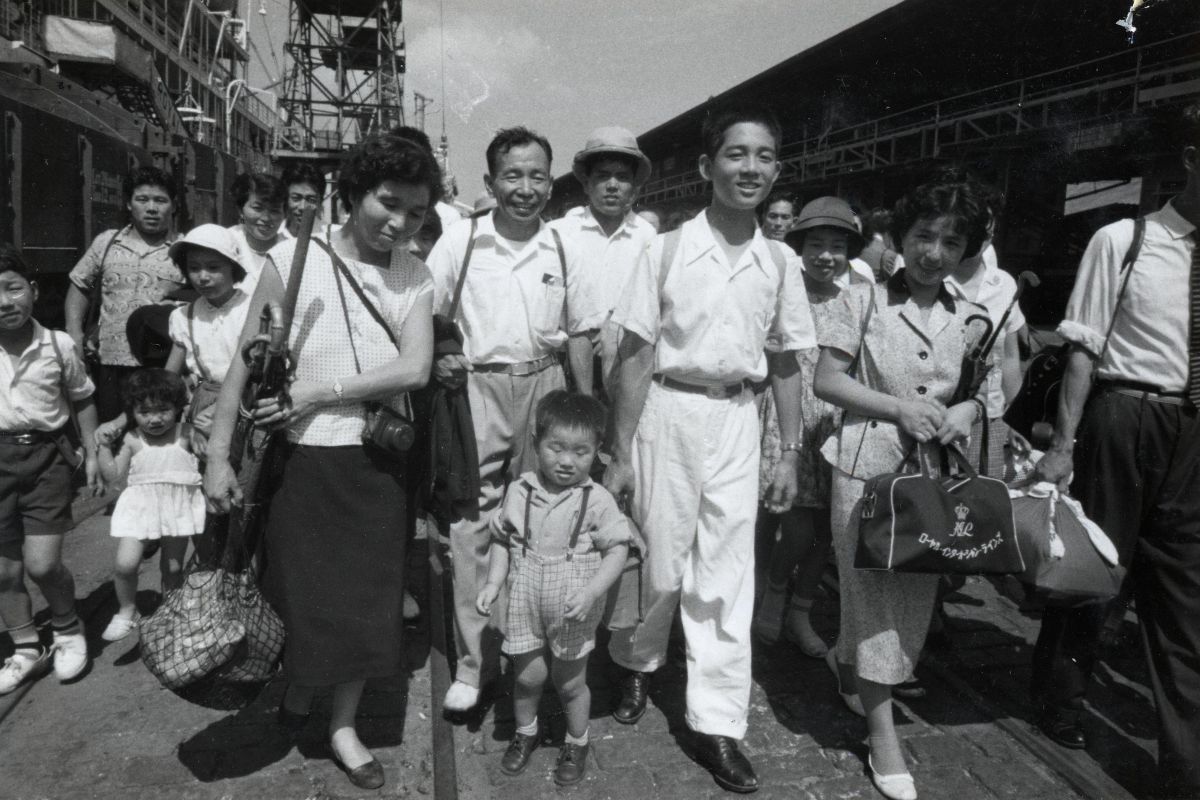
Japanese emigrants arrive at the Port of Santos, Brazil. (Photo provided by the Japanese Overseas Migration Museum, JICA Yokohama)
“The history of migration is not simply a story of the past; it is a living legacy that continues to this day. Our generation has inherited the baton of trust passed down by those who came before us, and we will carry it forward to the next generation by working together as partners in international cooperation across all fields, including healthcare, disaster risk reduction, and education.”
At the opening ceremony for the special exhibition “Japanese Migration and the Origins of Co-creation: Postwar Migrants and JICA Taking on Challenges Together,” which opened on June 23 at JICA Yokohama's Japanese Overseas Migration Museum in Yokohama, Mario Masayuki Toyotoshi, Ambassador Extraordinary and Plenipotentiary of the Republic of Paraguay to Japan and himself a descendant of Japanese immigrants, delivered remarks that were met with applause from ambassadors from various countries and other attendees.
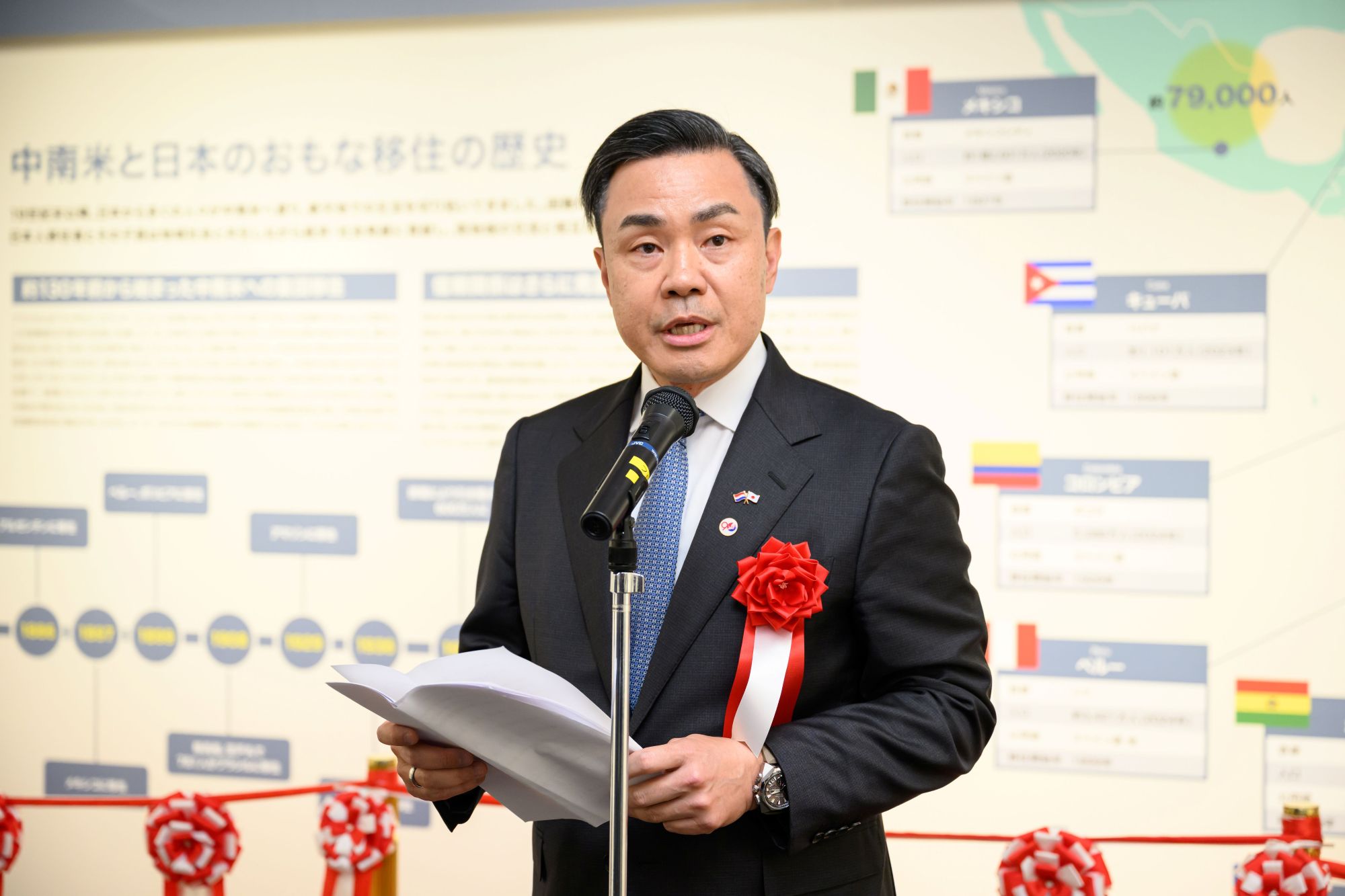
Mario Masayuki Toyotoshi, Ambassador Extraordinary and Plenipotentiary of the Republic of Paraguay to Japan, delivers remarks at the opening ceremony.
The special exhibition, which will run until Nov. 1, mainly introduces the history and achievements of postwar Japanese migration through photographs and various exhibits. In addition to large exhibition panels, visitors can view items such as pasta and Japanese rice produced by Japanese immigrants and their descendants in Bolivia. Those attending the exhibition appeared deeply engaged as they looked with interest at the valuable materials on display.
Tsuboi Hajime, Director General of the Japanese Overseas Migration Museum, spoke about the exhibition’s highlights and objectives. “The history of Japanese migration is one of overcoming challenges and building trust in host societies despite differences in culture and environment from country to country. That journey is also a source of pride for JICA as well, and the result of the collaborative efforts we have pursued together with migrants. We hope many people will learn about it,” he said.
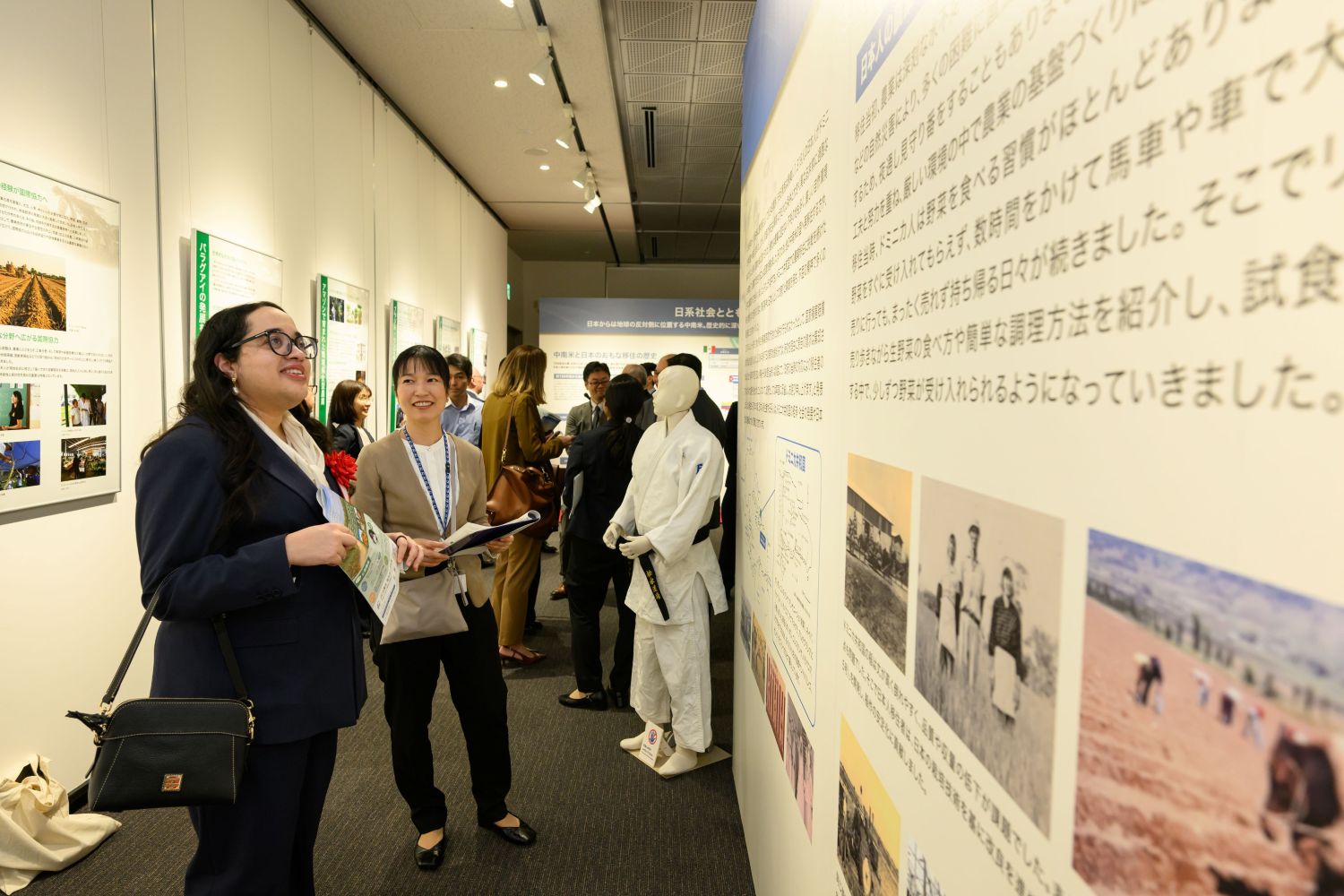
Visitors view panels at the special exhibition.
Japanese overseas migration is said to have begun in 1868, the first year of the Meiji era, when 153 Japanese emigrants traveled to Hawaii to work on sugar plantations, two years after Japan lifted its ban on overseas travel and ended its long period of national isolation. Thereafter, many more Japanese emigrated to countries such as the United States, Canada, Mexico and Peru.
Migration to Brazil, which today is home to the largest Nikkei population in the world, began in 1908. June 18, the day the ship Kasato Maru arrived at the Port of Santos carrying 781 Japanese emigrants, has been designated as the National Day of Japanese Immigration. Migration was interrupted during World War II, when travel and entry were prohibited, but resumed in 1952 with the departure of 54 emigrants bound for Brazil.
The original purpose of overseas migration was to address Japan’s growing population, shortage of farmland and poverty. Particularly in the postwar period, the Japanese government promoted emigration as a national policy to ease pressures caused by the influx of repatriates and the sharp rise in the birth rate. The number of emigrants peaked in the late 1950s at more than 16,000 a year.
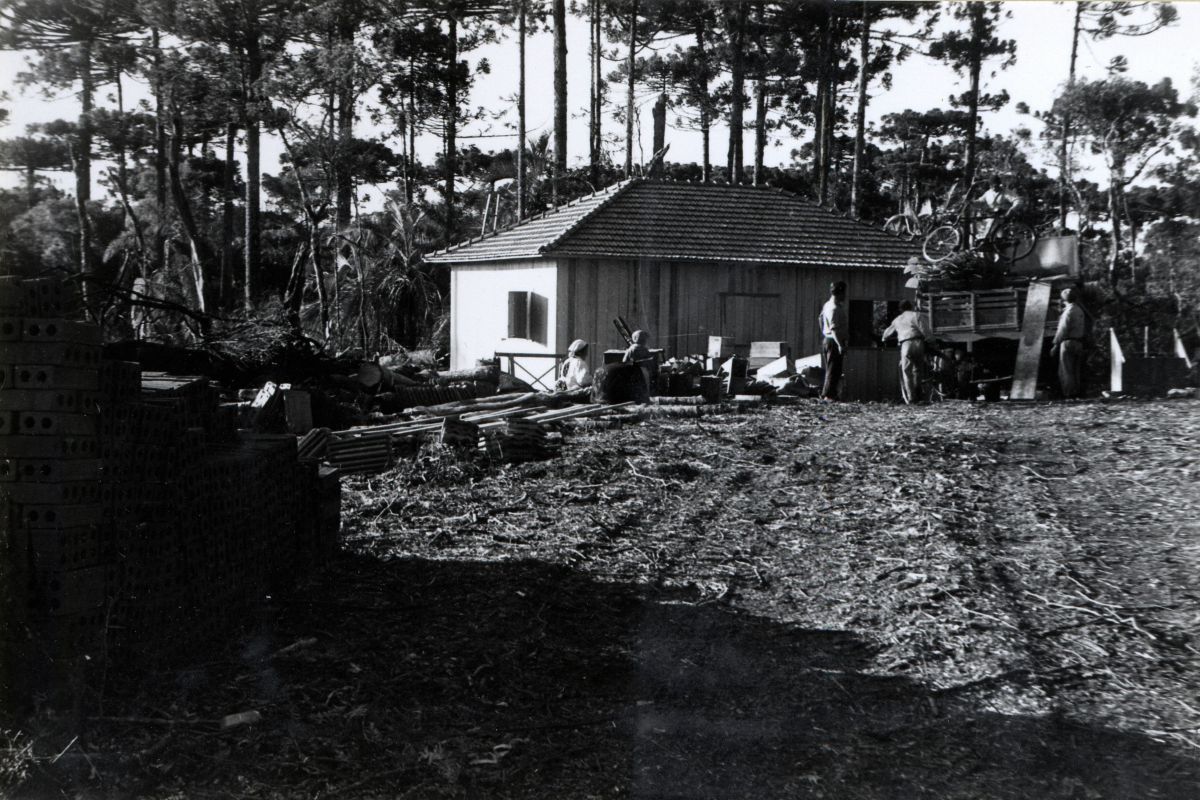
Japanese emigrants to Brazil arrive with their belongings and bicycles piled onto a truck.
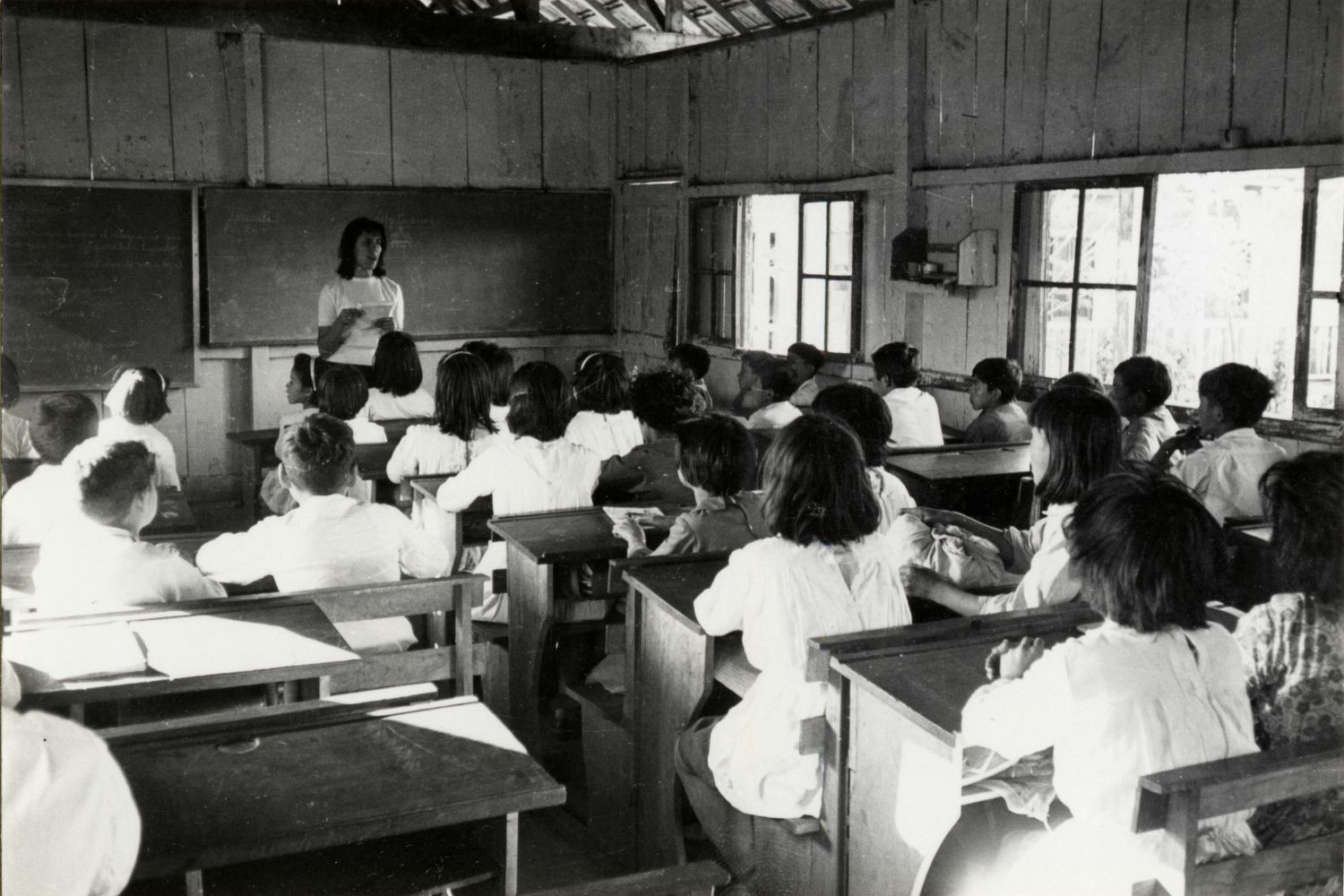
Students attend a Spanish-language class at a Japanese school in Paraguay. (Both photos are from the collection of the Japanese Overseas Migration Museum, JICA Yokohama.)
From 1954 onward, in response to the growing number of people seeking to migrate overseas, two organizations were established to administer Japan’s emigration program: the Federation of Japanese Overseas Associations and Japan Emigration Promotion Co. Ltd. In addition to recruiting and selecting prospective emigrants, providing travel loans, and supporting their settlement overseas, these organizations carried out a wide range of activities, including the purchase, development and subdivision of land, and the establishment of new settlement areas.
As the number of emigrants gradually declined, the focus of the program shifted to local support activities, such as agricultural extension services, healthcare and education, and improvements to living conditions in migrant communities. In 1963, the two organizations were merged to form the Japan Emigration Service. The program was subsequently transferred to JICA, (the Japan International Cooperation Agency), when it was established in 1974.
Even after JICA’s launch, overseas migration programs continued, and the experience accumulated through these efforts laid the foundation for today’s collaboration with Nikkei communities around the world. Reflecting on the significance of this history, JICA Senior Advisor Ohara Manabu (Nikkei Partnership) explains, “Supporting migrants contributed to the development of local Nikkei communities and economies. Collaboration with those developed Nikkei communities then evolved into international development cooperation.”
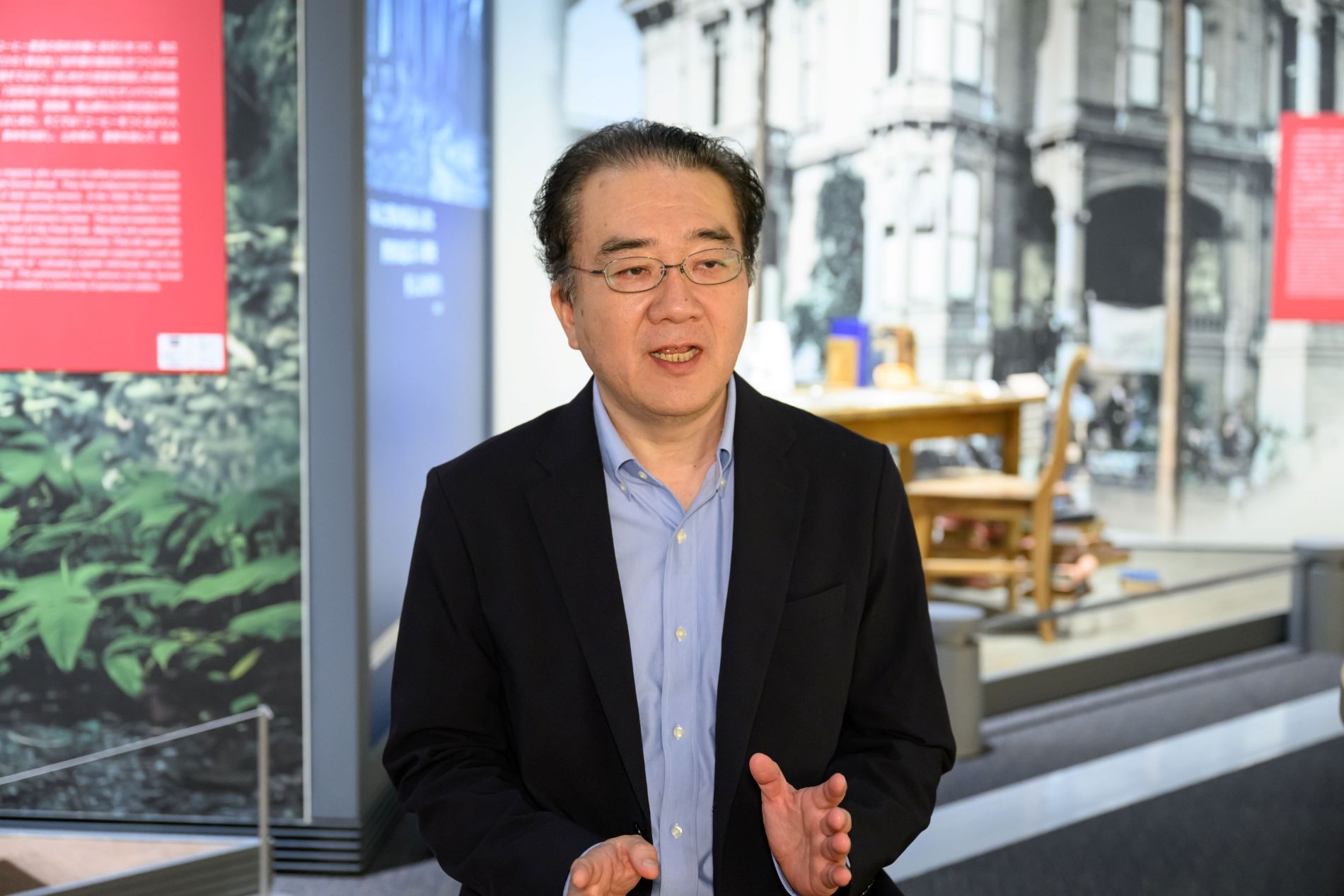
Ohara Manabu, Senior Advisor (Nikkei Partnership), JICA
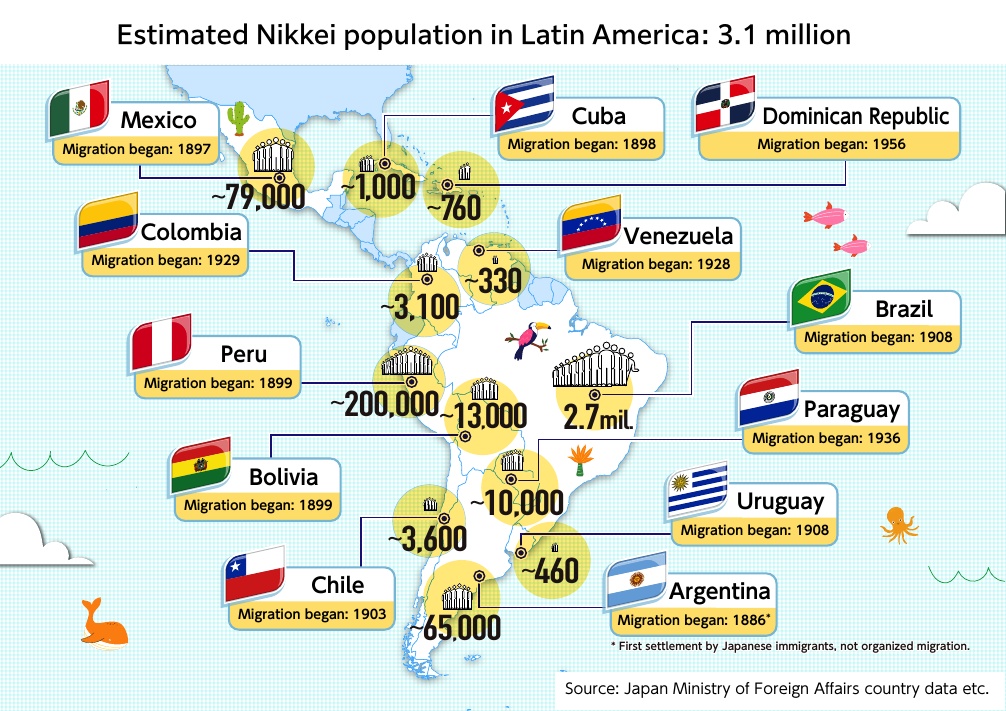
From the 1960s onward, the need for overseas migration gradually diminished as Japan’s standard of living improved during the period of rapid economic growth. In 1993, the government’s emigration program officially came to an end. Over the course of the program’s history, approximately 770,000 people emigrated from Japan before World War II and about 260,000 after the war. Today, the Nikkei population in Latin America is estimated at around 3.1 million.
Ohara reflected deeply on the significance of JICA’s long-standing support for Japanese overseas migration. “The history of Japanese emigration changed in character over time. The emphasis shifted from sending people out from Japan to helping them settle locally. Today, migrants and their descendants, the Nikkei, have become bridges with Japan, and have come to play leading roles in international cooperation. JICA has walked this journey alongside migrants.”
Japanese emigrants are said to have endured unimaginable hardships, including language and cultural barriers, racial discrimination, and harsh living conditions. During World War II, many also faced persecution, including internment. Yet they persevered, earning the trust of local communities through their innate diligence, and built communities of their own, establishing Japanese-language schools and hospitals along the way. One indispensable episode in looking back on that history is the agricultural development of Brazil’s Cerrado region.

Engineers, center, collect soil samples in the Cerrado before its development. (Photo provided by the Japan-Brazil Agricultural Development Corporation (CAMPO))
In Brazil’s inland Central-West region lay a vast expanse of “barren land” covering an area equivalent to 5.5 times the size of Japan. Known as the “Cerrado,” this tropical savanna was characterized by highly acidic, nutrient-poor soil that was considered unsuitable for agriculture. It was often described as land that “no one would want, not even for free or as an inheritance.”
However, after Brazil’s capital was relocated to Brasília in 1960, development of this vast region became a key priority. The Brazilian government turned to Japan for assistance, recognizing the country’s advanced agricultural expertise. On the Japanese side, there was also a pressing need to diversify sources of soybean imports following the United States’ 1973 announcement of a soybean export embargo.
In 1974, during a visit by then Prime Minister Tanaka Kakuei to Brazil, the two countries agreed to launch an agricultural cooperation initiative. This led to the launch of PRODECER (the Japan-Brazil Cerrado Agricultural Development Program), a joint public-private project between Japan and Brazil. At the center of this undertaking was JICA.
For around two decades, Japan supported the project through technical and financing cooperation. By applying lime, phosphate, and other fertilizers, highly acidic soils were improved, transforming barren red earth into farmland. New crop varieties, including soybeans suited to tropical conditions, were developed, while large-scale mechanized farming took advantage of the region’s vast expanses of land. Infrastructure such as roads and storage facilities was also constructed.
More than 100 Japanese experts were dispatched to Brazil, and 80 Brazilian trainees were accepted in Japan, helping to train agricultural researchers and specialists. The project ultimately involved 717 settler farm households, covered 345,000 hectares of developed land, and required a total investment of 68.4 billion yen. A key factor behind its success was the adaptation of soil improvement methods and agricultural technologies to local conditions through collaboration among JICA, Nikkei farmers, and Brazilian research institutions.

Part of the Cerrado, which has been transformed into one of the world’s leading grain-producing regions. (Photo by Hongo Yutaka, former JICA staff member)
PRODECER came to an end in 2001, but the Cerrado was transformed into a vast agricultural heartland that now accounts for approximately 60 percent of Brazil’s agricultural output. Brazil went on to become the world’s largest exporter of soybeans and the second-largest exporter of corn. In recognition of what was described as “one of the great achievements of agricultural science in the 20th century,” the project received the World Food Prize in 2006, an honor often referred to as the Nobel Prize of agriculture.
It was the Nikkei communities in Brazil that opened the door to the “Cerrado miracle” and connected Japan and Brazil. Highly skilled Nikkei farmers settled in the Cerrado and pioneered the development of new farmland, playing a central role in disseminating farming techniques and applying cultivation management practices. Drawing on their organizational strength, they also established agricultural cooperatives and, through their ability to work in both Japanese and Portuguese, served as bridges between the two countries.
The history of JICA’s support for overseas migration is connected to the spirit of international cooperation that continues to this day. What began as assistance for Japanese emigrants crossing the seas gradually evolved into support for their settlement in the countries to which they traveled. The migrants who received that support in turn became bridges linking Japan with those countries. In addition, the spread of agricultural technology and improvements in healthcare and education contributed to the development of local communities. Over time, Nikkei communities grew into an important human network for Japan and a source of soft power supporting friendly diplomatic relations.
Looking to the future, Director General Tsuboi emphasized the evolving role of Nikkei communities: “Today, Nikkei communities are partners in co-creation and collaboration, working together to improve the societies and economies of the countries in which they live. The relationships of trust built through these efforts also serve as a foundation for diplomacy and friendship between nations. Their contributions are not limited to a single country or region; they also have the capacity to help address global challenges such as food security, healthcare, and environmental issues. Through exchanges among younger generations, we hope to build a society that respects and values diversity in people’s backgrounds and roots.”
Rooted in Japan yet active in diverse societies across the globe, Nikkei people will continue to serve as important bridges between Japan and countries around the world.

Tsuboi Hajime, Director General, Japanese Overseas Migration Museum, JICA Yokohama
Sns share!


