

Reimagining African Governance: Women and Youth at the Center of Inclusive Peacebuilding
2026.02.13







Updates from JICA Ogata Research Institute on the latest events, publications and more.
RegistrationHow to Find Us


Inclusive governance that engages all members of society—including often marginalized groups such as women and youth—is essential for achieving sustainable peace and growth. Yet, societies around the world, including those in Africa, continue to grapple with significant challenges in this area.
To explore the future of African-style governance, a symposium titled, “Revisiting African-style Governance: Fostering an Inclusive Society Where Women and Youth can Thrive ” was held at Makerere University, Uganda, on Dec. 9, 2025. More than 100 scholars, young leaders, women and students participated in the event, co-organized by the JICA Ogata Sadako Research Institute for Peace and Development (JICA Ogata Research Institute), Makerere University and the Nomura Foundation. The participants from the JICA Ogata Research Institute were Research Fellows Seifudein Adem and Nagatsuji Takashi , and Visiting Fellow Imai Natsuko .
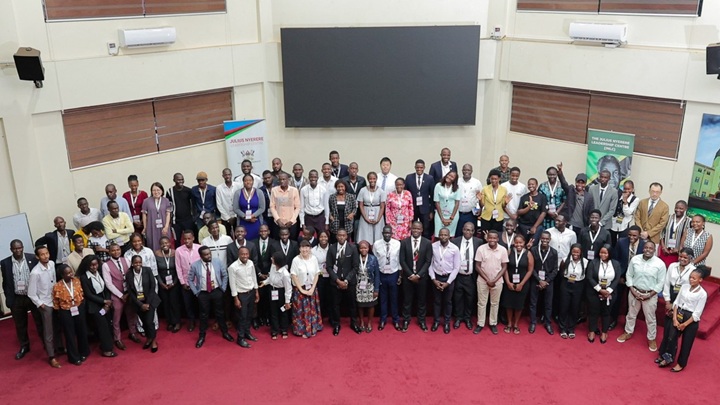
Over 100 participants, including scholars, young leaders, women, and students, joined the symposium.
Seifudein Adem participated online and delivered a keynote address, exploring Ali Mazrui’s concept of numericalism—belief in the dignity of large numbers—and its profound implications for Africa. With 70% of its population under 30, Africa is the youngest continent demographically and will account for one in four people globally by 2050. This demographic surge represents not just a statistic but a strategic asset, offering Africa unparalleled potential for growth and influence. Yet, Adem emphasized that numbers alone do not guarantee progress; empowerment of these people—especially of women and youth—is essential.
Drawing on Mazrui’s ideas, Adem examined three interrelated themes: The Gender of War, The Paradox of Gender, and Phased Institutional Transformation. Historically, war’s most persistent attribute has been its masculinity. While technological shifts, feminist movements, and liberation struggles have increased women’s participation in combat, Mazrui warned that visibility does not equal authority. Women often fought bravely but were excluded from post-conflict governance.
Mazrui’s proposed path toward inclusive governance involves phased institutional transformation—moving from women-only electoral spaces to gender-neutral systems—to ensure equity through gradual, culturally sensitive reforms. Adem concluded by linking these ideas to global agendas, such as Women, Peace and Security (WPS) and Youth, Peace and Security (YPS), underscoring that Africa’s governance, justice, and peace lie not in numbers alone but in the imagination and agency of its empowered youth and women.
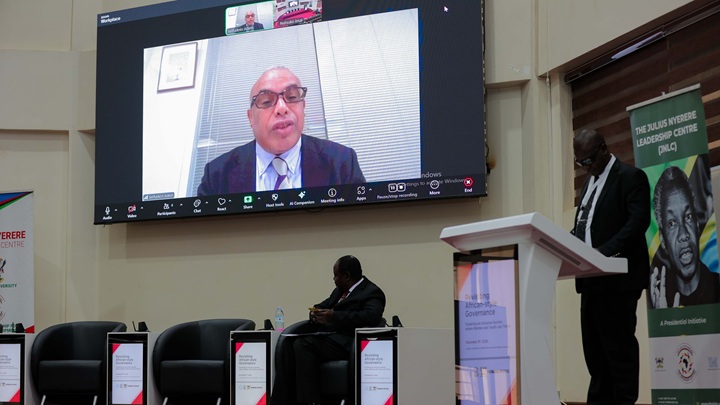
Seifudein Adem, Research Fellow, JICA Ogata Research Institute, participated online and delivered a keynote address.
In the following session, “The Values and Institutions of Inclusive African Governance: From the Perspectives of Gender, Generation, and Regionality,” Nagatsuji Takashi presented a research project conducted with Tanaka-Sakabe Yukako (Kyoritsu Women’s University) and Asano Rui (Seinan Gakuin University).* Based on their field survey in Liberia, they identified at-risk youth as young people exposed to conditions that increase the likelihood of them engaging in negative behavior and experiencing social exclusion. The Liberian government believes that the rising armed robbery, rape, and vigilantism problems in the country are linked to ex-combatants, most of whom are youth marginalized after the shortcomings of the Disarmament, Demobilization and Reintegration (DDR) programs. They are therefore a critical group to include in peacebuilding through expanded social and economic opportunities and equitable access to public services and justice.
Using four indicators—sleeping places, drinking habits, experience with chronic infectious diseases, and in-group affiliations—the research has identified that 35.57% of the 1,541 respondents were at risk. Among those who identified themselves as ex-combatants, 64% fell into the at-risk category. The findings suggest that vulnerable youth remain widespread more than 20 years after the civil wars. Nagatsuji emphasized that understanding the situation of at-risk youth is critical, and that their participation in communities can foster new interpersonal and intergroup relationships and contribute to peacebuilding in Liberia.
Please click here to access the discussion paper related to this presentation.
*The project was supported by the Japan Society for the Promotion of Science (JSPS) KAKENHI Grant Number JP24K00214 and JICA Ogata Research Institute Research Fund.
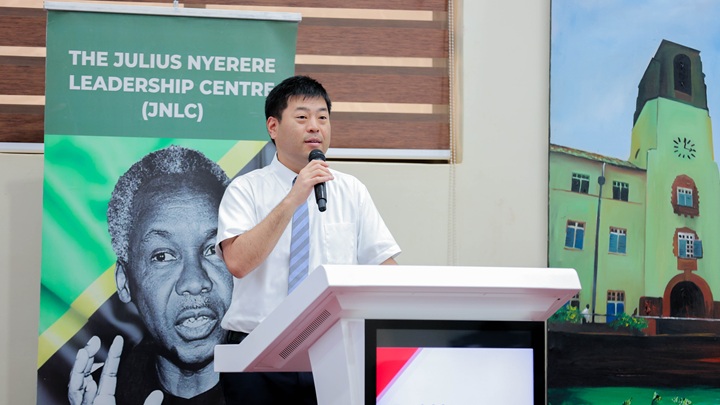
Nagatsuji Takashi, Research Fellow, JICA Ogata Research Institute.
In the session titled, “The Potential of African-style Democracy and Peacebuilding Unleashed by Women and Youth,” Imai Natsuko examined how Africa can shape its own model of good governance by connecting universal principles with local values rooted in its traditions and culture.
She emphasized that African traditional institutions, often contrasted with Western representative governance, contain distinctive democratic features, such as community participation and consensus-building. These practices deserve renewed attention as they reflect African conceptions of legitimacy, citizenship, and political belonging.
Imai argued that discussions on governance in Africa are not simply about institutional design, but rather about identifying the appropriate form of politics for African societies. While Western models prioritize individual representation, African traditions often emphasize communal participation and collective responsibility. Recognizing these unique values is essential for building sustainable and legitimate governance systems.
Within this context, she highlighted that youth inclusion is indispensable. As the continent’s demographic majority and key drivers of social change, young people must play a central role in shaping Africa’s political future.
She concluded that traditional institutions and good governance are not inherently in conflict. Rather than replacing local systems through external intervention, Africa’s governance reforms should strengthen existing institutions through internal dialogue and participatory processes. Ultimately, African good governance will emerge from culturally grounded deliberative participation and meaningful youth engagement.
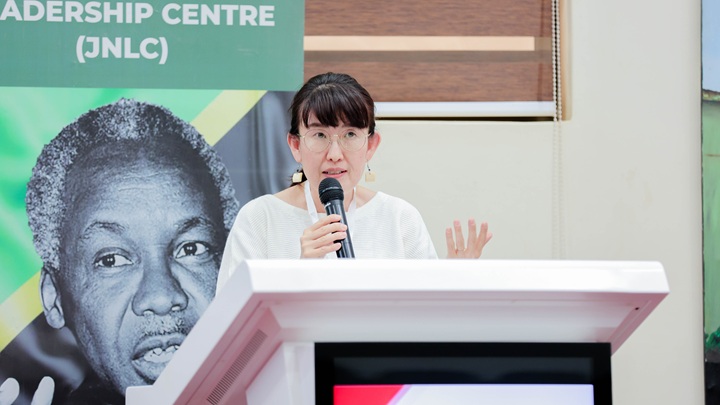
Imai Natsuko, Visiting Fellow, JICA Ogata Research Institute
For the full report on the symposium, please click below.
A recording of this symposium is available below.
Sns share!



事業事前評価表(地球規模課題対応国際科学技術協力(SATREPS)).国際協力機構 地球環境部 . 防災第一チーム. 1.案件名.国 名: フィリピン共和国.
事業事前評価表(地球規模課題対応国際科学技術協力(SATREPS)).国際協力機構 地球環境部 . 防災第一チーム. 1.案件名.国 名: フィリピン共和国.
事業事前評価表(地球規模課題対応国際科学技術協力(SATREPS)).国際協力機構 地球環境部 . 防災第一チーム. 1.案件名.国 名: フィリピン共和国.
事業事前評価表(地球規模課題対応国際科学技術協力(SATREPS)).国際協力機構 地球環境部 . 防災第一チーム. 1.案件名.国 名: フィリピン共和国.
事業事前評価表(地球規模課題対応国際科学技術協力(SATREPS)).国際協力機構 地球環境部 . 防災第一チーム. 1.案件名.国 名: フィリピン共和国.


