
KAIZEN PROJECT Activity Report Vol. 9 Bridge Opening Ceremony
[Goal 9] Industry, Innovation and Infrastructure

2026.06.23







2026.06.23
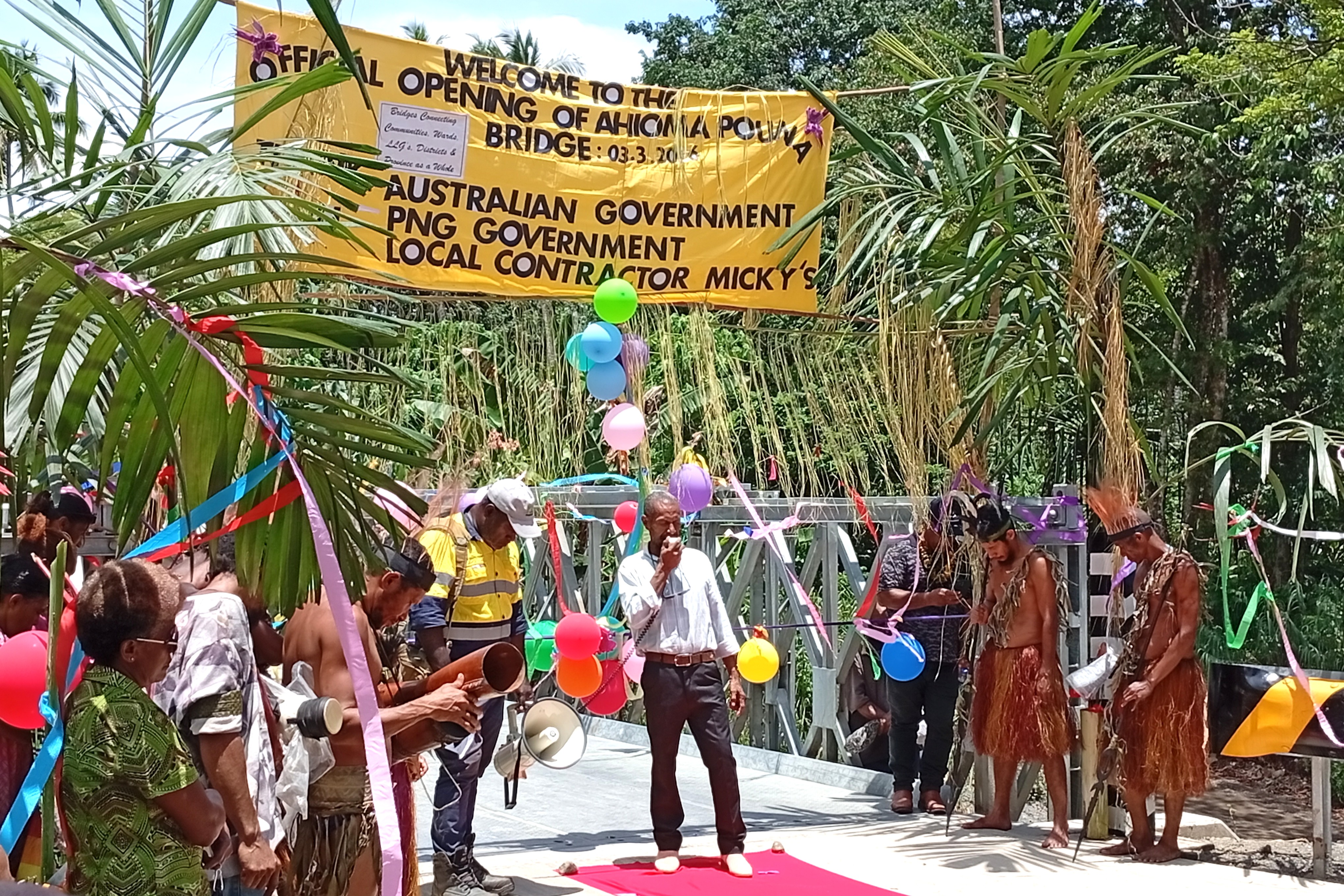
My name is Nakanishi, a JICA Volunteer. This article introduces the opening ceremony of the Ahioma Bridge, held in March 2026 in the outskirts of Alotau, Milne Bay Province, and also highlights local road conditions and cultural aspects of the area.
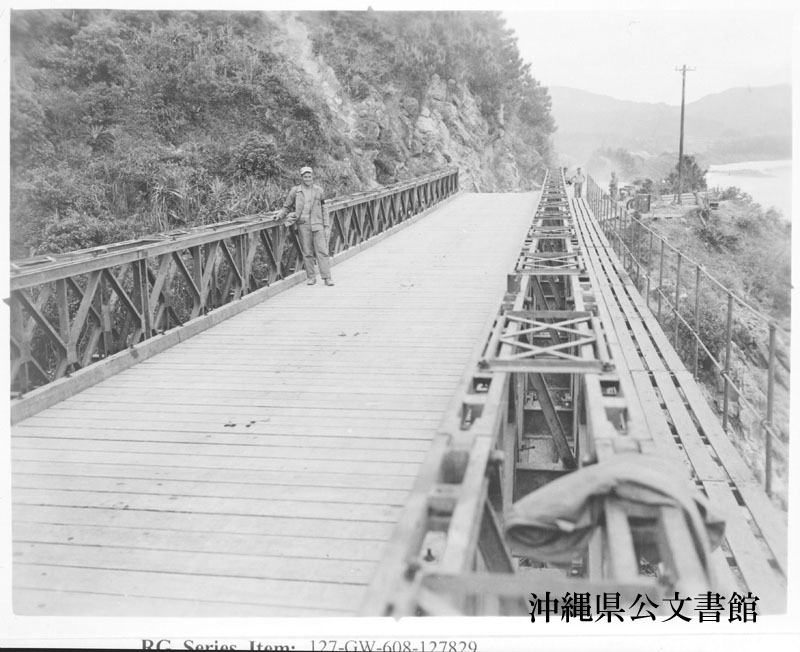
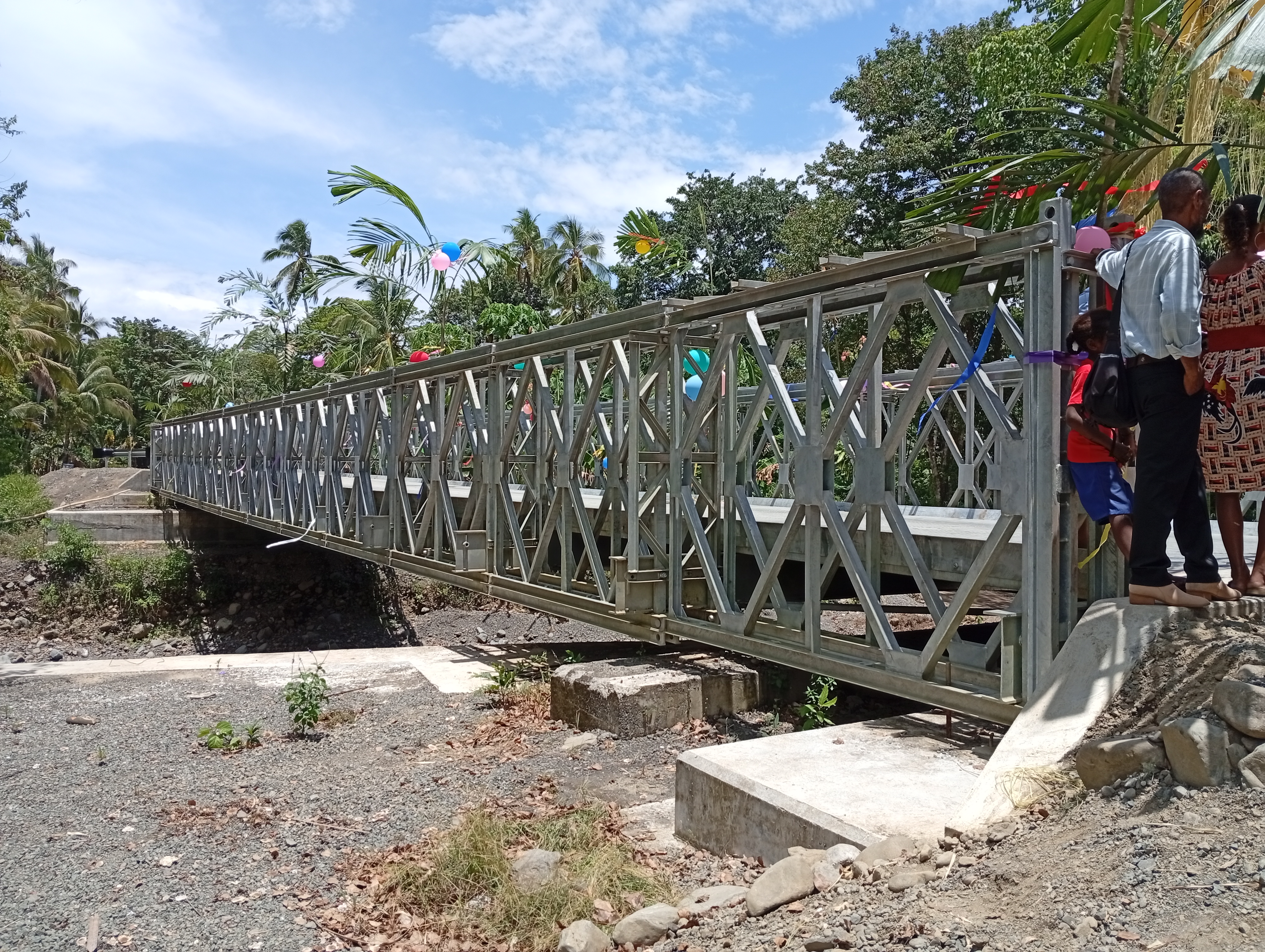
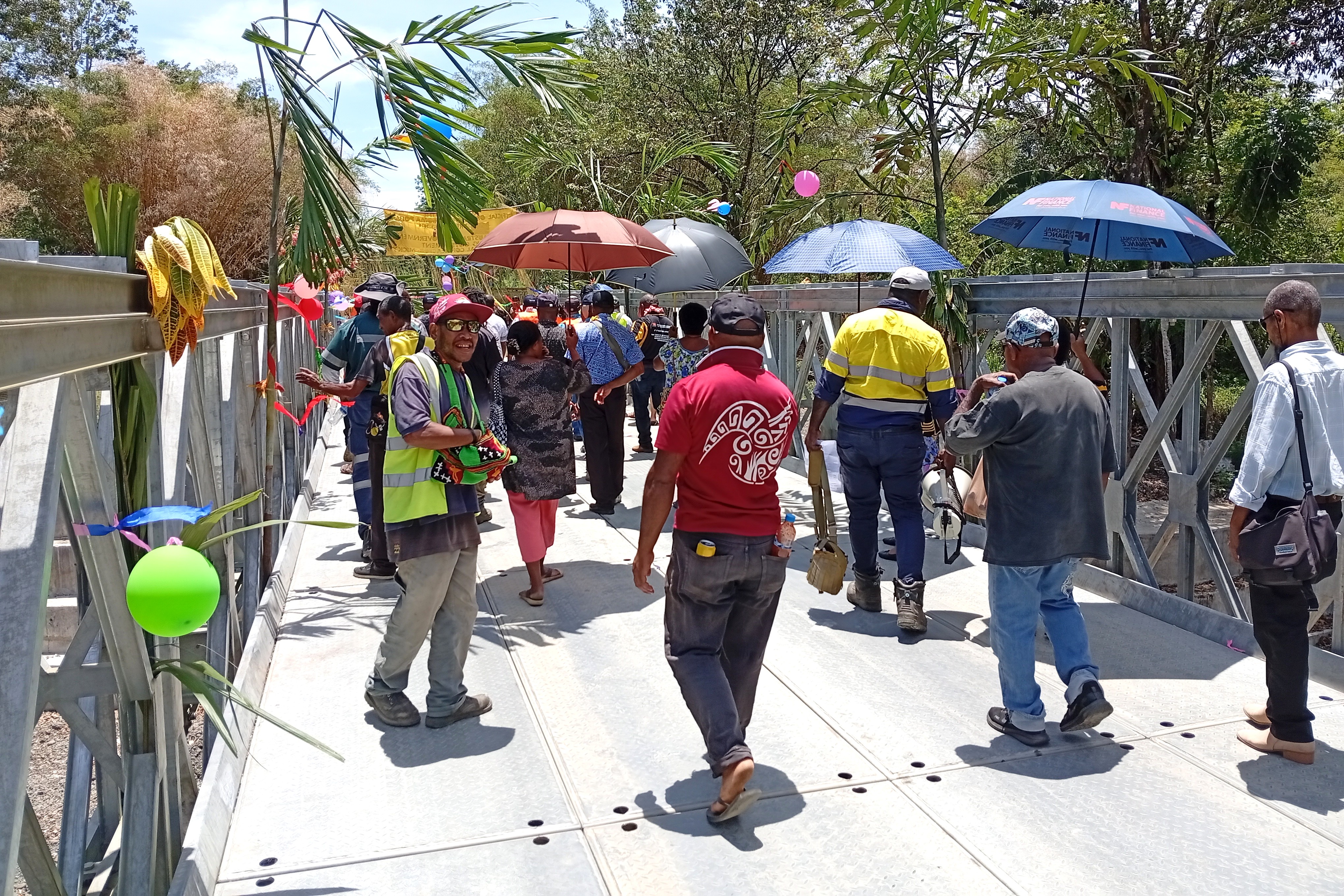
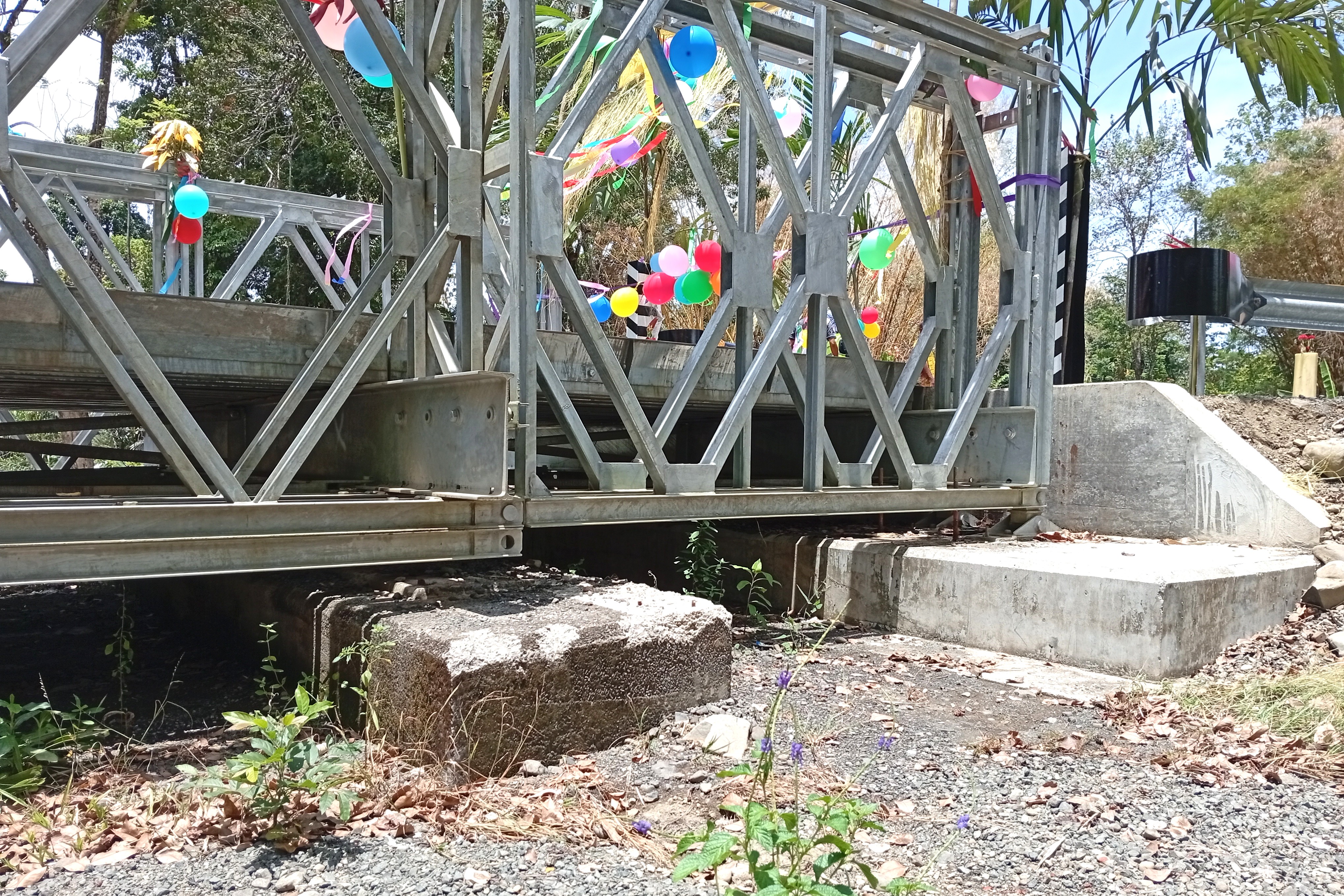
The Ahyoma Bridge is a type of truss bridge known as a Bailey bridge, constructed from steel components. Bailey bridges were originally developed in the United Kingdom during World War II as temporary structures, and were also used in Japan during the Battle of Okinawa. Today, their basic structure remains largely unchanged.
A Bailey bridge is assembled by connecting prefabricated steel panels and does not require heavy machinery such as large cranes during construction. For this reason, it is widely used as a permanent bridge in developing countries. Many Bailey bridges can also be seen in this area. The Ahioma Bridge has a total length of 36 meters and is designed to accommodate large vehicles.
The opening ceremony was attended by representatives of the Australian Government, which provided financial support for the project, as well as local level government leader, members of the assembly, community representatives, contractors, provincial government administrator, and manager from the Unit.
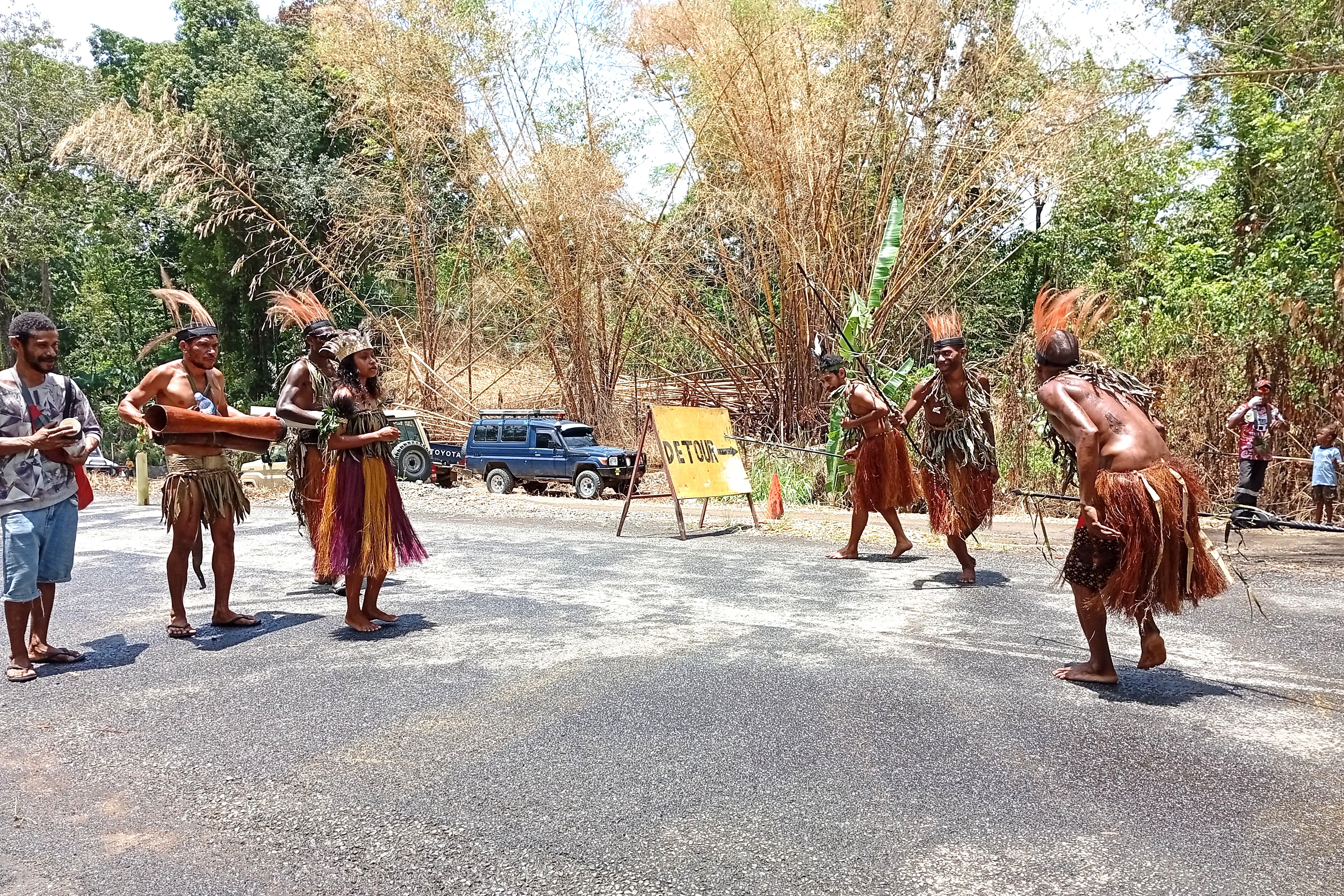
During the ceremony, a traditional dance performed by the local community was presented. Accompanied by the rhythm of a wooden drum called a “kundu,” dancers wearing face paint and holding spears performed in a way that evoked scenes of hunting. The spear and kundu are also featured in the national emblem of Papua New Guinea.
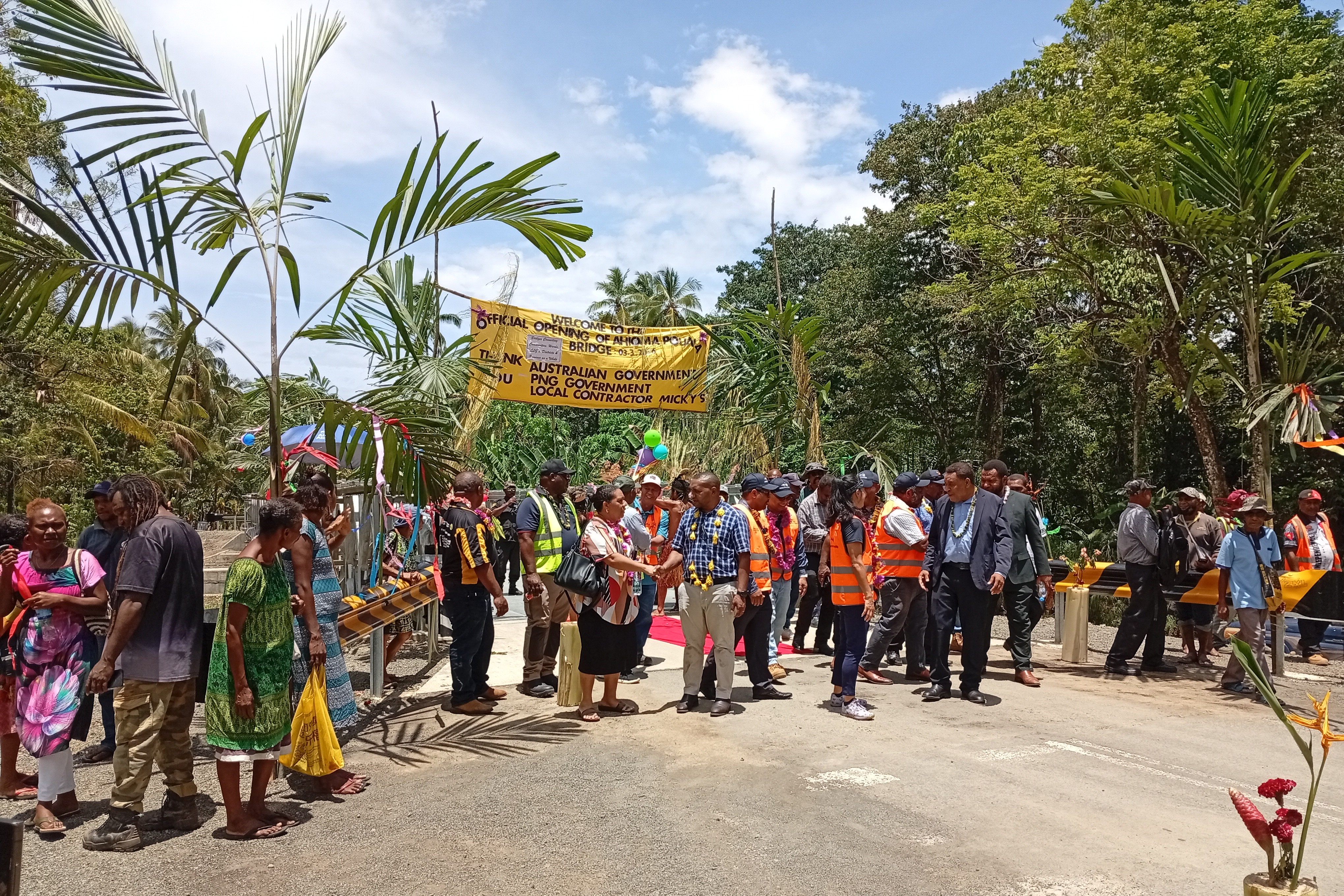
This was followed by a prayer for road safety led by a church pastor, a ribbon-cutting ceremony by the guests, and the first official crossing of the bridge, marking the conclusion of the event.
Upon observing the bridge site, it was noted that the existing abutments were reused, indicating that the bridge was replaced due to aging rather than newly constructed.
In Milne Bay Province, many roads are located near the coastline, where salt exposure and the tropical climate accelerate the deterioration of steel materials. The replacement of this bridge was supported by funding from the Australian Government, highlighting the important role of external support in infrastructure development.
Through this opening ceremony, I was reminded of the importance of properly maintaining existing bridges to ensure their long-term use. I will continue working together with my colleagues at the Unit to promote efforts toward extending the lifespan of public infrastructure.
Related Link
・First JCC Meeting Held for ECO-SHEP PNG Project
・KAIZEN PROJECT Activity Diary Vol.7 Combining Local Practice with Japanese Experience
・JICA Continues Deployment of Japanese Volunteers to PNG
Please also visit our Facebook for our latest activities and events news
JICA Facebook Page
Sns share!


