

Interview With Visiting Fellow Sugimura Miki: Why Global Citizenship Matters for a Connected World
2026.01.05





Updates from JICA Ogata Research Institute on the latest events, publications and more.
RegistrationHow to Find Us


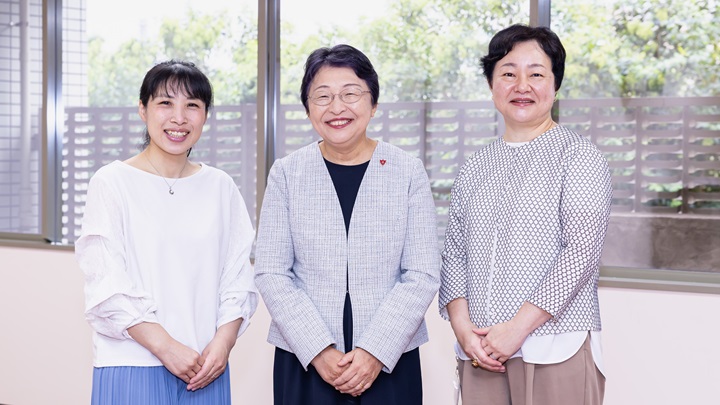
As concerns about a divided world grow, the concept of global citizenship is gaining attention. But what actually is global citizenship? We spoke with Sugimura Miki, Visiting Fellow at the JICA Ogata Sadako Research Institute for Peace and Development (JICA Ogata Research Institute) and President of Sophia University, who is dedicated to global citizenship education and has contributed to various research projects at the Institute. Joining the conversation were Kamei Haruko, Director General, and Hikami Naoko, Research Officer.
Hikami: Dr. Sugimura, your research spans comparative education, international education, cultural pluralism and inclusive education. What first made you interested in these?
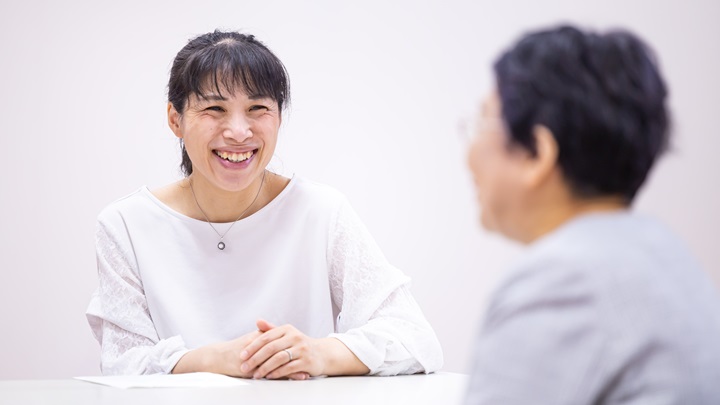
Hikami Naoko, Research Officer, JICA Ogata Research Institute, a member of the research project “Japan’s International Cooperation in Education”
Sugimura: While majoring in pedagogy at university, I realized that education is deeply connected to how societies function and how people live. Later, in a lecture on international relations theory, I learned that diplomacy is not driven solely by governments and international agencies—people-to-people exchange also plays a vital role. That insight inspired me to pursue a career in which I could promote international exchange and peace through education.
My thesis focused on Malaysia’s national education policy. In a multiethnic country like Malaysia, education is critical for nation building and human resource development, making the country a fascinating ground for a case study. This is s how Malaysia first came into my research.
I went to graduate school immediately after graduation but struggled to connect my interests with my research. Then came an unexpected turning point. One day, I was enjoying shrimp noodle soup in Yokohama Chinatown, and I noticed that the restaurant staff were talking in Chinese. Until then, I was unaware that a multicultural society like this existed even in Japan and suddenly realized that this Chinese community might be an interesting subject to study. That discovery led me to study cultural pluralism—thanks to a bowl of noodles! Later, at Sophia University, I became in charge of international education studies, working on topics ranging from education for international understanding, to cultural pluralism and international education development.
Hikami: You have also contributed to research projects of the JICA Ogata Research Institute like “Disability and Education” and “Japan’s International Cooperation in Education.”
Sugimura: For “Disability and Education,” I visited Nepal and learned many things there. While the project focused on disability and education, it reminded me that inclusive education—where everyone learns together from an equity perspective—goes beyond disability. It connects to cultural pluralism and aligns with the Sustainable Development Goals (SDGs), which aim to leave no one behind. Education exists for the people, and I have been fortunate to be able to explore this field through diverse opportunities and networks.
Hikami: You also supported the research project “Empirical Research on Impacts of Study Abroad in Developing Countries.” The findings showed that the study-abroad experience of academic professionals who work at major universities in Indonesia, Cambodia, Vietnam and Malaysia positively influenced overall education activities of universities, thereby facilitating university globalization. What do you think is the significance of this work?
Sugimura: In charge of the work on Malaysia in this research project, I designed questions for academic professionals. Collecting enough responses was challenging, but our analysis revealed interesting patterns. For example, Malaysian scholars preferred studying in the United Kingdom over the United States, while Indonesia had the greatest number of scholars who had studied in Japan, reflecting the strong ties between Indonesia and Japan fostered through Japan’s international cooperation.
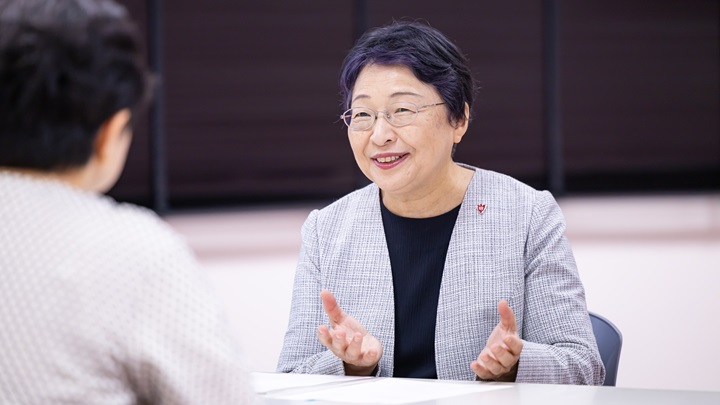
Sugimura Miki, Visiting Fellow, who has been involved in various research projects by the JICA Ogata Research Institute
What stood out most was how study abroad nurtures global citizenship among academics. While earning a degree is the primary goal, many maintain international networks after returning home and use these connections to educate future generations. The long-term impact is profound. This may sound obvious, but providing concrete evidence of these effects gives the research real value.
Hikami: What do you think about the globalization of Japanese universities today?
Sugimura: There is concern that Japanese students are becoming more inward-looking, favoring stability over adventure. The government aims to send 500,000 students abroad, offering scholarships and programs for both high-school and university students. Sophia University also provides opportunities, including short study tours to Africa. I hope students seize these chances to engage with the world. However, challenges remain. A weak yen, geopolitical risks and growing global divisions are reshaping the study-abroad landscape. It is fair to say that the environment for international education is changing dramatically.
Kamei: With domestic challenges and a world that seems increasingly divided, what do you think is important to keep the world connected?
Sugimura: Global citizenship has never been more important than it is today. The concept originated with UNESCO’s idea of the “global citizen,” but putting it into practice is not without challenges. Each country has its own priorities, and some countries may choose to strengthen national unity through education before promoting global citizenship education. Still, the need to cultivate global citizenship—encouraging students to engage with global issues and seek solutions for a peaceful and sustainable world—remains constant. While the goal is shared, the paths to achieve it will differ, shaped by each country’s unique context and approach.
Kamei: So global citizenship education plays a key role in promoting peace and overcoming division and prejudice.
Sugimura: Absolutely. Japanese society, too, must work toward embracing cultural pluralism, though this is not easy. Take Malaysia as an example. It is a multicultural society where Chinese, Indian and Malay people live together, and globalization has brought many international students. However, even in a country like Malaysia, some Malaysian students perceive students from the Middle East or Africa as “different.” To Japanese eyes, Malaysia seems highly diverse, but such attitudes still exist. While divisions run deep worldwide today, Japan has strong ties with Europe, North America and the Global South. I therefore think that Japan can make the most of this strength and act as a coordinator in the global community—a platform for connection.
Kamei: Universities are responsible for nurturing next generations. From that perspective, how would you like to contribute to society, including through collaboration with JICA?
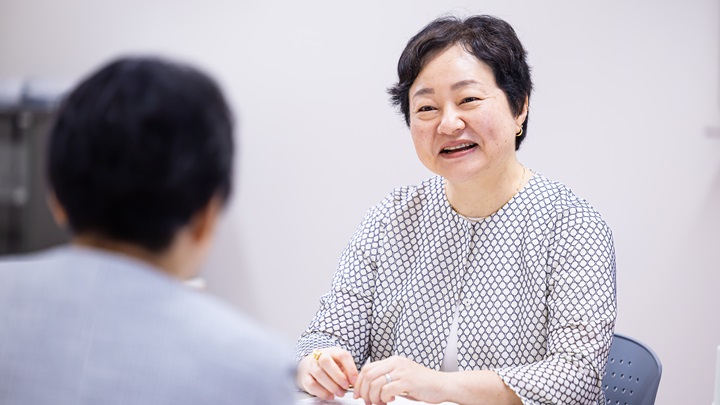
Kamei Haruko, Director General of the JICA Ogata Research Institute
Sugimura: Sophia University has partnered with JICA in many ways. For example, we have held guest lectures featuring JICA staff and former Japan Overseas Cooperation Volunteers (JOCVs), which have inspired some students to become JOCVs themselves. I have taken students to JICA Global Plaza, where they can learn about international cooperation efforts worldwide, including in Africa, and some were so inspired that they chose Africa as the focus of their theses. On another note, I currently teach at the Department of Education and we have two JICA scholarship students from Ghana. They actively participate in our international education study group for undergraduates that focuses on global citizenship education. Their unique perspectives enrich discussions and broaden the students’ understanding.
During the Ninth Tokyo International Conference on African Development (TICAD 9) in August 2025, Sophia University, as a UNESCO Chair university, co-hosted the youth-led side event called the Model African Union with JICA and the United Nations Development Programme (UNDP). Experiences like these reinforce my belief that even small opportunities to engage with the world are important for young people. It would be wonderful if the inspiration students gain from JICA’s expertise leads to a positive chain reaction.
Kamei: It would be our great pleasure if students, even in small ways, start thinking about global citizenship and cultural pluralism after networking with JICA scholarship students and those with hands-on experience. We hope to continue collaborating with universities on various activities. Finally, could you share your expectations for the JICA Ogata Research Institute?
Sugimura: Just like how you invited me to join a research project of the JICA Ogata Research Institute, I am hoping that the institute will continue to leverage JICA’s networks and grow as a hub connecting researchers in Japan and around the world. While both the world and Japan face complex challenges, I think that the most important concept is human security, which is the core of the Institute’s work. Human security focuses on each and every person, aiming to expand their opportunities. Now is a crucial time to revisit and strengthen this concept.
Kamei: “Co-creating practical knowledge for peace and development” is the JICA Ogata Research Institute’s vision. Guided by human security, which values every person, we will continue to explore through research, how we can address global and domestic challenges and build a world where we all live together in peace. Thank you very much.
Sns share!



事業事前評価表(地球規模課題対応国際科学技術協力(SATREPS)).国際協力機構 地球環境部 . 防災第一チーム. 1.案件名.国 名: フィリピン共和国.
事業事前評価表(地球規模課題対応国際科学技術協力(SATREPS)).国際協力機構 地球環境部 . 防災第一チーム. 1.案件名.国 名: フィリピン共和国.
事業事前評価表(地球規模課題対応国際科学技術協力(SATREPS)).国際協力機構 地球環境部 . 防災第一チーム. 1.案件名.国 名: フィリピン共和国.
事業事前評価表(地球規模課題対応国際科学技術協力(SATREPS)).国際協力機構 地球環境部 . 防災第一チーム. 1.案件名.国 名: フィリピン共和国.
事業事前評価表(地球規模課題対応国際科学技術協力(SATREPS)).国際協力機構 地球環境部 . 防災第一チーム. 1.案件名.国 名: フィリピン共和国.


