

Blog Post | Role of Evidence in Advancing Global Goals: A Reflection From JICA’s High-Level Engagement on SDG Localization at Osaka Expo
2026.04.10





Updates from JICA Ogata Research Institute on the latest events, publications and more.
RegistrationHow to Find Us


This post was written by Richard Ssempala, a JICA scholar under the SDG Global Leaders Program. Drawing on his experience at an SDG Localization event at the Osaka Expo, he reflects on the role of evidence in advancing global goals.
Author: Richard Ssempala, a JICA scholar under the SDG Global Leaders Program
Eleven years ago countries adopted the Sustainable Development Goals (SDGs) as a follow-up to the Millennium Development Goals . The SDGs are summarized in 17 goals to be achieved by 2030, and are based on 169 targets. These goals aim to stimulate action by stakeholders in areas critical to the survival of humanity and the planet.
Since their adoption, most countries have undertaken measures to evaluate their progress, primarily through Voluntary National Reviews or Voluntary Local Reviews (VLRs)
, which assess achievements and challenges across various indicators. Recognizing that countries started from very different levels of development and capacity, localizing the SDGs has become a practical way to adapt and implement the goals effectively.
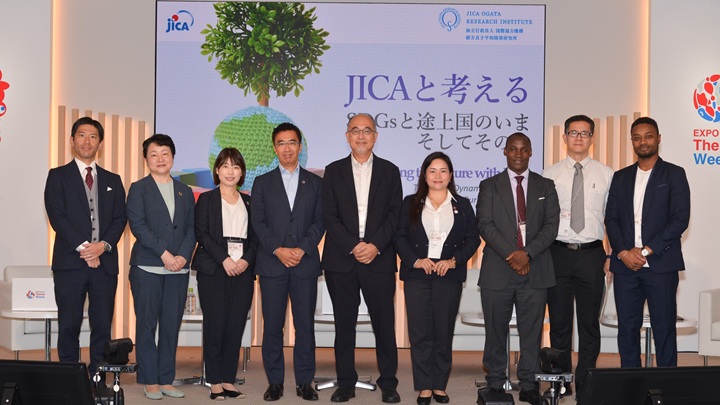
I spoke at an event organized by the JICA Ogata Sadako Research Institute for Peace and Development
(JICA Ogata Research Institute) at the Osaka Expo
on Oct. 5, 2025. The event focused on SDG localization under the theme, “Shaping the Future with JICA: The SDGs, Dynamic Realities of Developing Countries, and Our Path Forward
.”
In this blog, I reflect on one key issue highlighted during that discussion: the role of evidence in advancing global goals.
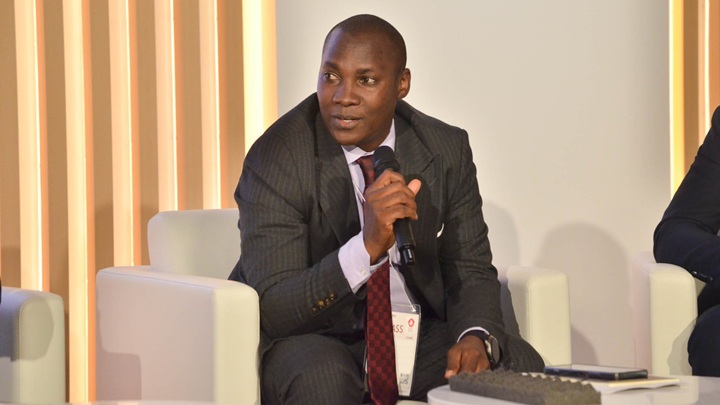
Richard Ssempala, one of the panelists, speaking at the event
In many countries, evidence-based policies are favored by policymakers, development partners and citizens alike. Reliable evidence on interventions, technologies, costs (short, medium, and long term), stakeholders, structures, interests, and power dynamics is essential for informed decision-making. Evidence helps identify the right problems and suggest appropriate measures to address them.
Limited resources—especially in developing countries—mean that the use of evidence becomes a critical necessity to ensure that investment and intervention yields the highest possible returns. This means global goals must be adapted to local contexts to make evidence-based strategies truly effective.
Evidence on infrastructure options, sustainable natural resource use strategies, human capital development, and poverty alleviation initiatives can help tackle pressing global challenges. However, countries often prioritize certain goals over others. Economic goals tend to receive more attention than environmental ones, even though current evidence shows climate change is severely impacting many countries. Prolonged droughts, torrential rains causing floods, and wildfires are increasingly common. For example, along with many others Ugandan cities frequently experience floods that disrupt business and traffic. Balancing environmental conservation with economic survival is a major challenge for low- and middle-income countries, especially amid rapid population growth. Meanwhile, developed countries face concerns about healthcare costs for aging populations and declining birth rates.
Evidence-based strategies for sustainable funding of education, healthcare, security, and job creation require trade-offs. Therefore, in the pursuit of SDGs and other global goals, evidence remains a vital ingredient for sound policymaking.
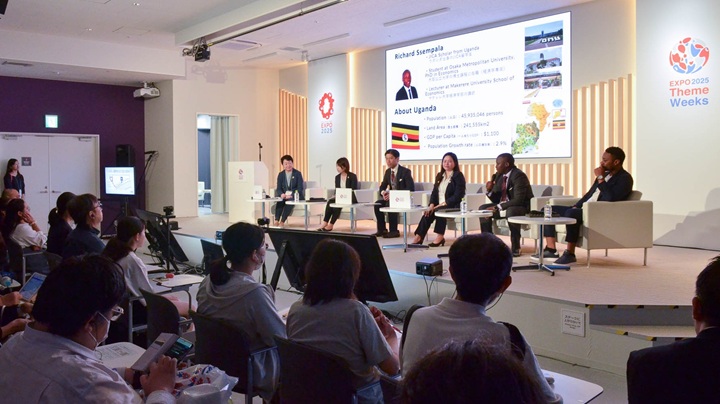
Panel discussion during the event
Achieving global goals requires regular monitoring to track progress effectively. With 169 targets, a strategy to regularly track progress is essential. Localization enables experts to design approaches tailored to national contexts, making tracking easier.
In Uganda, for instance, the government through the office of the Prime-Minister , specifically the SDG Secretariat , convenes stakeholders annually to review progress. Assessment reports on different targets are presented, and stakeholders share recommendations for improvement. Currently, the Voluntary National Review system plays a key role in helping countries monitor progress and reaffirm their commitment to the SDG targets. Evidence is used to guide the development of realistic policy actions to address critical challenges.

Stakeholders at Uganda’s 3rd National conference on SDGs, held in Kampala on 24th June 2024
Collaboration is essential for achieving global goals. Countries are at different stages and possess different expertise, so sharing ideas and resources ensures no country is left behind. Establishing platforms for countries to exchange lessons and address challenges is essential for peer-to-peer learning. These platforms can take the form of knowledge-sharing networks, regional forums, or collaborative workshops that enable countries to learn from each other’s experiences.
Governments and development partners must collaborate with research institutions to generate evidence for feasible interventions.
Academia plays a vital role in teaching and conducting research on the agreed upon global goals, feasible ways of achieving and contextualizing them to meet the needs of a country.
This approach was emphasized through the example of Toyota City in Japan, where seminars on SDGs are given by research experts. It is reported that SDG awareness among the people increased from 14.8% in 2018 to 91.8% in 2023 in part because of this initiative. Engaging research institutions to provide lectures and seminars on SDGs and other global goals not only provide knowledge but also awareness and connection between academia and the community.
Similarly, in Uganda, Makerere University has been instrumental in providing evidence on strategies to achieve Universal Health Coverage with an emphasis on country-contextualized, multi-sectoral approaches.
Achieving global goals requires enormous funding at global, national and local levels. Innovative financing mechanisms are essential to raise additional resources.
In countries with strong cultural institutions, leveraging these structures can also reduce costs. For example, Uganda’s Buganda Kingdom promotes health through as the annual Kabaka Birthday-Run, which raises awareness about diseases such as HIV/Aids, cancer, and sickle cell anemia, while generating funds to combat them.
Getting evidence into the hands of users and beneficiaries is also critical for achieving global targets. The channels and approaches used to disseminate evidence greatly influence its effectiveness. This calls for innovative ways of packaging and storing evidence so it can reach diverse stakeholders.
Using multimedia platforms is an effective strategy to meet the needs of almost all shareholders. With internet penetration
in many parts of the world, leveraging social media is essential. Creative approaches such as music, dance and drama can help communicate global targets even in rural areas. For instance, in Uganda and other countries, musicians
have often been engaged to spread key messages. Choosing the right channels for disseminating well-packaged evidence is necessary to achieve the intended objectives.
Only five years remain until the 2030 target year. Countries need to evaluate SDG implementation at all levels—assessing achievements, identifying challenges, and determining what actions to take beyond 2030.
In the era of the digital economy, increasing connectivity and sharing evidence should be prioritized by all countries. Impediments to generating, sharing and using evidence—especially in developing countries—must be addressed. These include poor infrastructure, restrictive patents rights, and human resource limitations.
Moreover, context-specific evidence can make it easier to implement a program and monitor and evaluate progress. Localization offers countries an opportunity to reflect on what they can achieve and identify those areas that need improvement. It also promotes awareness and ownership in a most cost-effective way. Countries that have embraced localization, such as Japan, demonstrate significant progress on several goals and targets.
Evidence should continue to guide strategies at local, national and global levels—not only to achieve the SDGs but also to advance progress toward other global goals beyond 2030.
Richard Ssempala is a PhD. student in Economics at Osaka Metropolitan University in Japan and a JICA scholar under the SDG Global Leaders Program. He also serves as a Lecturer in the School of Economics, Makerere University , Uganda.

For more details about the Expo event hosted by the JICA Ogata Research Institute, please visit the link below.
Sns share!



事業事前評価表(地球規模課題対応国際科学技術協力(SATREPS)).国際協力機構 地球環境部 . 防災第一チーム. 1.案件名.国 名: フィリピン共和国.
事業事前評価表(地球規模課題対応国際科学技術協力(SATREPS)).国際協力機構 地球環境部 . 防災第一チーム. 1.案件名.国 名: フィリピン共和国.
事業事前評価表(地球規模課題対応国際科学技術協力(SATREPS)).国際協力機構 地球環境部 . 防災第一チーム. 1.案件名.国 名: フィリピン共和国.
事業事前評価表(地球規模課題対応国際科学技術協力(SATREPS)).国際協力機構 地球環境部 . 防災第一チーム. 1.案件名.国 名: フィリピン共和国.
事業事前評価表(地球規模課題対応国際科学技術協力(SATREPS)).国際協力機構 地球環境部 . 防災第一チーム. 1.案件名.国 名: フィリピン共和国.


