

Blog Post | Measuring the Impact of the Maternal and Child Health Handbook: Evidence From a Study in Ghana
2026.07.14





Updates from JICA Ogata Research Institute on the latest events, publications and more.
RegistrationHow to Find Us


Born in Japan, the Maternal and Child Health (MCH) Handbook is a reliable tool that compiles health records and other relevant information of each mother and child—from gestation to infancy and early childhood—into one booklet. From obstetric and pediatric examinations to vaccination, MCH Handbooks have bridged between various services, supporting seamless care. Since the 1990s, JICA has provided assistance to introduce and spread the use of MCH Handbooks in accordance with local context.
This blog post shares about “Impact Evaluation of the Maternal and Child Health Record Book in the Republic of Ghana ,” an ongoing project between JICA, Ghana Health Service (GHS) and the University of Tokyo. Insight from discussions that took place during a meeting held in Ghana in February 2026 is shared as well.
Authors:
Hagiwara Akiko, Senior Advisor (Health), JICA
Omachi Mayumi, Advisor, Human Development Department, JICA
Hatano Natsuko, Program Officer, Human Development Department, JICA
Kajino Mayuna, Research Officer, JICA Ogata Sadako Research Institute for Peace and Development (JICA Ogata Research Institute)
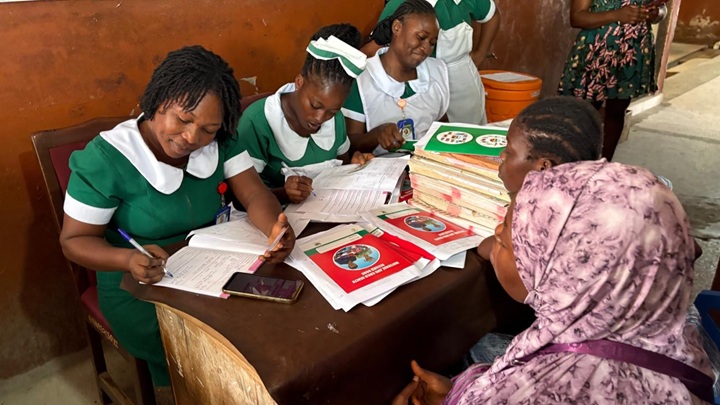
In 2018, Ghana integrated the Maternal Health Record, Child Health Record and Continuum of Care (CoC) Card into one MCH Handbook (with the official name “MCH Record Book”). This was the fruit of the “Ensure Mothers and Babies Regular Access to Care (EMBRACE)” implementation research program , conducted through collaboration between the Ghanaian government, the University of Tokyo and JICA. The program confirmed that the uptake rate of essential MCH services and the incidence rate of medical complications both show improvements among mothers and pregnant women through the use of the MCH Record Book. This is because the MCH Record Book provides enabling environments and effectively explains the importance of essential MCH services such as antenatal care, institutional delivery, postnatal care and child welfare clinics to pregnant women and mothers.
With JICA’s technical and financial support, MCH Record Book usage has spread across Ghana. A survey conducted in 2021 showed that the MCH Record Book is used in public, private and NGO health facilities throughout the country.
Below are some examples of the feedback that note many positive changes:
“It has become easier to keep birth records and encourage mothers to obtain birth certificates for their babies.”
“We can communicate better with mothers.”
“The MCH Record Book helps us to provide respectful care.”
However, the following have not been sufficiently analyzed yet: how the handbook influences health behaviors and health outcomes during the first 1,000 days of life from conception to the second birthday, a period considered to be the most important for maternal and child health; and how the Ghanaian government successfully institutionalized the MCH Record Book program. Therefore, through collaboration with GHS and the University of Tokyo, JICA is conducting an in-depth study to identify the changes caused by the continued use of MCH Record Books, as well as the success factors and barriers for sustainable institutionalization.
The effects of MCH Handbooks are studied around the world, but these studies are truly diverse in their sociocultural backgrounds and methods . In fact, it is extremely difficult to accurately measure their impacts. In the field of medicine, frameworks like the Grading of Recommendations Assessment, Development and Evaluation (GRADE) are used to grade the quality of evidence, while a randomized controlled trial (RCT) is considered to be highly reliable when evaluating the causality between the intervention and the observed effect.
Grading of Recommendations Assessment, Development and Evaluation (GRADE)
GRADE is an internationally accepted framework to systematically evaluate the quality of evidence provided by medical research and the strength of the recommendations that can be drawn from such evidence, while taking into account the validity of experimental design and potential biases.
The effects of maternal-and-child health projects, however, have multiple dimensions and appear over a long period of time as many factors are intertwined. As a result, clearly identifying “what works for what” is not straightforward. In addition, some impacts like social value are hard to quantify. Furthermore, translating research insights into policy and implementing them in practice presents additional challenges. For this reason, it is essential to clarify from the outset what should be measured, and for what purpose, in impact evaluations. Is the goal to establish causality? Or is it to inform policy implementation? The choice of methods and research design will depend on these objectives.
Building on questions that have emerged from the field in Ghana, the ongoing study aims to generate evidence to further improve the MCH Record Book program. Furthermore, it seeks to share the experience gained by the Ghanaian government with other countries.
The following questions came from those working in the field:
“Are MCH Record Books effectively used in all hospitals and health centers across Ghana?”
“Are there differences in childcare practices and health outcomes between mothers and children who consistently used MCH Record Books and those who did not?”
“How do healthcare professionals and mothers perceive the benefits of using MCH Record Books?”
“What kind of support do healthcare professionals consider necessary to further promote the use of MCH Record Books?”
“What strengths and challenges within the Ghanaian healthcare system affected the promotion of MCH Record Books?”
The research team designed the study to address these questions. To this end, a mixed-method approach combining both quantitative and qualitative techniques was adopted, enabling the study to capture not only numerical data but also the experiences and perspectives of participants.
Important considerations include the perception of MCH Record Books among mothers, the situations in which healthcare professionals find them effective, and the challenges faced by government officials responsible for relevant policies. Taking these factors into account will help advance research in this field.
Data was collected across Ghana in 2025.Collected data and firsthand experience on the ground are then combined and stakeholders come together to think about the improvements that should be made next. This process itself also adds significant value to the research.
On Feb. 11, 2026, the Data Validation Meeting was held for stakeholders to validate data collected from across Ghana. In addition to lessons learned, next steps to refine the analysis and further strengthen the program were discussed. The meeting was attended by Japanese members of the research team, GHS representatives, staff in charge of healthcare issues in different regions of Ghana and UNICEF representatives.
This meeting was not merely an opportunity to validate data. It was a platform for dialogue and collaboration to explore how research outcomes can be leveraged on the ground. By comparing data and firsthand experience on the ground, participants had frank discussion on the direction of future analyses and how to apply outcomes to policies.
Following this discussion, participants concluded that the collected data generally reflects realities on the ground. Although detailed analysis is still ongoing, positive outcomes associated with the use of MCH Record Books have already been observed. These include improvements in the service use and better nutrition status among children, At the same time, several challenges have been identified, such as difficulties faced by health workers in understanding, completing and interpreting nutritional records. With both these achievements and challenges now more clearly recognized, participants expressed strong expectations that the research findings will help improve existing systems.
The discussion also expanded to topics directly related to practical implementation. These included improvements to the design of the MCH Record Book (e.g., adding graphs to show deviation from reference values), better training for more effective use of the MCH Record Book, a stronger monitoring system to improve data quality, how to promote and revise user guides (the User Guide and the Management Guide ), and the possibility of developing a digital version of the MCH Record Book. Through these discussions, participants were able to exchange perspectives and develop a shared understanding. The meeting was highly significant, as it went beyond simply validating research data and led to new insights that will help improve maternal and child health services on the ground.
Article on the meeting by GHS
GHS/JICA Holds Validation Meeting on MCH-RB Impact Evaluation Survey Data | Ghana Health Service
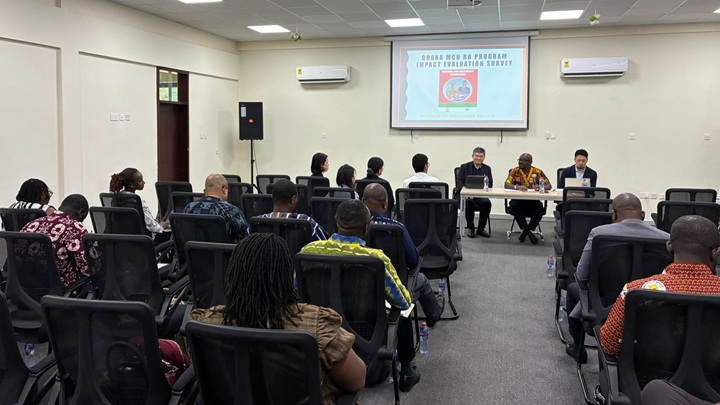
At the Data Validation Meeting
As a next step, further analyses will be conducted based on the data reviewed during the meeting, and the results of the impact evaluation will be compiled in a format that is easy to apply in practice. It is expected that the efforts made at this meeting will contribute to improving healthcare services through the use of MCH Record Books and serve as a model of research grounded in real-world practice.
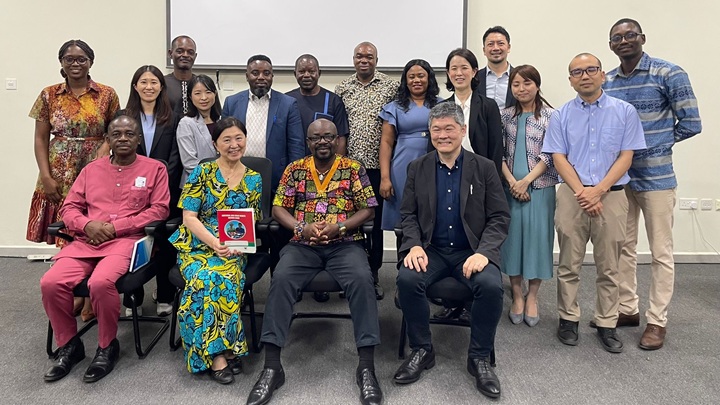
Members of the research team, GHS and JICA
Sns share!



事業事前評価表(地球規模課題対応国際科学技術協力(SATREPS)).国際協力機構 地球環境部 . 防災第一チーム. 1.案件名.国 名: フィリピン共和国.
事業事前評価表(地球規模課題対応国際科学技術協力(SATREPS)).国際協力機構 地球環境部 . 防災第一チーム. 1.案件名.国 名: フィリピン共和国.
事業事前評価表(地球規模課題対応国際科学技術協力(SATREPS)).国際協力機構 地球環境部 . 防災第一チーム. 1.案件名.国 名: フィリピン共和国.
事業事前評価表(地球規模課題対応国際科学技術協力(SATREPS)).国際協力機構 地球環境部 . 防災第一チーム. 1.案件名.国 名: フィリピン共和国.
事業事前評価表(地球規模課題対応国際科学技術協力(SATREPS)).国際協力機構 地球環境部 . 防災第一チーム. 1.案件名.国 名: フィリピン共和国.


