

Interview With Professor Nishitateno Shuhei: How Development Cooperation Can Deliver Mutual Benefits
2026.08.18





Updates from JICA Ogata Research Institute on the latest events, publications and more.
RegistrationHow to Find Us


Discussions about the purpose of official development assistance (ODA) have become increasingly active in recent years. Using a wide range of data on trade, infrastructure export and diplomacy, Nishitateno Shuhei , Professor at Kwansei Gakuin University, examines how ODA, which supports the growth of developing countries, also affects Japan as a donor country. Katsurai Taro , Senior Research Fellow, JICA Ogata Sadako Research Institute for Peace and Development (JICA Ogata Research Institute), asked Professor Nishitateno about the background, findings and future directions of his research, particularly from the perspectives of trust and mutual benefit.
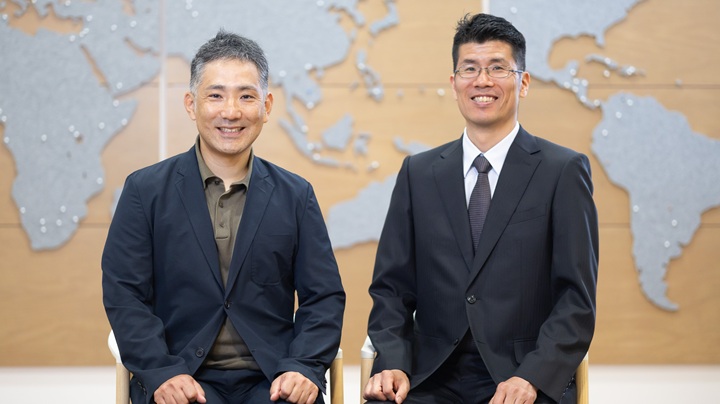
Katsurai: First of all, how did you come to study Japanese ODA?
Nishitateno: I actually started focusing on ODA studies fairly recently. In graduate school, I specialized in international trade and supply chains, conducting quantitative analyses of production networks in the automotive industry. My interests later extended to environmental issues and sustainable development through joint research with environmental economists at the Australian National University. After returning to Japan, I joined the Ministry of Economy, Trade and Industry (METI), where I was involved in policymaking and gained a broad perspective on the challenges facing the Japanese economy.
After joining Kwansei Gakuin University, my research centered on two main fields: international economics and environmental economics. In 2023, I began teaching development economics, which became a major turning point for me. I already had an interest in development economics, having studied the subject in graduate school and learned from my Sri Lankan supervisor, who often spoke passionately about the challenges of economic development. When I immersed myself in literature to prepare for my classes, I became increasingly intrigued by the depth and complexity of ODA.
I became particularly interested in the distinctive characteristics of Japanese ODA compared with that of other members of the Organisation for Economic Co-operation and Development (OECD) Development Assistance Committee (DAC). Examples of this uniqueness include a relatively high proportion of loans, a strong emphasis on economic infrastructure development, a geographic focus on Asia and close alignment with domestic industrial policy. I think these features are rooted in both the philosophy and history of Japanese ODA. The philosophy emphasizes self-reliance, while the historical origins can be traced in part to Japan’s post-World War II reparations. I came to think that I want to empirically examine how this distinctive Japanese model of assistance functions in practice.
Katsurai: You have authored many academic papers on ODA. Could you share some of your key findings?
Nishitateno: In “Heterogeneous effects of Aid-for-Trade on donor exports: Why is Japan Different? ” (Review of International Economics, 2023), we demonstrated that Japan’s Aid for Trade (AfT) promotes Japanese exports and that this export-promoting effect is stronger for Japan than for other donor countries. Our study revealed that Japanese ODA not only encourages Japanese foreign direct investment (FDI) but also generates economic benefits for Japan through increased exports.
Using data in the “Annual Report on Plant Exports” from the Heavy & Chemical Industries News Agency, “Does official development assistance benefit the donor economy? New evidence from Japanese overseas infrastructure projects ” (International Tax and Public Finance, 2024) showed that Japanese ODA has contributed to an increase in infrastructure exports by Japanese companies, extending beyond projects directly financed by ODA. One particularly interesting finding was that the impact of ODA is greater when loans and grants are combined.
In “The Return to Overseas Visits by Political Leaders: Evidence from Japanese yen loan procurement auctions ” (RIETI Discussion Paper Series, 2024), we used bidding data from JICA’s yen-loan projects to analyze the impact of official visits by Japanese political leaders, such as ministers and prime ministers. Our analysis showed that the contract award rate of Japanese companies increased by 47 percentage points following such visits.
Katsurai: You work with some rather unique datasets, not only traditional ones.
Nishitateno: Yes. I manually sorted data from the “Annual Report on Plant Exports,” procurement records for yen-loan projects, and information on official visits by political leaders. Working with data that have not previously been analyzed can lead to innovative research findings, which is one of the most exciting aspects of my work.
Katsurai: You have also been conducting research on China’s Belt and Road Initiative (BRI) recently. What have you found?
Nishitateno: The BRI aims to strengthen China’s economic and political ties with countries around the world by financing infrastructure projects in transportation, energy and information and communication technology (ICT). In “The impact of the Belt and Road Initiative on foreign direct investment from China, the United States, and major investor countries ” (Journal of Japanese and International Economies, 2025), we examined how participation in the BRI affects foreign direct investment from Japan, the United States and Europe. We found that joining the BRI led to increased direct investment from the United States, while the effect on investment from Japan was statistically insignificant.
The BRI’s economic and diplomatic impacts on Japan were analyzed in “Economic and Diplomatic Impacts of the Belt and Road Initiative on Western Nations in Infrastructure Investment Competition: Evidence from Japan ” (Review of International Economics, 2026). We found that after countries joined the BRI, the amount of infrastructure export from Japanese companies and the number of visits to Japan by senior government officials from those countries decreased. The significance of this paper is that it revealed that the BRI has diplomatic as well as economic implications for Western countries, including Japan.
Finally, in “Compete or Retreat? Evidence from aid competition between China and Western donor countries ” (RIETI Discussion Paper Series, 2026), we estimated how the expansion of Chinese aid affects ODA allocations by other donor countries. The results showed that Japan was the only donor country that increased the amount of ODA as China’s engagement expanded, whereas no similar pattern was observed among Western European donors. In this sense, examining trends in Chinese aid also helps us better understand Japanese ODA.
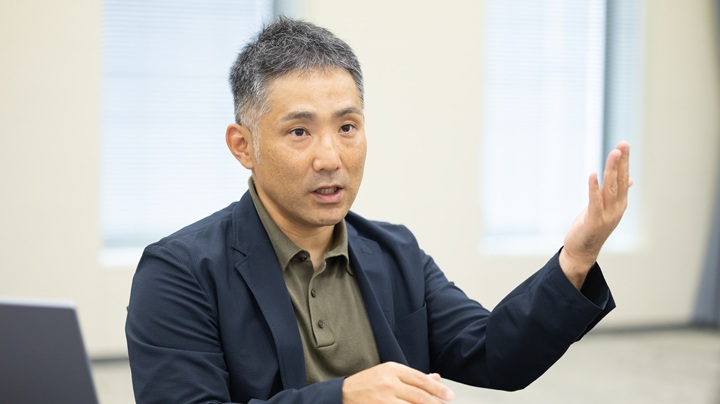
Professor Nishitateno Shuhei of Kwansei Gakuin University conducts research on ODA using a wide range of data.
Katsurai: Your research focuses on the impact of ODA on donor countries. This is particularly valuable because most ODA studies emphasize its contribution to development in recipient countries.
Nishitateno: I think ODA has two roles. The first is, of course, to support economic development and poverty reduction in recipient countries. The other is to realize the national interests of donor countries. The importance of objectively showing the benefits of ODA for Japan is growing, as the low birthrate and aging population are creating fiscal constraints, the security landscape is becoming more uncertain and international competition is intensifying. I would like to identify what kinds of aid policies can best advance Japan’s national interest.
Having said that, national interest encompasses a wide range of dimensions—including economic, political, diplomatic and strategic interests—and these are not always easy to examine through empirical research. Challenges include how to define national interest, how to measure it, and how to establish causal relationships between ODA and national interest. As an economist, I started by analyzing economic interests, which are more readily measurable through indicators such as trade, investment and infrastructure exports. As I mentioned earlier, our research confirmed that ODA contributes to increases in Japanese exports, FDI and infrastructure exports. However, it remains unclear how much of a country’s overall national interest can be explained by economic considerations alone. Moreover, existing studies have tended to focus on short-term and direct economic interests, leaving long-term and indirect benefits less understood.
One particularly important aspect of ODA is trust. Trust is difficult to quantify directly, but in the long run, I believe it may generate the greatest national interest. For instance, trust built through sustained cooperation can strengthen diplomatic relationships and increase influence in international negotiations. It can also create indirect economic interests, when recipient-country markets expand and Japanese businesses are better positioned to participate in them. In other words, ODA can not only generate immediate interests but also expand future opportunities. There are benefits that cannot be measured by short-term economic indicators alone.
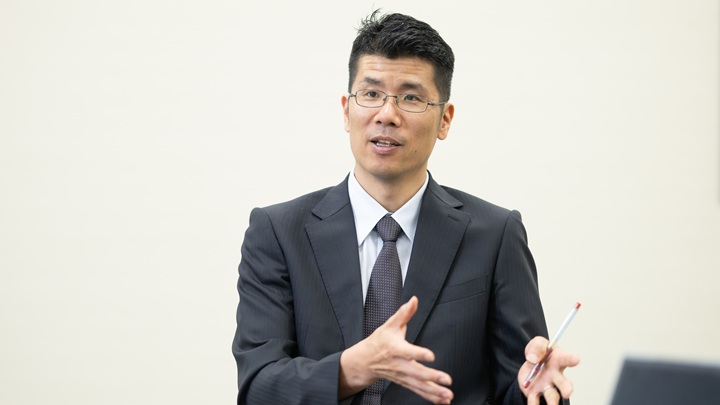
Katsurai Taro, Senior Research Fellow, JICA Ogata Research Institute
Katsurai: What are the future directions of your research?
Nishitateno: The question I most want to answer is: What would ODA that delivers mutual benefits look like? I want to identify a mechanism that can make both donor countries and recipient countries happy. One area that particularly interests me is the re-evaluation of tied aid. In recent years, not only Japan but also other OECD-DAC members have been revisiting the relationship between aid and domestic industry. I would therefore like to examine how tied aid affects development outcomes in recipient countries, while also assessing its contribution to export promotion in donor countries.
My current work focuses on relatively short-term national interest, but I am hoping to explore long-term national interest. When ODA supports infrastructure development, the economy grows and the market expands in developing countries. This can create future business opportunities for Japanese companies. I am also interested in developing empirical approaches to measuring trust as a form of national interest. Another area I hope to explore is the impact of support for legal and institutional development and governance reform.
Moreover, I would like to closely monitor developments among OECD-DAC members and China to better understand the future direction of aid policies. I am going to continue to empirically examine what Japanese ODA contributes to the world and explore ways to advance both the development of recipient countries and Japan’s national interest.
Katsurai: We look forward to seeing the results of your future research on ODA. Thank you.
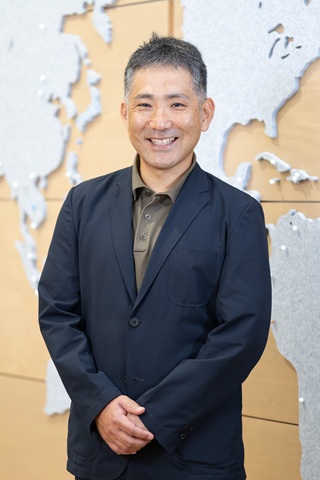
Nishitateno Shuhei
Since 2023, Nishitateno has been a professor at the School of Policy Studies, Kwansei Gakuin University. He is also a research associate at the Research Institute of Economy, Trade and Industry (RIETI). Prior to joining Kwansei Gakuin University in 2014, he worked at the Industrial Structure Policy Division, Economic and Industrial Policy Bureau, Japan’s Ministry of Economy, Trade and Industry (METI). His research areas are development economics and international economics.
Sns share!



事業事前評価表(地球規模課題対応国際科学技術協力(SATREPS)).国際協力機構 地球環境部 . 防災第一チーム. 1.案件名.国 名: フィリピン共和国.
事業事前評価表(地球規模課題対応国際科学技術協力(SATREPS)).国際協力機構 地球環境部 . 防災第一チーム. 1.案件名.国 名: フィリピン共和国.
事業事前評価表(地球規模課題対応国際科学技術協力(SATREPS)).国際協力機構 地球環境部 . 防災第一チーム. 1.案件名.国 名: フィリピン共和国.
事業事前評価表(地球規模課題対応国際科学技術協力(SATREPS)).国際協力機構 地球環境部 . 防災第一チーム. 1.案件名.国 名: フィリピン共和国.
事業事前評価表(地球規模課題対応国際科学技術協力(SATREPS)).国際協力機構 地球環境部 . 防災第一チーム. 1.案件名.国 名: フィリピン共和国.


