

Interview With Distinguished Fellow Kariya Takehiko: What Japan’s Modernization Reveals About Education and Inequality
2026.09.10





Updates from JICA Ogata Research Institute on the latest events, publications and more.
RegistrationHow to Find Us


Why does educational inequality continue to persist in Japan? In this interview, Kariya Takehiko , Distinguished Fellow at the JICA Ogata Sadako Research Institute for Peace and Development (JICA Ogata Research Institute), who is also Specially Appointed Professor at Sophia University, and Professor Emeritus at the University of Oxford, reflects on the positive and negative legacies of education in Japan’s modernization, the relationship between terms used in education policy and their social perception, and the lessons Japan can offer developing countries. Interviewing him is Kimura Izuru, JICA Director General for Knowledge Management and a former student of Kariya during his undergraduate years.
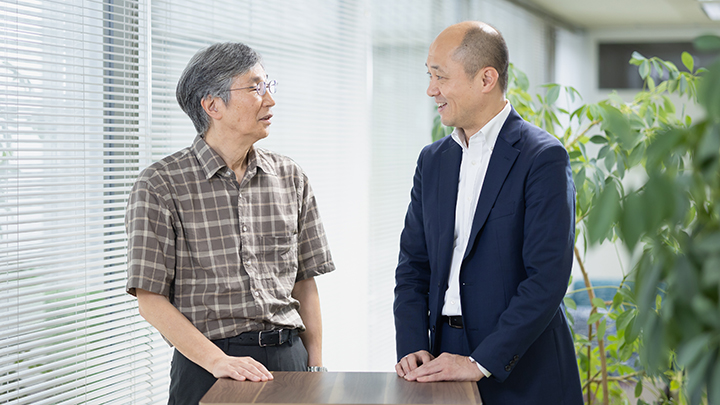
Kimura: You have long examined education and inequality from a sociological perspective, continually questioning the challenges facing Japan’s education system. It has been more than 30 years since I attended your classes at the University of Tokyo during the 1995 and 1996 academic years. Your Japanese-language book “The Way to Insightful Thinking ” (tentative English title), which you kindly signed for me upon my graduation, has been a constant companion of mine. I took it with me when I studied in the United States and later during my overseas assignments.
Kariya: That book was actually inspired by my experience teaching students in your cohort.
Kimura: The multi-perspective way of thinking presented in that book has remained a hallmark of your work ever since. You have consistently articulated the historical backgrounds of contemporary developments in Japan and their significance in international comparison with remarkable clarity. I recently read your Japanese-language books “Who killed Japan’s Modernity? What Comes after ‘catch-up ” and your 2026 publication “Inequality and Education: Why has Japan failed to solve social and educational inequalities? ” (tentative English title), and I felt they too were grounded in the same mode of thinking.
Today, I'd like to hear your thoughts on education and inequality in the context of Japan's modernization. You have argued that since the Meiji Restoration, Japan experienced two major periods of catching up with the West, followed by periods in which the country lost its sense of direction. What would you say were the major achievements and unintended consequences of education reforms during these periods?
Kariya: Broadly speaking, I see the first catch-up period as extending from the Meiji Restoration of the 1860s to the 1920s. The second period begins with Japan’s defeat in World War II in 1945 and ends in the 1980s. During this time, many Japanese people came to believe that their country had finally caught up with the West.
After World War I, Japan became one of the five major powers that played a central role in establishing the League of Nations in 1920. This gave the country a sense that it had “caught up.” In reality, however, Japan’s economic and diplomatic strength still lagged significantly behind that of Western nations.
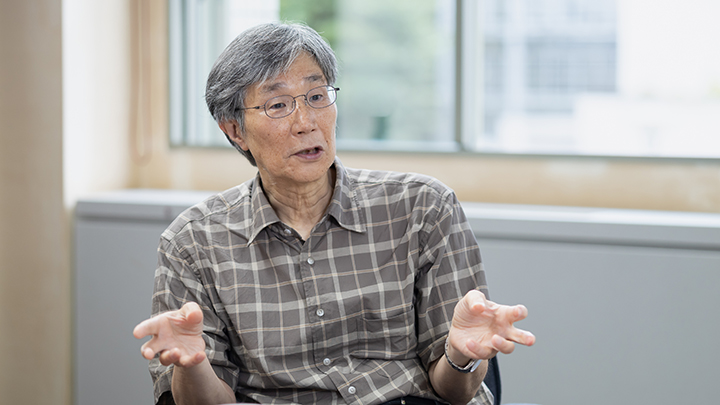
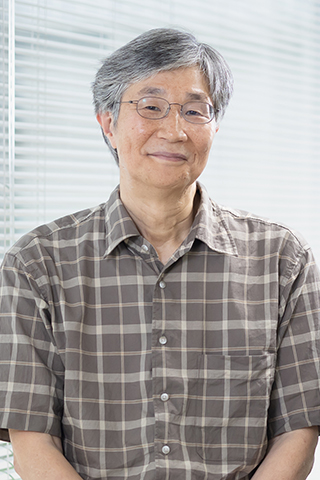
Kariya Takehiko, Distinguished Fellow at the JICA Ogata Research Institute (also Specially Appointed Professor at Sophia University and Professor Emeritus at the University of Oxford) has devoted his career to studying education and inequality.
Throughout these periods, education reforms made important contributions to Japan's development, but it also produced unintended consequences. Firstly, following the Meiji Restoration, the Japanese government invited foreign experts, sent talented individuals overseas and eagerly adopted Western institutions, knowledge and technology. The country worked tirelessly to emulate and adapt these models to its own context. In higher education, textbooks in foreign-languages were initially used, but as translations gradually became available, Japanese scholars began teaching from textbooks written in Japanese.
Higher education expanded beyond the Imperial Universities to include private institutions such as the old professional schools of law and economics.
By the beginning of the twentieth century, Japan had created an environment in which advanced higher education textbooks used in both national and private institutions could be read in Japanese. Education undoubtedly played a central role in Japan’s successful modernisation. It also ensured that works of Western literature, philosophy and the arts were translated into Japanese remarkably quickly. During the Taisho period and the early Showa era, these translated books became affordable, enabling ordinary citizens as well as elites to read them. This was one of education’s major contributions.
Following World War II, the second catch-up period shifted the focus from military expansion to economic development, science, and technology. Building on the intellectual foundations established before the war, Japan developed heavy industries such as steel production and shipbuilding. After the war, Japan adopted democratic education from the United States and continued its efforts to catch up with the West, achieving rapid economic growth.
The expansion of compulsory education to include a three-year junior high school programme played a significant role in ensuring that post-war constitutional principles and values were widely shared across society. By the 1970s, more than 90 percent of students advanced to high school, meaning that the vast majority of Japanese citizens could receive a relatively advanced level of education.
On the other hand, education during these periods also produced the unintended consequences. Competitive entrance examinations and rote learning became defining features of the system. More importantly, I would like to focus on what happened after Japan came to believe that the catch-up process had ended.
During the first catch-up period, Japan eventually turned inward and sought to create its own model. By the 1930s and 1940s, this tendency evolved into extreme nationalism and militarism. Education was used for ideological control and wartime mobilization. From the perspective of ordinary citizens, this was profoundly one of the gravest costs of the education system.
Likewise, I believe that ever since Japan came to regard itself as having caught up with the West in the 1980s, the country has remained in a prolonged period of drift. In education, we continue trying to align ourselves with international standards, yet terms such as “active learning,” “competencies,” and “digitalization” often circulate without clear definitions. It remains unclear whether these concepts can genuinely reduce educational inequality, but policy continues to move forward regardless.
My view is that Japanese society, including its education system, performs exceptionally well when pursuing a clear goal and striving to reach the world’s leading nations. However, once it believes it has achieved that goal, it tends to lose its sense of direction.
Kimura: Despite numerous educational reforms over the years, you have consistently argued that educational inequality remains unresolved in Japan. What structural factors do you believe lie behind this persistence?
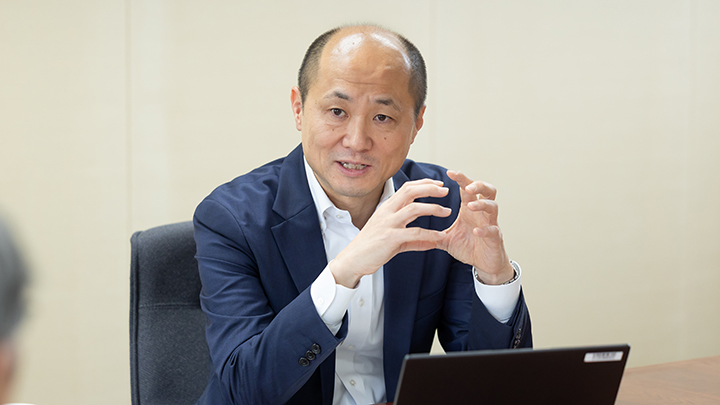
Kimura Izuru, Director General for Knowledge Management, JICA, studied under Distinguished Fellow Kariya Takehiko as an undergraduate student.
Kariya: I believe the problem lies in the very way we perceive and construct those structures. As I discuss in my recent book “Inequality and Education,” the terms used in educational policy has created important misunderstandings.
Take the expression “equal educational opportunity.” Japan has achieved considerable success in equalizing resources and public financing at the primary education level, ensuring that family income differences have relatively limited effects on access to schooling. In higher education, however, 70 to 80 percent of students attend private universities. These institutions receive only a fraction of the public funding provided to national universities, leaving students and families to bear a heavy financial burden. What appears to be equal educational opportunity at the compulsory education stage is therefore far less equal at the higher education level.
The English term “opportunity” implies more than mere access or participation. It also encompasses the conditions and possibilities necessary to achieve “success”. Yet the Japanese term, kikai, which is commonly used to translate “opportunity,” is often understood merely as an entry point into education. Even after admission, it tends to refer only to the provision of educational settings. In other words, the Japanese understanding of kikai differs significantly from what the English term “opportunity” originally implies.
Similarly, the English word “equality” is often rendered in Japanese educational policy not as byōdō (“equality,” which implies the reduction of unjust disparities), but as kintō (“uniformity” or “equal distribution”). As a result, kikai kintō ('equal opportunity') tends to be understood as providing equal access to education and equal conditions, rather than correcting unfair inequalities. Unlike the English concept of 'inequality', which highlights unfair differences with strong normative force, the Japanese notion of 'gap' (kakusa) lacks the momentum needed to drive meaningful reform for equality.
Take the example of Japan’s high school tuition-free policy. Some support the policy because it allows students to choose schools regardless of family income. However, the policy essentially replaces tuition payments with tax revenue, while not a single yen was directed toward improving educational quality. Equalizing access alone does not eliminate inequality in education if it is not accompanied by improvements in educational content and quality.
Because kintō (“uniformity”) is easier to achieve than byōdō (“equality”), it tends to be favored. More broadly, Japanese society often uses euphemisms to soften language and avoid conflict. This creates agreements based on the assumption that everyone understands the same thing, even when concepts remain vague. That tendency makes it difficult to generate the dynamics needed to change existing structures.
Kimura: Through the JICA Development Studies Program , JICA shares Japan’s modernization experience with developing countries. You also participated in a dialogue with then-JICA President Kitaoka Shinichi on this topic. What lessons can Japan’s educational experience, including both its successes and failures, offer to developing countries as they pursue nation-building?
Kariya: In many developing countries, the languages of former colonial powers continue to shape education systems and public administration. This makes it all the more important to ask: Are we unknowingly viewing the world through translated concepts? Do the terms we use to discuss the “state”, “society”, “politics”, “economy”, and “development” truly correspond to our lived realities?
I am not advocating a simple return to indigenous languages or traditions. Rather, I am suggesting that we step back and scrutinize the concepts we habitually use without question. By measuring the distance between those concepts and our actual circumstances, we may realize: “So this is how we have been interpreting our society through the concepts and terms we use.” That realization can reveal an entirely different world, seen through a different lens.
Japan’s experience should not be viewed as a model to be replicated but as one case among many. The way Japan blended knowledge originating in the West with its own cultural traditions may provide valuable material for developing countries as they seek to rethink their own societies and paths of development.
Kimura: Thank you very much.
■About Kariya Takehiko
He served as Professor at the Graduate School of Education, University of Tokyo, and later as Professor at the University of Oxford. In 2022, he became Professor Emeritus of the University of Tokyo. He is currently Specially Appointed Professor at Sophia University, Professor Emeritus at the University of Oxford, and Specially Appointed Professor at the Institute for the Future of Human Society, Kyoto University. His field of specialization is sociology. He earned his Ph.D. in Sociology from Northwestern University in the United States.
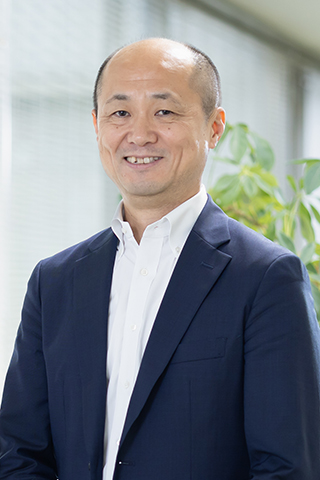
■Izuru Kimura
Kimura is Director General for Knowledge Management, JICA. He joined the Overseas Economic Cooperation Fund (OECF, now JICA) in 1997. Over the course of his career, he has worked on country operations in Southeast Asia, the Middle East, and Africa, as well as in Operations Strategy Department and Human Resources Department. He also served as Deputy Chief Secretary to the President of JICA and Director General of the JICA Kansai Center. Since 2026, he has held his current position. He earned a Ph.D. in Education from the University of California, Los Angeles (UCLA).
Sns share!



事業事前評価表(地球規模課題対応国際科学技術協力(SATREPS)).国際協力機構 地球環境部 . 防災第一チーム. 1.案件名.国 名: フィリピン共和国.
事業事前評価表(地球規模課題対応国際科学技術協力(SATREPS)).国際協力機構 地球環境部 . 防災第一チーム. 1.案件名.国 名: フィリピン共和国.
事業事前評価表(地球規模課題対応国際科学技術協力(SATREPS)).国際協力機構 地球環境部 . 防災第一チーム. 1.案件名.国 名: フィリピン共和国.
事業事前評価表(地球規模課題対応国際科学技術協力(SATREPS)).国際協力機構 地球環境部 . 防災第一チーム. 1.案件名.国 名: フィリピン共和国.
事業事前評価表(地球規模課題対応国際科学技術協力(SATREPS)).国際協力機構 地球環境部 . 防災第一チーム. 1.案件名.国 名: フィリピン共和国.


