

Interview with Professor Oscar A. Gomez: Building Resilient Societies Through Human Security Thinking and Practice
2026.10.29


Updates from JICA Ogata Research Institute on the latest events, publications and more.
RegistrationHow to Find Us


Ten years ago, the JICA Ogata Sadako Research Institute for Peace and Development (JICA Ogata Research Institute) spoke with Oscar A. Gomez, then a Research Fellow, about human security and responses to humanitarian crises . Now a Professor at the College of Asia Pacific Studies, Ritsumeikan Asia Pacific University, Gomez continues to explore human security ideas, international cooperation, and disaster and crisis management.
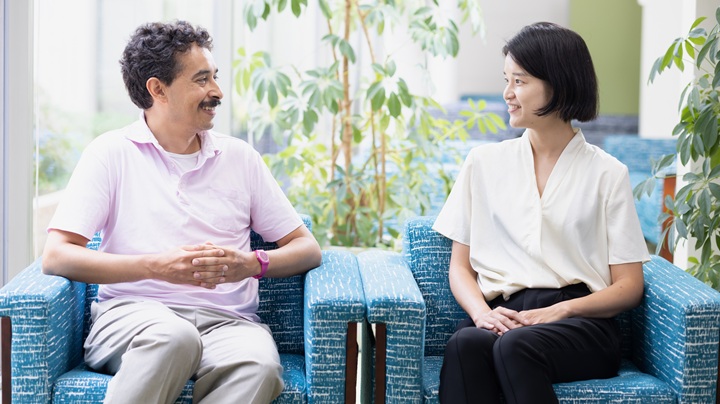
Sakanishi Megumi, Research Coordinator (Development Cooperation Strategies) at the JICA Ogata Research Institute, recently spoke with him about what the disasters of the past decade have taught us, the relationship between climate change and disaster risk, and what it takes to build societies better able to protect people.
Sakanishi: What are the main issues you are focusing on in your research today?
Gomez: My main research at the moment relates to the role of the state as a humanitarian actor . In international cooperation during crisis situations, international humanitarian organizations are usually seen as a helping hand, while the state tends to be seen either as a donor or as a bad actor in a crisis, often considered incompetent and unable to protect its people, or even responsible for contributing to their suffering. But from the research we did here at the JICA Ogata Research Institute 10 years ago, it became very clear to me that states play a central role in protecting people. People expect their local governments and institutions to protect them. So I have been developing this idea of how states are humanitarian actors, particularly through my research in Colombia.
I am also continuing my work on Japan as a donor (see “Embracing Human Security ” and “Human Security After the Great East Japan Earthquake ”). Recently, I published a paper on Japan's disaster-prevention diplomacy. JICA has long sought to promote disaster prevention over disaster response, but most diplomacy happens after a disaster. You can send rescue teams and have photos of yourself helping others, which is seen as having more diplomatic value. You don't get diplomatic gains from preventing a disaster because it doesn't happen. You cannot take a photo when there was no disaster. So I have been exploring how Japan has tried to bring more attention and appreciation about prevention.
Sakanishi: Looking back over the past decade, what are the most important lessons we have learned from major crises?
Gomez: There is no doubt that the most important disaster of the past 10 years was the COVID-19 pandemic. Its scale and implications were groundbreaking. I had already included pandemics in my earlier research at the JICA Ogata Research Institute, and it was very clear to me that they were on a different scale from other disasters.
One of the aspects that caught my attention was migration and COVID-19 , and we found that migrants are often scapegoated during a crisis. Migrants are a very heterogeneous group. Some are relatively secure while others are at risk, but during a crisis all of them can be put in vulnerable positions. When governments are unable to show that they are dealing effectively with a crisis, migrants can become an easy group to blame. During the pandemic, we saw governments blaming migrants for spreading the disease, restricting their movement or even deporting them.
Another important lesson is how societies tend to forget crises. The COVID-19 pandemic paralysed the whole planet for months, but afterward everybody became busy again with life. When I later tried to find documents in Colombia summarizing what had happened and what had been learned, they were very difficult to find, if at all. During a crisis, everybody becomes involved in the response, but once it is over, nobody is taking notes or recording what went well, what went badly, and what we should do next time. Some of that knowledge may remain with bureaucrats working in government ministries, but it does not necessarily become common knowledge. We need to become better at keeping records and sharing what we have learned so that societies are better prepared for the next crisis.
We also learned important lessons about equity during the pandemic. The most vulnerable people should have access to vaccines regardless of their nationality or whether they live in a rich or poor country, but we still do not have effective mechanisms to address situations in which countries prioritize their own citizens over the needs of others. At the same time, COVID-19 showed that you do not need to be rich to deal with a crisis effectively. What you need is knowledge, capable public institutions, effective communication, and citizens who are willing to cooperate.
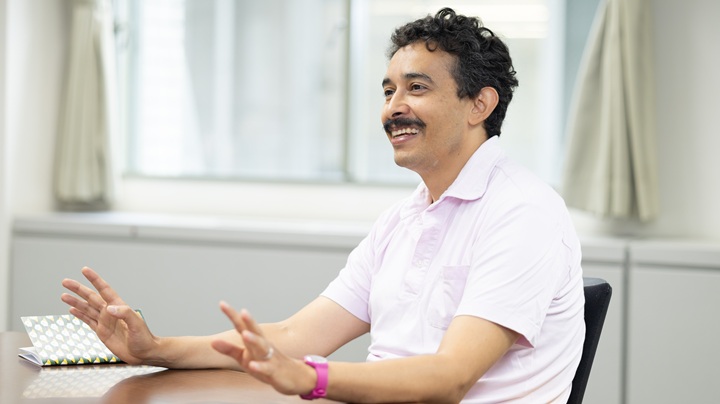
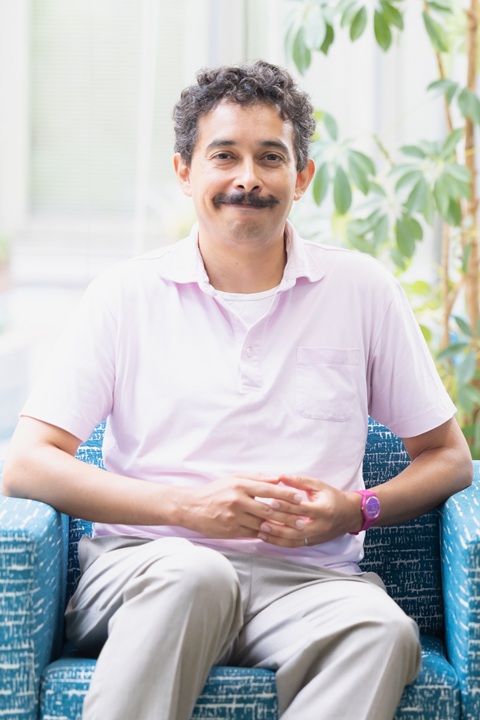
Oscar A. Gomez, a professor at Ritsumeikan Asia Pacific University, reflects on the lessons of the past decade's disasters, the relationship between climate change and disaster risk, and what it takes to build more resilient societies.
Sakanishi: Climate change is increasingly being considered in terms of disaster risk. From a human security perspective, how should we approach the relationship between climate change and disaster prevention?
Gomez: Climate change is very important, and the institutions, agreements and efforts to address it need to continue. The growing focus on climate change has encouraged valuable new research. Heatwaves, for example, have received much greater attention, helping societies better understand how to prepare for and respond to them.
At the same time, from a human security perspective, we also need to think about the people who are living today. Even if we were able to stop using fossil fuels, it would take many years for the atmosphere to recover. In the meantime, people would still face disasters today and in the years ahead. That is why we need to think not only about addressing climate change, but also about how people can be protected from the disasters they face today.
One concern I have is that attributing a disaster to climate change does not necessarily tell us how to protect people from it. The tradition of disaster prevention research has been to understand all kinds of disasters, including smaller ones, and to incorporate that understanding into everyday development. Unfortunately, attention to disasters within the climate change agenda tends to focus on mega-events, so society often forgets that, if we put all small events together, they are more significant. Besides, if a landslide occurs, for example, identifying climate change as a contributing factor does not by itself help communities respond. What they need is the expertise to assess the risks posed by the landslide and determine what actions are needed to protect people.
Sakanishi: How have your experiences changed the way you think about international cooperation and its role in building resilience?
Gomez: When I came to Japan to study human security and international cooperation, I had some of the romantic ideas that many people have about international cooperation. My experience at the JICA Ogata Research Institute led me to reconsider some of them. International cooperation is very important and can do a lot of good, but the protection of people relies mostly on local actors. Societies are resilient only when local actors, including the state, have the capacity to fulfill their responsibilities.
One finding from our research at the JICA Ogata Research Institute was particularly important for me. We started with the idea that human security involves protection from above and empowerment from below. But when we asked people what empowerment meant to them, many talked about having a stronger state or good government. That was one of the reasons I became interested in the state as a protector.
This is not to say that people themselves do not have a role to play. In a disaster, most people who are rescued are rescued by the people around them. Individuals, families, communities, and governments all have different capacities and responsibilities. Which actors are important can change depending on the situation and the timing of a crisis. Understanding how these different actors contribute to protection and resilience is therefore essential. International cooperation plays an important role in helping societies learn from one another and build the capacities needed for more resilient societies.
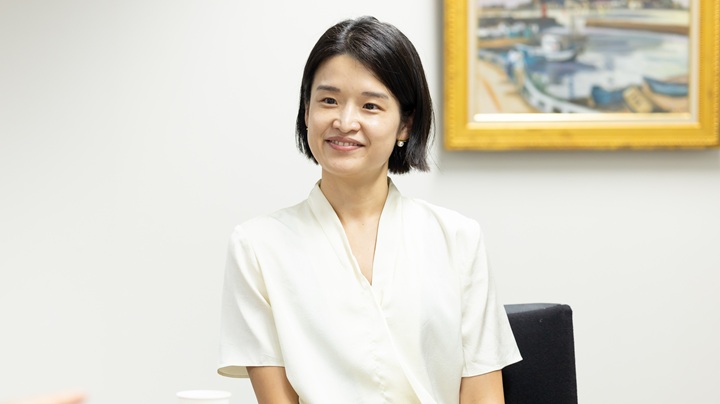
Sakanishi Megumi, Research Coordinator (Development Cooperation Strategies) at the JICA Ogata Research Institute, served as the interviewer.
Sakanishi: Having lived and worked in both Colombia and Japan, what do you think the two countries can learn from each other?
Gomez: Colombia and Japan have different histories, and those histories have shaped the way their institutions respond to crises. In Colombia, for example, because of the long internal conflict, disaster response was largely left to the Red Cross. After the volcanic disaster of 1985, engineers became more involved and there was a greater focus on disaster prevention. This reflects how disaster management institutions develop differently depending on a country's history and circumstances. So I do not think we can assume that one model will work everywhere. We need to understand how institutions have evolved in each country if we want to understand how disaster risk reduction can be improved.
For me, human security is also about expanding our ethical circles. In Japan, there is the idea of uchi and soto—those who are inside and those who are outside. From a human security perspective, everybody is uchi. There is no soto in humanity.
I also think we need to move beyond the simple distinction between developed and developing countries. Different countries are good at different things and have different capacities depending on the situation. That means there are things Colombia can learn from Japan, but also things Japan can learn from Colombia. Countries can learn from each other rather than assuming that one country has all the answers.
Sakanishi: Looking ahead, what does a truly resilient society look like, and what do we need to do to build one?
Gomez: There is no simple solution for building a resilient society, but I think the state, public institutions, and the people who work in them are particularly important. Prime ministers and presidents change, but civil servants continue working across different administrations. They maintain state practices over time and can consolidate and improve them. Building that capacity within the state is very important because when a crisis happens, the state needs to be able to protect people.
But that said, I believe civil society, NGOs, and international actors still have important roles to play. That is not to say that their current roles should be taken for granted. They need to find their own ways to contribute to resilience. NGOs, for example, do a lot to support refugees, and they do it very well. But sometimes they do it because the state has effectively outsourced refugee support. Is that the best way of doing it? The answer is not always straightforward. So international cooperation can help us better understand how different actors contribute to protection and resilience, how those capacities can be strengthened, and how their interactions shape societal resilience.
Sakanishi: Thank you very much for sharing your insights with us.
After earning a degree in Chemical Engineering from the National University of Colombia, he received his Ph.D. in Environmental Studies (Human Security Program) from Tohoku University. He served as a Research Fellow at the JICA Research Institute from 2013 to 2018 and joined Ritsumeikan Asia Pacific University as an Assistant Professor in 2018, where he is currently a Professor in the College of Asia Pacific Studies. His research focuses on governance and security, with particular emphasis on humanitarian crises.
Sns share!



事業事前評価表(地球規模課題対応国際科学技術協力(SATREPS)).国際協力機構 地球環境部 . 防災第一チーム. 1.案件名.国 名: フィリピン共和国.
事業事前評価表(地球規模課題対応国際科学技術協力(SATREPS)).国際協力機構 地球環境部 . 防災第一チーム. 1.案件名.国 名: フィリピン共和国.
事業事前評価表(地球規模課題対応国際科学技術協力(SATREPS)).国際協力機構 地球環境部 . 防災第一チーム. 1.案件名.国 名: フィリピン共和国.
事業事前評価表(地球規模課題対応国際科学技術協力(SATREPS)).国際協力機構 地球環境部 . 防災第一チーム. 1.案件名.国 名: フィリピン共和国.
事業事前評価表(地球規模課題対応国際科学技術協力(SATREPS)).国際協力機構 地球環境部 . 防災第一チーム. 1.案件名.国 名: フィリピン共和国.


