

How Much Investment Does Asia Need for Social Infrastructure? Experts Discuss Policy Options
2026.01.29







Updates from JICA Ogata Research Institute on the latest events, publications and more.
RegistrationHow to Find Us


On Dec. 9, 2025, the JICA Ogata Sadako Research Institute for Peace and Development (JICA Ogata Research Institute) and the Institute for Economic and Social Research, Universitas Indonesia co-hosted the international webinar “Addressing Social Infrastructure Needs in Asia.” Katsurai Taro , Senior Research Fellow at the JICA Ogata Research Institute, opened the event by stating that its aim was to present and discuss the new report, “Addressing Social Infrastructure Needs in Asia: Towards a Pandemic Resilient Society .” He emphasized that the report was a first attempt to estimate Asia’s social infrastructure investment needs. The discussion covered key sectors—education, health, and public housing—and explored policy responses to bridge the gap between projected needs and current spending.
Hirota Koki, former Visiting Fellow at the JICA Ogata Research Institute and lead researcher on the research project that produced this report, outlined the study’s aim of examining how infrastructure demand is driven by socio-economic development, focusing on education, healthcare, public housing, and government buildings. Methodologically, the research combined top-down macroeconomic estimation with bottom-up micro-level analysis, using infrastructure stock as the core variable and explicitly accounting for operation and maintenance, replacement and rehabilitation costs.
The team conducted case studies in Japan, Indonesia, and Thailand before extending the estimates to 45 Asian countries. Hirota highlighted the study’s contributions, including its sectoral coverage, treatment of costs for existing stocks, partial incorporation of quality differences and pandemic-resilience scenarios, while also noting limitations related to human resources, sectoral variation and country-specific institutional frameworks.

Hirota Koki, former Visiting Fellow at the JICA Ogata Research Institute
Teguh Dartanto , Associate Professor at the Institute for Economic and Social Research, Faculty of Economics and Business, Universitas Indonesia, presented findings on the scale and distribution of social infrastructure needs across ASEAN. He argued that education, health, public housing and government buildings are as fundamental to development as economic infrastructure. He highlighted significant regional disparities, including unequal access to health facilities, acute housing shortages in rapidly growing megacities and the vulnerabilities exposed by the COVID-19 pandemic.
The studies that revealed this situation, according to Teguh, combined macroeconomic and micro-level approaches. The findings indicate annual social infrastructure needs of around 5–6% of regional GDP, with public housing and healthcare, as well as replacement and rehabilitation costs, comprising a substantial share of this. He concluded that closing the estimated USD 1.3–1.4 trillion annual investment gap between demand and supply of social infrastructure is crucial to reducing inequality, strengthening resilience and sustaining Asia’s future development.
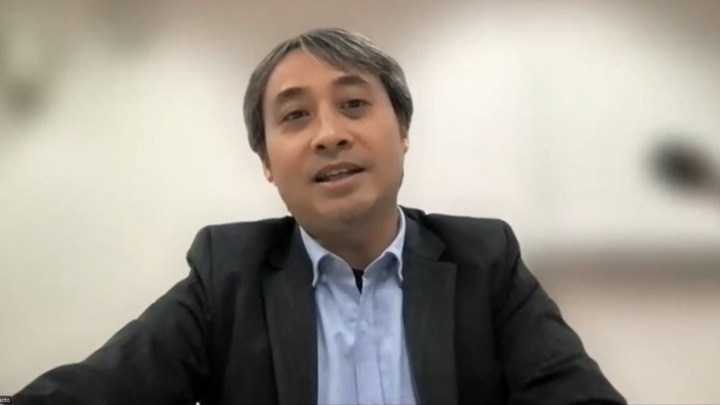
Teguh Dartanto, Associate Professor at the Institute for Economic and Social Research, Faculty of Economics and Business, Universitas Indonesia
Ishizuka Fumiaki , Senior Research Fellow at the JICA Ogata Research Institute, focused on policy options for closing Asia’s social infrastructure investment gap. He outlined four broad categories of measures: 1) strengthening public finance through tax reform, spending reprioritization and improved borrowing; 2) mobilizing private finance via regulatory reform, incentives and public–private partnerships; 3) pursuing integrated funding approaches including user fees and land-based financing; and 4) improving investment efficiency and lifecycle planning.
Ishizuka argued that social infrastructure differs from economic infrastructure in two key respects: cost recovery through user fees is often limited, and effective service delivery depends not only on physical assets but also on sustained investment in human resources such as teachers and health workers.
Finally, Ishizuka stressed the importance of efficiency and lifecycle planning, introducing the concept of “infrastructure saving,” whereby social needs are met through flexible, multipurpose facilities, appropriate technologies and long-term asset management to reduce costs while maintaining service quality.

Ishizuka Fumiaki, Senior Research Fellow at the JICA Ogata Research Institute
In the subsequent panel discussion moderated by Kamei Haruko , Director General, JICA Ogata Research Institute, Yi Jiang , Principal Economist at the Asian Development Bank (ADB), acknowledged that the study addresses a major gap in regional infrastructure analysis by focusing on social infrastructure in Asia. While previous ADB reports focused on economic infrastructure, he noted that this study complemented them by estimating social infrastructure needs and current spending through 2030, particularly the need for significant public housing investment. He also pointed to large regional disparities in the health sector, noting the need for greater international support for their removal.
Jiang concluded by emphasizing the importance of demonstrating the economic returns of social infrastructure investment and further strengthening the treatment of quality and human resources in future analyses. Future research, he suggested, should incorporate emerging demands in education, such as pre-primary education and lifelong learning, and those arising from demographic shifts.
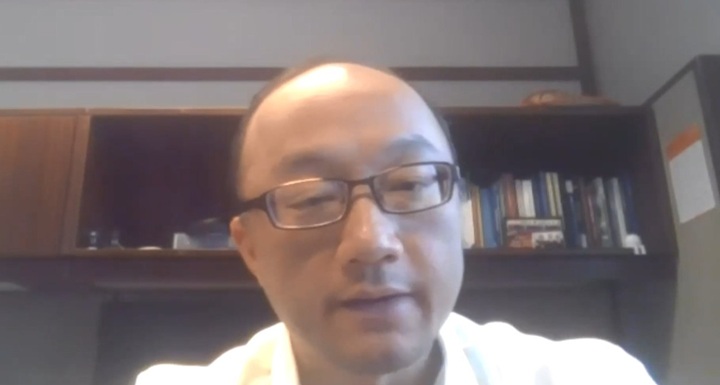
Yi Jiang, Principal Economist at the Asian Development Bank
In her comments, Makimoto Saeda, from the Human Development Department of JICA, focused on the health sector and welcomed the study as the first regional estimate of social infrastructure demand in Asia. She highlighted its emphasis on hospital investment, operation and maintenance, and pandemic resilience, pointing to the significant underinvestment in health infrastructure and the importance of preparing for future pandemics. She also noted that these areas are priority themes in JICA’s sector strategies, namely the JICA Global Agenda for Health and its subordinate Cluster Strategy for Strengthening Health Service Delivery.
Health infrastructure, Makimoto argued, must be understood as part of broader health system strengthening, requiring sustained investment in human resources, management, supply chains, and governance, as emphasized in the cluster strategy. She further stressed that hospital investment needs to be situated within an integrated service delivery structure spanning primary to tertiary care. She also suggested that future analyses should incorporate climate resilience considerations and explore innovative and blended approaches to the financing of social infrastructure.
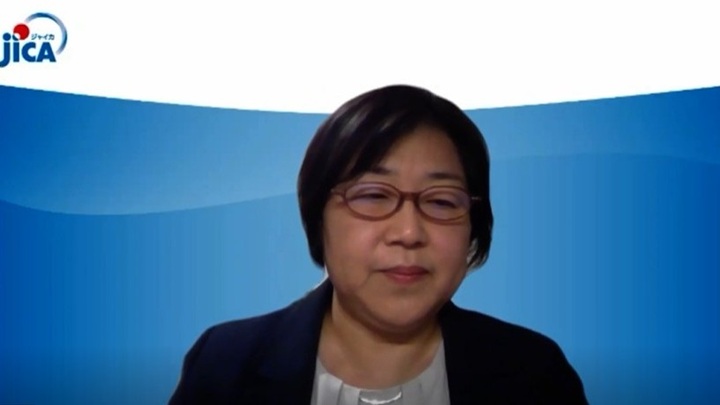
Makimoto Saeda, Human Development Department, JICA
Building on these perspectives, the participants discussed the role of multilateral development banks and JICA in bridging the investment gap, emphasized the importance of data and evidence-based policymaking to reduce inequality, and explored how digitalization and AI could shape future infrastructure needs.
Sns share!



事業事前評価表(地球規模課題対応国際科学技術協力(SATREPS)).国際協力機構 地球環境部 . 防災第一チーム. 1.案件名.国 名: フィリピン共和国.
事業事前評価表(地球規模課題対応国際科学技術協力(SATREPS)).国際協力機構 地球環境部 . 防災第一チーム. 1.案件名.国 名: フィリピン共和国.
事業事前評価表(地球規模課題対応国際科学技術協力(SATREPS)).国際協力機構 地球環境部 . 防災第一チーム. 1.案件名.国 名: フィリピン共和国.
事業事前評価表(地球規模課題対応国際科学技術協力(SATREPS)).国際協力機構 地球環境部 . 防災第一チーム. 1.案件名.国 名: フィリピン共和国.
事業事前評価表(地球規模課題対応国際科学技術協力(SATREPS)).国際協力機構 地球環境部 . 防災第一チーム. 1.案件名.国 名: フィリピン共和国.


