

Knowledge Forum “Reconsidering the Role of ODA from the Perspective of Mutual Benefit” Jointly Hosted by the JICA Ogata Research Institute and the Institute of Geoeconomics
2026.07.14





Updates from JICA Ogata Research Institute on the latest events, publications and more.
RegistrationHow to Find Us


As global order becomes increasingly undermined, discussions on what constitutes effective official development assistance (ODA) are gaining momentum. On April 13, 2026, the JICA Ogata Sadako Research Institute for Peace and Development (JICA Ogata Research Institute) and the Institute of Geoeconomics (IOG) of the International House of Japan jointly hosted the Knowledge Forum “Reconsidering the Role of ODA from the Perspective of Mutual Benefit” to explore the roles that future ODA will need to play.
Jimbo Ken, Managing Director, International House of Japan (and President of its Asia Pacific Initiative), noted in his opening remarks that the environment surrounding ODA is changing significantly, and that the actors involved in development cooperation are becoming increasingly diverse. According to 2025 preliminary figures from the Organisation for Economic Co-operation and Development (OECD), the total amount of ODA provided by member states of the Development Assistance Committee (DAC) of the OECD declined by 23.1% from the previous year, marking the largest year-on-year decrease on record. Meanwhile, ODA from 12 public funding institutions in non-DAC countries amounted to 13.3 billion USD. Jimbo emphasized that the distinctive value of Japanese ODA is its emphasis on the generation of virtuous cycles based on mutual benefit. This approach contributes not only to Japan’s security and economic resilience, but also to the maintenance of global public goods. It also emphasizes Japan’s respect for counterpart countries as equal partners and fosters their ownership and self-sustaining development.
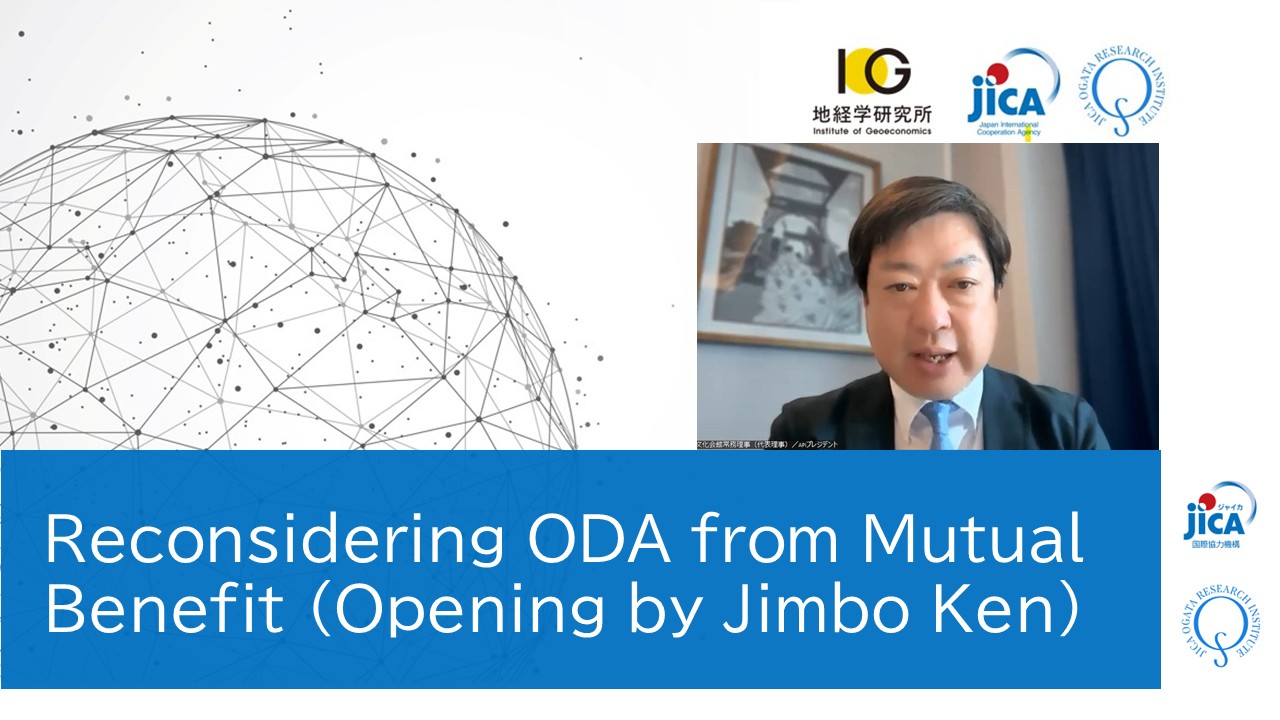
Seminar | Reconsidering ODA from Mutual Benefit (Knowledge Forum: Opening Remarks by Jimbo Ken)
The purpose of the forum was explained by Kamei Haruko , Director General, JICA Ogata Research Institute. To start the discussion and present key issues, Harada Tetsuya , Principal Research Fellow, JICA Ogata Research Institute (also Head of JICA France Office), presented an overview of ongoing debates in Europe regarding the roles of ODA. As reductions in ODA budgets are observed in major European nations such as the United Kingdom, Germany and France, the objectives of ODA are increasingly being discussed under three pillars: i) assistance to those most in need, including least developed countries and vulnerable groups; ii) addressing global challenges such as climate change and infectious diseases; and iii) the pursuit of national interest. Harada noted in particular that the term “mutual benefit” is now used more frequently in response to the growing emphasis on the third pillar in Europe. He also pointed out that approaches to ODA taken by Europe and China are becoming more aligned with those of Japan. For instance, the UK has proposed the “four shifts” in its approach to ODA , including “from donor to investor” and “grants to expertise,” while China has emphasized strengthened South-South cooperation.
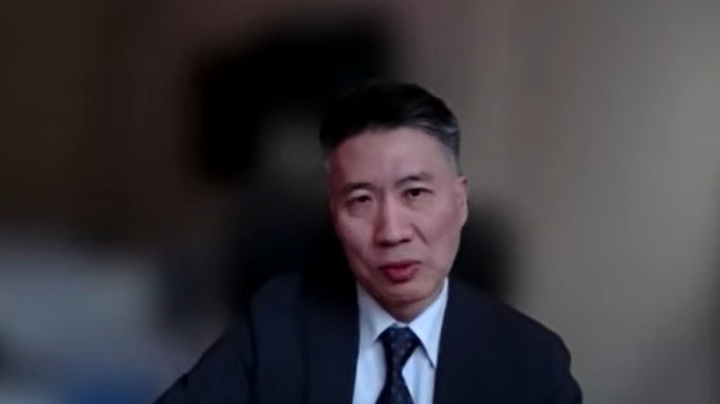
Harada Tetsuya, Principal Research Fellow, JICA Ogata Research Institute (also Head of JICA France Office)
With Kamei as the moderator, the panelists discussed from their respective positions in government, industry and academia on topics including how Japanese ODA contributes to mutual benefit, what values should be prioritized, the roles of Japanese ODA from the perspective of mutual benefit, and what actions are needed going forward.
Reflecting on the evolution of global order over the last eight decades after World War II, Sagara Yoshiyuki, Senior Research Fellow, IOG, pointed out that the liberal international order, based on shared values and the rule of law, is now at a major turning point. He noted that it is transitioning toward a world order characterized more by power-based negotiations. He highlighted the trust that Japan has built through its development cooperation as an important source of soft power, emphasizing the need to recognize it as a key component of Japan’s national strength. Looking ahead, Sagara identified several priorities: i) improving Japan’s strategic indispensability to more firmly establish its unique roles and strengths globally; ii) adapting the expertise that Japan has accumulated to the contexts of the Global South; iii) communicating Japan’s contributions more clearly and effectively; and iv) applying the Co-creation for Common Agenda Initiative to fields such as global health.
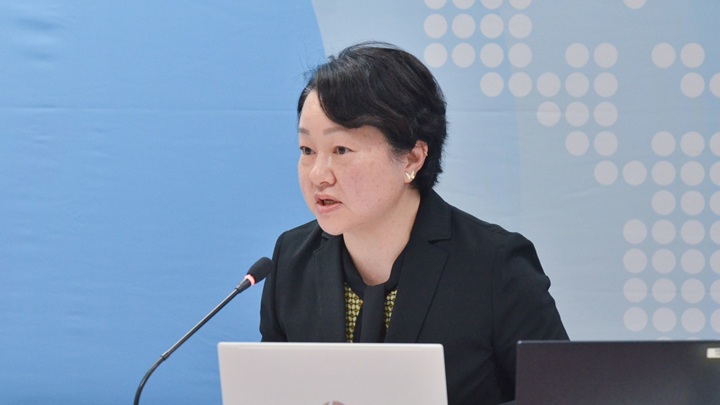
Kamei Haruko, Director General, JICA Ogata Research Institute, the moderator of the discussion session
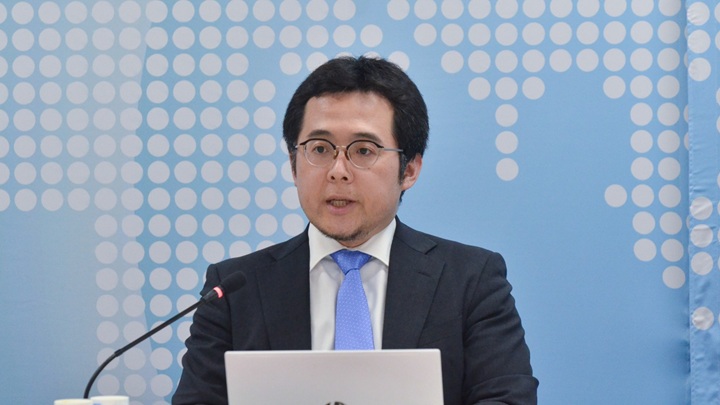
Sagara Yoshiyuki, Senior Research Fellow, Institute of Geoeconomics (IOG), International House of Japan
Todo Yasuyuki, Professor, Faculty of Political Science and Economics, Waseda University, explained that by supporting economic development in aid-recipient countries, Japanese ODA generates a “vanguard” effect to facilitate market expansion and foreign direct investment by Japanese businesses. This, in turn, contributes to making supply chains more resilient and strengthening economic security, thereby significantly benefiting both Japan and aid-recipient countries in terms of economic development and security. To illustrate these points, several examples including the following were presented: technical cooperation to the foundry industry in Indonesia; assistance for forest management, farmer field schools and certification schemes for shade-grown coffee in Ethiopia; and support to Japanese small and medium enterprises (SMEs) for business expansion to Vietnam. Todo also addressed changing domestic and international circumstances, emphasizing the need for intellectual collaboration with the Global South, more active advocacy to communicate the importance of mutual benefit to citizens of Japan and aid-recipient countries, as well as enhanced assistance for Africa.
Iwazawa Kana is an Assistant Manager at the External Relations Department of the Tokyo Office of Daikin Industries Ltd., a corporation operating in around 170 countries. She gave a presentation on the company’s efforts to introduce energy-efficiency standards for air conditioners to Nigeria through a private-sector-collaboration project by JICA. Although inverter air conditioners can reduce energy consumption by around 50%, their significance was not understood well in the local market prior to this project as energy-efficiency regulations were neither sufficiently developed nor effectively implemented in Nigeria. Therefore, Daikin Industries not only promoted its air conditioners but also collaborated with JICA to support the Nigerian government establishing and implementing a regulatory framework for energy-efficient air conditioners. Iwazawa commented that this is a good example of ODA generating value for both business and public good. By addressing regulatory issues, the initiative contributed not only to improved electricity supply-demand balance and reduced greenhouse gas (GHG) emissions, but also to fostering a market environment in which high-efficiency technologies are properly valued.
Based on this case study, Iwazawa emphasized that Japanese ODA should not use short-term corporate profit as a primary indicator of success. She instead highlighted that it is important to start by identifying and addressing social issues in partner countries, and develop the systems, regulations and market foundations necessary to solve them, thereby creating outcomes that benefit both business and public interest. Furthermore, Iwazawa highlighted the importance of formulating a long-term strategy to generate broader economic spillover effects, so that they can be clearly communicated externally and contribute to better understanding of ODA among the public.
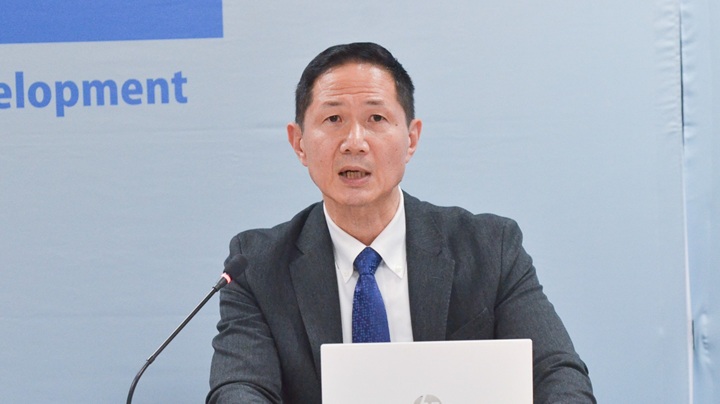
Todo Yasuyuki, Professor, Faculty of Political Science and Economics, Waseda University
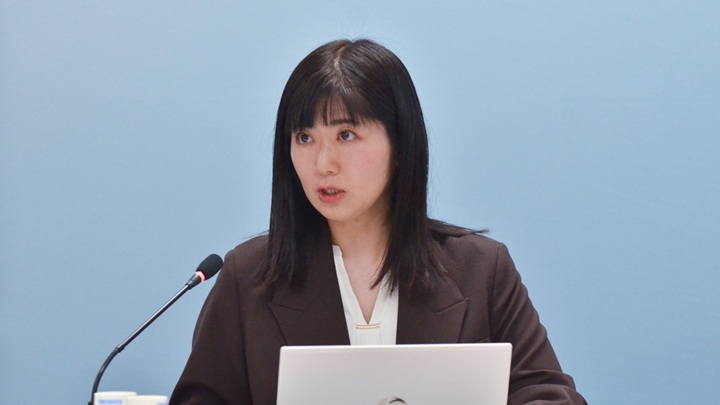
Iwazawa Kana, Assistant Manager, External Relations Department of the Tokyo Office of Daikin Industries Ltd.
Ono Yoko, Head of Global Advocacy Policy, Advocacy and Campaigns, Save the Children Japan, explained that the growing number of NGOs contributing to global public goods including peace, the Earth’s environment and global health, represents an important form of mutual benefit generated by civil society. Ono noted that efforts of civil society have helped Japan gaining trust and having great reputation internationally. They have also encouraged the democratic involvement and participation of citizens to Japanese policy. From the perspective of Japan’s roles in international communities, Ono proposed the concept of a “neutral, honest and trusted middle power.” She noted that avoiding direct military actions, respecting the accumulated wisdom of humanity and strengthening international networks could contribute to comprehensive and sustainable security for Japan.
During the Q&A session, discussions continued on a wide range of topics, including the value of ODA for local communities or SMEs, as well as how the benefits of international cooperation that come back to Japan should be communicated to the Japanese public. The Knowledge Forum closed with remarks from Yoshida Masahiro, Senior Vice President, JICA. Yoshida proposed co-creation, innovation and circulation as key concepts, emphasizing the importance of collaborating with diverse partners to create new values and leveraging their outcomes for Japan’s domestic revitalization.
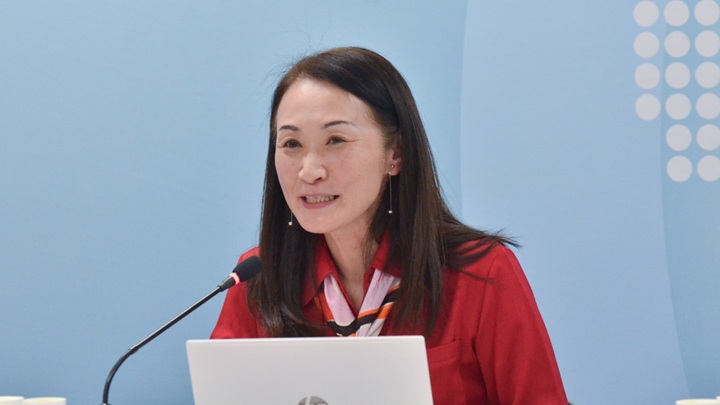
Ono Yoko, Head of Global Advocacy Policy, Advocacy and Campaigns, Save the Children Japan
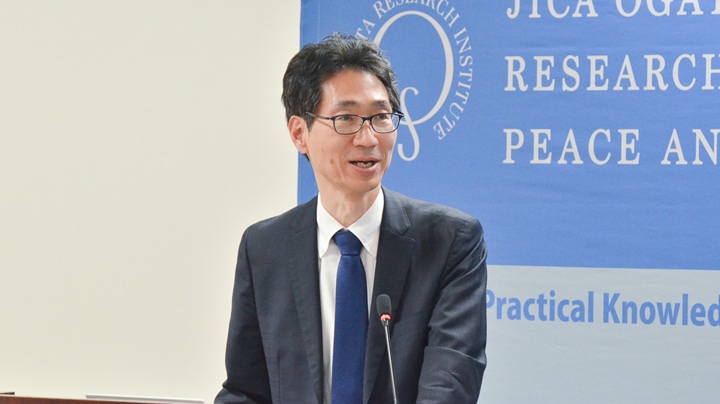
Yoshida Masahiro, Senior Vice President, JICA
A video recording of this Knowledge Forum can be viewed from the link below.
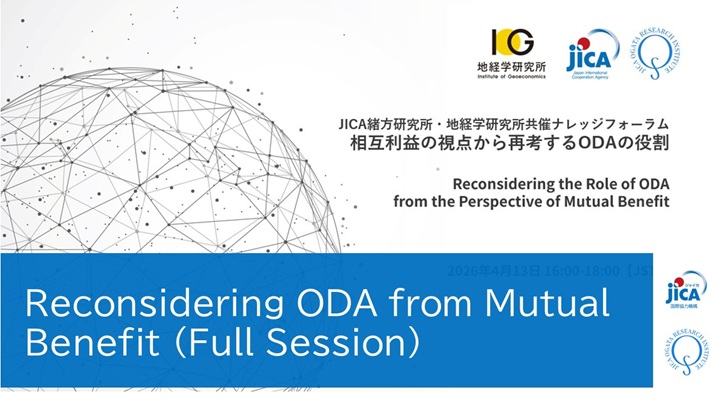
Seminar | Reconsidering ODA from the Perspective of Mutual Benefit (Knowledge Forum: Full Session)
Sns share!



事業事前評価表(地球規模課題対応国際科学技術協力(SATREPS)).国際協力機構 地球環境部 . 防災第一チーム. 1.案件名.国 名: フィリピン共和国.
事業事前評価表(地球規模課題対応国際科学技術協力(SATREPS)).国際協力機構 地球環境部 . 防災第一チーム. 1.案件名.国 名: フィリピン共和国.
事業事前評価表(地球規模課題対応国際科学技術協力(SATREPS)).国際協力機構 地球環境部 . 防災第一チーム. 1.案件名.国 名: フィリピン共和国.
事業事前評価表(地球規模課題対応国際科学技術協力(SATREPS)).国際協力機構 地球環境部 . 防災第一チーム. 1.案件名.国 名: フィリピン共和国.
事業事前評価表(地球規模課題対応国際科学技術協力(SATREPS)).国際協力機構 地球環境部 . 防災第一チーム. 1.案件名.国 名: フィリピン共和国.


