

Human Security in an Era of Compounded Crises: Reflections from a Seminar
2026.11.05




Updates from JICA Ogata Research Institute on the latest events, publications and more.
RegistrationHow to Find Us


On Sept. 1, 2026, the JICA Ogata Sadako Research Institute for Peace and Development (JICA Ogata Research Institute) held an internal seminar as part of its ongoing Handbook of Human Security in Practice publication project. The project aims to bridge theory and practice by bringing together scholars and practitioners working on human security. The event invited three handbook editors, all of whom have long-standing research and professional engagement with the JICA Ogata Research Institute and have contributed to advancing human security scholarship through various forms of collaboration. Bringing together perspectives from academia, policy, and international cooperation, the event provided an opportunity to reflect on the continued relevance of human security in addressing contemporary global challenges.
Following the opening remarks by Akutsu Kentaro , Executive Senior Research Fellow, Mine Yoichi , Executive Director, set the stage for the discussion by inviting the panelists to reflect on the added value of the human security approach, how it differs from related concepts such as human rights, human development, national security, and non-traditional security, and what implications it holds for development cooperation, peacebuilding, and the future international order.
Mely Caballero-Anthony, Professor of International Relations at the S. Rajaratnam School of International Studies, Nanyang Technological University, Singapore, argued that human security is more relevant than ever because contemporary risks have become increasingly interconnected, complex, and transnational. Climate change, emerging technologies, infectious diseases, and economic disruptions no longer occur in isolation, while the institutions expected to address them often struggle with issues of effectiveness and legitimacy.
Against this backdrop, she emphasized that the principal value of human security lies in shifting attention from the security of states to the security of individuals and communities. Drawing on lessons from crises such as the Asian Financial Crisis and the COVID-19 pandemic, she argued that human security highlights the urgent need to protect people from sudden shocks that threaten their health, livelihoods, and dignity.
While human rights focus on entitlements and human development emphasizes long-term capabilities and opportunities, she noted that human security draws attention to immediate vulnerabilities and the need for protection against abrupt downturns. Looking ahead, she stressed the importance of strengthening cooperation across sectors and borders while addressing the deeper structural inequalities and power imbalances that continue to undermine the security and dignity of vulnerable populations.
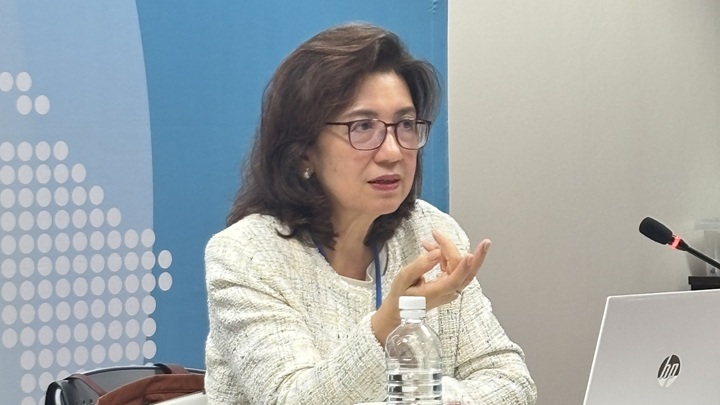
Mely Caballero-Anthony, Professor of International Relations at the S. Rajaratnam School of International Studies, Nanyang Technological University, Singapore
Oscar A. Gomez, Professor at the College of Asia Pacific Studies, Ritsumeikan Asia Pacific University, Japan, described human security as an ethical compass that helps policymakers and practitioners navigate difficult choices in times of crisis. Drawing on lessons from the COVID-19 pandemic, he noted that governments around the world faced difficult decisions involving trade-offs between competing priorities. In such situations, he argued, human security provides a framework for determining whose needs should receive priority and how scarce resources should be distributed.
Gomez also stressed that human security encourages critical reflection on development and humanitarian practice itself. Genuine commitment to protecting people requires not only good intentions but also a continuous assessment of whether interventions are actually helping those they are intended to support. Human security therefore demands humility, contextual understanding, and a willingness to question established approaches.
Looking ahead, he highlighted the importance of learning systematically from crises. Despite the unprecedented global impact of COVID-19, many countries have yet to undertake thorough assessments of what worked, what failed, and what lessons should guide future responses. He suggested that strengthening societies’ capacity to learn from crises will be essential for addressing future human security challenges.
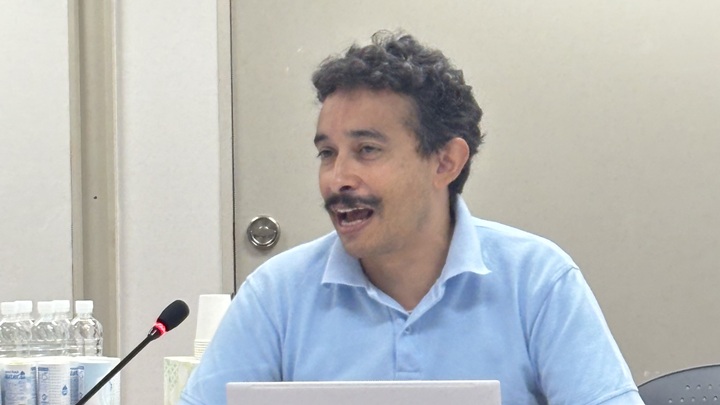
Oscar A. Gomez, Professor at the College of Asia Pacific Studies, Ritsumeikan Asia Pacific University, Japan
Shahrbanou Tadjbakhsh, Professor at Sciences Po Paris, France, reflected on more than two decades of work on human security and described the concept as fundamentally centered on human dignity. While the idea may appear simple, she argued that it is often overlooked in practice as policymakers prioritize state interests, institutions, and power politics over the experiences of ordinary people. She also expressed concern that many students in an increasingly militarized Europe are struggling to reconcile the values of human security with a political environment that places growing emphasis on power and state-centered security.
Against this backdrop, she emphasized that human security should not be treated solely as a framework for development cooperation abroad. Rather, it should be mainstreamed into domestic policymaking and everyday life, reflecting her conviction that human dignity and security are concerns for all societies, not only for vulnerable populations abroad.
Turning to implementation, Tadjbakhsh highlighted the need to translate these principles into practice by breaking down sectoral silos and moving beyond viewing people as passive beneficiaries. Genuine empowerment, she argued, requires involving affected communities in the design, implementation, and evaluation of policies and projects. Ultimately, she suggested that empathy lies at the heart of human security, providing a foundation for recognizing people's dignity, agency, and capacity to contribute to solutions.
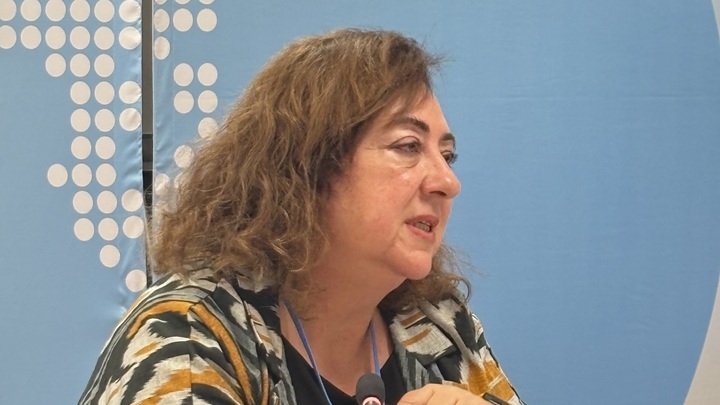
Shahrbanou Tadjbakhsh, Professor at Sciences Po Paris, France
In the Q&A session that followed, participants discussed the relationship between humanitarian action and human security, the distinction between empowerment and capacity development, and the role of regional organizations. The panelists emphasized the importance of people’s agency and meaningful participation, while noting that regional organizations can both advance and constrain efforts to address human insecurity.
Kamei Haruko , Director General, concluded the seminar by highlighting the importance of bridging research and practice and expressed hope that the forthcoming Handbook of Human Security will help strengthen exchanges among scholars, policymakers and practitioners.
Sns share!



事業事前評価表(地球規模課題対応国際科学技術協力(SATREPS)).国際協力機構 地球環境部 . 防災第一チーム. 1.案件名.国 名: フィリピン共和国.
事業事前評価表(地球規模課題対応国際科学技術協力(SATREPS)).国際協力機構 地球環境部 . 防災第一チーム. 1.案件名.国 名: フィリピン共和国.
事業事前評価表(地球規模課題対応国際科学技術協力(SATREPS)).国際協力機構 地球環境部 . 防災第一チーム. 1.案件名.国 名: フィリピン共和国.
事業事前評価表(地球規模課題対応国際科学技術協力(SATREPS)).国際協力機構 地球環境部 . 防災第一チーム. 1.案件名.国 名: フィリピン共和国.
事業事前評価表(地球規模課題対応国際科学技術協力(SATREPS)).国際協力機構 地球環境部 . 防災第一チーム. 1.案件名.国 名: フィリピン共和国.


