

Introduction to Quality Growth: Concept, Theoretical Background, Policy and Measurement






Updates from JICA Ogata Research Institute on the latest events, publications and more.
RegistrationHow to Find Us


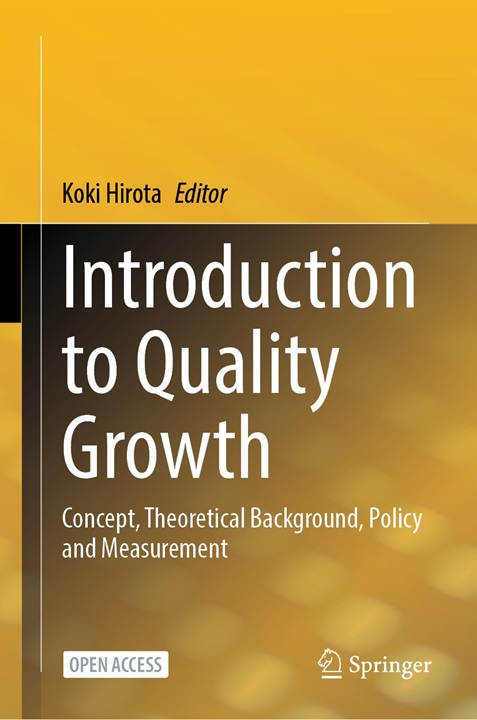
The “quality growth” addressed in this volume is a forward-looking paradigm of development that transcends the conventional focus on the expansion of production and income and embraces the vital, human-centric dimensions of inclusiveness, sustainability, and resilience. It has been designated as a strategic priority in Japan’s Development Cooperation Charter, and in alignment with this policy, the Japan International Cooperation Agency (JICA) has embraced quality growth, alongside human security, as a central mission in its cooperation with developing countries.
This book seeks to address profound and practical questions raised by the quality growth approach, including what inclusiveness, sustainability, and resilience entail, how they intersect with growth, how quality growth can be measured, and above all, how it can be achieved in concrete terms. It offers a comprehensive examination of the concept from the perspective of economic theory, as well as from ongoing efforts to measure its progress.
The book aims to clarify three pillars of the concept of quality growth: its theoretical background, policies for realization, and indicators for measuring results. It further considers Indonesia, Vietnam, Peru, Costa Rica, and Madagascar as case studies, assessing their development through the lens of quality growth. By bringing together theoretical discussion, indicators, and country-level analysis, the volume contributes to advancing discussions on quality growth in development cooperation.
This book is an outcome of a research project entitled “Study on Quality Growth” conducted at the JICA Ogata Sadako Research Institute for Peace and Development.


