
Striving for Better Construction: “KAIZEN PROJECT” Activity Diary Vol. 5
[Goal 9] Industry, Innovation and Infrastructure

[Goal 11] Sustainable Cities and Communities
2026.01.13






2026.01.13
My name is Nakanishi, a member of JICA Volunteers. I am currently working at the Provincial Works Supervision Unit (hereafter referred to as “the Office”) in Alotau, Milne Bay Province (hereafter referred to as “the site”).
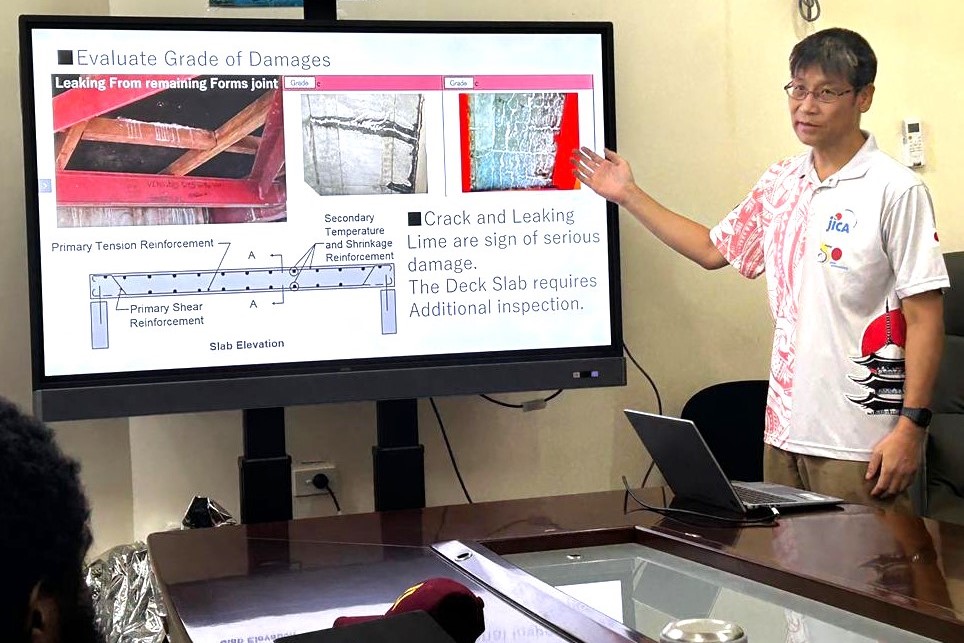
In my previous report, I shared how we conducted on-site bridge inspections together with the Office staff to promote understanding of preventive maintenance for road facilities. This time, I would like to report on a workshop where we evaluated the structural condition of the bridge based on the inspection results and discussed future countermeasures.
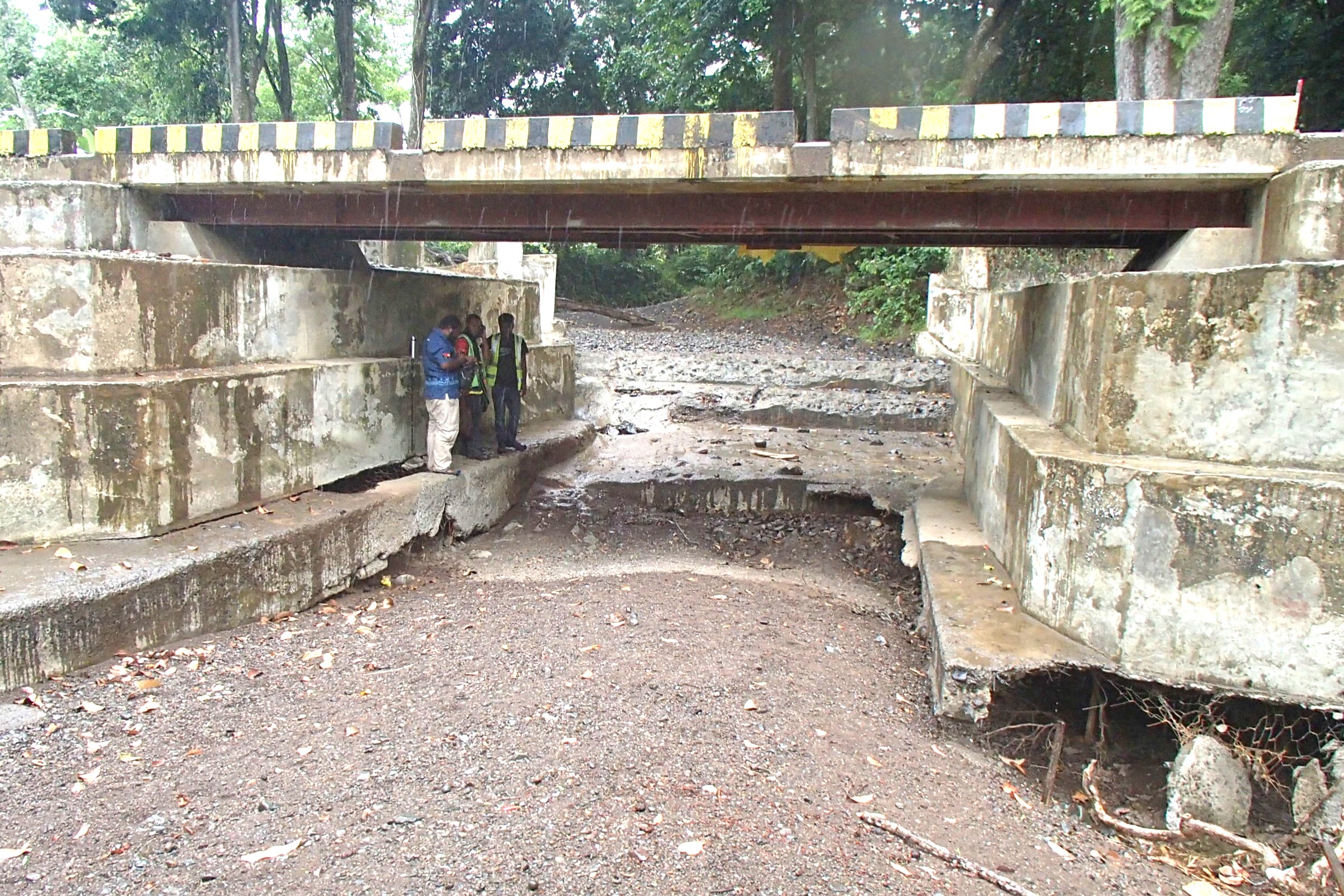
The bridge inspected was the Kiba Bridge on the North Coast Road, located on the outskirts of Alotau, the provincial capital (Photo 1). The main damages requiring attention were as follows:
(Photo 1)
(Photo 2)
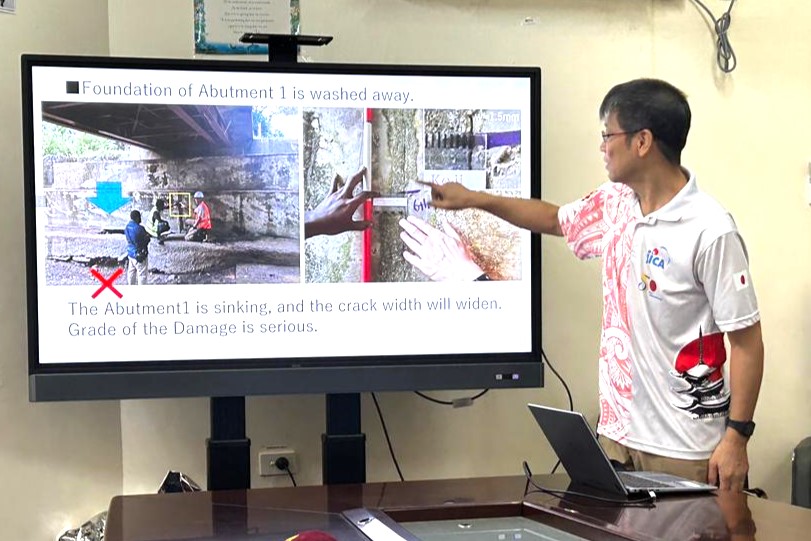
(Photo 3)
Regarding the efflorescence, it is necessary to partially remove the remaining formwork and reassess the internal condition. At this stage, we did not assign a condition rating but proposed preventive measures to avoid further deterioration. These include regular cleaning to maintain surface drainage and improving the approach slab connected to the joint by adjusting its gradient upward (Photo 4).
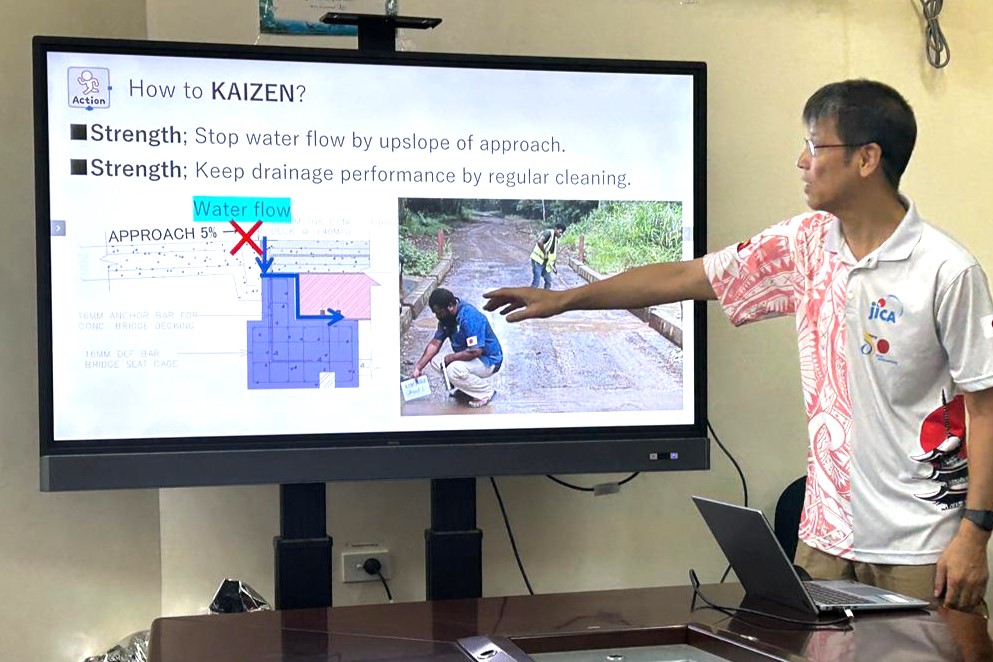
(Photo 4)
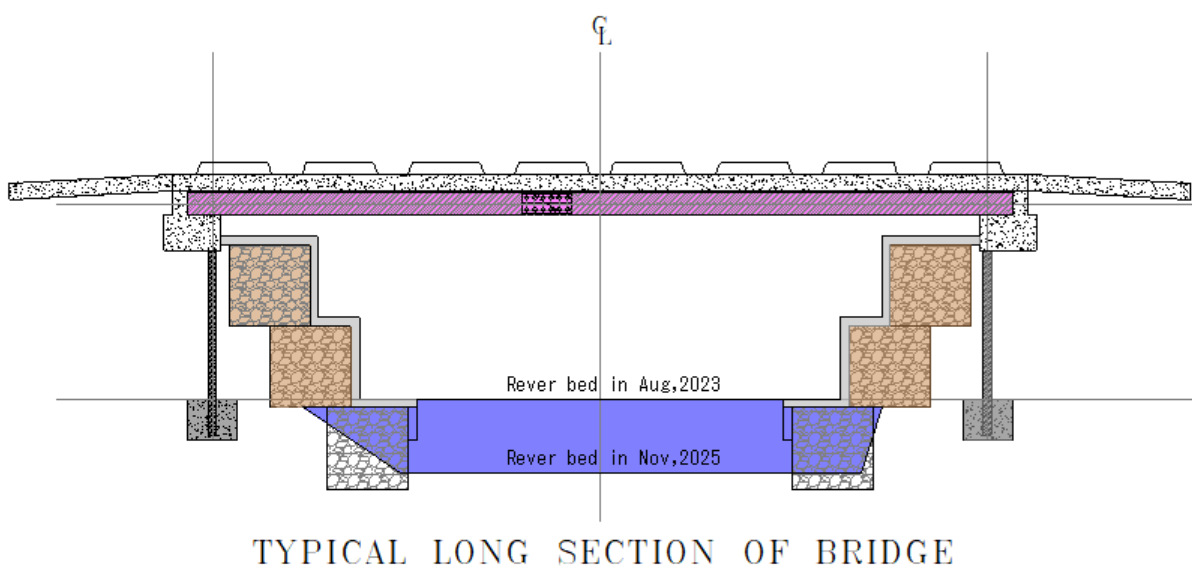
(Reference Figure 1)
Next, concerning the settlement of the abutment: although the settlement itself does not directly affect the bridge’s functionality, protecting the foundation piles that support the bridge load is critical. Over the past two years, the extent of riverbed scour (Reference Figure 1) has expanded, and if this continues at the same rate, the piles may be exposed within two years, potentially impairing the bridge’s functionality.
According to Japan’s Road Bridge Periodic Inspection Manual¹, bridge condition is classified into four levels, from “I (Good)” to “IV (Emergency Action Required).” The emergency level is defined as “a state in which the bridge’s functionality is significantly impaired or highly likely to be impaired, requiring urgent action,” but no specific deadline is indicated. In contrast, guidelines²³ developed with JICA’s support for developing countries specify a deadline of one or two years, reflecting limited contingency budgets for emergency measures.
Similarly, at the Office, securing funds for construction work through the initial budget of the following fiscal year can take up to two years. Therefore, we evaluated the target bridge as requiring emergency action within two years. When considering the standardization of bridge inspection manuals in the future, it will be essential to discuss these evaluation criteria thoroughly with the Office staff, taking into account the number of facilities under management.
During this workshop, we were able to hold discussions with the project manager who accompanied the inspection (Photo 5).
I believe this helped deepen understanding of preventive maintenance, even if only slightly. Moving forward, we aim to work steadily with our colleagues on developing human resources to sustain these efforts.
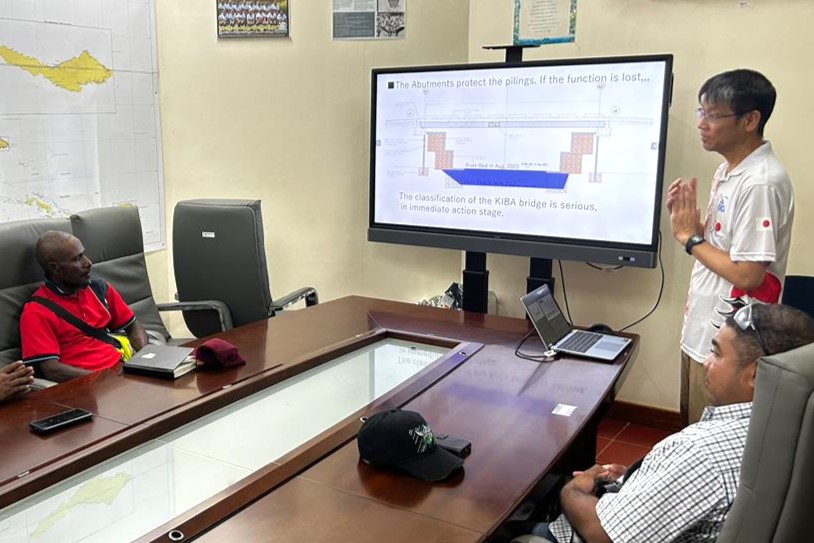
(Photo 5)
Past Articles
・Building Better Works: The KAIZEN PROJECT – Activity Report vol.1
・Building Better Works: The KAIZEN PROJECT – Activity Report vol.2
・Building Better Works: The KAIZEN PROJECT – Activity Report vol.3
・Building Better Works: The KAIZEN PROJECT – Activity Report vol.4
Related Link
・JICA PNG Office Newsletter: Bringing you the latest news!
・Working Together for Educational Improvement — Textbook Use and Math Education Potential
・JICA, NARI and East New Britain government promote sustainable agriculture in ENB province with JICA’s flagship approach
Please also visit our Facebook for our latest activities and events news
JICA Facebook Page
Sns share!


