

Blog Post | Exploring a New Indicator Framework Beyond 2030: Insights from a UN Expert Meeting on SDG Indicators in Kitakyushu
2025.12.25






Updates from JICA Ogata Research Institute on the latest events, publications and more.
RegistrationHow to Find Us


Researchers at the JICA Ogata Sadako Research Institute for Peace and Development (JICA Ogata Research Institute) have wide-ranging experience and diverse backgrounds, and they are forging partnerships with various stakeholders and partners. This series of blog posts shares the knowledge and perspectives that they have acquired through their research activities. In this post, Sato Ichiro , Executive Senior Research Fellow, who participates in the research project “Study on the Indicator Framework for Post-2030 International Development Goals ,” shares an overview of an expert meeting on SDG indicators which was held in Kitakyushu, Japan in early November, 2025.
Author: Sato Ichiro, Executive Senior Research Fellow , JICA Ogata Research Institute
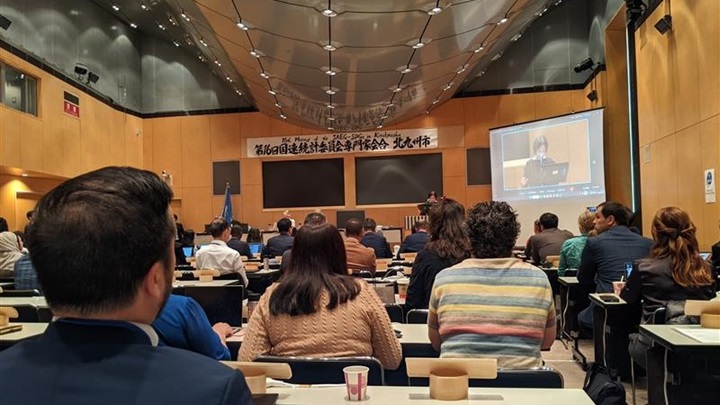
From Nov. 5 to 7, 2025, hosted by the Ministry of Internal Affairs and Communications of Japan, the sixteenth meeting of the Inter-agency and Expert Group on Sustainable Development Goal Indicators (IAEG-SDGs) was held in Kitakyushu, Fukuoka. Experts joined from around the world and discussed SDG indicators from multiple perspectives.
The Sustainable Development Goals (SDGs) were adopted by the United Nations (UN). The IAEG-SDGs is a group in charge of developing, implementing, reviewing and improving the global indicator framework to monitor progress of the SDGs. It was created under the UN Statistical Commission and currently consists of 28 member states . Many of its members are experts from national statistical agencies of member states.
The IAEG-SDGs holds regular meetings (which became annual since 2020) and the 2025 meeting took place over three days in Kitakyushu. A closed meeting was held on the first day, while the following two days featured a plenary session open not only to members but also to experts in statistics and data from national statistical agencies of IAEG non-member states, as well as representatives from international organizations and NGOs. I had the opportunity to participate in the two-day plenary. Presentation materials and recordings of the plenary are available on the official website of the meeting .
Various issues regarding the SDG indicators were discussed during the meeting.
For example, global progress of the SDGs was reported, based on The Sustainable Development Goals Report 2025 . In addition, progress focusing on a specific region (i.e., the Asia-Pacific) and thematic issues (e.g., gender and peace) were reported and challenges were shared. One of the identified challenges was the shortage of human and financial resources needed to compile indicator data. An example shared was that data collection for 39 SDG indicators is affected by the discontinuation of support from the US government to the Demographic and Health Surveys (DHS) Program, which had received funding from the United States Agency for International Development (USAID) over many years. Human and institutional capacity development along with securing funding have already been recognized as challenges for indicator data compilation, but as international development aids are on the decline today, the impacts of these challenges will likely be felt more strongly in coming months and years.
Although official statistics produced by national statistical agencies have been traditionally used as indicator data, the use of other data and new digital tools was also extensively discussed in the plenary. Efforts of countries and other stakeholders were shared, followed by discussions on the use of geospatial information (e.g., Earth observation satellite imagery), mobile location data and citizen data, as well as the efficient management, analysis and communication of data through the use of digital tools such as artificial intelligence (AI).
Under the IAEG-SDGs, several working groups and task teams have been organized to work on specific topics. One such task team aims to use lessons learned from developing and implementing the SDG monitoring framework—including its indicators—with a view to reflecting them in designing a monitoring framework for the future international development agenda. On the final afternoon, a session was held to discuss the issues that this task team has been working on. At the beginning of the session, I had the opportunity to give a presentation on the overview and preliminary results of the research project “Study on the Indicator Framework for Post-2030 International Development Goals ,” conducted by the JICA Ogata Research Institute (The presentation slides are available here .)
In this presentation, I proposed to significantly reduce the number of global indicators that all UN Member States are required to report under the indicator framework for the post-2030 development agenda, compared to the current 234 global SDG indicators. In place of this reduction, I proposed strengthening the roles of custom indicators set by each country or region based on its own policy priorities, local contexts, and monitoring needs. I also demonstrated a statistical method that uses correlations among indicators to help narrow down the global indicators.
In the Q&A session that followed, questions and comments came from five participants. While some agreed with the proposed framework, others pointed out that other methods need to be combined, as relying solely on statistical approaches could be problematic. A few participants also approached me individually during the coffee break to share feedback and ask further questions. I felt that our research generated considerable interest.
Official discussions on the post-2030 development agenda are expected to start from September 2027 at the UN. We aim to contribute to these upcoming discussions by exploring a more effective and efficient indicator framework while having discussions with experts and stakeholders at meetings like this one.
For further information about the research work on the indicator framework by the JICA Ogata Research Institute, please click the link below to visit the research project webpage.
Disclaimer: All opinions expressed in this blog post are the author’s and do not reflect opinions of JICA or the JICA Ogata Research Institute.
Sato Ichiro is an executive senior research fellow at the JICA Ogata Research Institute since 2022. He joined the Japan International Cooperation Agency in 1997 and has worked at its Mexico Office, Brazil Office, Disaster Risk Reduction Group, and the Office for Climate Change. He was seconded to the World Resources Institute from 2018 to 2020.
Sns share!



事業事前評価表(地球規模課題対応国際科学技術協力(SATREPS)).国際協力機構 地球環境部 . 防災第一チーム. 1.案件名.国 名: フィリピン共和国.
事業事前評価表(地球規模課題対応国際科学技術協力(SATREPS)).国際協力機構 地球環境部 . 防災第一チーム. 1.案件名.国 名: フィリピン共和国.
事業事前評価表(地球規模課題対応国際科学技術協力(SATREPS)).国際協力機構 地球環境部 . 防災第一チーム. 1.案件名.国 名: フィリピン共和国.
事業事前評価表(地球規模課題対応国際科学技術協力(SATREPS)).国際協力機構 地球環境部 . 防災第一チーム. 1.案件名.国 名: フィリピン共和国.
事業事前評価表(地球規模課題対応国際科学技術協力(SATREPS)).国際協力機構 地球環境部 . 防災第一チーム. 1.案件名.国 名: フィリピン共和国.


