

Interview With Distinguished Fellow Csaba Kőrösi: Beyond GDP and How We Measure Progress
2026.02.03





Updates from JICA Ogata Research Institute on the latest events, publications and more.
RegistrationHow to Find Us


The question of how societies define and measure progress is more urgent than ever before. It is becoming increasingly clear that the long-standing over-emphasis on economic growth as measured by Gross Domestic Product (GDP), has distorted our assessment of sustainable development in an era marked by climate change, widening inequalities and environmental degradation. In an online conversation with Sato Ichiro , Executive Senior Research Fellow at the JICA Ogata Research Institute, Csaba Kőrösi , a Hungarian diplomat who served as President of the 77th United Nations General Assembly, explores the origins, challenges and future of the “Beyond GDP” agenda.
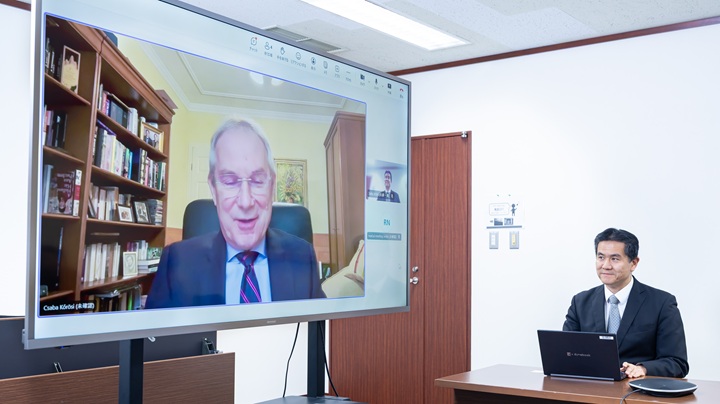
Sato: Thank you very much for the interview. Let’s start with the basics: What does “Beyond GDP” mean, and where did the idea come from?
Kőrösi: The idea behind “Beyond GDP” starts from a simple premise: we have relied on a single economic indicator to judge progress for far too long, even though development is about much more than economic output. The challenge has always been how to measure economic performance while also capturing social progress and long-term stability. This question matters because the way we measure success shapes the decisions we make—and whether we prevent or create future crises.
GDP itself was developed in the aftermath of the Great Depression. Simon Kuznets and his team were asked to design a tool that could track economic activity and help avoid another major collapse. What they produced was a powerful indicator of economic activity, but Kuznets warned that GDP was never intended to measure development. Rather, it captures the value of monetized goods and services reaching markets, but it does not measure changes in human, social or natural capital, nor does it capture inequalities within societies.
That is where Beyond GDP comes in. Sustainable development depends on maintaining a balance across different forms of capital—human, social, natural, built and financial. Through economic activities, we constantly transform one type of capital into another, often creating value but also generating externalities—positive or negative alike. When those side effects go uncounted, we like to believe they don't exist—but they do. They accumulate and reinforce each other, driving crises such as climate change, biodiversity loss, pollution, or social inequalities and instability. These crises claim more lives than all 56 ongoing armed conflicts combined—over ten times more. This is the non-traditional nature of crises stemming from unsustainable ways of operating. Going beyond GDP means developing tools that can measure the aggregated impacts of our activities across all the different forms of capital and help us judge whether we are truly making progress in development.
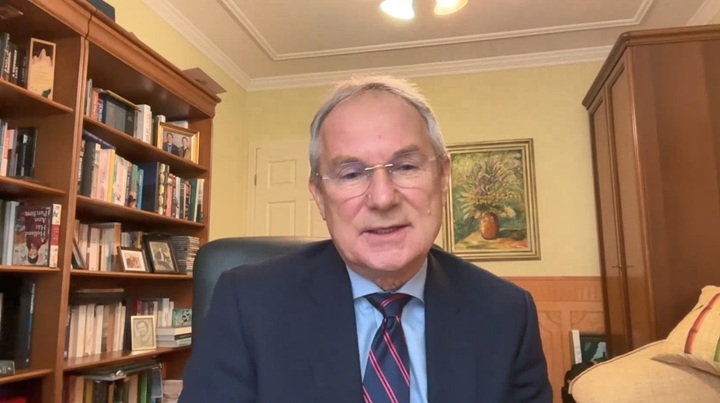
Csaba Kőrösi, Distinguished Fellow, JICA Ogata Research Institute
Sato: There are already many indicators, such as the Human Development Index and the OECD Better Life Index , that attempt to measure well-being beyond GDP. Yet new initiatives under the “Beyond GDP” banner continue to emerge. What is still missing from existing indicators, and why does this debate continue?
Kőrösi: GDP remains the dominant—and often mistaken—yardstick for effectively measuring development. This is even though we already have many other valuable tools, such as composite indices that measure human development or quality of life. The challenge is not a lack of ideas, but a lack of integration. In some cases, we simply lack the necessary data. Even in OECD countries, nearly 30% of relevant, high-quality data is missing, and in many other countries, institutional capacity to collect and validate data is even more limited.
But even where data exists, methodology remains a major challenge. We still do not have a way to integrate data from different areas of life in a manner that supports decision-making for systemic change. Another complication is that local trends often matter more for real development than global indices, even though global data remain essential for understanding common goods such as climate, oceans and biodiversity. This is partly because countries at different stages of development have different priorities, which shift over time as their societies evolve—from one type of capital to another. As a result, voluntary national review
reports often paint a rosier picture than data collected by international organisations, creating clear discrepancies. We need a system that shows where global phenomena stand and allows us to compare them with what is happening at the national level. So, it’s about finding the right combination of indicators.
Finally, we must recognize the existence of vested interests in maintaining the present accounting system. When negative externalities are ignored, some actors enjoy the benefits of their activities while sidestepping the costs. For taxpayers, what matters most is often what’s in their pockets—and everything else tends to come later. This is why going beyond GDP—taking into account the lives of our neighbours, children and grandchildren—is essential, even if it’s not an easy sell.
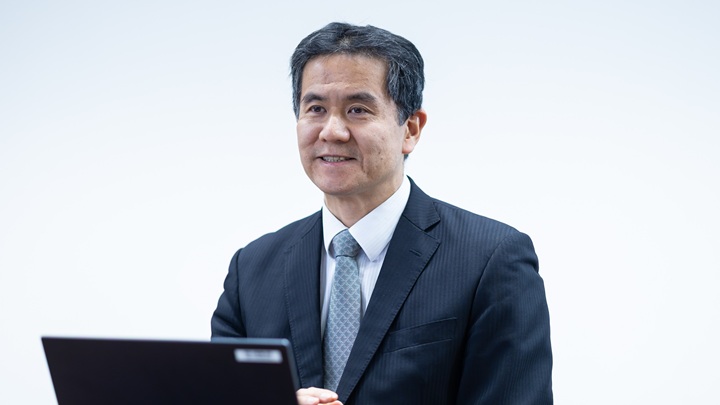
Sato Ichiro, Executive Senior Research Fellow, JICA Ogata Research Institute
Sato: A number of international initiatives are now working to develop Beyond GDP frameworks, each taking different approaches and setting different priorities. How do you see these efforts evolving, and what do they tell us about the future of Beyond GDP?
Kőrösi: International initiatives have already delivered important progress. Institutions such as the World Bank, OECD and some leading universities have developed methods to link economic performance with natural and social capital, and several countries have experimented with national accounting systems that go beyond GDP. These efforts are valuable, but they have not yet produced a comprehensive alternate system.
What we still lack is a system that can simultaneously measure changes in both quantity and quality across all dimensions of sustainable development. It must be flexible enough to work across different stages of development, be relevant from the local to the global level, and be capable of guiding investment and policy decisions. For this reason, Beyond GDP is unlikely to result in a single headline number, and country rankings should be seen only as a by-product—not the goal.
What truly matters is not how countries compare to each other, but how they progress over time against their own past. A well-designed Beyond GDP framework should help identify where societies are over-investing or under-investing, and guide decisions by showing where changes in investment and policy are needed.
Sato: What do you see as the most critical first step to make Beyond GDP a reality?
Kőrösi: If Beyond GDP were embraced as widely as GDP, it could transform how we define progress. GDP itself took nearly 50 years to gain global acceptance, after fierce debates over its merits and flaws. Beyond GDP has been discussed under various names for more than 25 years, but if we truly want it to guide the sustainability transition, we cannot afford to wait another 25 years. Change will not happen overnight—national accounting systems are deeply rooted in traditions, regulations, and vested interests.
The realistic first step is agreement on a common dataset and methodology, tested alongside existing systems as a “shadow measurement.” If proven effective, this could pave the way for decisions that accelerate sustainability, foster balanced growth, and make voluntary national review reports more honest and actionable. It could even provide early signals for where to invest—or divest—in critical areas.
Ultimately, Beyond GDP is about more than metrics—it’s about reshaping economics itself. If Beyond GDP becomes reality, it could inspire a new economic paradigm—one that embeds sustainability at its core, is taught in universities, and is practiced by companies, cities, and communities worldwide. That is my wildest dream—and the vision that could redefine progress for the benefit of people and planet. I hope I will live long enough to see it.
SATO: Yes, I share that hope. To make it a reality, countries and international organizations like ours must work more closely together to build capacity for high-quality data. Thank you very much, Mr. Kőrösi, for sharing your reflections and for providing such a clear and insightful discussion on the need to move Beyond GDP.
Sns share!



事業事前評価表(地球規模課題対応国際科学技術協力(SATREPS)).国際協力機構 地球環境部 . 防災第一チーム. 1.案件名.国 名: フィリピン共和国.
事業事前評価表(地球規模課題対応国際科学技術協力(SATREPS)).国際協力機構 地球環境部 . 防災第一チーム. 1.案件名.国 名: フィリピン共和国.
事業事前評価表(地球規模課題対応国際科学技術協力(SATREPS)).国際協力機構 地球環境部 . 防災第一チーム. 1.案件名.国 名: フィリピン共和国.
事業事前評価表(地球規模課題対応国際科学技術協力(SATREPS)).国際協力機構 地球環境部 . 防災第一チーム. 1.案件名.国 名: フィリピン共和国.
事業事前評価表(地球規模課題対応国際科学技術協力(SATREPS)).国際協力機構 地球環境部 . 防災第一チーム. 1.案件名.国 名: フィリピン共和国.


