

Interview With Assistant Professor Hirai Tadashi: Rethinking How We Measure True Prosperity Through Trust and Self-Assessment
2026.10.22


Updates from JICA Ogata Research Institute on the latest events, publications and more.
RegistrationHow to Find Us


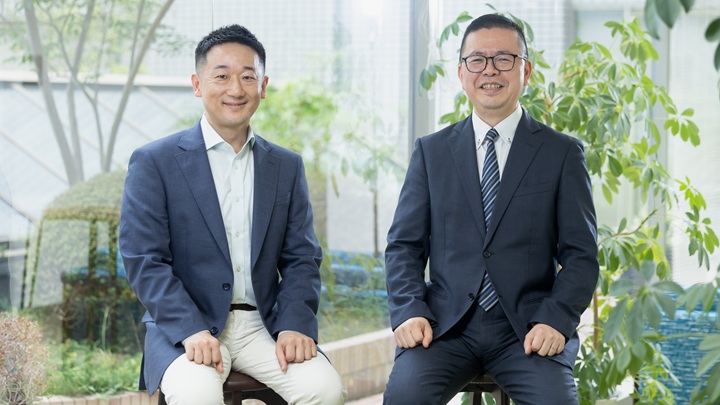
Assistant Professor Hirai Tadashi of the IQS School of Management at Ramon Llull University in Barcelona, Spain, contributed an article “Human Development: Toward Measuring the True Wealth of Well-Being ” to Human Security Today No. 3: “Measuring Human Security ,” a flagship report of the JICA Ogata Sadako Research Institute for Peace and Development (JICA Ogata Research Institute). For more than two decades, he has explored ways to measure human development more accurately. In this interview, Negishi Seiichi , Executive Senior Research Fellow at the JICA Ogata Research Institute, speaks with Hirai about the challenges of existing development indicators and how concepts such as prosperity and trust can be measured more meaningfully.
Negishi: To begin, what sparked your interest in the fields of human development and the measurement of prosperity?
Hirai: When I was a child, I experienced discrimination while travelling abroad, which sparked my interest in issues of inequality and discrimination. At university, I studied human rights law. After volunteering in Bosnia and Herzegovina a few years after the conflict had ended, I witnessed firsthand how development assistance was not reaching everyone who needed it.
That experience inspired me to pursue graduate studies in Development Studies. One of the books on the reading list was Amartya Sen’s “Development as Freedom.” Reading it was a turning point for me. Sen argues that development is not just about increasing income, but about expanding people’s freedom to choose the kind of life they value. I found this perspective deeply compelling, and it was a real eye-opener. I felt that this was the area I wanted to dedicate my life to, and I have now spent more than 20 years researching better ways to measure human development.
Negishi: There are already many indicators used to measure human development. What challenges do they face?
Hirai: The concept of human development is difficult to capture fully through existing indicators. The Human Development Index (HDI) , for example, is primarily based on objective factors relating to health, education, and income. While these factors are important, objective affluence alone cannot fully capture the essence of a truly fulfilling life.
Moreover, human development is not a fixed concept; it has evolved over time. In response to growing concerns about climate change, the United Nations Development Programme (UNDP) introduced the Planetary Pressures-adjusted HDI (PHDI) in 2020, which takes environmental impacts into account. The Nature Relationship Index is also being developed for inclusion in the 2026 Human Development Report.
However, we still lack adequate measures of how people themselves perceive and experience their own lives. Human development is not only about building capabilities but also about how effectively people can use them. Understanding this requires asking people directly about their experiences. I believe that incorporating this subjective dimension is the next major challenge for the field of human development.
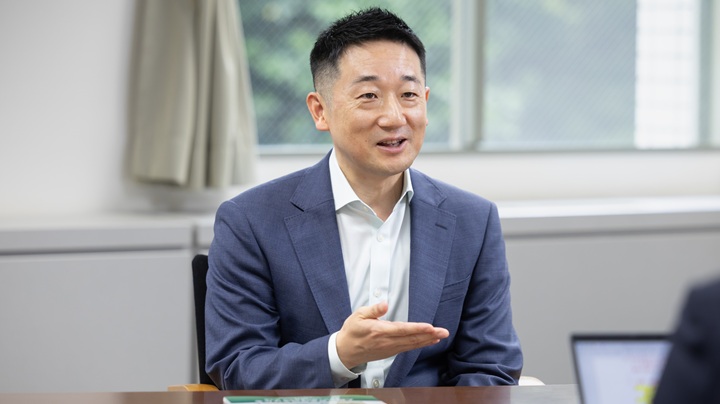
Assistant Professor Hirai Tadashi of the IQS School of Management at Ramon Llull University in Barcelona, Spain, conducts research on measuring human development.
Negishi: So, indicators such as GDP and other commonly used measures are not enough to capture genuine prosperity?
Hirai: Exactly. Even in economically prosperous countries with high HDI scores, serious issues such as social isolation, withdrawal from society, and suicide can still be prevalent. These realities remind us that income, education, and life expectancy alone cannot fully capture true prosperity.
While objective indicators are certainly important, they tell us little about how people are living their lives. Higher incomes, more years of education, or an increased life expectancy do not automatically guarantee a fulfilling life. What truly matters is whether people are able to live lives that they themselves find valuable.
The values that people prioritize differ from person to person. Therefore, it is important to examine whether objective living conditions translate into lives that reflect individuals’ own values and aspirations. In this sense, subjective information plays a critical role in complementing objective indicators. This is why I believe that people’s own perceptions and self-assessments should be incorporated into policymaking.
Negishi: In your work, you focus particularly on trust and self-assessment as ways of measuring prosperity. How should these be evaluated?
Hirai: Trust reflects a social environment in which people can make confident choices and fully exercise their capabilities. In a high-trust society, people are better able to exercise their agency and pursue the lives they value. This is also an essential condition for achieving what Amartya Sen calls “effective freedom”.
Trust also shapes how people view the future. When people are confident about the future, they are more likely to invest in the long-term areas such as education and environmental sustainability, rather than focusing only on immediate gains. This contributes to more sustainable human development.
The same applies in the context of development policy. Without trust, people may assume that they could be betrayed tomorrow, so they try to secure as many short-term benefits as possible today. Such an environment is unlikely to support sustainable development.
Interestingly, some societies have high HDI scores but low levels of trust, while others display the opposite pattern. This suggests that high levels of education or income do not necessarily enable people to fulfill their capabilities. For this reason, I focus on institutional trust and have proposed the Socially Dependent Human Development Index (SHDI), which incorporates this dimension.
The second concept is self-assessment. This indicates whether people can utilize objective resources, such as health, education, and income, in ways that align with their own values. In this sense, self-assessment captures whether individuals feel they are achieving the kind of life they value.
To measure this, I have proposed two indices: the Comprehensive Human Development Index and the Human Development Gap Index. These indices evaluate achievements across different dimensions of life, weighting levels of achievement according to the importance individuals assign to each dimension. Human development is not just about having capabilities; it is about being able to use them to build a life that reflects one’s own aspirations. By incorporating self-assessment, we can better understand how people exercise their capabilities in practice.
Negishi: Could you share some of the key findings from your research?
Hirai: In the field of human development, self-assessment is often viewed with skepticism. Subjective evaluations have tended to be dismissed due to the concept of adaptive preferences, which suggests that people living in disadvantaged conditions may adapt to them and come to accept them as normal.
I am somewhat skeptical of this argument. In surveys that I conducted across BRICS countries, I asked respondents questions such as “Are you happy?” and “Are you satisfied with your life?” Poorer individuals generally reported lower levels of happiness and satisfaction than wealthier individuals. This suggests that the existence and extent of adaptive preferences may not be as clear-cut as is often assumed.
Furthermore, my analysis using the Human Development Gap Index shows that when people are unable to achieve something they value, they do not necessarily value it any less. In other words, these findings suggest that people do not necessarily lower their aspirations when achievement is difficult.
For these reasons, I do not believe that subjective information is as unreliable as it is sometimes portrayed. Even among the more than 200 indicators used to monitor the Sustainable Development Goals (SDGs), only about six relate directly to subjective evaluations or self-assessment. The current framework remains heavily weighted towards objective measures, but I believe that subjective information deserves much greater attention.
Negishi: As efforts to measure human development more realistically gain momentum, how do you think such approaches could contribute to human security and development cooperation? What are your expectations for JICA?
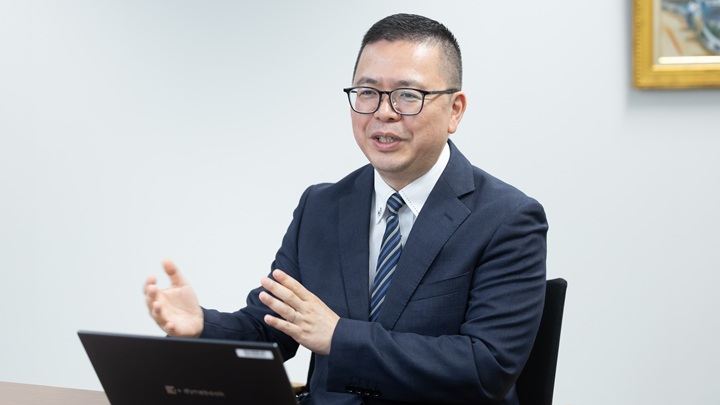
Hirai: From a human security perspective, objective information remains critically important because many issues pose an immediate threat to people’s lives and livelihoods. Nevertheless, subjective information, including self-assessment, is equally valuable.
Even among people facing severe hardships, priorities differ. Understanding how people perceive their lives, what they value and consider important, and the kind of future they hope to achieve can provide essential insights. Incorporating people’s own voices and assessments into development cooperation can make it more responsive to local realities, more sustainable, and ultimately more human-centered. I hope JICA will continue to place people’s own voices, values, and aspirations at the heart of development cooperation.
Negishi: Thank you very much for sharing your valuable insights with us.
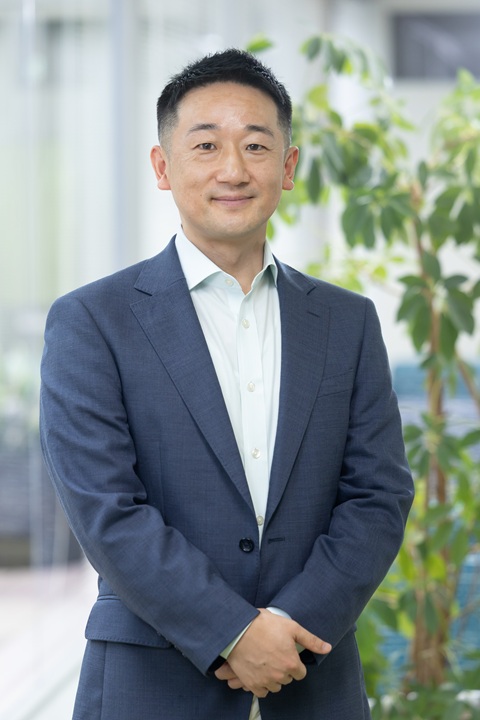
He received his BA from Tokyo University of Foreign Studies and his MPhil and PhD from the University of Cambridge. Since 2024, he has been an Assistant Professor (Professor Contratado Doctor) at the IQS School of Management, Ramon Llull University. Previously, he was a Research Fellow of the Japan Society for the Promotion of Science (JSPS) and a Project Researcher at the Institute for Advanced Studies on Asia, The University of Tokyo. At the University of Cambridge, he served as an Affiliated Lecturer and Research Associate in the Department of Politics and International Studies at the University of Cambridge. He also worked as an International Consultant for the United Nations Development Programme (UNDP).
Sns share!



事業事前評価表(地球規模課題対応国際科学技術協力(SATREPS)).国際協力機構 地球環境部 . 防災第一チーム. 1.案件名.国 名: フィリピン共和国.
事業事前評価表(地球規模課題対応国際科学技術協力(SATREPS)).国際協力機構 地球環境部 . 防災第一チーム. 1.案件名.国 名: フィリピン共和国.
事業事前評価表(地球規模課題対応国際科学技術協力(SATREPS)).国際協力機構 地球環境部 . 防災第一チーム. 1.案件名.国 名: フィリピン共和国.
事業事前評価表(地球規模課題対応国際科学技術協力(SATREPS)).国際協力機構 地球環境部 . 防災第一チーム. 1.案件名.国 名: フィリピン共和国.
事業事前評価表(地球規模課題対応国際科学技術協力(SATREPS)).国際協力機構 地球環境部 . 防災第一チーム. 1.案件名.国 名: フィリピン共和国.


