

Why Did Japanese Technicians Migrate to Brazil? Research Fellow Tanaka Conducts Fieldwork in São Paulo State, Brazil
2026.02.02






Updates from JICA Ogata Research Institute on the latest events, publications and more.
RegistrationHow to Find Us


In Sept. 2025, Roberto Shuichi Tanaka , Research Fellow, JICA Ogata Sadako Research Institute for Peace and Development (JICA Ogata Research Institute), conducted field research in São Paulo State, Brazil, as part of the research project “A Study on the Postwar Industrial Migration from Japan to Brazil.”
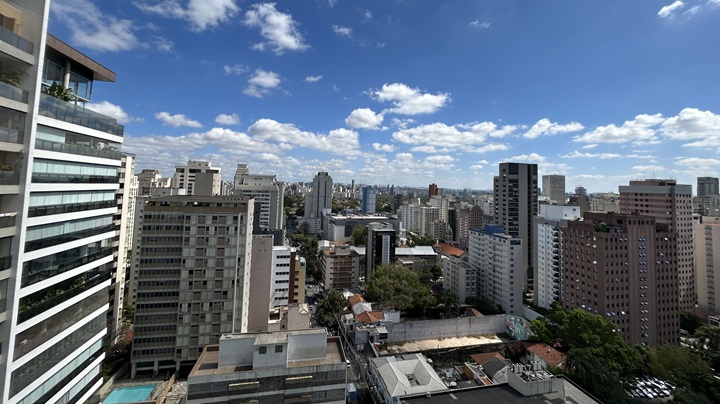
São Paulo City, home to a large Japanese-Brazilian community
Brazil is home to the largest Japanese community outside Japan, with approximately 2.7 million people of Japanese descent. After World War II, government agencies such as the Japan Emigration Service (a predecessor of JICA) facilitated migration to Brazil. About 71,000 Japanese migrated under these programs, most as agricultural migrants.
In 1961, the Japanese government agencies followed this up with a new migration scheme—the Industrial Migration Program (also known as Technical Migration). Between 1961 and 1978, around 2,700 technicians moved to Brazil under this program. They contributed to a wide range of industries, including electrical engineering, mechanical engineering, production design, and chemistry. Moreover, many became prominent artists and teachers in cultural activities such as calligraphy, pottery, tanka poetry, and folk music, enriching the cultural life of Japanese Brazilian communities.
After completing his fieldwork, Tanaka reflected on the significance of his research. He noted that postwar Japanese migration to Brazil is generally associated with agricultural settlement, and the smaller-scale industrial migration has remained relatively unknown and largely unstudied. Yet, many industrial migrants have made significant contributions to Brazil, and he believes it is important to honor their achievements and preserve their memories for future generations. He emphasized that scholars need to listen to their voices and document their life stories. Furthermore, according to him, to understand their comments scholars should investigate why the Industrial Migration Program existed in the first place by consulting primary and secondary sources.
During his fieldwork in São Paulo State, he interviewed 22 industrial migrants and their family members. The interviews focused on their motivations for migration, their contributions to Brazil’s economic development and technological advancement, and the challenges they faced after settling in Brazil. He was impressed by how he could see their eyes lit up with enthusiasm when they spoke. More importantly, he found that their reasons for migrating varied—some had joined major companies in Japan but faced a limited prospect of career advancement due to rigid educational hierarchies, while others were driven by pure curiosity and a desire to explore the world.

Industrial migrants who participated in the interviews (Kanatani and Oya families) with Research Fellow Roberto Tanaka (center, back row)
In addition to his interviews, Tanaka conducted research at the University of São Paulo library to understand why the Brazilian government and firms were eager to accept industrial migrants. He also visited organizations such as the Brazilian Association for Japanese Culture and Social Assistance, the Center for Japanese Brazilian Studies, and the Brasil Nippo newspaper to discuss the history of Japanese migration. Furthermore, he was invited by Masato Ninomiya, Senior Professor at the University of São Paulo, Faculty of law, to give a presentation on the objectives and methodology of his research project at the Law School of the university.
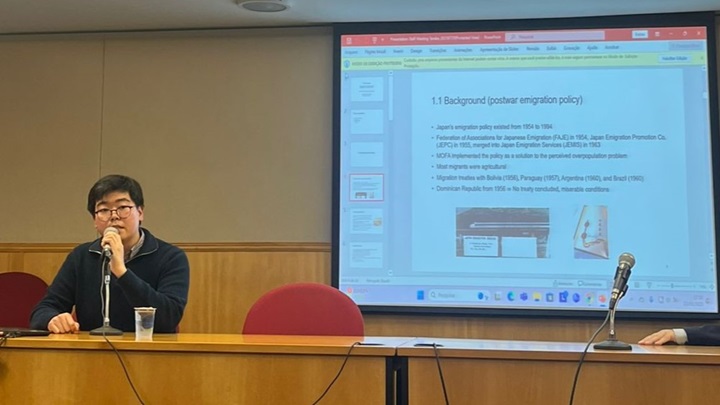
Tanaka presenting at the University of São Paulo Law School
Based on his findings, Tanaka plans to write two academic papers. The first will focus on the life stories of industrial migrants, exploring why they decided to move to Brazil and how they contributed to Brazilian economic development and technological transformation. The second will examine why Japan’s migration policy promoted the emigration of technicians to Brazil during the period of rapid economic growth, despite the existence of strong domestic demand for technical professionals in Japan.
The JICA Ogata Research Institute is also conducting other research projects related to Japanese migration to Latin America. Please check them out as well.
Sns share!



事業事前評価表(地球規模課題対応国際科学技術協力(SATREPS)).国際協力機構 地球環境部 . 防災第一チーム. 1.案件名.国 名: フィリピン共和国.
事業事前評価表(地球規模課題対応国際科学技術協力(SATREPS)).国際協力機構 地球環境部 . 防災第一チーム. 1.案件名.国 名: フィリピン共和国.
事業事前評価表(地球規模課題対応国際科学技術協力(SATREPS)).国際協力機構 地球環境部 . 防災第一チーム. 1.案件名.国 名: フィリピン共和国.
事業事前評価表(地球規模課題対応国際科学技術協力(SATREPS)).国際協力機構 地球環境部 . 防災第一チーム. 1.案件名.国 名: フィリピン共和国.
事業事前評価表(地球規模課題対応国際科学技術協力(SATREPS)).国際協力機構 地球環境部 . 防災第一チーム. 1.案件名.国 名: フィリピン共和国.


