

Outcomes of Research Activities by the JICA Ogata Research Institute Presented at the 15th Annual Conference of JAHSS
2026.03.31





Updates from JICA Ogata Research Institute on the latest events, publications and more.
RegistrationHow to Find Us


With “Disasters and Human Security” as its theme, the 15th Annual Conference of the Japan Association for Human Security Studies (JAHSS) took place at Kanazawa University on Nov. 8 and 9, 2025. Representing the JICA Ogata Sadako Research Institute for Peace and Development (JICA Ogata Research Institute), Mine Yoichi , Executive Director, gave a keynote lecture and Maryam Alkubati , Research Fellow, gave a presentation.
Mine gave a keynote lecture titled “Creating Human Security Indicators to Realize a Society Where No One is Left Behind” and talked about a project to develop human security indicators (human security dashboard). He introduced the book “SDGs and Japan: Human Security Indicators for Leaving No One Behind ,” which was published as an outcome of the efforts by Human Security Forum, an NGO that participates in this project and is led by Takasu Yukio, Special Adviser on Human Security to the United Nations Secretary-General, and Mine.
With Muto Ako , Specially Appointed Research Fellow, as a moderator, presentations were given by the following during the plenary session: Yamazaki Maho, Lecturer, Tohoku Gakuin University; Miyashita Hiromu, Associate Professor, Meijo University; and Ishimoto Megumi, Executive Director, Women’s Eye. They showed that common indicators at the national level alone are not enough to accurately capture the reality of human security in Japan in line with underlying contexts. They also pointed out that indicator development is just a milestone which clarifies areas that need improvement and allows activities to be more focused. After showing some municipal-level challenges in Miyagi and Aichi using indicators, and following comments from Okuda Hisashi, Associate Professor, Kanazawa University, and Tomita Hiroyuki, former Director General, JICA Hokuriku Center, the discussion was broadened to cover various issues that local communities in Ishikawa face as they work toward recovery from the 2024 Noto Peninsula Earthquake.
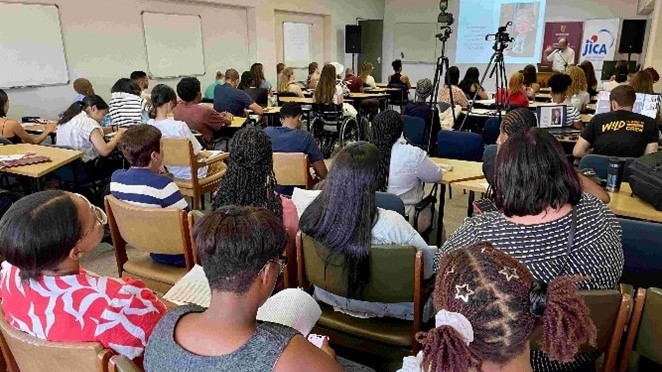
The plenary session was moderated by Muto Ako, Specially Appointed Research Fellow, JICA Ogata Research Institute, to discuss human security indicators.
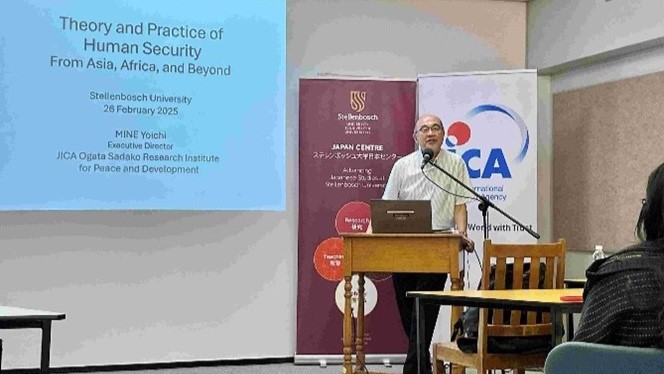
Mine Yoichi, Executive Director, JICA Ogata Research Institute, gives a keynote lecture.
Alkubati gave a presentation titled “Women, War, and the Everyday Work of Peace in Yemen” to discuss daily peacebuilding activities undertaken by women in conflict-torn Yemen, based on interviews and narratives provided by local women. She shared the following about Yemen: 80% of the population lives below the poverty line; the labor force participation rate is around 60% for men but only 5% for women, indicating that gender-based socioeconomic inequality persists; and state-run systems have collapsed because of the civil war. Alkubati then shared that despite this situation, Yemeni women support peace and human security in local communities through the following three practices:
1) Care as protection
“Care as protection” refers to unpaid and informal work carried out by women such as caregiving, dispute resolution and small-scale livelihoods. Women protect their families and communities through this form of daily care work. In particular, mothers are expected to instill the values of kindness, perseverance and peaceful coexistence in their children, teaching them that “peace starts at home.” A woman in Aden who started a business selling incense and offering beauty services noted that she now plays a family-supporting role. Such work not only helps households to sustain their livelihoods but also contributes to stability in local communities.
2) Faith as empowerment
“Faith as empowerment” refers to how women, with faith as their source of strength, are reinterpreting Islamic teachings, encouraging peaceful coexistence, rejecting violence and justifying peacebuilding efforts. Female Islamic educators (daiya) emphasize that violence against women contradicts Islamic teachings, and call for respect, dignity and peaceful coexistence based on religious values. In addition, many women assert that there is no religious basis in Islamic teachings that prohibits women from working in the public sphere. Faith provides moral support and strengthens women’s resolve to continue their peacebuilding activities.
3) Collective responsibility as solidarity
“Collective responsibility as solidarity” refers to how families, local communities and religious leaders cooperate to support women’s peace activities. In Hadhramaut, for example, women’s groups worked together to call for the reopening of an airport that had been closed for a long time. In another case, a group of mothers of abductees have turned sorrow into power and continues to demand the release of family members held in captivity. Moreover, women who receive support from male family members such as their brothers, husbands and fathers, are more likely to step beyond prescribed gender roles with greater confidence and security, challenging conventional gender norms. This type of peace practice by women in Yemen help broaden our understanding of peacebuilding and should be considered in the design of global peacebuilding frameworks.
Alkubati sees these practices as signs of moral resilience amid ongoing conflict. She emphasized that these are ways in which women maintain social cohesion and dignity, ethically survive and quietly show resistance, even when formal systems are broken.
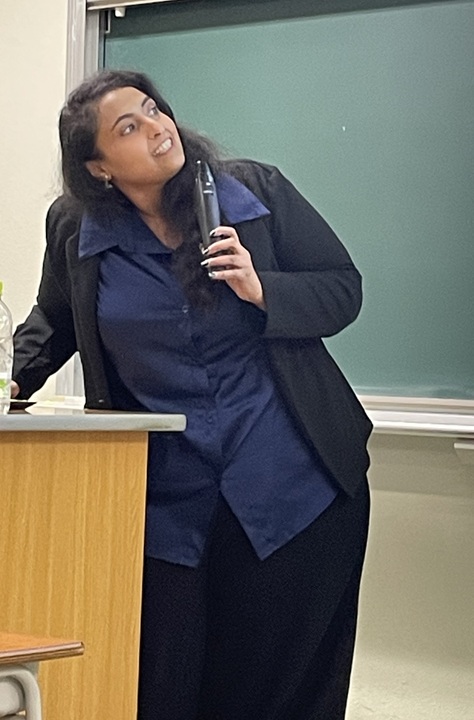
Maryam Alkubati, Research Fellow, JICA Ogata Research Institute, gives a presentation.
Sns share!



事業事前評価表(地球規模課題対応国際科学技術協力(SATREPS)).国際協力機構 地球環境部 . 防災第一チーム. 1.案件名.国 名: フィリピン共和国.
事業事前評価表(地球規模課題対応国際科学技術協力(SATREPS)).国際協力機構 地球環境部 . 防災第一チーム. 1.案件名.国 名: フィリピン共和国.
事業事前評価表(地球規模課題対応国際科学技術協力(SATREPS)).国際協力機構 地球環境部 . 防災第一チーム. 1.案件名.国 名: フィリピン共和国.
事業事前評価表(地球規模課題対応国際科学技術協力(SATREPS)).国際協力機構 地球環境部 . 防災第一チーム. 1.案件名.国 名: フィリピン共和国.
事業事前評価表(地球規模課題対応国際科学技術協力(SATREPS)).国際協力機構 地球環境部 . 防災第一チーム. 1.案件名.国 名: フィリピン共和国.


