

“The History of Migration and Nikkei Roots: Bonds and Culture Seen through Transnational Experiences” Book Launch Seminar
2026.06.08






Updates from JICA Ogata Research Institute on the latest events, publications and more.
RegistrationHow to Find Us


On Jan. 26, 2026, the JICA Ogata Sadako Research Institute for Peace and Development (JICA Ogata Research Institute) held a book launch seminar for “The History of Migration and Nikkei Roots: Bonds and Culture Seen through Transnational Experiences ” (available in Japanese only), the final product of the research project “A Study on the Movement and Networks of Japanese Migrants and Their Descendants Between Japan and Latin America .”
Launched by the JICA Ogata Research Institute in 2021, this research project examines how migration has shaped network formation and diversified identities among the Nikkei (Japanese emigrants and their descendants). By revisiting the historical roots of Nikkei migration, the book explores the reality of Nikkei immigration to South America before and after World War II (WWII), postwar relations between the Nikkei and Japan, their homeland, as well as the transnational networks and identities that emerged as the Nikkei moved between Japan and South America.
Mine Yoichi , Executive Director, JICA Ogata Research Institute, gave opening remarks. He started by saying that Nikkei immigration to South America, which started over 100 years ago, was more than a simple movement of people; it gave rise to bonds and cultures that have been sustained across generations and geographies. Mine noted that the key element of the book lies in its portrayal of Nikkei migration as a continuous experience that transcends national borders, rather than viewing it solely through the conventional perspective of sending/receiving populations. He concluded by expressing his hope that the discussions during the seminar will bridge academic knowledge and JICA’s on-the-ground work to create an opportunity to revisit the values created by migration, from the human security perspective.
Nagamura Yukako, Visiting Fellow, JICA Ogata Research Institute (at the time of the seminar), who was the chief of this project and one of the editors of the book, presented the continuum of the movement of people between Japan and Latin America: i) the migration from Japan to the Americas at the end of the 19th century; ii) the return to Japan from Latin America since the 1980s; and iii) the return to Latin America after living in Japan or the choice to permanently reside in Japan. Nagamura explained that the book aims to capture different trends in Nikkei migration as a history from a big-picture perspective, look at the networks that the Nikkei participated in during different stages of migration, and review their diverse migration experiences, community and identity formation as well as cultural practices. In addition to the outline of the book, Nagamura shared some cases in the book that focus on the experiences of minorities in the history of emigrants from Japan, such as the women who moved to Latin America as “migrant brides,” the small number of emigrants sent out from prefectures like Ishikawa, and Japanese repatriates from overseas after WWII who later migrated to Latin America. She also covered various research methods such as oral history interviews and surveys.

Mine Yoichi, Executive Director, JICA Ogata Research Institute

Nagamura Yukako, Visiting Fellow, JICA Ogata Research Institute (at the time of the seminar), the chief of the research project and one of the editors of the book
Gustavo Meireles , Assistant Professor, Sophia University, who was an editor of this book, noted that migration history and research on migrants living in Japan are often treated as separate fields. He explained that this book repositions them as closely interconnected fields, an innovative approach that enables discussions beyond conventional historical and geographical frameworks. Araragi Shinzo , Visiting Professor, International Research Center for Japanese Studies, another editor of the book, started by asking the audience why he, a researcher on Japanese repatriates, had joined this project. As an answer to this question, he gave an example of the continuum of movement experienced by repatriates: after WWII, those who had lived in former Manchuria first returned to Japan, later moved to South America, and eventually moved back to Japan. Araragi emphasized that this trajectory captures precisely the perspective he sought to present in the book—one that integrates studies of migration, repatriation, and colonial history.
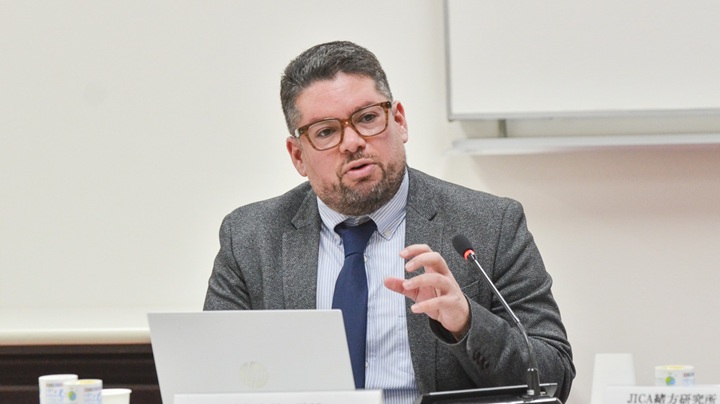
Gustavo Meireles, Assistant Professor, Sophia University, an editor of the book

Araragi Shinzo, Visiting Professor, International Research Center for Japanese Studies, an editor of the book
In the next session, to discuss a wide range of topics, four commentators made comments and the editors responded to them.
Minamikawa Fuminori , Professor, Graduate School of Global Studies, Doshisha University, studies immigrants and ethnic minorities in the United States. He commented that the book is interesting from a sociological perspective, because it has a strong focus on migration itself: previous studies on migration surprisingly did not pay attention to mobilities enough, tending to focus not on migration itself but more on the generations that came after those who migrated or stuck to fixed-point observation from emigrant-sending countries. He positively noted that this book, however, vividly describes the complex migration cycle between Japan and Latin America, seen in diverse and multi-layered Nikkei communities. Minamikawa then asked some questions on how the “immobility” of Nikkei communities, consisting of a majority who will not or cannot move, should be viewed, as well as how Nikkei communities should be perceived in a time when global dynamics around Japan are changing.
Ohara Manabu, a JICA Senior Advisor (and former Director General, Latin America and the Caribbean Department, JICA), shared how Nikkei networks, as well as overseas migration projects and projects for Nikkei community collaboration by JICA, have changed over the years. He explained that projects to send emigrants by JICA’s predecessor organization, which started as solutions to address post-WWII population issues in Japan, developed into projects to assist those who emigrated and the Nikkei. Today these projects facilitate the sustainable development of Nikkei communities. Ohara further added that Nikkei communities have evolved into partners for co-creation in development cooperation and collaboration with them is being strengthened. There are also efforts aiming to solve Japanese domestic issues through collaboration with Nikkei communities. He shared a Nikkei network collaboration project in Bolivia that leverages networks with Okinawa and then asked how Nikkei networks and the study that produced the book can lead to future JICA projects.
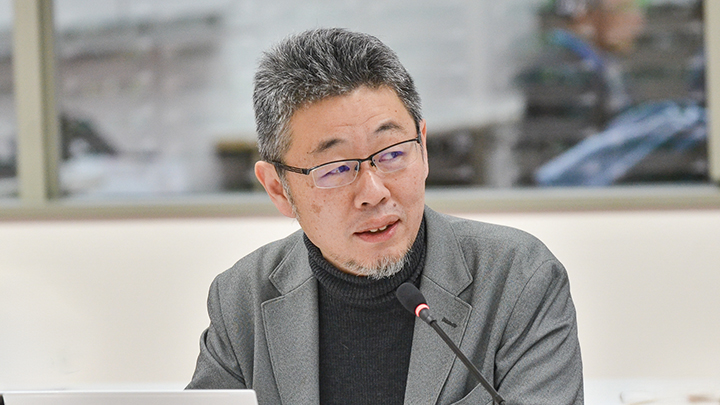
Minamikawa Fuminori, Professor, Graduate School of Global Studies, Doshisha University

Ohara Manabu, JICA Senior Advisor
Koyasu Akiko , Professor, Sophia University, who studies Brazilian diplomatic history, started by noting that “bonds” and “networks” are the keywords throughout the book. She then commented that this book is significant as it teaches us that the history shaped by Japanese migration and the changes caused by migration both to and from Japan have multiple layers and facets. Showing where Nikkei communities are positioned in diplomacy between Japan and Latin American countries today, she asked how the study findings may be leveraged in Japanese diplomatic policies, given Japan’s recent great diplomatic priority on Nikkei communities in countries like Brazil. Koyasu finally pointed out the importance of having younger generations think about the time when Japanese people were migrating globally, as there are many students at Japanese universities who have Nikkei roots.
Nakayama Taisho , Associate Professor, Graduate School of Economics and Business, Hokkaido University, studies people living in areas near national borders, such as Japanese citizens left on Sakhalin. Nakayama explained the significance of humanities and social sciences in a divided era like today. Based on the recognition that our life is a continuation of the modern period, he commented that the value of the book lies in how it practically provided narrative of the modern period that has direct relevance today. He particularly positively regarded the book’s focus on the initiative of migrants. Nakayama then made some critical comments, noting the book mostly only features successful cases. He also brought up a new perspective: if members of Nikkei communities themselves produced a similar book as part of future studies on migration, what would it look like?
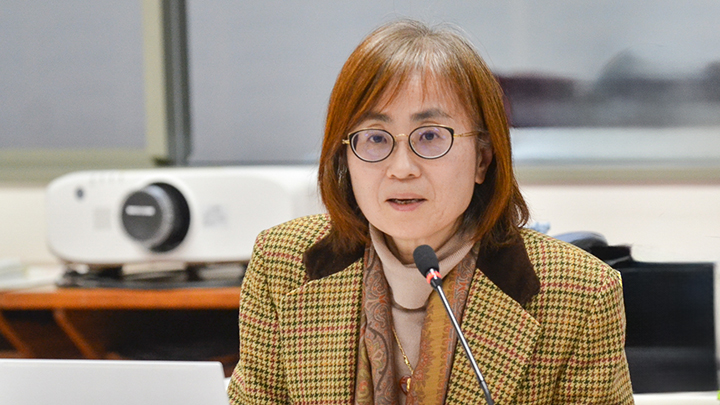
Koyasu Akiko, Professor, Sophia University

Nakayama Taisho, Associate Professor, Graduate School of Economics and Business, Hokkaido University
The editors responded to these comments and questions. Nagamura responded by saying that the history of migration is not limited to the experiences of the migrants. For further discussion, she would like to further visualize those around migrants and their involvement in Nikkei communities and networks. She added that although JICA has historically maintained strong bonds with Japanese emigrants, we need to reconsider how to maintain these bonds. This is because Nikkei communities undergo generational changes while the interests of Japanese society also evolve.
Meireles also noted that we need to consider generational changes and the increasing variety of life courses, emphasizing that various factors are intertwined in the study of Nikkei communities. He added that we need to be aware that concepts like identity and community are also not fixed but changeable practices. Furthermore, considering the relevance of migration studies with today’s Japanese society, Meireles commented that migration studies should be seen as a future-oriented area that spotlights challenges like declining birth rate, aging population and the struggle with cultural pluralism that Japanese society faces today.
Araragi pointed out the limits of the methodology of oral history against the backdrop of the increase in “overcoming” stories in recent migration studies. He noted that when people look back on their own lives, they often want to say that although life was tough in the past, things are good now, meaning that their lives have not been wasted. Araragi stressed that we need to be aware that there are people who live while hiding or suppressing their past behind narratives of overcoming hardships.
After a Q&A session with the audience, Akutsu Kentaro , Executive Senior Research Fellow, JICA Ogata Research Institute, gave closing remarks. Akutsu remarked that because there were comments from multiple perspectives—from sociology, political science and history to practical work at JICA—he was able to feel for real the depth of the topics that this book covers. He then reflected that this book describes people’s movement as an experience continuum across national borders instead of revisiting it from the sole perspective of sending/receiving populations. Akutsu closed by commenting that not only does this book look back on history it also provides many great suggestions in considering future bonds between Japan and Latin American Nikkei communities.
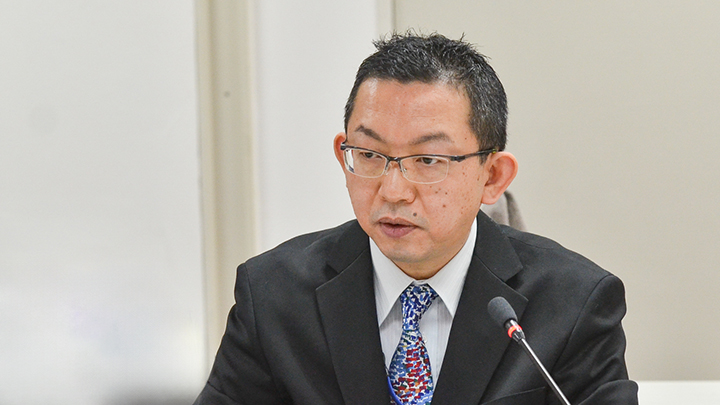
Akutsu Kentaro, Executive Senior Research Fellow, JICA Ogata Research Institute
For further information on JICA’s overseas migration projects visit the link below:
Sns share!



事業事前評価表(地球規模課題対応国際科学技術協力(SATREPS)).国際協力機構 地球環境部 . 防災第一チーム. 1.案件名.国 名: フィリピン共和国.
事業事前評価表(地球規模課題対応国際科学技術協力(SATREPS)).国際協力機構 地球環境部 . 防災第一チーム. 1.案件名.国 名: フィリピン共和国.
事業事前評価表(地球規模課題対応国際科学技術協力(SATREPS)).国際協力機構 地球環境部 . 防災第一チーム. 1.案件名.国 名: フィリピン共和国.
事業事前評価表(地球規模課題対応国際科学技術協力(SATREPS)).国際協力機構 地球環境部 . 防災第一チーム. 1.案件名.国 名: フィリピン共和国.
事業事前評価表(地球規模課題対応国際科学技術協力(SATREPS)).国際協力機構 地球環境部 . 防災第一チーム. 1.案件名.国 名: フィリピン共和国.


