

Research Presentations by the JICA Ogata Research Institute at the 27th JASID Spring Conference (Part 2: Roundtables)
2026.08.17






Updates from JICA Ogata Research Institute on the latest events, publications and more.
RegistrationHow to Find Us


On June 27, 2026, researchers from the JICA Ogata Sadako Research Institute for Peace and Development (JICA Ogata Research Institute) presented their latest research at the 27th Spring Conference of the Japan Society for International Development (JASID) , held at Meiji Gakuin University. JICA Ogata Research Institute organized roundtable sessions on topics including knowledge co-creation with emerging development partners, empirical research on ODA reputation, and infrastructure development and impact evaluation.
Click here to read a summary of the general oral presentation sessions at the conference.
The Study Group on Knowledge Co-Creation with Emerging Countries organized a roundtable to share its findings and to foster broader dialogue.
At the beginning, Director General Kamei Haruko explained that the purpose of the study group was to explore ways to build equal partnerships with emerging development partners and to promote mutual learning in response to significant changes in the development cooperation landscape.
Executive Senior Research Fellow Akutsu Kentaro highlighted the growing importance of South-South cooperation led by emerging development partners and emphasized the need for an inclusive global development architecture, an overall structure of development cooperation, that is non-binding, voluntary, and respectful of diversity.
Narumi Yukino of Tsuda University analyzed practices of knowledge circulation in Latin America and introduced “circular cooperation” as a lens for understanding knowledge co-creation, through which knowledge and experience are shared, adapted, and applied among diverse actors. She also presented implications for JICA’s future efforts.
Senior Research Fellow Endo Kei , also Senior Representative of the JICA Nepal Office, provided a comprehensive overview of the current state, aid philosophies, and challenges facing emerging development partners such as Indonesia and Thailand. He also discussed how Japan could further promote collaboration with these partners.
In response to these presentations, Professor Kondoh Hisahiro of Saitama University noted that knowledge co-creation may not necessarily be applicable to all emerging development partners. At the same time, he commented that Japan, having transitioned from an aid recipient to an aid donor and being a member of the Organisation for Economic Co-operation and Development (OECD) Development Assistance Committee (DAC), is well positioned to serve as a bridge connecting countries with different development experiences.
Visiting Fellow Sato Jin , who is also a professor at the University of Tokyo, identified several important areas for future research, including domestic support for ODA within emerging economies, perspectives from aid-recipient countries, administrative constraints and professional capacity development within aid agencies, and the sharing of lessons from the negative aspects of development experiences.
During the discussion, participants examined topics such as the growing importance of financing and policy frameworks outside traditional ODA mechanisms—including central bank deposits and currency swap arrangements—the balance between donors' priorities and local priorities, and the coordination burden placed on partner countries by the increasing diversity of donors.
In closing, Senior Research Advisor Ohno Izumi , who is professor emeritus at the National Graduate Institute for Policy Studies, emphasized the importance of reassessing Japan’s position within an increasingly diversified global development architecture and fostering the exchange of lessons learned from both successes and failures through continuous engagement between theory and practice.
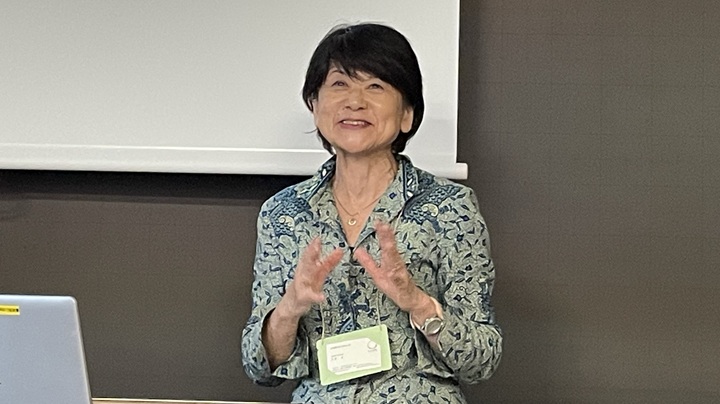
Senior Research Advisor Ohno Izumi

Professor Kondoh Hisahiro of Saitama University
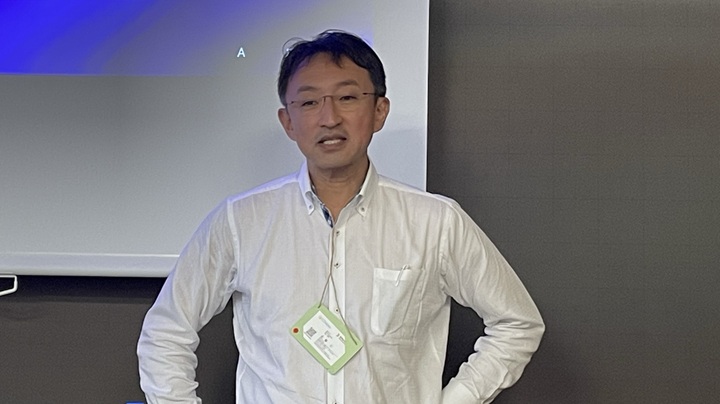
Visiting Fellow Sato Jin
Research Fellow Nagatsuji Takashi
organized a roundtable on the JICA Ogata Research Institute’s research project, “Empirical Analysis of ODA Reputation: Capturing the Effects of ODA on Trust Building
.”
First, Principal Research Fellow Orita Tomomi , the project leader, introduced the overall framework of the research. Nagatsuji then presented his findings on the relationship between public understanding and perceptions of ODA based on preliminary results from the online surveys.
Next, Professor Sakamoto Takuto of the University of Tokyo introduced a pilot study on measuring the reputation of development cooperation through news media analysis. Finally, Nagatsuji and Suzuki Junpei, Lecturer at Komazawa University, presented their findings from an online survey experiment examining the relationship between ODA disbursement levels and public support for political administrations. The roundtable also highlighted findings on how public understanding of ODA affects public attitudes, as well as the relationships between changes in ODA amount and approval ratings.
As discussants, Murotani Ryutaro, Deputy Director General at JICA’s Operations Strategy Department, and Research Fellow Oishi Koji provided comments from their respective areas of expertise. Their comments addressed topics such as the importance of identifying mechanisms through which ODA contributes to reputation-building, the validity of comparing evaluations from recipient countries with those from other donors, and the interpretations of the scales used to measure sentiments and perceptions.
The session concluded with an active exchange of views among approximately 60 participants attending both in person and online.
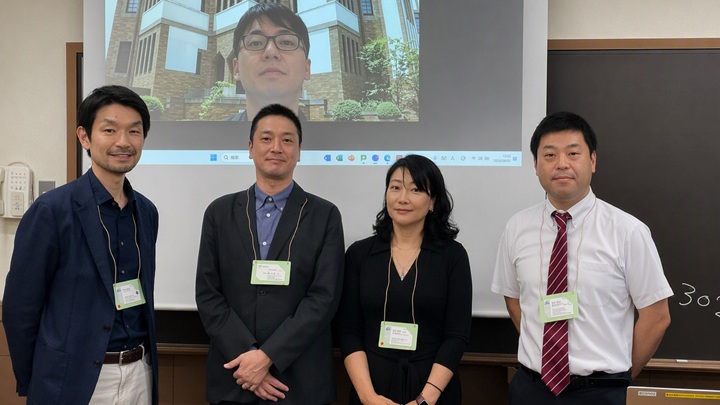
On screen: Suzuki Junpei, Lecturer at Komazawa University. From left: Murotani Ryutaro, Deputy Director General at JICA’s Operations Strategy Department; Sakamoto Takuto, Professor at the University of Tokyo; Principal Research Fellow Orita Tomomi; and Research Fellow Nagatsuji Takashi. (Titles are as of the time of the event.)
Moderated by Professor Tokunaga Tatsumi of Takushoku University, the roundtable explored how the impacts of infrastructure development should be evaluated and how evaluation findings can be fed back into project design and policymaking in an increasingly complex development landscape.
Senior Research Fellow Yamada Eiji reviewed recent trends in impact evaluation research in the transport infrastructure sector. He then presented the results of a comparative analysis using natural language processing and machine learning techniques, examining 842 ex-ante evaluation reports for JICA transport-sector projects and 487 studies archived in the international impact evaluation database maintained by the International Initiative for Impact Evaluation (3ie).
The analysis showed that, although practitioners and researchers often differ in terms of focus and vocabulary, many projects and academic studies share common objectives and intervention approaches. The study also quantitatively identified areas where research is abundant but relatively few JICA projects have been implemented, as well as areas where the reverse is true. Yamada discussed how existing evidence could be more effectively utilized in project formulation in the former areas, while development projects themselves could generate valuable new evidence in the latter.
Executive Senior Research Fellow Negishi Seiichi served as a discussant for the roundtable. Commenting on a presentation by Tokuori Tomomi, Senior Advisor for JICA, on the impact of regional integration processes on the development of physical and institutional connectivity, Negishi discussed new perspectives on non-tariff barriers in light of geopolitical tensions and responses to pandemics. He also explored approaches to development cooperation based on the distinct patterns of development observed in the Northern Corridor of the East African Community and the Southern Economic Corridor of the Greater Mekong Subregion. In addition, responding to a presentation by Associate Professor Takeda Shinichi of Takushoku University on the conditions necessary for sustainable Labour-Based Technology (LBT) infrastructure development, Negishi referred to forms of community participation highlighted in JICA’s Handbook for Utilization of Regional Revitalization Resources published in 2017. Drawing on examples from the mechanisms of Japan’s wide-area cooperatives and JICA-supported initiatives in Honduras, he discussed desirable approaches to sustainable community-based infrastructure development, including the maintenance of technical capacity.
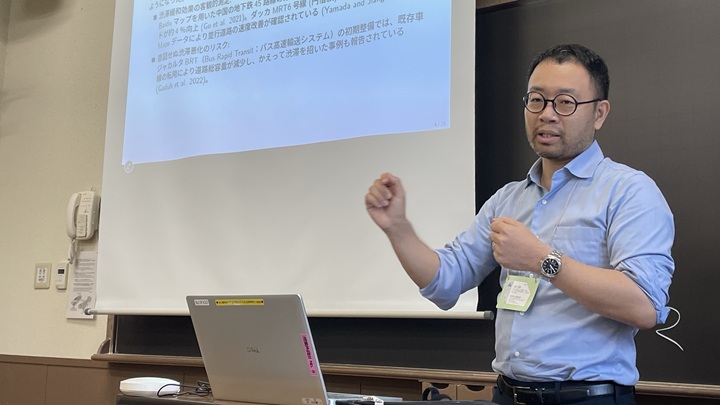
Senior Research Fellow Yamada Eiji
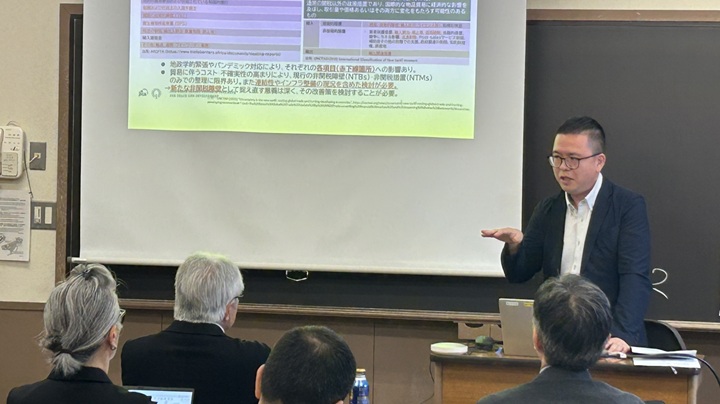
Executive Senior Research Fellow Negishi Seiichi
Sns share!



事業事前評価表(地球規模課題対応国際科学技術協力(SATREPS)).国際協力機構 地球環境部 . 防災第一チーム. 1.案件名.国 名: フィリピン共和国.
事業事前評価表(地球規模課題対応国際科学技術協力(SATREPS)).国際協力機構 地球環境部 . 防災第一チーム. 1.案件名.国 名: フィリピン共和国.
事業事前評価表(地球規模課題対応国際科学技術協力(SATREPS)).国際協力機構 地球環境部 . 防災第一チーム. 1.案件名.国 名: フィリピン共和国.
事業事前評価表(地球規模課題対応国際科学技術協力(SATREPS)).国際協力機構 地球環境部 . 防災第一チーム. 1.案件名.国 名: フィリピン共和国.
事業事前評価表(地球規模課題対応国際科学技術協力(SATREPS)).国際協力機構 地球環境部 . 防災第一チーム. 1.案件名.国 名: フィリピン共和国.


