

Knowledge Forum Explores New Forms of Cooperation with Emerging Development Partners: From Knowledge Sharing to Knowledge Co-Creation
2026.08.06





Updates from JICA Ogata Research Institute on the latest events, publications and more.
RegistrationHow to Find Us


On July 1, 2026, the JICA Ogata Sadako Research Institute for Peace and Development (JICA Ogata Research Institute) hosted a Knowledge Forum titled “Exploring New Forms of Cooperation with Emerging Development Partners: From Knowledge Sharing to Knowledge Co-Creation.” The forum marked the conclusion of the research project “Knowledge Co-creation With Emerging Countries,” examining the opportunities and challenges of working with emerging development partners across Southeast Asia, the Middle East, Latin America, and Africa. These partners are increasingly engaging in development cooperation at regional and inter-regional levels. Its findings have been published in the accompanying policy note , which served the basis for much of the panel discussion.
Kamei Haruko, Director General of the JICA Ogata Research Institute, delivered the opening remarks. She highlighted the growing importance of cooperation with emerging development partners in an increasingly complex global landscape marked by geopolitical tensions and declining ODA from traditional donors. Emphasizing that development is a mutual learning process, she argued that conventional one-way knowledge sharing is no longer sufficient to address increasingly complex development challenges and called instead for knowledge co-creation, in which diverse actors learn from one another through mutual, horizontal relationships.
Kamei’s opening remarks were followed by a panel session moderated by Ohno Izumi, Professor Emeritus at the National Graduate Institute for Policy Studies. To open the discussion, Ohno invited the panelists to identify the key enablers and barriers to promoting knowledge co-creation between traditional and emerging development partners. She also asked them to reflect on how triangular cooperation could facilitate knowledge co-creation beyond knowledge sharing.
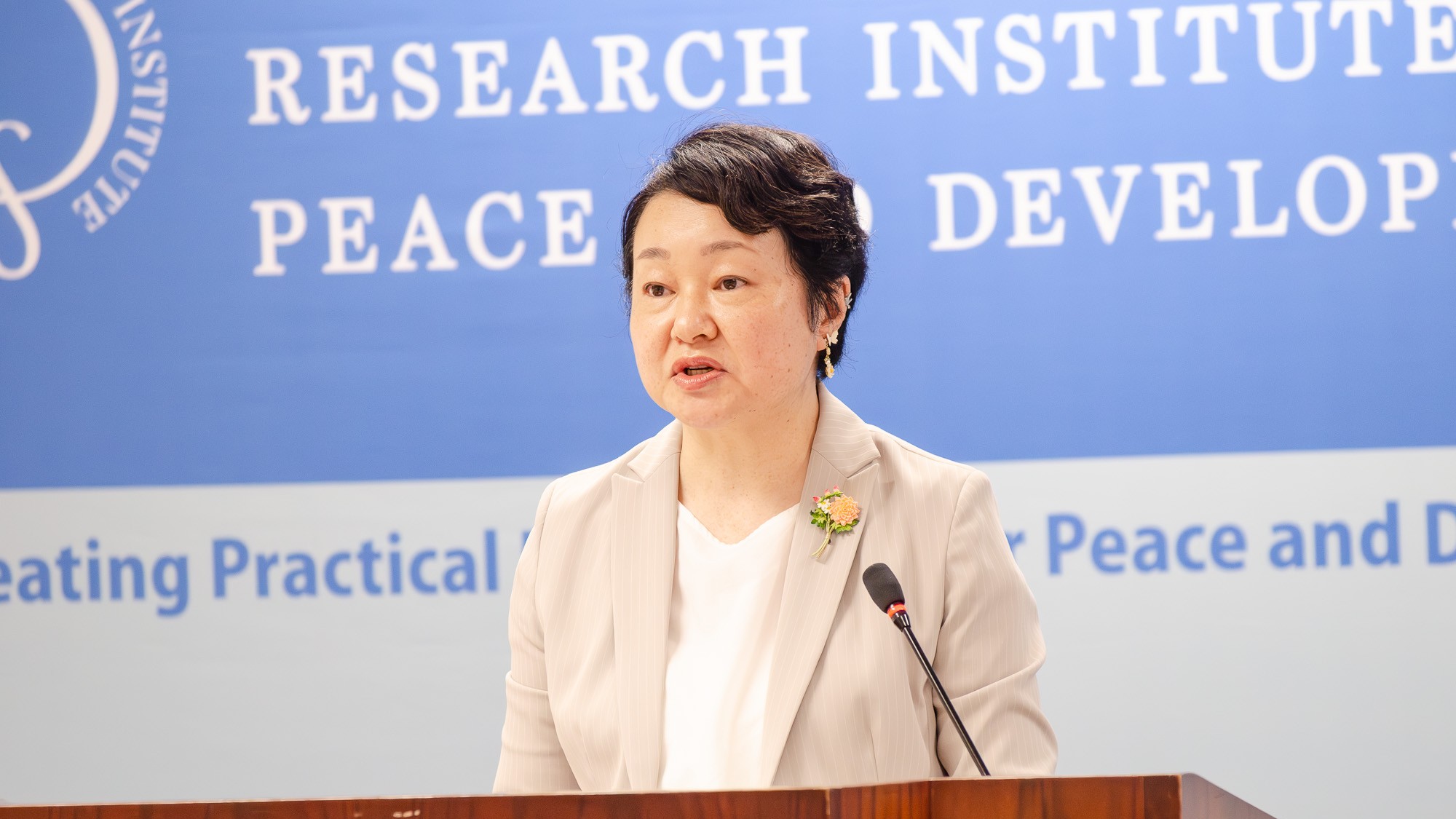
Kamei Haruko, Director General of the JICA Ogata Research Institute
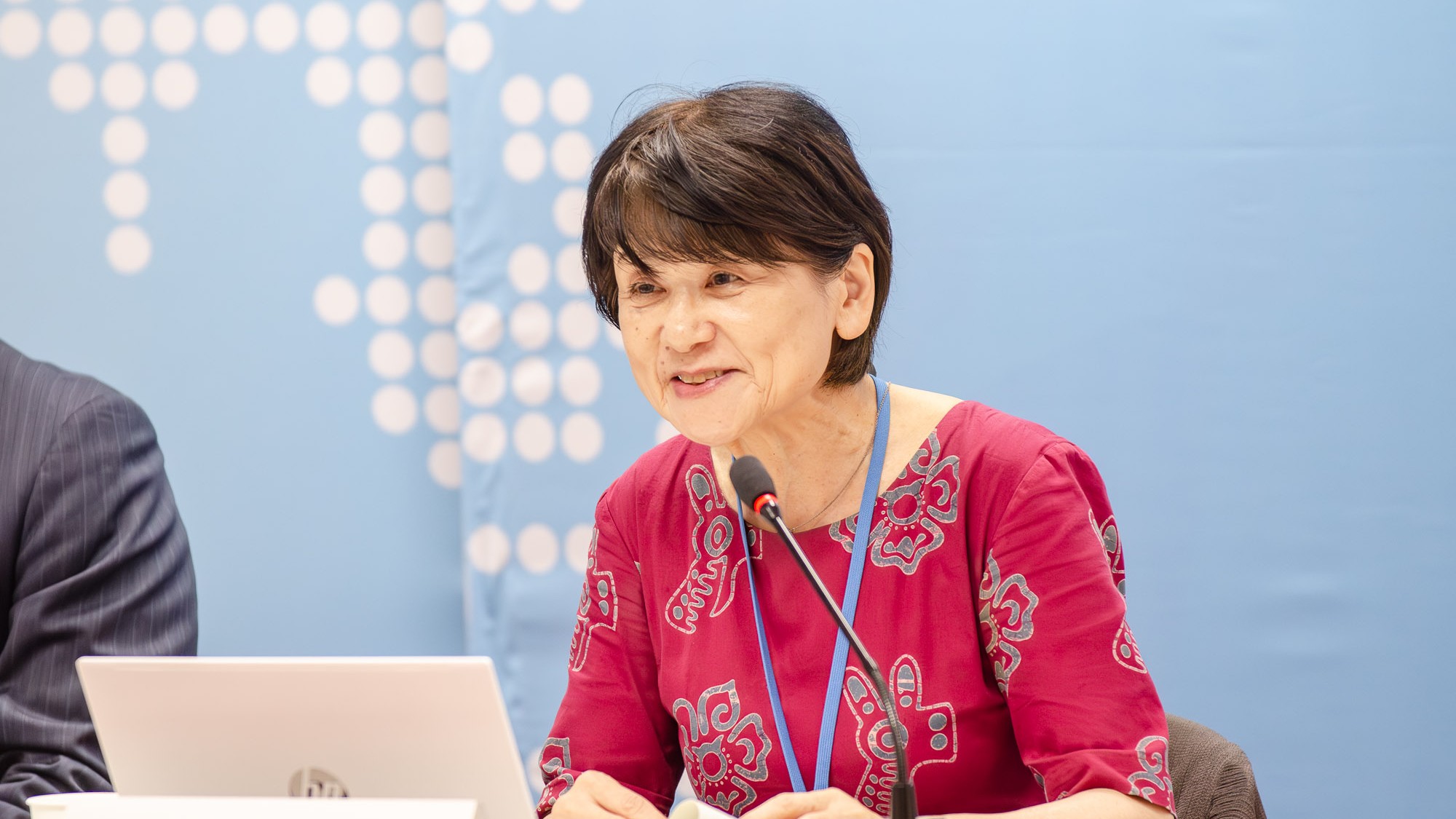
Ohno Izumi, Professor Emeritus at the National Graduate Institute for Policy Studies
Siriporn Wajjwalku, Professor in the Faculty of Political Science at Thammasat University, who joined remotely from Thailand, argued that development is ultimately “a local matter” and that knowledge co-creation should contribute to local development in recipient countries. She identified two barriers to collaboration: technical differences between traditional donors and emerging providers, and a wider trust deficit. Rather than viewing one approach as better than another, she argued that differences should be recognized, understood, and respected, suggesting that the policy note should explicitly emphasize respect for diversity as the foundation for trust. She also supported the policy note’s emphasis on strengthening human resource capacity and expanding collaboration through digital platforms such as podcasts and videos.
Yonezaki Norio, Advisor for the Triangular Cooperation Unit in JICA’s Latin America and the Caribbean Department and Chief Advisor for JICA’s Japan-Mexico Partnership Program Project, welcomed the policy note but argued that greater attention should be given to outcomes and impact. Knowledge co-creation, he argued, should focus not only on producing knowledge, but on how it is implemented and contributes to social outcomes. Drawing on Latin America’s extensive experience with South-South and triangular cooperation, he proposed treating co-created knowledge as a regional or global public good and called for stronger evaluation to demonstrate value and effectiveness.
Sato Jin, Director and Professor at the Institute for Advanced Studies on Asia, The University of Tokyo, questioned what “mutual and equal learning” should mean in practice. He identified trust-based political relationships as the fundamental enabler of knowledge co-creation, arguing that framing learning around countries’ documented development experiences would naturally favor Japan’s leadership, making genuinely equal learning difficult. Instead, he proposed jointly identifying new development challenges and exploring what is not yet known.
Jungwook Kim, Executive Director of the Center for International Development at the Korea Development Institute, who joined the forum online, argued that effective knowledge co-creation depends on selecting the right partners, agreeing on shared priorities, and establishing effective vehicles for collaboration. He emphasized that these processes require resources, knowledge and political leadership, and consensus-building to translate co-created knowledge into practical outcomes. He concluded that these elements should be made more explicit in future versions of the policy note.

Siriporn Wajjwalku, Professor in the Faculty of Political Science at Thammasat University
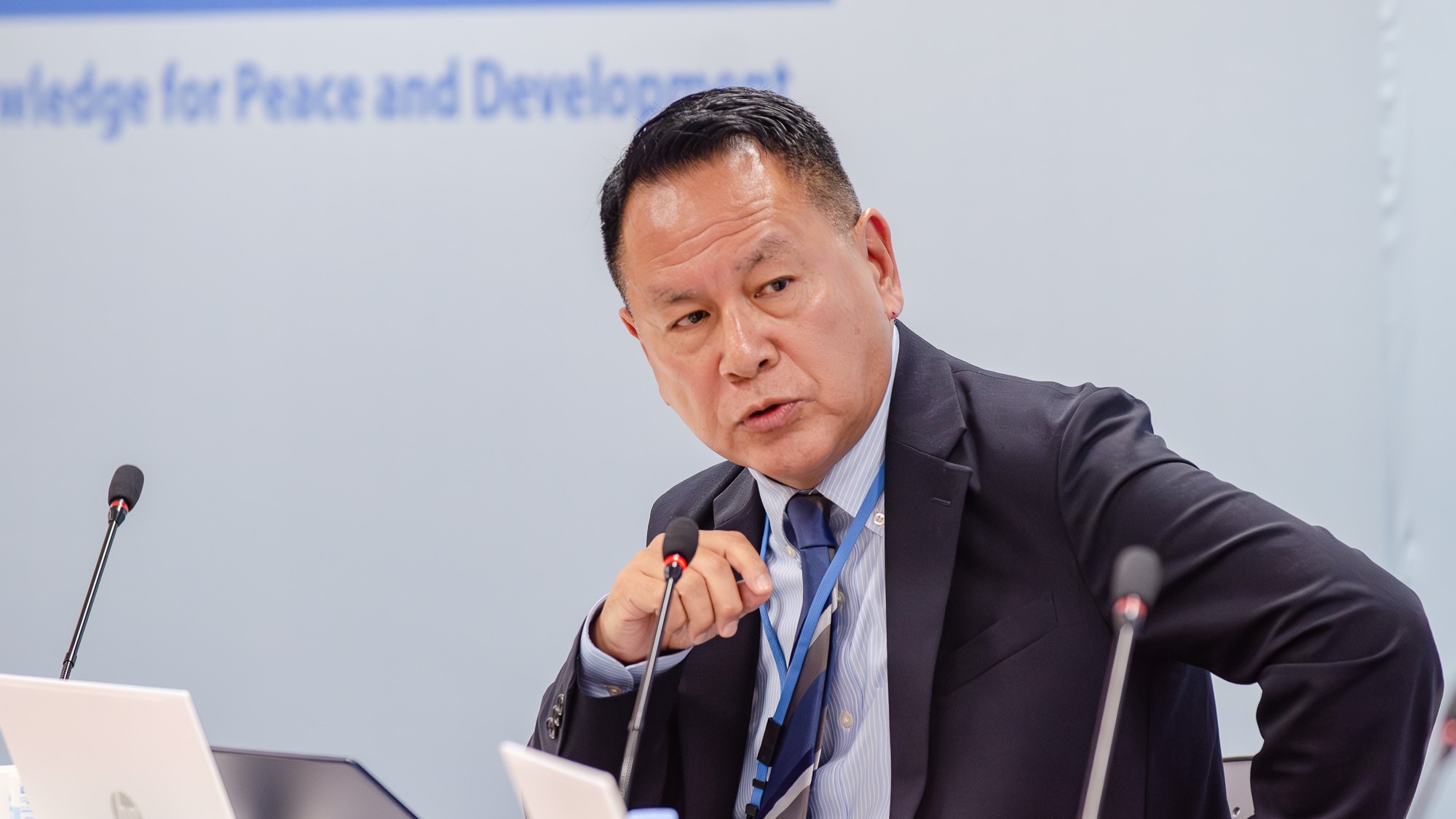
Yonezaki Norio, Advisor for the Triangular Cooperation Unit in the Latin America and the Caribbean Department, JICA
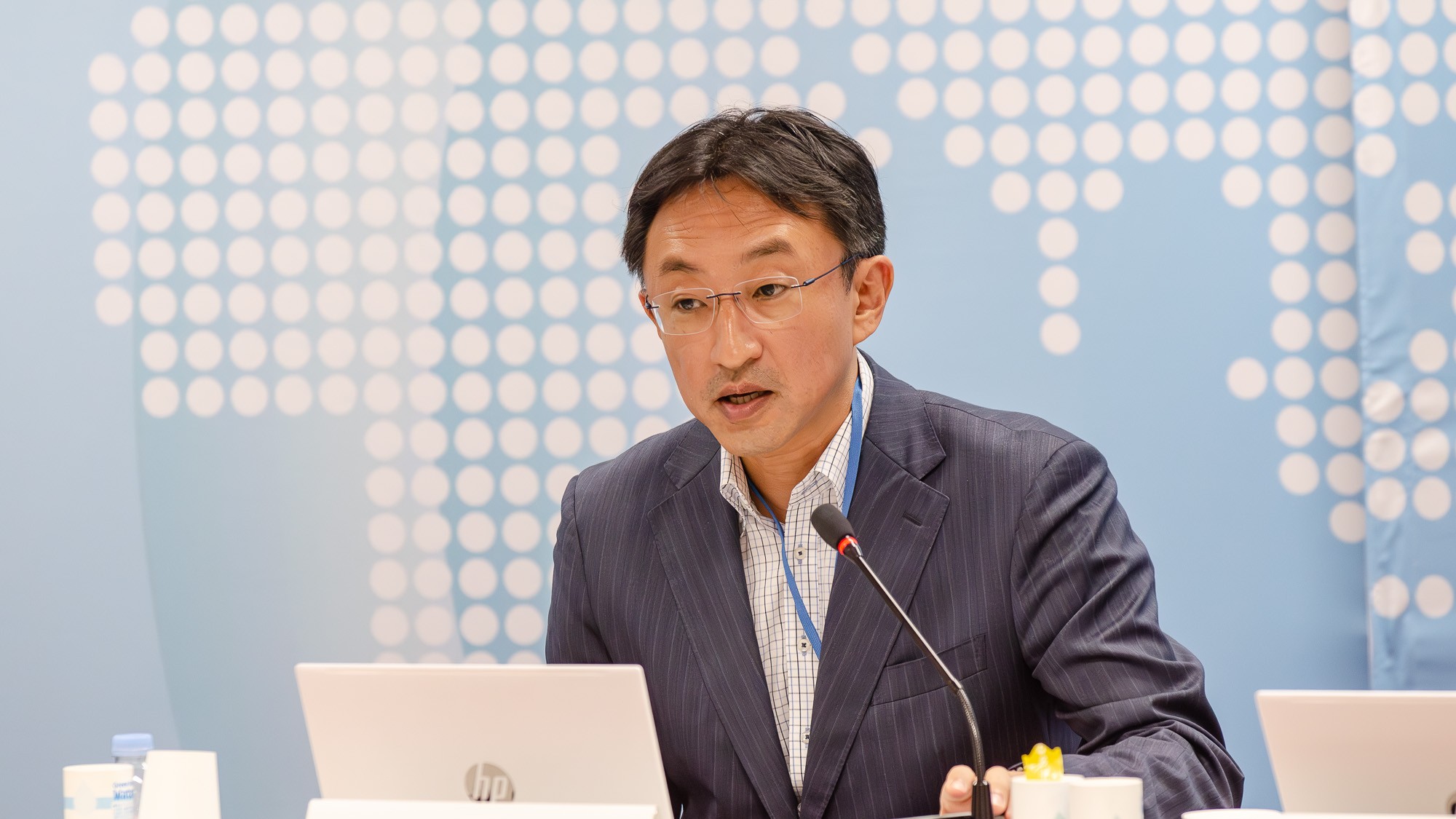
Sato Jin, Director and Professor at the Institute for Advanced Studies on Asia at The University of Tokyo
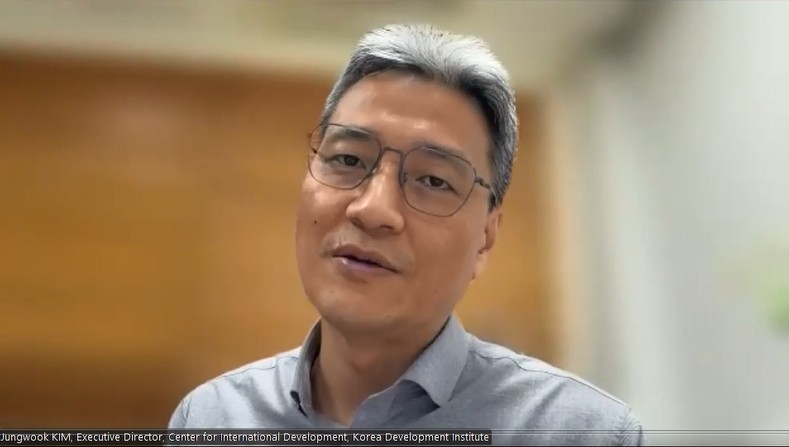
Jungwook Kim, Executive Director of the Center for International Development at the Korea Development Institute
Turning from principles to practice, Ohno invited the panelists to reflect on lessons from their experiences with knowledge co-creation and triangular cooperation.
Wajjwalku, drawing on case studies of triangular cooperation involving Japan, Thailand and ASEAN, argued that consultation is essential for building trust, strengthening ownership, and ensuring that knowledge is adapted to recipient-country contexts. She also highlighted the contribution of triangular cooperation to regional integration and suggested that its strengths, including the development of regional standards, should be further promoted.
From the Latin American perspective, Yonezaki described the evolution from traditional triangular cooperation to “circular cooperation,” in which countries can act as providers, recipients or facilitators depending on the context. He also argued that Japan should increasingly see itself as a learner, drawing on partner countries’ expertise in areas such as peacebuilding and population aging.
Sato argued that development cooperation should learn not only from successful experiences but also from failures. He highlighted Japan’s comparative advantage in “pre-emptive development,” which seeks to prevent problems before they escalate while learning from partners’ experience in responding to crises.
Kim concluded by emphasizing the need to address knowledge gaps through implementation, context-sensitive evaluation, and adapting knowledge partnerships to emerging challenges, suggesting that AI could help strengthen future evaluation methods.
The forum concluded with a discussion on the future of development cooperation, knowledge co-creation, and the evolving role of emerging development partners. Across the discussions, panelists emphasized the importance of trust, mutual respect, and long-term partnerships as the foundations for effective cooperation. They also highlighted the need to strengthen institutional capacity, foster mutual learning, and create platforms that enable emerging development partners and traditional donors to contribute their knowledge and experience on an equal footing.
Click the link below to watch the video recordings of the forum (YouTube).
Knowledge Co-creation With Emerging Countries
Sns share!



事業事前評価表(地球規模課題対応国際科学技術協力(SATREPS)).国際協力機構 地球環境部 . 防災第一チーム. 1.案件名.国 名: フィリピン共和国.
事業事前評価表(地球規模課題対応国際科学技術協力(SATREPS)).国際協力機構 地球環境部 . 防災第一チーム. 1.案件名.国 名: フィリピン共和国.
事業事前評価表(地球規模課題対応国際科学技術協力(SATREPS)).国際協力機構 地球環境部 . 防災第一チーム. 1.案件名.国 名: フィリピン共和国.
事業事前評価表(地球規模課題対応国際科学技術協力(SATREPS)).国際協力機構 地球環境部 . 防災第一チーム. 1.案件名.国 名: フィリピン共和国.
事業事前評価表(地球規模課題対応国際科学技術協力(SATREPS)).国際協力機構 地球環境部 . 防災第一チーム. 1.案件名.国 名: フィリピン共和国.


