

How Should Sustainable Development Progress Be Measured Beyond 2030? Post-2030 Indicator Framework Discussed with SDG Monitoring Practitioners from Nine Countries
2026.09.02






Updates from JICA Ogata Research Institute on the latest events, publications and more.
RegistrationHow to Find Us


As the target year 2030 for achieving the Sustainable Development Goals (SDGs) approaches, an important policy question for the international community is not only what goals and targets should succeed the SDGs, but also how progress toward sustainable development should be measured. Against this backdrop, on Aug. 6, 2026, Sato Ichiro , Executive Senior Research Fellow at the JICA Ogata Sadako Research Institute for Peace and Development (JICA Ogata Research Institute), delivered a lecture as part of the Knowledge Co-Creation Program, “Theory and Practices in Official Statistics for Monitoring Sustainable Development Goals (SDGs).” The program is implemented by JICA Tokyo in cooperation with the Statistical Institute for Asia and the Pacific (SIAP) .
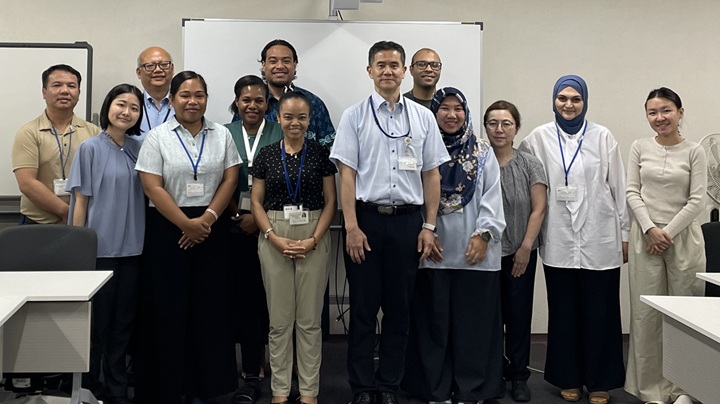
Sato Ichiro (center), Executive Senior Research Fellow at the JICA Ogata Research Institute, with participants from nine countries.
In the lecture, Sato introduced the JICA Ogata Research Institute research project, “Study on the Indicator Framework for Post-2030 International Development Goals ”. After reviewing the strengths and challenges of the current SDG indicator framework , Sato discussed how an indicator framework could be designed to monitor progress under the sustainable development agenda beyond 2030. Sato also presented approaches to narrowing down the number of indicators and insights from case studies on the use of local indicators in Japan and Indonesia .
The participants were practitioners engaged in SDG monitoring at national statistical offices and government agencies in Azerbaijan, Cambodia, Egypt, Kiribati, Lao PDR, Madagascar, Malaysia, Papua New Guinea, and Tonga. During the question-and-answer and discussion session, the participants raised numerous questions and comments on the challenges of the current SDG indicator framework, possible directions for post-2030 indicators, and challenges in producing official statistics in their respective countries.
The discussion continued for more than 30 minutes beyond the scheduled time, demonstrating that the design of the post-2030 indicator frameworks is a topic of great interest to statistical practitioners across countries. The exchange further reaffirmed that the current SDG indicator framework is highly complex and difficult for practitioners to fully grasp in its entirety. At the same time, participants highlighted the strong demand not only for globally standardized indicators but also for locally relevant indicators that better reflect national and regional contexts.
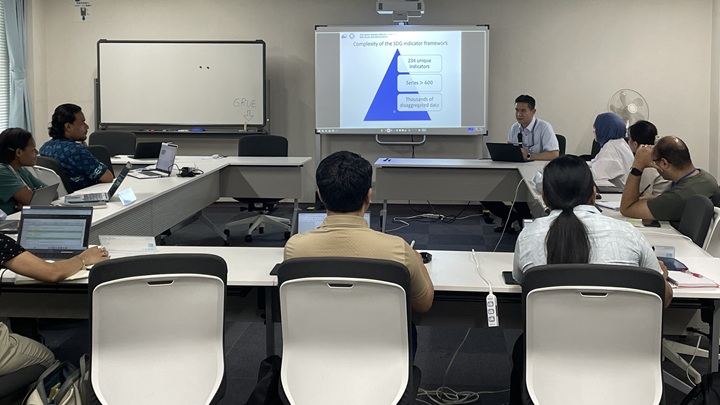
Participants engaged in SDG monitoring raised a range of questions during the discussion.
Sns share!



事業事前評価表(地球規模課題対応国際科学技術協力(SATREPS)).国際協力機構 地球環境部 . 防災第一チーム. 1.案件名.国 名: フィリピン共和国.
事業事前評価表(地球規模課題対応国際科学技術協力(SATREPS)).国際協力機構 地球環境部 . 防災第一チーム. 1.案件名.国 名: フィリピン共和国.
事業事前評価表(地球規模課題対応国際科学技術協力(SATREPS)).国際協力機構 地球環境部 . 防災第一チーム. 1.案件名.国 名: フィリピン共和国.
事業事前評価表(地球規模課題対応国際科学技術協力(SATREPS)).国際協力機構 地球環境部 . 防災第一チーム. 1.案件名.国 名: フィリピン共和国.
事業事前評価表(地球規模課題対応国際科学技術協力(SATREPS)).国際協力機構 地球環境部 . 防災第一チーム. 1.案件名.国 名: フィリピン共和国.


