

Interview with Professor Kawasaki Akiyuki: Pre-disaster Investment for Flood Protection Can Reduce Poverty and Inequality
2026.09.14






Updates from JICA Ogata Research Institute on the latest events, publications and more.
RegistrationHow to Find Us


Professor Kawasaki Akiyuki of the Institute for Future Initiatives at the University of Tokyo has long studied the links between water-related disasters and the expansion of poverty and inequality in developing countries. He contributed the research essay “Measuring the Impact of Water-Related Disasters on Poverty and Inequality, and Evaluating Climate Adaptation Policies to Strengthen Societal Resilience” to the third issue of Human Security Today, the flagship report series of the JICA Ogata Sadako Research Institute for Peace and Development (JICA Ogata Research Institute), titled “Measuring Human Security ”.
In this interview, Otsuka Takahiro , Senior Research Fellow at the JICA Ogata Research Institute, speaks with Professor Kawasaki about the relationship between water-related disasters and poverty from a human security perspective, and how their impacts can be measured.
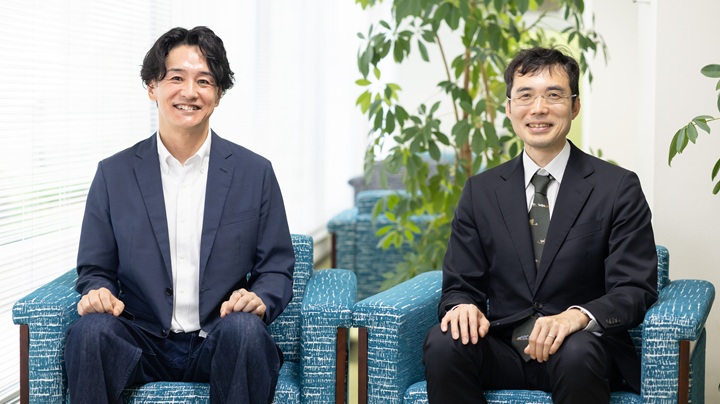
Otsuka: Thank you for contributing your essay to our flagship report. How does your research on disaster risk reduction, poverty, and inequality relate to human security?
Kawasaki: To be honest, I had never thought about disaster risk reduction and development from the perspective of human security. It was only after being invited to contribute to this publication that I realized my research was closely connected to the concept. One of the core principles of human security is “freedom from fear”—the ability to live without threats to one’s life and livelihood. Viewed from this human security perspective, natural disasters are clearly among the major threats to human security. The impacts of floods, however, are not evenly distributed. Vulnerable populations with limited assets and social capital, particularly low-income households, tend to suffer disproportionately. Once floods undermine people’s livelihoods, the effects can persist for years, affecting income, education, and health. Recovery often takes a long time. In developing countries, where infrastructure and social systems are often inadequate, floods can become a major factor in perpetuating poverty and widening inequality.
Otsuka: You have conducted research in flood-prone areas across Asia and Africa. How do local people perceive these threats?
Kawasaki: People experience and perceive these threats in many different ways. Among low-income households, it is common to see families living along rivers or coastlines in fragile houses made from bamboo, straw, or other simple materials. For example, in low-lying floodplains downstream of continental major rivers, flooding can occur even when there has been no local rainfall for several days, because heavy rain upstream days or even weeks earlier eventually flows downstream. In areas without electricity or functioning early warning systems, people sometimes wake up in the middle of the night to find floodwaters already reaching their homes. As a result, during the rainy season many people live with constant anxiety, wondering when the next flood will strike.
Even after floodwaters recede, removing large volumes of deposited sediment can take a long time. In addition to concerns about sanitation, some residents worry about snakes and other wild animals being washed into their homes by the floodwater and debris. For daily wage laborers, floods can mean days or weeks without work and therefore without income. For people with little or no savings and limited access to financial services, losing their source of income is an immense source of fear.
Otsuka: So once the poor people suffer flood damage, it can be extremely difficult for them to get back on their feet.
Kawasaki: Exactly. In “Poor Economics,” a book written by Nobel Prize-winning economists Abhijit V. Banerjee and Esther Duflo, the concept of the poverty trap is illustrated using an S-shaped curve. When people have very limited assets, investments often generate little return. However, once assets accumulate beyond a certain threshold, productivity and income can increase rapidly. The reverse is also true. Losing assets due to even a relatively small shock can push people far below that threshold, making it difficult to recover.
When floods occur year after year, poor households lose the assets they worked hard to build and are unable to rebuild quickly. As a result, they become trapped in a vicious cycle, unable to escape poverty. This is why, in addition to traditional poverty-reduction measures such as education and public health improvements, flood protection and other climate adaptation measures should be recognized as important development cooperation approaches for addressing poverty and inequality in the context of climate change.
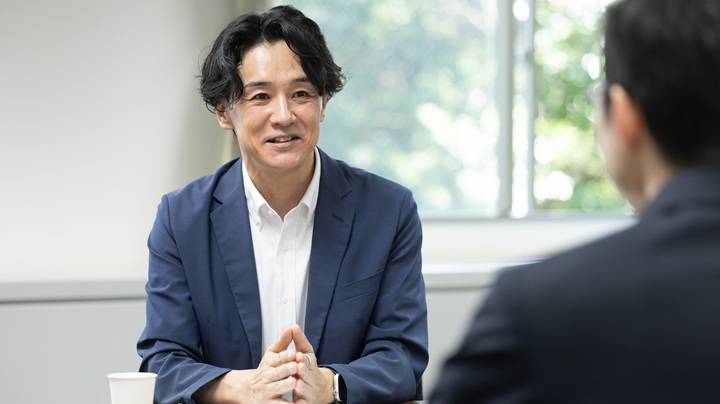
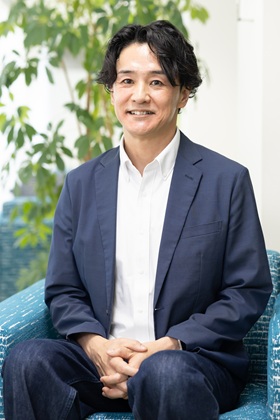
Professor Kawasaki Akiyuki of the Institute for Future Initiatives at the University of Tokyo
Otsuka: What first led you to become interested in the relationship between water-related disasters and poverty?
Kawasaki: My academic background is in disaster risk reduction using Geographic Information Systems (GIS). Initially, I was not particularly focused on poverty or inequality in developing countries.
However, from 2010 to 2014, I taught in the Field of Study of Water Engineering and Management at the Asian Institute of Technology (AIT) in Thailand. There, I met students from across Asia, many of whom wanted to study the relationship between water and poverty. At first, I was surprised. I remember thinking, “What does water have to do with poverty?” But as I accompanied these students on field surveys in Thailand, Myanmar, Bangladesh, and elsewhere, I witnessed firsthand the fragile housing and harsh living conditions in flood-prone communities. Those experiences directly sparked my interest in the links between water-related disasters and poverty. Having originally studied architecture, I had long been interested in how natural and residential environments shape people’s lives. That concern gradually expanded into a broader interest in poverty and inequality.
At the time, the idea of a vicious cycle between disasters and poverty was already widely recognized, but most analyses were based on national-level macro data. Very few studies examined impacts at the community or household level. To address this gap, my students and I at AIT began conducting household surveys in flood-prone areas of Myanmar in 2010. Over the past 15 years, we have carried out surveys of more than 9,000 households in flood-prone regions across six countries: Myanmar, Thailand, the Philippines, Sri Lanka, Bangladesh, and Ghana.
To my knowledge, there are few datasets anywhere in the world that examine the relationship between flooding and poverty on such a large scale. Research conducted in Myanmar, Thailand, the Philippines, and Ghana was also greatly supported through our participation in Science and Technology Research Partnership for Sustainable Development (SATREPS), a joint program of JICA and the Japan Science and Technology Agency that promotes international joint research to tackle global issues. Fieldwork in Ghana is still ongoing. In fact, I even spent the 2025-2026 New Year period there with my students.
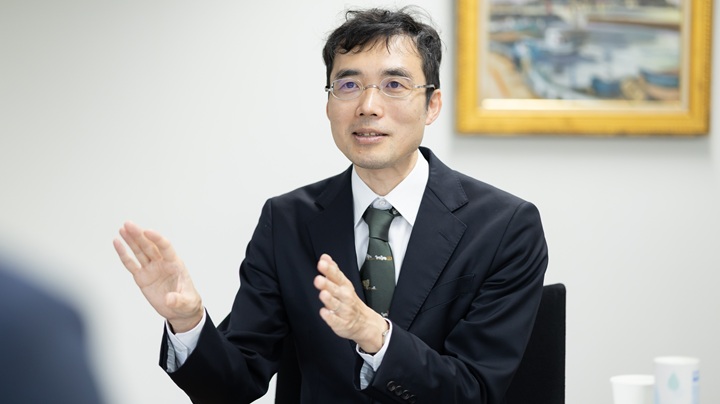
Otsuka Takahiro, Senior Research Fellow at the JICA Ogata Research Institute
Otsuka: What analytical approaches did you use, and what findings emerged from the research?
Kawasaki: Our work has been guided by the hypothesis that repeated flooding accelerates the vicious cycle of poverty. We conduct quantitative household interviews with both low-income and high-income households in flood-prone areas, asking about the damage they experienced during major floods and the impacts on employment, education, and other aspects of their lives. We also survey nearby households that were not directly affected, allowing us to make comparative analyses.
Across flood-prone communities in Myanmar, Thailand, and the Philippines, we found a common pattern: repeated floods tend to stagnate or worsen the economic conditions of low-income households in the short and medium term, while the relative economic positions of higher-income households improve. As a result, inequality widens. That said, the magnitude and dynamics of these effects differ across countries. In Myanmar, for example, where the economic system remains less developed and access to finance is limited, poor households face particular difficulties escaping poverty and often experience further economic decline after flooding. Differences in flood severity also matter, so we continue to investigate the specific causal mechanisms behind these outcomes.
Otsuka: You are also actively working to connect your research findings to public policy. What strategies do you use to ensure that research can be applied in practice?
Kawasaki: Through SATREPS, I have had several opportunities to provide policy recommendations to national ministries and local governments based on our research findings. One lesson I repeatedly encounter is that policy decisions are not always made solely on the basis of scientific evidence. Political considerations and many other factors often play important roles.
To support evidence-based policymaking, researchers must think carefully about how to communicate their findings. Otherwise, even strong evidence may fail to have an impact. For this reason, we developed scenario analyses that estimate how different policy interventions—such as investments in disaster risk reduction, educational support, and income redistribution—could affect poverty and inequality over the next 30 years, compared with a scenario in which no action is taken. We are also developing tools that present these long-term socioeconomic impacts in clear quantitative and visual formats using numbers and graphs.
In addition, I believe it is important to demonstrate the economic benefits of past pre-disaster investment for flood protection in Japan. For example, extensive historical records of pre-disaster investment for flood protection in the Shinano River Basin go back more than a century. By combining those records with statistical data on agriculture, industry, and commerce, we can examine how pre-disaster investment for flood protection contributed to subsequent socioeconomic development. Presenting such historical evidence alongside future projections strengthens the persuasiveness of policy recommendations and helps stakeholders better understand their value.
Otsuka: Grounding recommendations in Japan’s own development experience while tailoring them to the social and administrative contexts of partner countries is indeed crucial. Your insights reinforce the importance of advancing our work on human security. Thank you for your time.
Kawasaki Akiyuki
Professor, Institute for Future Initiatives, the University of Tokyo; concurrently affiliated with the Department of Civil Engineering, Graduate School of Engineering, the University of Tokyo. Prior to assuming his current position in 2022, he held appointments at Yokohama National University, the United Nations University, Harvard University, and the Asian Institute of Technology (AIT).
Sns share!



事業事前評価表(地球規模課題対応国際科学技術協力(SATREPS)).国際協力機構 地球環境部 . 防災第一チーム. 1.案件名.国 名: フィリピン共和国.
事業事前評価表(地球規模課題対応国際科学技術協力(SATREPS)).国際協力機構 地球環境部 . 防災第一チーム. 1.案件名.国 名: フィリピン共和国.
事業事前評価表(地球規模課題対応国際科学技術協力(SATREPS)).国際協力機構 地球環境部 . 防災第一チーム. 1.案件名.国 名: フィリピン共和国.
事業事前評価表(地球規模課題対応国際科学技術協力(SATREPS)).国際協力機構 地球環境部 . 防災第一チーム. 1.案件名.国 名: フィリピン共和国.
事業事前評価表(地球規模課題対応国際科学技術協力(SATREPS)).国際協力機構 地球環境部 . 防災第一チーム. 1.案件名.国 名: フィリピン共和国.


