

The Book “Resilience, Peacebuilding, and Preventing Violent Extremism” Introduced at a Seminar Co-hosted by the Permanent Missions of Japan and Norway to the United Nations
2026.07.07






Updates from JICA Ogata Research Institute on the latest events, publications and more.
RegistrationHow to Find Us


On Feb. 19, 2026, a book launch seminar for “Resilience, Peacebuilding, and Preventing Violent Extremism: A Complex Systems Perspective on Sustaining Peace ” was co-hosted by the Permanent Missions of Japan and Norway to the United Nations (UN) in New York. This book is an outcome of research conducted by the JICA Ogata Sadako Research Institute for Peace and Development (JICA Ogata Research Institute). Two of its editors, Muto Ako , Specially Appointed Research Fellow, JICA Ogata Research Institute, and Cedric de Coning , Research Professor, Norwegian Institute of International Affairs (NUPI), participated as speakers. The audience consisted of representatives of 14 governments and international agencies.
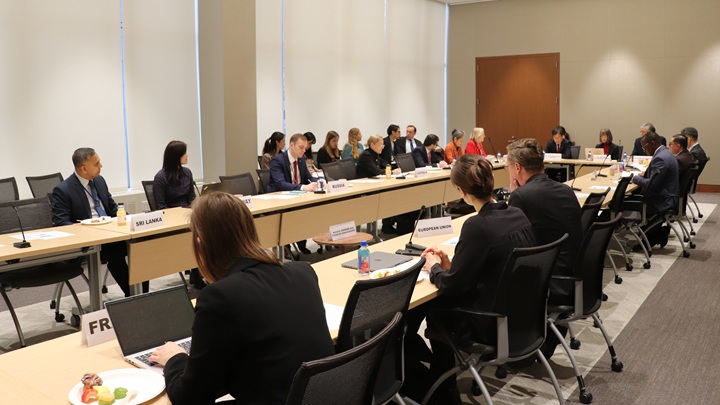
Book launch seminar co-hosted by the Permanent Missions of Japan and Norway to the United Nations
The book is an outcome of “Research on Resilience, Peacebuilding, and Preventing Violent Extremism: A Complex Systems Perspective on Sustaining Peace ,” a research project by the JICA Ogata Research Institute. Through case studies in Africa, Asia and the Middle East, the book analyzes the complex dynamics behind violent extremism. As a measure to prevent or counter it, the book proposes a peacebuilding approach centered around social cohesion, resilience building and adaptive peacebuilding.
The seminar started with opening remarks from H.E. Yamazaki Kazuyuki, Ambassador Extraordinary and Plenipotentiary, Permanent Representative of Japan to the UN. Elizabeth Spehar, Assistant Secretary-General for Peacebuilding and Peace Support, UN Department of Political and Peacebuilding Affairs (DPPA), followed, expressing her support for the peacebuilding approach proposed in the book while citing parts of it. Noda Shoko, Assistant Administrator and Director, Crisis Bureau, United Nations Development Programme (UNDP), and Eihab Omaish, Director for Policy and Coordination, United Nations Office of Counter-Terrorism (UNOCT), also gave remarks, noting that the message of the book strongly resonated with them.
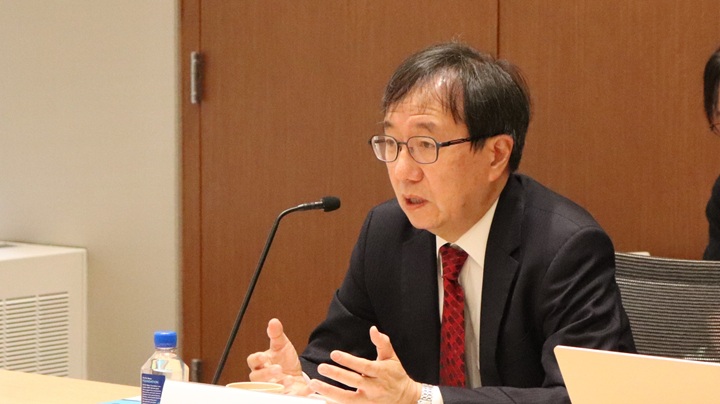
H.E. Yamazaki Kazuyuki, Ambassador Extraordinary and Plenipotentiary, Permanent Representative of Japan to the UN
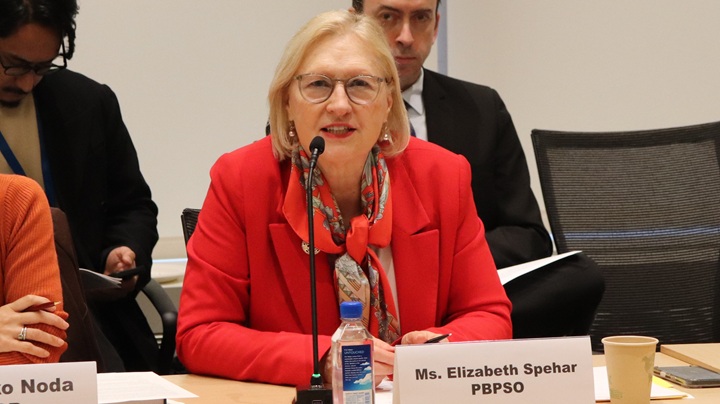
Elizabeth Spehar, Assistant Secretary-General for Peacebuilding and Peace Support, UN DPPA
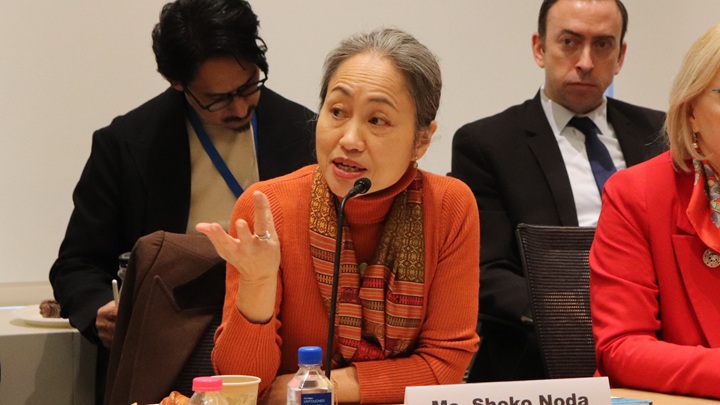
Noda Shoko, Assistant Administrator and Director, Crisis Bureau, UNDP
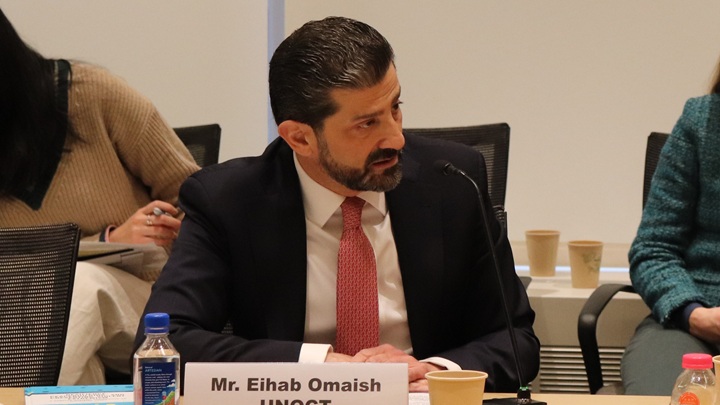
Eihab Omaish, Director for Policy and Coordination, UNOCT
Muto and de Coning shared the summary and key message of the book. After providing details of the case studies in Mozambique, Syria, Iraq, Niger, Sri Lanka and the Philippines that are covered in the book, Muto noted that short-term approaches prioritizing security and aiming to remove violent extremism are insufficient on their own; long-term, community-based and inclusive approaches that prioritize community resilience are important when addressing violent extremism. She pointed out that the consequences of climate change such as food and water insecurity may further exacerbate existing vulnerabilities and weaken social cohesion and community resilience. Muto also added that adaptive peacebuilding approaches are closely related to the concept of human security , proposed by Ogata Sadako and now highlighted in the basic policies of the Development Cooperation Charter of Japan.
De Coning first explained that whether inclusive approaches can successfully eliminate violent extremism or resolve conflicts largely depends on stakeholders, including governments of the countries involved as well as relevant communities. He then pointed out that UN agencies and bilateral agencies like JICA are expected to play the facilitator role for consensus building among stakeholders, making the accumulation of case analysis data useful in order to be able to deal with a wide range of situations. De Coning then noted that the argument set out in the book is highly compatible with ideas mentioned in the 2025 Review of the UN Peacebuilding Architecture, i.e., prevention-oriented approaches as well as the establishment of robust systems and societies based on human rights and the rule of law.
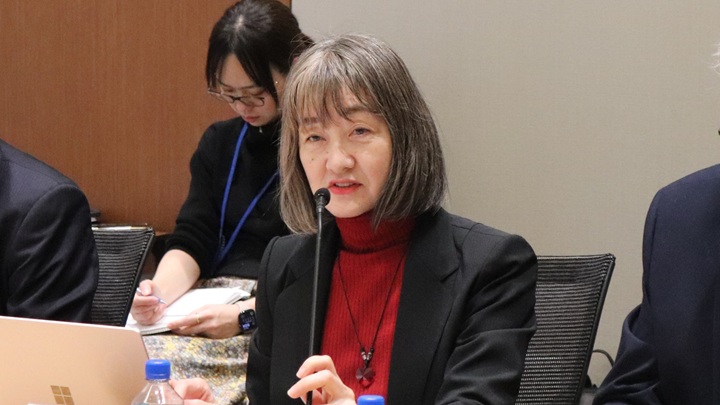
Muto Ako, Specially Appointed Research Fellow, JICA Ogata Research Institute
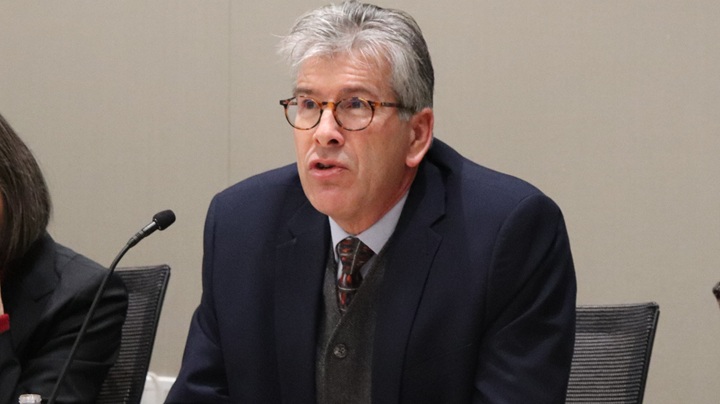
Cedric de Coning, Research Professor, NUPI
During the Q&A session, the Permanent Mission of Australia to the UN asked how relationships of mutual trust, which form the basis of holistic approaches, can be built. De Coning answered by saying that because any relationship of trust, regardless of its level, is ultimately built between individuals, it is important to always keep on building as many interpersonal relationships as possible. The Permanent Mission of Norway to the UN suggested considering the development of indicators in addition to collecting and analyzing data to measure the impact of various approaches. Muto responded that the JICA Ogata Research Institute is currently developing a human security dashboard. Active discussion followed.
Sns share!



事業事前評価表(地球規模課題対応国際科学技術協力(SATREPS)).国際協力機構 地球環境部 . 防災第一チーム. 1.案件名.国 名: フィリピン共和国.
事業事前評価表(地球規模課題対応国際科学技術協力(SATREPS)).国際協力機構 地球環境部 . 防災第一チーム. 1.案件名.国 名: フィリピン共和国.
事業事前評価表(地球規模課題対応国際科学技術協力(SATREPS)).国際協力機構 地球環境部 . 防災第一チーム. 1.案件名.国 名: フィリピン共和国.
事業事前評価表(地球規模課題対応国際科学技術協力(SATREPS)).国際協力機構 地球環境部 . 防災第一チーム. 1.案件名.国 名: フィリピン共和国.
事業事前評価表(地球規模課題対応国際科学技術協力(SATREPS)).国際協力機構 地球環境部 . 防災第一チーム. 1.案件名.国 名: フィリピン共和国.


