

Measuring Development Impact: Column Series No. 3—Can “mobile money shops” where young people gather become a new social model for preventing unintended teen pregnancy?
2026.03.04





Updates from JICA Ogata Research Institute on the latest events, publications and more.
RegistrationHow to Find Us


This four-part column series introduces how development impact can be measured from an academic perspective. Using examples from agriculture, education, health, and infrastructure, it highlights diverse research methods and shows how evidence can help improve policies and programs. In this blog, we will focus on the research project “Intervention Study on Unintended Teenage Pregnancy in Uganda “.
You can find the other columns in this series at the links below.
Author: Komasawa Makiko , Visiting Fellow, Human Development Cluster , JICA Ogata Sadako Research Institute for Peace and Development
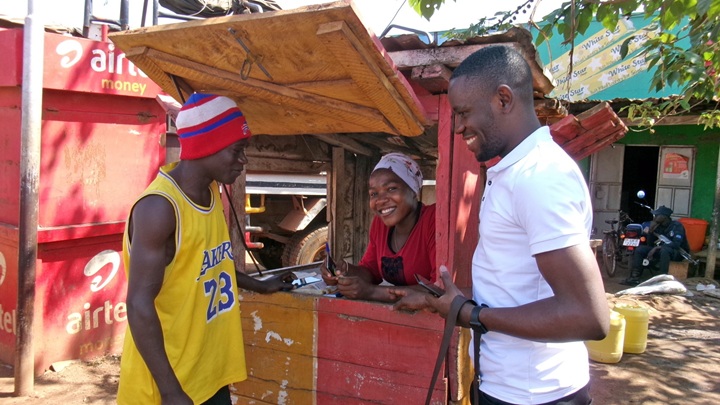
An adolescent customer (left) and a researcher (right) at the participating shop
Sub-Saharan Africa is experiencing a rapid increase in its youth population. Uganda, in particular, is an exceptionally young country, with nearly half of its population under the age of 18. However, the social environment that enables young people to learn and grow safely is still insufficient. For example, although premarital sexual activity is common in Uganda, opportunities to obtain accurate information about sexuality, health, and contraception are limited. As a result, approximately 25% of girls aged 15–19 have already experienced childbirth, and many of these pregnancies were unintended. Adolescent pregnancy poses serious social challenges, increasing health risks for mothers and babies, while also leading to interruptions in schooling and future economic hardship.
In response to these issues, the JICA Ogata Research Institute conducted a two-year empirical study starting in FY2023, based on a new and innovative approach. The study focused on “mobile money shops,” which serve as intermediaries for mobile phone–based money transfers and payments. These shops are widespread across the country, many of the owners are in their 30s or younger, and they also function as informal “community hangouts” where teenagers frequently stop by.
This study positioned mobile money shops as “new health access points.” When teenagers visit these shops, they are provided with easy-to-understand information about sexual and reproductive health and contraception, along with condom distribution. The goal was to create a system in which young people—who may feel uncomfortable visiting hospitals or health centers—could naturally receive support in a familiar and accessible environment.
More than 100,000 young people visited the 30 participating shops over a four-month intervention period, and about half of them received information on sexual and reproductive health and contraception. In addition, around 20,000 young people obtained condoms. This scale is more than 30 times larger than the annual number of users at a local health center (approximately 600 people), clearly demonstrating how accessible mobile money shops are for young people.
A before-and-after survey targeting customers aged 15–19 also showed that the rate of condom use during sexual intercourse in the last four months increased from 67% before the intervention to 78% after (Figure 1). Condom use was also 1.5 times higher in intervention areas than in areas without the program (the control group), a statistically significant difference.
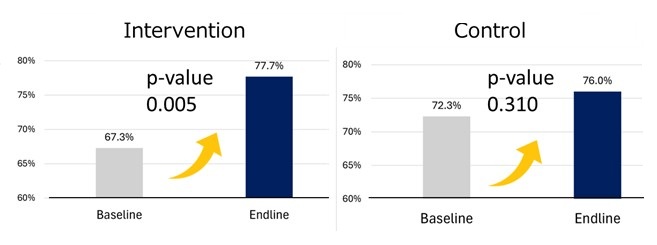
Figure 1: Changes in Condom Use
Furthermore, approximately 65% of the youth surveyed reported “mobile money shops” as their source for obtaining condoms (Figure 2), indicating that the shops effectively functioned as trusted health access points. On the business side as well, the number of young customers increased by an average of 1.6 times, and sales grew by 1.5 times, creating positive economic effects for the shop owners.
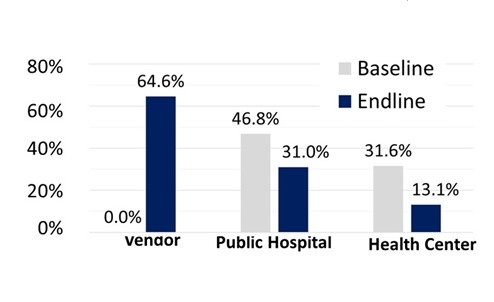
Figure 2: Changes in Places of Obtaining Condoms
In eastern Uganda, we conducted a four-month initiative (an implementation experiment) aimed at reducing the rate of adolescent unintended pregnancies. Before launching the main study, we carried out a 10-day pilot at four shops outside the study area to assess the feasibility of the intervention and identify potential challenges.
Based on the pilot findings, we selected one intervention area (Iganga City) and one control area (Bugiri City). A total of 300 shops in both cities were surveyed to understand local characteristics and shop conditions, and ultimately 30 shops in each area were chosen as research sites. In both the intervention and control areas, a total of 1,204 customers aged 15–19 were randomly selected and interviewed using questionnaires before and after the experiment to capture changes in their knowledge, attitudes, and behaviors.
The collected data were analyzed using a method called logistic regression analysis to objectively verify the impact of the intervention. In addition, the study employed multiple qualitative methods—such as questionnaire surveys and group interviews with shop owners, as well as interviews with young people and community leaders—to examine the implementation process, community reactions, business impacts, and the potential for scaling up in other regions. These insights were integrated to assess the practical feasibility and key considerations for introducing this approach more broadly in society.
Interviews with shop owners revealed that many owners felt their confidence had increased as a result of being involved in activities that contribute to society. In particular, many comments were received from female owners who account for approximately 70% of the participants, expressing a desire to “continue participating in similar activities” and to “apply the experience gained through this project in other district.” These responses indicate that the project also had a positive impact on enhancing participants’ sense of self-realization.
The research team believes that this model can be applied not only in the field of health but also in areas such as education and disaster response. Looking ahead, the team plans to continue its research with a view to expanding the model to other African countries facing similar social challenges and possessing comparable social systems.
Disclaimer: All opinions expressed in this blog post are the author’s and do not reflect opinions of JICA or the JICA Ogata Research Institute.
Sns share!



事業事前評価表(地球規模課題対応国際科学技術協力(SATREPS)).国際協力機構 地球環境部 . 防災第一チーム. 1.案件名.国 名: フィリピン共和国.
事業事前評価表(地球規模課題対応国際科学技術協力(SATREPS)).国際協力機構 地球環境部 . 防災第一チーム. 1.案件名.国 名: フィリピン共和国.
事業事前評価表(地球規模課題対応国際科学技術協力(SATREPS)).国際協力機構 地球環境部 . 防災第一チーム. 1.案件名.国 名: フィリピン共和国.
事業事前評価表(地球規模課題対応国際科学技術協力(SATREPS)).国際協力機構 地球環境部 . 防災第一チーム. 1.案件名.国 名: フィリピン共和国.
事業事前評価表(地球規模課題対応国際科学技術協力(SATREPS)).国際協力機構 地球環境部 . 防災第一チーム. 1.案件名.国 名: フィリピン共和国.


