

Measuring Development Impact: Column Series No. 2—What Effects Does University Faculty Study Abroad Have on Their Subsequent Academic Activities and the Internationalization of Their Universities?
2026.03.04






Updates from JICA Ogata Research Institute on the latest events, publications and more.
RegistrationHow to Find Us


This four-part column series introduces how development impact can be measured from an academic perspective. Using examples from agriculture, education, health, and infrastructure, it highlights diverse research methods and shows how evidence can help improve policies and programs. In this blog, we will focus on the research project “Empirical Research on Impacts of Study Abroad in Developing Countries – based on Study Abroad Experiences of Academic Professionals of Major Universities in ASEAN Countries – ”.
You can find the other columns in this series at the links below.
Author: Naoko Hikami , Research Officer, Human Development Cluster , JICA Ogata Sadako Research Institute for Peace and Development
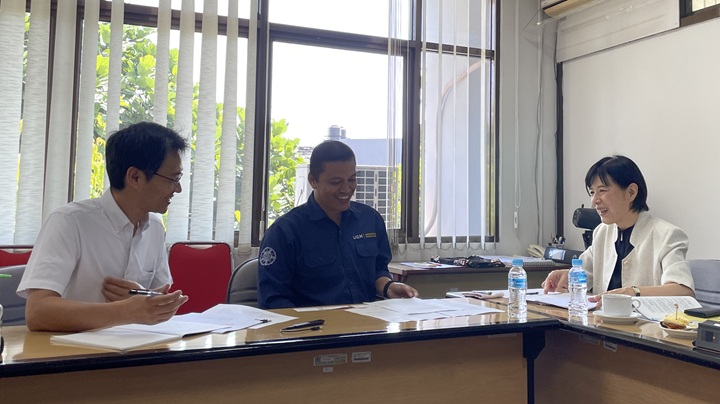
Scene from the interview survey (from an article on the JICA Ogata Research Institute website)
Since the late twentieth century, academic fields have become increasingly internationalized as globalization has advanced, and the number of international students worldwide has expanded rapidly. In Japan as well, large-scale programs to accept international students have been implemented by the Ministry of Education, Culture, Sports, Science and Technology (MEXT) and JICA. However, relatively little research has been conducted on the impact that returning international students have on their home organizations and societies.
To address this gap, the JICA Ogata Research Institute conducted a study focusing on university faculty members as an example, examining the impact of their study abroad experiences. From 2018 to 2024, this study investigated major universities in Cambodia, Indonesia, Malaysia, and Vietnam to determine how faculty members’ study abroad experiences affected their subsequent academic activities and the internationalization of their universities. The research utilized two methods: a questionnaire survey and interviews. Differences between faculty members with and without study abroad experience were compared and analyzed, including their teaching and research activities, formation of international networks, and contributions to university internationalization.
The survey revealed distinctive trends among university faculty members who had studied abroad. Notably, the impact of study abroad on international education and research was greater than its impact on domestic activities. Many faculty members reported that study abroad strengthened the knowledge and skills needed to deliver courses in foreign languages, engage in exchanges with overseas universities, and develop international programs.
In terms of research, study abroad also had significant effects on activities such as presenting at international conferences, collaborating with overseas researchers, and writing academic papers in foreign languages.
At the same time, changes were also observed in domestic teaching practices, including enhanced efforts to develop classes that encourage active student participation and the creation of improved teaching materials. These findings indicate that not only the experience of conducting research in a foreign language, but also the confidence and insights gained through international exposure, play important roles. Furthermore, many faculty members applied the academic networks built during their study abroad experiences to initiate new international activities and collaborations after returning home.
The study also produced three key insights. First, the fact that faculty study abroad improves the quality of education and research and substantially contributes to university internationalization should be reflected in education policy. Second, although study abroad plays a significant role in developing countries, it is also necessary to strengthen domestic higher education; thus, a balance must be maintained between promoting study abroad and promoting domestic enrollment. Third, study abroad destinations should be further diversified so that faculty members can build broader networks and make use of different countries’ strengths to benefit their home institutions. These perspectives are essential for the development of higher education in developing countries.
The study began with a questionnaire survey. This included an online survey as well as paper questionnaires distributed, collected, and digitized by local researchers collaborating on the project. Both quantifiable questions and some open-ended questions were included. In total, approximately 3,000 responses were collected from faculty with and without study abroad experience, and statistical analyses were conducted.
To explore background factors not visible in numerical data alone, interviews were conducted with more than 100 faculty members who had studied abroad. In addition to individual interviews, focus group interviews were conducted with faculty members involved in university management. These interviews allowed for deeper examination of how study abroad experiences influence individual teaching and research activities, as well as university internationalization. Such qualitative data added depth to the findings obtained through statistical analysis and enriched the overall understanding of the study.
One of the greatest challenges encountered during the research was the difficulty of collecting questionnaire responses during the COVID-19 pandemic, which made it necessary to extend the study period. Additionally, at some universities, the use of university-specific survey systems resulted in data formats unsuited to statistical analysis, requiring extensive data cleaning. Despite these difficulties, careful attention to the necessary research processes allowed for reliable analytical results based on a large dataset.
The findings of this study were published as an academic book, which received an award from the Comparative and International Education Society (CIES) in North America in 2025. Currently, as part of a follow-up study, new interviews are being conducted with Indonesian university faculty members who studied abroad in Japan, focusing on the international mobility of skilled professionals. Academic papers and other publications are also in progress. It is expected that these insights will contribute to improving study abroad programs and education policies.
Disclaimer: All opinions expressed in this blog post are the author’s and do not reflect opinions of JICA or the JICA Ogata Research Institute.
Sns share!



事業事前評価表(地球規模課題対応国際科学技術協力(SATREPS)).国際協力機構 地球環境部 . 防災第一チーム. 1.案件名.国 名: フィリピン共和国.
事業事前評価表(地球規模課題対応国際科学技術協力(SATREPS)).国際協力機構 地球環境部 . 防災第一チーム. 1.案件名.国 名: フィリピン共和国.
事業事前評価表(地球規模課題対応国際科学技術協力(SATREPS)).国際協力機構 地球環境部 . 防災第一チーム. 1.案件名.国 名: フィリピン共和国.
事業事前評価表(地球規模課題対応国際科学技術協力(SATREPS)).国際協力機構 地球環境部 . 防災第一チーム. 1.案件名.国 名: フィリピン共和国.
事業事前評価表(地球規模課題対応国際科学技術協力(SATREPS)).国際協力機構 地球環境部 . 防災第一チーム. 1.案件名.国 名: フィリピン共和国.


