The JICA website uses cookies to improve the service provided. By closing or continuously browsing this banner, you agree to use the cookies listed in the privacy policy.
Cultivating the Power of Agriculture in Eastern Highlands Province Vol.1 ~Identifying and Organizing Challenges: How My Work Began by Understanding Village System~
Oho Motaveh ( a greeting in the Goroka dialect).
I’m Hara, a JOCV member from the 2024-1 batch, assigned as a vegetable cultivation specialist to the Provincial Department of Agriculture and Livestock (DAL) in Goroka, Eastern Highlands Province.
After sharing my activities within the JICA PNG office, I received feedback that this could be useful for other volunteers and those aspiring to join the program. This series will summarize the process of field surveys, technical support, and collaboration with stakeholders in five parts.
First Steps After Arrival
My initial task was to clearly explain my technical expertise and areas of support to my supervisor and counterpart. Agriculture requires a combination of diverse techniques, so the materials prepared during pre-departure training greatly helped in establishing mutual understanding.
Following this, I set the primary goal of identifying challenges faced by local farmers based on on-site information.
Photo 1: Goroka Show (Held every September)
The Goroka Show is one of PNG’s most iconic cultural events, where tribes from across the country showcase traditional dances and songs in full regalia.
Interviews with Farmer Leaders
Each district in Goroka has farmer leaders who play a critical role in local agriculture. They have deep knowledge of crop cultivation, harvesting, marketing trends, and even community security and living conditions.
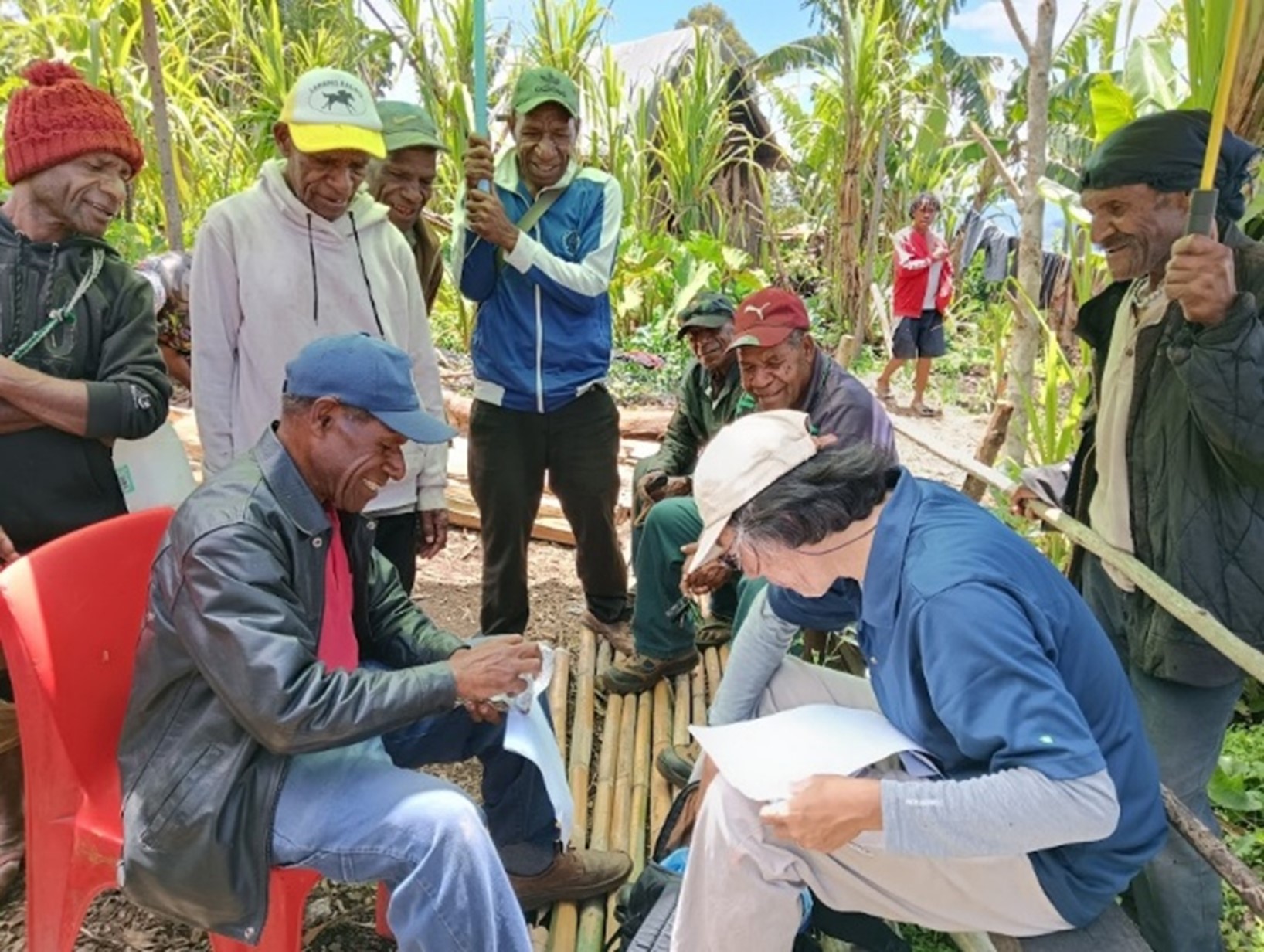
Together with DAL staff, I visited their farms and conducted detailed interviews focusing on:
・Cultivation challenges and success stories
・Management concerns (labor, inputs, income)
・Community operations and security practices
These discussions often took place over light meals, allowing us to gather insights beyond technical farming issues.
Photo 2: Interview Survey in the Suburbs of Goroka
Key Challenges Identified
The survey revealed several major issues:
・Yields of staple crops (root vegetables, fruiting vegetables, leafy greens) remain stagnant
・Quality inconsistency and increased waste in fruiting vegetables
・Continuous cropping of the same crop raises soil-borne disease risks
・Farmer leaders bear the burden of securing labor and coordinating tasks
One striking observation was that farmer leaders also play a vital role in maintaining community security. Through joint farming and shared income opportunities, they contribute to regional stability.
Visualizing Data for Better Decisions
While Goroka farmers have strong observational skills, data-driven problem analysis is not yet common. To address this, we worked with farmer leaders to record and visualize:
・Crop yields
・Expenses (inputs, labor)
・Sales revenue
This visualization enabled farmers to analyze:
・Why quality is inconsistent
・Which tasks require more labor
・Which inputs improve profitability
Such insights empower farmers to identify directions for improvement and accelerate technology dissemination across the region.
Summary of Vol.1
The process of identifying and organizing challenges is a critical foundation for upcoming initiatives such as:
・Introducing green manure
・Conducting technical trials
・Improving seed production techniques
We will continue working closely with DAL staff and farmer leaders to support agricultural development in the region.
Next in Vol.2
“The Process of Introducing Green Manure – Finding Methods Suitable for PNG Soil”