The JICA website uses cookies to improve the service provided. By closing or continuously browsing this banner, you agree to use the cookies listed in the privacy policy.
Cultivating the Power of Agriculture in Eastern Highlands Province – Vol.5 ~ Farmers and Officials Begin to Embrace Change— Promoting Green Manure in Eastern Highlands Province — ~
This article, Vol.5 highlights emerging behavioral changes among DAL officers and farmers as greenmanure activities advance, with locally adapted cultivation methods and active discussions supporting technical learning. Ongoing challenges such as seed storage and knowledge retention are being addressed through improved training and recordkeeping. These developments reaffirm that technology spreads through people—through collaboration, initiative, and shared understanding.
1. Signs of Behavioral Change
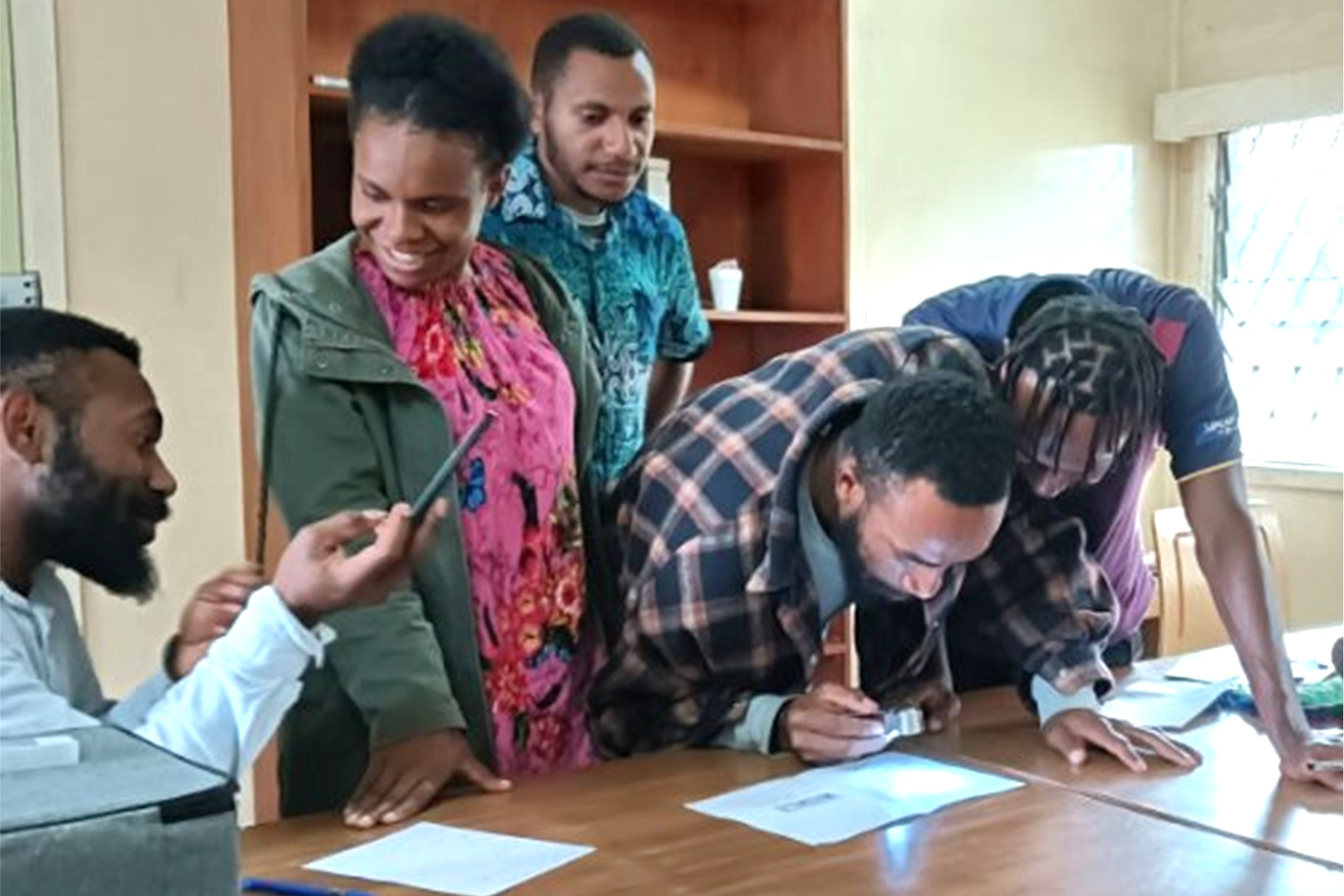
DAL (District Agriculture and Livestock) officers involved in the green manure demonstration plots are now proactively suggesting sowing methods and field layouts for the next cropping season. Farmers in the area have also begun asking, “When is the next information session?”—a clear sign that the demonstration plots are becoming established as learning hubs.
Photo 1: Soil management workshop conducted by DAL. Active discussions took place among staff and students.
2. Cultivation Methods Adapted to Local Conditions
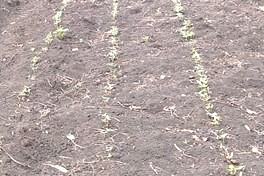
In the seed production fields, we proceeded with cultivation while respecting local practices. As a result, green manure crops naturally shifted from broadcasting to the row planting method commonly used in Japan, and fertilizer application improved from surface spreading to band placement. Furthermore, while contour farming is common in Japan, we confirmed that in the mountainous local terrain, planting along the slope to prioritize drainage is a more rational approach. This serves as a practical example showing that even the same technique can take different forms depending on the land.
Photo 2: Germination of Crotalaria sown in rows using local techniques
3. Challenges for Wider Adoption
Issues remain in areas such as seed storage and consistent understanding of techniques. To address this, training sessions now incorporate Q&A formats to deepen mutual understanding. In PNG, oral information tends to fade quickly, highlighting the importance of improving both how information is communicated and how it is preserved.
4. Record-Keeping: The Key to Dissemination and Knowledge Transfer
Beyond introducing green manure, efforts are underway to strengthen local collaboration. Through discussions at demonstration plots and field visits, farmers and staff have begun exploring strategies for scaling up green manure use. A system for systematically recording seedling growth, yield surveys, and soil changes is also being developed to support continuous improvement. Information—from seed import procedures to cultivation methods and introductions to Japanese agricultural organizations—is being compiled into booklets and shared with staff and JICA offices.
5. Technology Moves Forward Through People
This progress has been driven by:
・DAL officers’ proactive engagement
・Coordination by NAQIA (National Agriculture Quarantine and Inspection Authority)
・Support from JICA
The experience strongly reinforced a key lesson: technology dissemination depends on human initiative and organizational cooperation.
6. Looking Ahead
A demonstration plot is not only a place where crops grow—it is a place where people grow. Just as green manure roots anchor the soil, the goal is for local staff to firmly establish their skills and experience, ensuring these practices continue independently into the future.