The JICA website uses cookies to improve the service provided. By closing or continuously browsing this banner, you agree to use the cookies listed in the privacy policy.
Cultivating the Power of Agriculture in Eastern Highlands Province – Vol. 4 ~ From Setting Up Demonstration Plots to Seeing the Moment People Start to Act~
This article, Vol.4 outlines the establishment of both demonstration and seed production plots in Goroka, highlighting how soil analysis guided site selection, fertilizer decisions, and early management practices. Through these processes, staff awareness began to shift as field activities started taking shape. The groundwork is now set for training, outreach, and the transition toward wider dissemination in the next phase.
1. Establishing Demonstration and Seed Production Plots
This year, we secured both demonstration plots and seed production plots—the core pillars for introducing green manure. Initially, we planned to combine these functions in a single plot in the Korofeigu area. However, soil and environmental assessments revealed that the site was unsuitable for seed production. After discussions with stakeholders, the seed plot was relocated to farmland in the Goroka area.
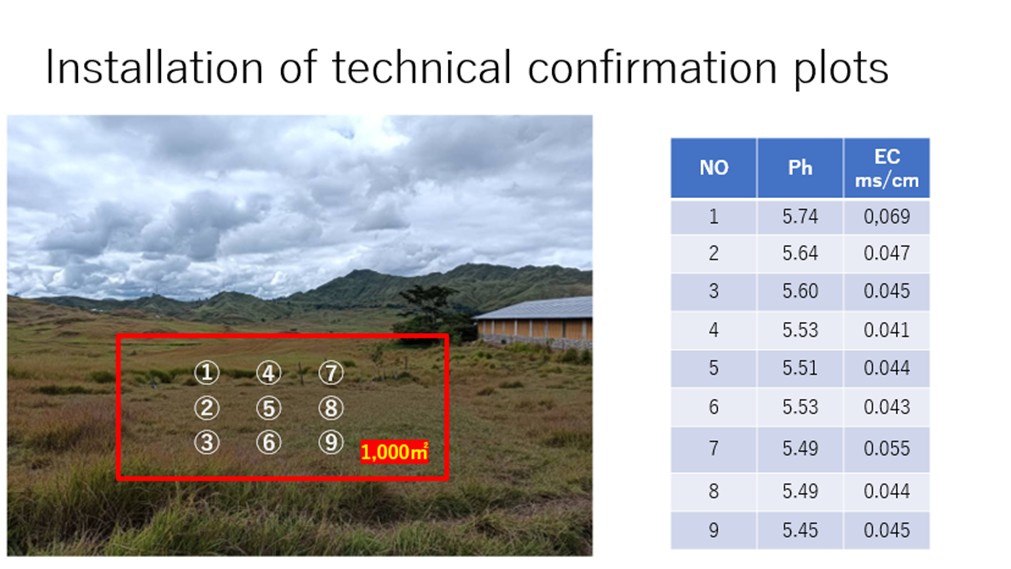
Meanwhile, the Korofeigu demonstration plot remains on schedule. Its low soil fertility offers an advantage: the effects of green manure will be more visible. Currently, we are waiting for the completion of fencing to prevent livestock intrusion, after which sowing will begin.
Photo 1: Planned demonstration plot in Korofeigu. Each block shows low EC values and limited nutrients, making it unsuitable for seed production. Sowing will start after fencing is installed.
2. From Soil Analysis to Fertilizer Decisions
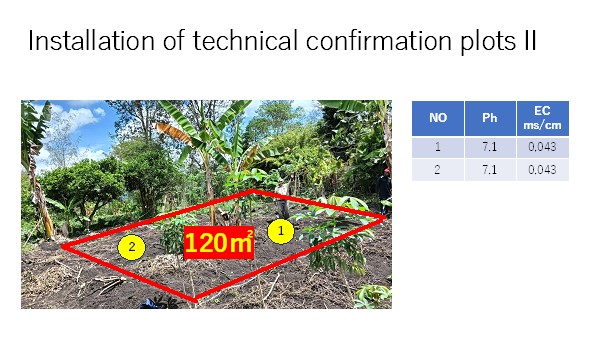
Soil analysis at the seed plot confirmed suitable texture but extremely low nitrogen levels. Based on this, we applied an appropriate amount of chemical fertilizer and completed sowing in late November. Moving forward, we will monitor germination and growth trends, and organize management practices for sowing and seed harvesting.
Photo 2: Seed production plot in Goroka. The soil is good for cultivation, but low EC values led to the decision to apply chemical fertilizer before sowing in late November.
3. Staff Reactions and Shifts in Awareness
The introduction of green manure has sparked noticeable changes among field staff. Previously, they were passive listeners during explanations. Now, they are asking questions and even explaining concepts to others. These small changes suggest that something is beginning to move.
4. A Demonstration Plot Is More Than Just Land
One key lesson from this process: a demonstration plot is not simply about securing land. It must be designed based on farmers’ needs and local conditions. Soil characteristics, rainfall, altitude, and farmers’ priorities—such as soil improvement, fertilization, and pest management—must all be considered to minimize failure.
5. Demonstration Plots Are Triggering Human Action
Although green manure growth has only just begun, we are already seeing early signs of movement:
・Staff are consulting with each other
・They are involved in decision-making
・Field activities are starting
Technology dissemination is not only about crops—it’s about creating systems where people act, think, and share knowledge.
6. Next Steps
Progress on the demonstration and seed plots will be shared at the upcoming meeting with farmer leaders and DAL staff. We are also beginning discussions on hosting hands-on training sessions in the field.
In the next issue (Vol. 5), we will introduce strategies for ensuring continuity—how to hand over and sustain these activities locally.