

Monthly Highlights of Research Activities: January 24 Marks the International Day of Education
2026.01.22





Updates from JICA Ogata Research Institute on the latest events, publications and more.
RegistrationHow to Find Us


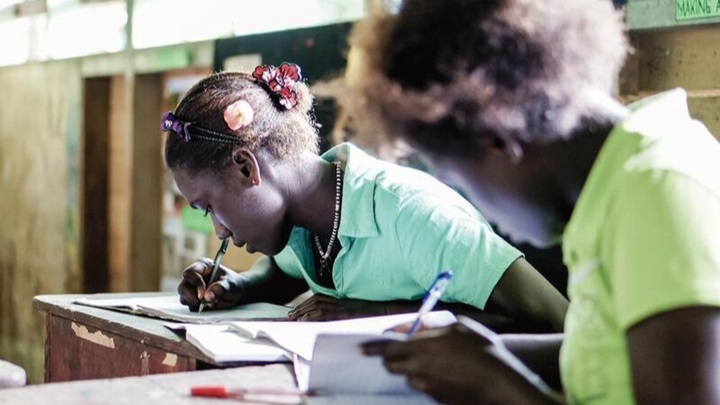
Photo: JICA
“Education is a basic human right, a public good and a public responsibility,” according to the UNESCO website. Without inclusive, high-quality learning opportunities for all, societies cannot achieve gender equality or break the cycle of poverty that keeps millions of children, youth, and adults behind.
To underscore this vital role, the UN General Assembly designated January 24 as the International Day of Education , a global occasion to celebrate education as a driver of peace and progress. In 2026 it highlights “The Power of Youth in Co-Creating Education.” Global events will unite educators, policymakers and youth to shape more inclusive education systems.
In this article, we share key insights from our research that shed light on how education can unlock opportunities and foster sustainable change.
To address the severe learning crisis in Africa, the improvement of foundational learning is a priority policy issue. In Madagascar, the Ministry of Education began scaling up the training on the pedagogical approach, called Teaching at the Right Level (TaRL), in primary education. This study investigates the impact of the interventions by the difference-in-differences strategy.
A package of interventions to deliver remedial support for students through collaboration among parents, teachers, and community members was developed in Madagascar. This study investigated the effectiveness of the package by use of a randomized controlled trial.
Maruyama Takao , Senior Research Fellow, received the 2024 Main Association Award from the Japan Society for International Development (JASID), together with Igei Kengo, Project Associate Professor at Keio University, for their paper titled “Community-Wide Support for Primary Students to Improve Foundational Literacy and Numeracy: Empirical Evidence from Madagascar.”
This paper reports on the results from a field experiment that tests the effectiveness of the globally popular Kumon learning method in improving the cognitive and non-cognitive abilities of disadvantaged pupils in Bangladesh.
This paper examines the impact of introducing TV-aided model lessons in class to enhance the quality of teaching (the EQUITV project) on the national examination test scores of Mathematics and “Combined Subject” (a comprehensive subject comprising 30% science and 70% social studies and other topics) as well as English in the final year of primary education in Papua New Guinea.
Based on a large-scale survey and interviews of faculty at ten leading universities in Malaysia, Indonesia, Vietnam, and Cambodia, this volume offers a new understanding of higher education development in Southeast Asia by examining the impact of study abroad on the academic profession and the higher education sector.
The book introduced above won the 2025 Best Book Award from the Study Abroad and International Students Special Interest Group (SAIS SIG) of the Comparative and International Education Society (CIES).
When scholars from developing countries study abroad, what impact do their experiences have on their home countries? Senior Research Advisor Kayashima Nobuko led a research project to find the answer to this question. We asked her about the findings from a large-scale study that looked at faculty members of academic institutions in ASEAN member states.
This book is the first to comprehensively document the history of Japanese development cooperation in education from the 1950s to mid-2010s. The book is organized around the three core subsectors of Japan’s international education cooperation: basic education, technical and vocational education and training (TVET) and higher education, taking a holistic approach that highlights the interdependence of these subsectors.
In addition to a video in which the editors introduce the overview of the book, you can also watch videos where the authors and editors of each chapter explain the key points of their respective chapters from the links below.
Learn more: Japan’s International Cooperation in Education: History and Prospects
As concerns about a divided world grow, the concept of global citizenship is gaining attention. We spoke with Visiting Fellow Sugimura Miki , who is dedicated to global citizenship education and has contributed to various research projects at the Institute.
Due to prolonged periods of armed conflict and poverty worsened by the conflict, one-fifth of the population (200,000 people) in Timor-Leste were unable to complete their basic education. This paper examines the motives, experiences and circumstances of the youth and adult learners who have had the opportunity to receive second-chance education.
Learn more: Obtaining a Second Chance: Education during and after Conflict
Social infrastructure, such as schools, hospitals, and public housing, is an essential element in the formation and support of human capital, people’s well-being, and sustainable economic development. After confirming the characteristics of social infrastructure that differ from those of economic infrastructure, the research group has estimated the current level of expenditure and the future demand up to 2030 for social infrastructure in the Asian region and examined the gap between the two.
Learn more: Research on Demand Estimate on Infrastructure in Asia
You can also find a list of publications by the JICA Ogata Research Institute in the field of education at the link below.
Sns share!



事業事前評価表(地球規模課題対応国際科学技術協力(SATREPS)).国際協力機構 地球環境部 . 防災第一チーム. 1.案件名.国 名: フィリピン共和国.
事業事前評価表(地球規模課題対応国際科学技術協力(SATREPS)).国際協力機構 地球環境部 . 防災第一チーム. 1.案件名.国 名: フィリピン共和国.
事業事前評価表(地球規模課題対応国際科学技術協力(SATREPS)).国際協力機構 地球環境部 . 防災第一チーム. 1.案件名.国 名: フィリピン共和国.
事業事前評価表(地球規模課題対応国際科学技術協力(SATREPS)).国際協力機構 地球環境部 . 防災第一チーム. 1.案件名.国 名: フィリピン共和国.
事業事前評価表(地球規模課題対応国際科学技術協力(SATREPS)).国際協力機構 地球環境部 . 防災第一チーム. 1.案件名.国 名: フィリピン共和国.


