

Monthly Highlights of Research Activities: What Does It Mean to Measure Development Impact “Academically”?
2026.03.12







Updates from JICA Ogata Research Institute on the latest events, publications and more.
RegistrationHow to Find Us


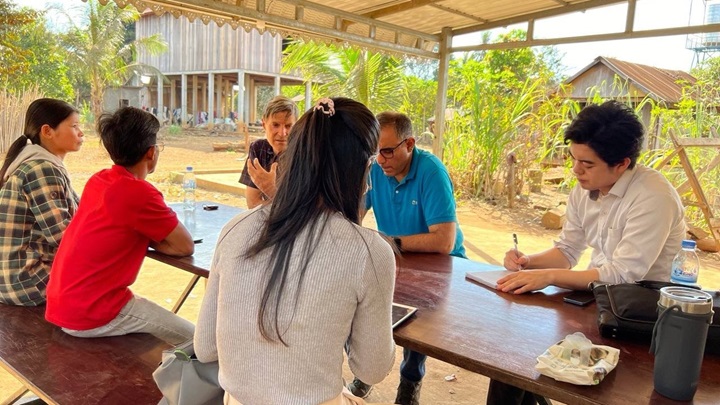
JICA Ogata Research Institute conducts policy-oriented research on the challenges faced by developing countries.
Using academic methods to measure development impact has significant value. Insights derived from peer-reviewed academic research, based on rigorous methodologies, are less susceptible to the subjective views or interests of researchers or practitioners, and therefore can provide highly reliable, objective evidence. Moreover, replicable research findings possess a universality that allows them to be applied beyond specific regions or contexts.
There are various academic approaches to measuring development impact, broadly categorized into quantitative research and qualitative research. Quantitative research aims to generate generalizable results by statistically analyzing numerical data. Qualitative research, on the other hand, seeks to deeply understand people’s experiences through words and actions, enabling the analysis of complex phenomena and uncovering insights that may be difficult to capture with numerical data.
A “mixed-methods” approach that combines both quantitative and qualitative research is attracting attention as a comprehensive methodology that leverages the strengths of each. While it involves challenges in integrating the two methods and often requires additional time and cost, it provides a more holistic understanding of development impact.
In this issue, we introduce several examples of development impact identified through our research activities. These cases illustrate the diversity of the methodological approaches used in development impact research.
As part of the "Capacity Development Project for Sustainable Forest Management in the Republic of Kenya " implemented in cooperation with the Kenyan government from 2016 to 2021, JICA conducted a program called "Farm Forestry Farmer Field School (FFS)." Sato Ichiro , Executive Senior Research Fellow, examined how FFS affected participating farmers' resilience to climate change using a statistical method known as propensity score matching.
Quantitatively evaluating climate change adaptation measures remains challenging due to uncertainties in climate projections. The research project “Quantitative Evaluation of Climate Change Adaptation Benefits of Urban Flood Management ” aims to address this issue by applying the Robust Decision Making framework to develop new approaches to assessing the effectiveness of adaptation measures. Focusing on river basins in Sri Lanka’s Colombo Metropolitan Region, where future flood risks are expected to be high, the research team examined whether the flood mitigation measures proposed in the 2023 Storm Water Drainage Plan (Master Plan) will be effective.
In this blog, Hikami Naoko , Research Officer, introduces the project “Empirical Research on Impacts of Study Abroad in Developing Countries – based on Study Abroad Experiences of Academic Professionals of Major Universities in ASEAN Countries .” As part of the project, a study was conducted at major universities in Cambodia, Indonesia, Malaysia, and Vietnam to determine how faculty members’ study abroad experiences affected their subsequent academic activities and the internationalization of their universities, using a questionnaire survey and interviews.
When scholars from developing countries study abroad, what impact do their experiences have on their home countries? Senior Research Advisor Kayashima Nobuko led a research project to explore this question.
Below are links to a three-part series on impact evaluation and the use of evidence, written by Senior Research Fellow Maruyama Takao
.
Maruyama discusses how development agencies can use impact evaluation and evidence to improve their programs, drawing on the case of the Indian NGO Pratham , which began using impact evaluation in the early 2000s and has since leveraged evidence to enhance and scale its initiatives. The integrated cycle of search, learning, and communication, conceptualized from Pratham’s case, offers a model for how development agencies can use evidence more effectively.
This blog provides an overview of how a package consisting of the distribution of mathematics textbooks—developed through JICA’s Project for the Improvement of Mathematics Teaching in Primary and Secondary Education (the ESMATE project) , launched in El Salvador in 2015—and accompanying interventions to promote their use has contributed to improving children’s learning outcomes in mathematics. It also describes how evidence from a Randomized Controlled Trial (RCT) conducted to assess these effects was utilized in the project.
Since the early 2000s, JICA has supported improvements in education through collaboration between schools and local communities by democratically establishing School Management Committees (SMCs) and enhancing their capacity under the initiative known as Ecole pour Tous (EPT), or School for All in English. Maruyama presents three cases of impact evaluation conducted in response to the evolution of the project activities in Madagascar between 2018 and 2022 and describes how the evidence was used.
In this blog, Komasawa Makiko , Visiting Fellow, introduces the research project “Intervention Study on Unintended Teenage Pregnancy in Uganda. “ The study focused on “mobile money shops,” which act as intermediaries for mobile phone–based money transfers and payments. These shops are widespread across Uganda and also serve as informal “community hangouts” which teenagers often frequent. By positioning these shops as “new health access points,” the study provided teenagers with easy-to-understand information on sexual and reproductive health and contraception, along with condom distribution. The data collected through this initiative were analyzed using logistic regression to objectively verify the impact of the intervention.
When formulating development plans, it is essential to understand how infrastructure investment shapes lives and behaviors, how these impacts vary across locations and demographic groups, and to identify the scale and sustainability of their broader socioeconomic effects. In this blog, Yamada Eiji , Senior Research Fellow, draws on research findings on urban transportation infrastructure, including metro systems and Bus Rapid Transit (BRT), to explore these issues.
LEADS (Learn, Adapt, and Scale) workshops , organized by the World Bank’s Development Impact Group, bring together researchers and practitioners from around the world to integrate evidence and data analysis into operations. Ahead of the Tokyo workshop, the World Bank, the Asian Development Bank (ADB), and JICA jointly hosted a research conference, “Innovation in Infrastructure Impact ” on Jan. 26, 2026.
JICA Ogata Research Institute analyzes the social and economic effects of infrastructure development, using a range of data on the infrastructure projects implemented by JICA. The institute also studies the factors and methods that enable sustainable infrastructure development in developing countries, taking into account financial and environmental costs. This article highlights some of its activities and research findings.
Tanaka Tomoaki, a JICA staff member, leads a research project on the barriers to pension participation among Mongolian nomadic herders. Using a large-scale survey with randomly distributed questionnaires, the project identifies the key constraints hindering pension participation.
Learn more: Barriers to Saving for Retirement: Evidence from a Public Pension Program in Mongolia
In Cambodia, where both the local currency “riel,” and the US dollar are widely used, the National Bank of Cambodia has been making a variety of efforts to promote the use of the riel. Visiting Fellow Aiba Daiju discusses the challenges facing the Cambodian financial sector and shares research findings from the vantage point of someone who has continued to observe both research and policy making.
Learn more: Study on the Promotion of Financial Inclusion: The Case of Cambodia
Learn more: Empirical Study on the Promotion of Home Currency in Cambodia
This article highlights the development impacts of two initiatives, “The Coalition for African Rice Development (CARD) ” and “Smallholder Horticulture Empowerment and Promotion (SHEP) .” The CARD study provides an empirical analysis of how that initiative serves to increase rice productivity and reduce poverty, while the SHEP study evaluates its impact on smallholder livelihoods using both empirical and sociological methodologies.
Sns share!



事業事前評価表(地球規模課題対応国際科学技術協力(SATREPS)).国際協力機構 地球環境部 . 防災第一チーム. 1.案件名.国 名: フィリピン共和国.
事業事前評価表(地球規模課題対応国際科学技術協力(SATREPS)).国際協力機構 地球環境部 . 防災第一チーム. 1.案件名.国 名: フィリピン共和国.
事業事前評価表(地球規模課題対応国際科学技術協力(SATREPS)).国際協力機構 地球環境部 . 防災第一チーム. 1.案件名.国 名: フィリピン共和国.
事業事前評価表(地球規模課題対応国際科学技術協力(SATREPS)).国際協力機構 地球環境部 . 防災第一チーム. 1.案件名.国 名: フィリピン共和国.
事業事前評価表(地球規模課題対応国際科学技術協力(SATREPS)).国際協力機構 地球環境部 . 防災第一チーム. 1.案件名.国 名: フィリピン共和国.


