





帰国研修員の活躍-南部アフリカで結核対策を推進- Achievements of Returning Participants —Promoting Tuberculosis Control in Southern Africa—
2026.07.08







新型コロナウイルス感染症で私たちが経験したように、ある地域で発生したアウトブレイクを早期かつ適切に対処しなければ、あっという間に世界中広がり、多くの人々の命を脅かすのが感染症です。日本が長年取り組んできた感染症対策の1つに、結核対策があります。かつて多くの日本人の命を奪い、国民病とさえ言われた結核。この感染症の克服を目指してきた日本の経験と技術を詰めた研修で育成された研修員のその後をご報告します。
As we have experienced with the COVID-19 pandemic, infectious diseases can spread around the world in the blink of an eye and threaten the lives of many people if an outbreak in a particular region is not addressed early and appropriately. One of the infectious disease control measures Japan has been working on for many years is tuberculosis control. Tuberculosis once claimed the lives of many Japanese people and was even referred to as a “national disease.” In this report, we will share updates on the participant who participated to the program that draws on Japan’s experience and technology in overcoming this disease.
ナミビアのモコメレ・クイーンデリンさん(以下、クイーンさん)はナミビア病理学研究所(The Namibia institute of pathology limited :NIP)の主任臨床検査技師です。当研究所は、国の結核基幹検査所NTRL(National Tuberculosis Reference Laboratory)としての役割を持ちます。彼女の業務は、日々実施する検査の精度管理、職員の監督や教育、予算管理・物品調達などの在庫管理、国のハンセン病・結核ガイドライン策定等多岐にわたります。
クイーンさんの国、ナミビアはWHOにより結核高負担国として指定された国の1つで、HIV/AIDSと結核の合併症も深刻です。正確で安定した検査結果を出すことは、患者治療に直接影響する重要な要素であり、結核診断の質向上と治療結果の改善に直結します。結核基幹検査所の主任として、検体の高い汚染率(保存状態が悪く雑菌が増殖することで検出率を低下させる原因となる)と診断の遅れに課題があると考え、実施する検査の質を高めていく必要性を感じていました。
クイーンさんは、結核菌培養検査法、薬剤感受性検査法、次世代シークエンス検査といった検査技術の質向上と、トラブルシューティング力の向上をすることで、度重なる検査精度管理の失敗から抜け出したいとの強い意志を持ち、2023年JICAの研修「健康危機における結核制圧と薬剤耐性のための最新診断-実施指導による基礎技術から次世代シークエンス-」に参加しました。

2023年度に参加したクイーンさん FY2023 participant, Ms. MOKOMELE Queendeline.「写真提供:MOKOMELE Queendeline」
Facing reoccurred failures in external and internal quality control(EQA and IQC)
Ms. Mokomele Quindelin (hereinafter referred to as Ms. Quin) of Namibia is the Chief Medical Technologist at the Namibia Institute of Pathology Limited (NIP). The institute serves as the National Tuberculosis Reference Laboratory (NTRL). Her responsibilities are wide-ranging and include quality control for daily laboratory tests, supervising and training staff, inventory management—including budgeting and procurement. She also serves as the TB focal person and contributing to the development of national guidelines for leprosy and tuberculosis.
Namibia is one of the countries designated by the WHO as a high tuberculosis burden country, and complications with TB and HIV/AIDS are also a serious issue. Accurate and reliable test results are a critical factor that directly impacts patient treatment outcomes. As the chief medical technologist of the national tuberculosis reference laboratory, She recognized that high specimen contamination rates and diagnostic delays were major challenges, and felt a strong need to improve the quality of the tuberculosis tests that her organization conducts.
By enhancing her own expertise—specifically in improving her institution’s technical capabilities (tuberculosis culture testing, drug susceptibility testing, next-generation sequencing), as well as by improving her troubleshooting skills, in order to break free from reoccurred failures in external and internal quality control(EQA and IQC). With this strong determination, she participated in the 2023 JICA KCCP titled “Advance Diagnostics for Ending TB and AMR in Health Emergency -Basic Technologies to Next Generation Sequencing in Hands-on-.”
日本での研修はどうだったのでしょうか?ご本人から当時の様子を振り返ってもらいました。
「講師陣や各国から参加した仲間と共に、インタラクティブで実践的な実習が一番印象に残っています。実際に自分たちが手を動かし、検体の汚染除去技術や正しい検査手順について学びました。検査業務の正確さ、均一性、信頼性、完全性の重要性を認識しました。研修を通じて、品質重視の検査室運営をしていくための気づきと知識を得ることができました。また、同じ研修に参加していた他国の成功例や課題を共有し合うことで、自分の視野が広がり、実践に応用できるアイデアを得ることができたことも良かったです。」
日本での生活において、印象に残っていることも語ってくれました。
「私は日本人の仕事に対する姿勢に感銘を受けました。職務に対する強い献身精神、正確さ、そして誇りを感じました。これは休日に行ったお店から研修の講師まで、至る所で、サービスは丁寧に提供され、単純な作業でさえも細心の注意を払って行われていることが伺えました。この献身的な姿勢は、社会の多くの分野において高い水準と一貫性を生み出していると感じました。」
彼女はまた、語ります。
「私にとって最も強い印象として挙げられるのは、社会を支える「一体感」です。個々の行動は、相互尊重の精神のもと、地域社会への影響を意識して行われているように見えました。」
Insights Gained Through Hands-On Training
How was the program in Japan? We asked her to reflect on her experience at that time.
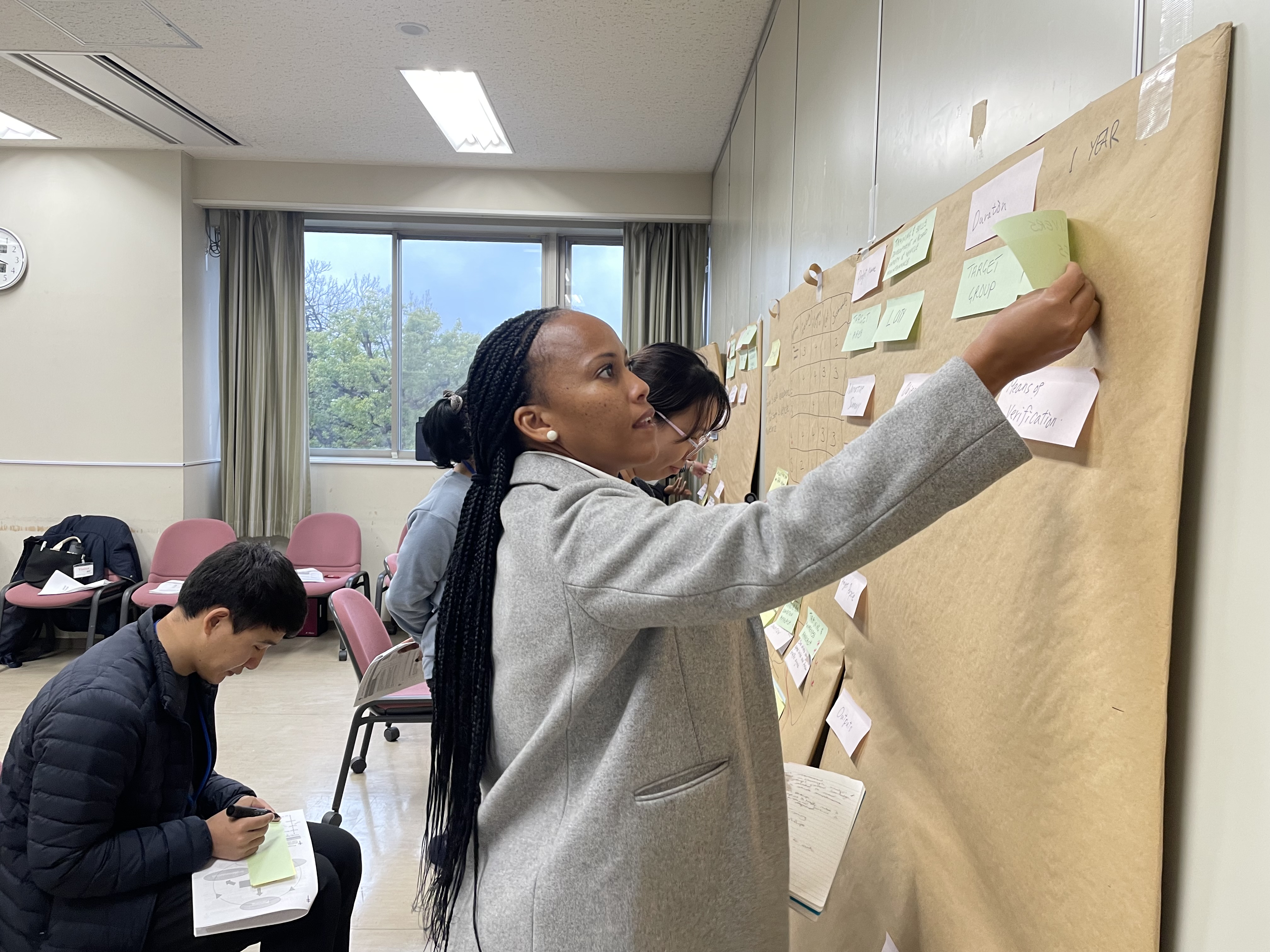
所属先であるナミビア病理学研究所の課題分析をしている様子 Analyzing issues at her workplace「写真提供:JICA」
“What left the strongest impression on me were the interactive, hands-on training sessions with the instructors and fellow participants from various countries. We learned about decontamination techniques and proper testing procedures. I came to recognize the importance of accuracy, consistency, reliability, and integrity in laboratory work. Through this program, I gained insights and knowledge necessary for managing a quality-focused laboratory. It was also valuable to share success stories and challenges with participants from other countries. This broadened my perspective and provided me with ideas I can apply in my daily work.”
She also shared some of her most memorable experiences in Japan.
“I was deeply impressed by the Japanese work ethic. The strong sense of dedication, precision, and pride in their responsibilities. From the shops I visited on my days off to the instructors at my training sessions, I could see that service was provided with great care everywhere, and even simple tasks were carried out with meticulous attention to detail. I felt that this dedicated attitude fosters high standards and consistency across many sectors of society.”
She also said
“The most lasting impression was the “sense of oneness” that underpins society. It seemed that people’s individual actions were guided by a spirit of mutual respect and a conscious awareness of their impact on the community.”
クイーンさんは帰国後の様子を語ってくれました。
「帰国後は、新たな検査情報システムの導入に参画し、結核情報の電子報告や検査の品質指標をリアルタイムでモニタリングすることが可能になりました。今後は、迅速で正確な結核診断と治療開始のため、精度管理を進めるべく、職場の人材育成に力を入れていきます。ナミビアの人々が、社会的、経済的な立場に関わらず等しく質の高い検査や保健医療サービスにアクセスできることが大切です。世界水準の検査をナミビアでも実施できるようになり、将来的には南部アフリカ開発共同体の各検査室の監査や指導をする人材になっていきたいです。」
WHOによると、2024年に世界で123万人が結核によって命を落としています。これは、単一の感染症による死因としては世界で最も多いものです。日本で育成された一粒の種が、遠いナミビアの地で芽を出して成長し、やがて南部アフリカ開発共同体に多くの花を咲かせることが期待されます。彼女の活躍により結核で命を落とす人が減ることを期待しています。
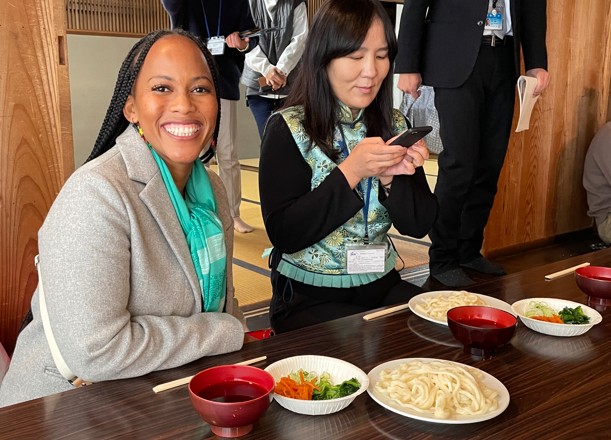
滞在中は日本文化体験としてうどんづくりも経験した。
During her stay, she also experienced making Udon(Japanese noodle) as part of her experience with Japanese culture.「写真提供:JICA」
Dreaming to make world-class testing a reality in Namibia
Ms. Quin told us about how she’s been doing since returning home.
“After returning to Namibia, I participated in the implementation of a new laboratory information system, which made it possible to electronically report tuberculosis data and monitor TB quality indicators in real time. Moving forward, to ensure rapid and accurate tuberculosis diagnosis and timely initiation of treatment, I will prioritize capacity development at my laboratory to advance quality control. It is essential that the people of Namibia have equal access to high-quality testing and healthcare services, regardless of their social or economic status. My immediate goal is to reach a point where world-class testing can be conducted in Namibia, and in the future, I hope to become a professional capable of auditing and providing guidance to laboratories within the Southern African Development Community.”
According to the WHO, a total of 1.23 million people died from tuberculosis (TB) in 2024 (including 150 000 among people with HIV). Globally, TB is the world’s leading cause of death from a single infectious agent. A single seed nurtured in Japan will sprout and grow in distant Namibia, eventually blossoming into many flowers within the Southern African Development Community. We hope that her efforts will help reduce the number of people who suffer and lose their lives from tuberculosis.
\SNSでシェア!/


